

Angioplasty Surgery Cost in India
Last updated: April 19, 2026
Starting from USD 14,000
INCLUDES
- FDA Approved Implant
- Surgery and Stay at the Hospital
- Pre-operative Investigations
- Medicines, Consumables & Food at the hospital
- Airport Transfers & MediTraWell assistance
DOES NOT INCLUDE
- Accommodation outside the Hospital
- Air tickets
- Medical Visa fee
STAY REQUIRED
- Stay at the Hospital - 1 to 2 days
- Stay at the Hotel - 7 to 8 days
- Stay in India - 8 to 10 days
With end to end services for your hassle-free Cancer Treatment in India, MediTraWell has made the entire process of seeking medical tourism in India easy and hassle free for you besides making it affordable.
Factors that Affect AICD Cost in India
- Type of AICD
A significant portion of the overall AICD cost in India arises from the type of implant used. There are different types of implants available which include s ingle chamber, dual chamber, biventricular, and subcutaneous implant. The doctor shall recommend the appropriate implant depending on your medical condition and requirements. MediTraWell recommends you explore the options by consulting our expert Interventional Cardiologists.
- Cardiologist’s Fees
A significant component of an AICD cost in India is the heart surgeon’s fees. MediTraWell recommends highly experienced, skilled, board-certified heart surgeons who can deliver excellent results. While the charges may vary based on the surgeon’s experience, you can be confident that you are in safe and capable hands when opting for affordable heart surgery in India with MediTraWell Health Tours.
- Your Choice of Surgical Facility
Selecting an accredited medical facility with skilled and qualified medical staff is essential for the success of AICD procedure in India. Larger cities in India generally provide superior medical facilities and more experienced heart surgeons, leading to higher costs. MediTraWell Health Tours recommends surgical facilities in these larger cities to prioritize quality of care and ensure safety of our overseas guests.
- Surgery-Related Expenses
The expenses related to AICD surgery include the pre- and post-surgical expenses. The amount of pre-surgical expenses depends on the age and medical condition of the patient and thus the number and type of investigations that may be required. The amount of post-surgical expenses depend on prescription medications and extent of follow-up consultations required.
We Customize AICD Cost in India Quote to Suit Your Preferences
At MediTraWell Health Tours, we consolidate most of the expenses for your AICD cost in India to provide you with an inclusive and cost-effective package tailored to your budget and individual requirements. After receiving medical reports, your case manager will provide an estimated cost based on a discussion with the heart surgeon in India.
The final AICD cost in India can however be confirmed after your face-to-face consultation with the heart surgeon.
We at MediTraWell, understand that you travel with a budget in mind and do not like to be greeted by surprises after arrival in India. We thus club all these expenses and give you a package cost that is inclusive and affordable at the same time.
Your case manager shall give you an estimated cost of your surgery after discussing your medical reports with the surgeon. The final cost, however, shall be confirmed after your consultation with the surgeon.
Medi Trawell Services
Making Medical Travel to India Affordable & Hassle-free for 15+ Years

We Help you Choose the Right Treatment, Surgeon & Hospital

We Arrange Video/Telephonic Consultation with the Surgeon

We Assist you with Visa & Accommodation

We Receive you at the Airport and Drop you at Hotel/Hospital

We Assist you the at Hospital & Provide Post Operative Support
Our services are FREE for our patients.
In fact, we have Special Negotiated Rates with the Hospitals and you can avail Discounted Rates when you choose to Travel with MediTrawell. Container
Cardiac Procedures We Offer
Here is a compilation of the heart treatment options we provide in India.
- Holter Monitoring
- Alcohol Septal Ablation
- AICD
- Coronary Angiography
- Coronary Angioplasty (PTCA)
- Pacemaker Implantation
- Cardiac Bypass (Heart Bypass)
- ASD Device Closure
- Aortic Valve Replacement
- ASD Treatment
- VSD Treatment
- Cardiac Tumor Surgery
- EP Study
- Balloon Valvuloplasty
- Bentall Procedure
- Cardiac Ablation
- Minimally Invasive Heart Bypass
- Valve Replacement Surgery
- Pediatric Heart Surgery
- Robotic Heart Surgery
- Heart Transplant
- LVAD (Left Ventricular Assist Device)
- TAVR (Transcatheter Aortic Valve Replacement)
- Truncus Arteriosus Repair
Best cardiologist in India
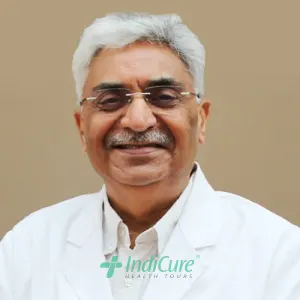
Dr. T S Kler
Interventional Cardiologist
MBBS, MD, DM, Fellow of Royal College of Physicians (FRCP), UK and Fellow of American College of Cardiology (FACC)
Gurgaon
Dr. TS Kler is one of the most renowned names in the field of Cardiology in India. He was the first doctor in India to implant an implantable cardioverter defibrillator (ICD) and establish the first electrophysiology department in India. He is also the first doctor in South East Asia, to perform the first heart failure device (Biventricular Pacemaker) and Combo Device (ICD and Biventricular Pacemaker).
the first doctor in India to implant an implantable cardioverter defibrillator (ICD) and establish the first electrophysiology department in India.
He is known for performing more than 300 angioplasties, including stenting/atherectomy/rotablation, and around 2000 cardiac diagnostic angiograms every year. Complex Coronary Interventions and Angioplasty Using Advanced Techniques, Cardiac Pacing and Electrophysiology, Devices in Heart Failure, Cardiomyopathy, and Sudden Cardiac Death are some of his areas of interest.
In 2005, the President of India bestowed the PADMA BHUSHAN, India’s third highest civilian honor on him, for contribution in the area of medicine. He was Awarded the 2006 Lifetime Achievement Award for extraordinary contributions to clinical and preventive cardiology throughout the world.
South East Asia, to perform the first heart failure device (Biventricular Pacemaker) and Combo Device (ICD and Biventricular Pacemaker).
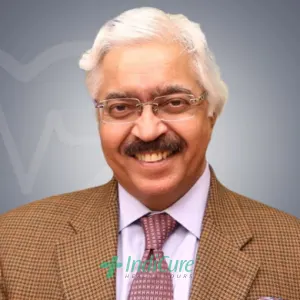
Dr. Ashok Seth
Interventional Cardiologist
MBBS, MD, DM, MRCP
New Delhi
Dr. Ashok Seth is one of India’s most renowned and sought-after Interventional Cardiologists. He is known for doing over 50,000 angiograms and 20,000 angioplasties. Holds the “LIMCA” Book of Records for doing one of the biggest numbers of angiograms and angioplasties in the world.
He is known for doing over 50,000 angiograms and 20,000 angioplasties. Holds the “LIMCA” Book of Records for doing one of the biggest numbers of angiograms and angioplasties in the world.
Dr. Seth is Asia Pacific’s first cardiologist to perform an angioscopy and directional atherectomy. He’s also one of the few cardiologists in the world who can do the Percutaneous Myocardial Laser Revascularization technique.
Dr. Seth is one of the youngest recipients of the Banaras Hindu University’s honoris Causa Doctorate of Science (D.Sc.). He was also one of the youngest doctors from outside the United Kingdom to be awarded a Fellowship by all three Royal Colleges of London, Edinburgh, and Ireland. The President of India has bestowed the prestigious national awards of “Padma Bhushan” and “Padma Shri” to Dr. Seth.
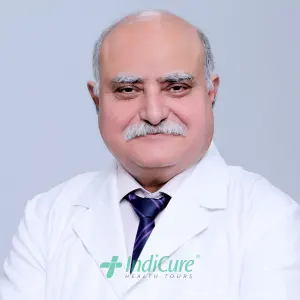
Dr. Ajay Kaul
Cardiac Surgeon
MBBS, MS, MCh, Fellowship in Heart & Lung transplant, Hannover Medical School, Fellowship in Minimally Invasive Cardiac Surgery, Lipzig Heart Centre, Germany
Delhi, NCR (Noida)
He graduated from Bombay University with a Master’s degree in Cardiothoracic and Vascular Surgery. He also has Fellowships in Cardiac Surgery, Cardiac Transplantation, and Minimally Invasive Surgery from prestigious institutions such as the Royal Prince Alfred Hospital in Germany, the Royal Melbourne Children’s Hospital in Melbourne, Hannover Medical School in Germany, and the Leipzig Cardiac Centre in Germany (Germany).
Dr. Ajay Kaul is a very prominent and accomplished cardiac surgeon in India. He has conducted over 15,000 Cardiac Surgeries and 4000 Total Arterial Coronary Bypass Surgeries in his 36-year career.
Royal Prince Alfred Hospital in Germany, the Royal Melbourne Children’s Hospital in Melbourne, Hannover Medical School in Germany, and the Leipzig Cardiac Centre in Germany (Germany).
Dr. Kaul is a multi-talented surgeon with expertise in complete Arterial Heart Bypass Surgery, Valve repair & replacement surgeries such as Aortic Valve Replacement, Mitral Valve Replacement, Pediatric Cardiac Surgery, Aneurysm Surgery, and Cardiac Failure Surgery. He has also received extensive training in cardiac transplantation and ventricular support devices. He is a member of the Cardiological Society of India and the Association of Cardiothoracic Surgery of India, among other organizations. Dr. Kaul has been featured in a number of notable news outlets, including ET Healthworld and NDTV establishing him as one of the best cardiac surgeons in India.
Best Cancer Hospitals in India
These are our top cancer hospitals in India, ensuring you receive the healthcare you deserve.
Fortis Memorial Research Institute, Gurgaon
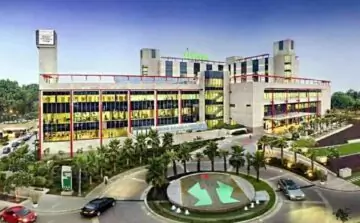
Location: Gurgaon
Speciality: Multi-Superspeciality
Accreditation: Accreditation : Joint Commission International (JCI, USA), National Accreditation Board for Hospitals & Healthcare Providers (NABH)
No. of Beds: Beds : 1000
The hospital is located in Gurgaon or NCR (National Capital Region), on the outskirts of Delhi. Besides being a premium referral healthcare facility, it endeavors to be the ‘Mecca of Healthcare’ for the Asia Pacific and beyond. The hospital is set on a spacious 11 acres campus, with 1000 beds, is equipped with state-of-the-art technology. FMRI is the first to bring the most advanced technology not only in India or Asia, but few are the first to be introduced in the world.
HCG Cancer Hospital, Mumbai
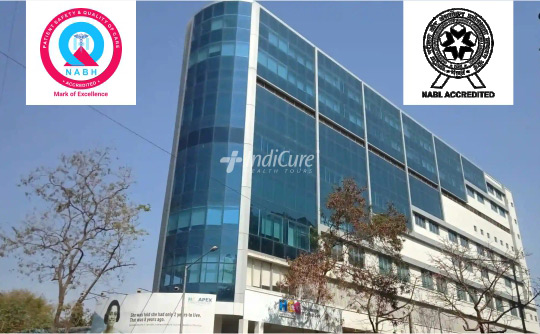
Location: Mumbai
Speciality: Multi-Superspeciality
Accreditation: Accreditation : National Accreditation Board for Hospitals & Healthcare Providers (NABH)
No. of Beds: Beds : 207
HCG Cancer Centre is the first dedicated cancer hospital in Mumbai giving a top-quality treatment by using worldwide advancements. In the state of Maharashtra, it is the first centre to launch the Elekta Versa HD Radiation Machine. This machine has agility, which allows for a high-speed, high-precision beam to precisely target the tumor. The hospital is NABH accredited. In the state of Maharashtra, it is the first centre to launch the Elekta Versa HD Radiation Machine. HCG Centre, Mumbai is the first hospital in Western India to use CyberKnife, the world’s first whole-body robotic radiosurgery technology. The Radixact TomoTherapy Radiation Therapy machine was also introduced in Mumbai. A dedicated hemato-oncology unit with a Bone Marrow Transplant program is available at the hospital. Thyroid and prostate cancers are treated with high-dose isotope therapies at the department. The hospital’s Nuclear medicine section contains modern PET Scan machines amongst other things making it one of the best hospitals in Mumbai. https://www.MediTraWell.com/bone-marrow-transplant-cost-india/ Bone Marrow Transplant https://www.MediTraWell.com/prostate-cancer-treatment-cost-india/ prostate cancers
What is Coronary Angioplasty?
Angioplasty, also known as coronary angioplasty or percutaneous coronary intervention is a minimally invasive procedure used to widen the occluded blood vessels or to relieve stenosis (blockage) of blood vessels to ensure proper blood flow to the heart. The procedure is done when a person develops Coronary Artery Disease or CAD.
Coronary Artery Disease (CAD) causes arteries to get stenosed or become narrow because of the deposition of calcium and fat called plaque on the arterial walls. This build-up is called atherosclerosis, which if left untreated, can lead to heart attack.
Angioplasty can be performed for two main reasons:
- During or after a heart attack: Angioplasty is done to quickly open a blocked artery to minimize the damage to the heart. Due to complete blockage of arteries and absence of oxygen to heart muscles, heart muscles can get damaged or this can even lead to death.
- Chest pain/Angina: The arteries of the heart are narrowed and this increases the stress on the heart to meet the oxygen demand causing chest pain, and shortness of breath also known as angina. Angioplasty can be done as a planned procedure when medicines have failed to work.
When is Angioplasty Required?
Your doctor would recommend you to undergo an angioplasty if:
- You suffer from chest pain or shortness of breath due to CAD and medicines have failed to help.
- You have significant blockage in one or a maximum of two coronary arteries. If the number of arteries involved is multiple or blockages are multiple, heart bypass is the procedure of choice.
- You underwent heart bypass and the graft is now closed or blocked.
Not everyone suffering from CAD or atherosclerosis is a good candidate for Angioplasty. If your heart muscles are already weak if you have blockages in multiple vessels or if the narrowing is in the main artery bringing blood to the heart, you would need a Coronary Artery Bypass Graft, or CABG commonly called open heart surgery.
Types of Angioplasties
- Balloon Angioplasty
Balloon angioplasty is done by passing a catheter or thin tube through a small incision in the upper leg or arm and the catheter is passed through the artery to the place of clog. The balloon is expanded to push the plaque and expand the artery. - Stenting
Stents are small and expandable metal devices for expanding narrow arteries and to prevent them from closing again. Stenting is most often combined with ballooning angioplasty for long-lasting results and thus prevents the problem of restenosis of the dilated artery. One, because they do not allow the balloon to collapse inside the artery and second, modern stents are medicine-coated stents or drug-eluting stents which reduce the rate of in-stent restenosis. - Rotablation
Rotablation is done when the plaques are too hard to be cut or crossed by balloons or stents. A special guide wire is passed to the site of stenosis followed by a drill powered by compressed air that is advanced at a speed of around 140,000 to 160,000 rpm. The process of drilling cuts the plaque’s calcium deposits into small particles which are removed from the body naturally. This is followed by normal angioplasty- ballooning and stent placement.
How is Angioplasty Done?
Step 1: The procedure is performed under local anesthesia combined with sedation in a Cath. The area, typically the groin or arm, is thoroughly cleaned and prepared. Blood-thinning medications are administered to reduce the risk of blood clots during the procedure.
Step 2: A needle is inserted into the artery and a guide wire is passed through it. The wire is manipulated to blockage and a catheter is passed over the wire to reach the blockage. The location of all tubes and catheters are checked for position with proper diagnostics.
Step 3: A balloon at the catheter tip is expanded and deflated to relieve the artery narrowing. A stent can be placed after expansion to maintain the expanded status of the artery and keep it patent. The incision is closed and dressed. The patient is monitored for blood pressure.
What is the Recovery after Angioplasty like?
Patients can be discharged after an overnight stay at the hospital. It depends on the condition of the patient’s health and the doctor’s advice. After surgery the patient is advised to have a lot of fluid intake and not to do any heavy lifting, exercise, or smoking for the next 24 hours.
What Results Can I Expect from Angioplasty?
Angioplasty increases blood flow through narrowed and blocked arteries. Angina is decreased and health improves with exercise. With proper changes in lifestyle and medications, the improvement of health is good. No further surgery is usually necessary, such as bypass after a successful coronary angioplasty.
Questions to Ask
Here is a set of questions you should consider asking before commencing your medical tour for Angioplasty surgery in India
- Is the heart surgeon board certified?
- How experienced is the Surgeon?
- Which language does the surgeon speak?
- Is the treatment done in a well-equipped facility?
- What treatment option is recommended for me?
- What about the risks involved?
- Does the surgeon use a certified anesthetist?
- How long will the recovery period be?
Be ready to respond about:
Prepare to answer questions about your:
- Medical history and exams
- Previous surgeries
- Current medication review
- History of smoking, drugs, or alcohol