
Prostate Cancer Treatment Cost in India
Last updated: April 19, 2026
Prostate Cancer Treatment Cost in India depends on the type of treatment required, your medical condition, hospital and the city where you choose to get the treatment done.
Typical Costs for Prostate Cancer Treatment in India looks like:
| Procedure | Cost (Range in US $) |
|---|---|
| Investigations | 500-1000 |
| Chemotherapy | 500-2,000 per cycle |
| Radiotherapy | 3,500-5,500 |
| Cyberknife | 6,000-8,000 |
| Prostate Surgery | |
| – Open Radical Prostatectomy | 3,500 |
| – Laparoscopic Prostatectomy | 4,500 |
| – Robotic Radical Prostatectomy | 6,500 |
| HIFU | 4,000-6,000 |
With end to end services for your hassle-free Cancer Treatment in India, MediTraWell has made the entire process of seeking medical tourism in India easy and hassle free for you besides making it affordable.
Factors that affect Colon Cancer Treatment Cost in India:
- Type of Treatment
Many times, the best option might include more than one type of treatment. Surgery, alone or with other treatments, is used to treat most uterine cancers. The cost associated with each type of treatment is different. MediTraWell recommends you to understand the options by consulting our expert oncologists.
- Number of Chemotherapy and Radiation Cycles
The overall oral cancer treatment cost depends on the number of chemotherapy or radiation therapy cycles that a patient has to undergo. In some patients, the doctors might advise giving more than a couple of cycles of chemotherapy or radiation therapy to kill the cancerous cells.
- Oncologist’s Fees
An important expense when it comes to your oral cancer treatment in India is going to be your oncologist’s fees. MediTraWell recommends highly experienced, skilled, board-certified surgeons who are capable of delivering successful surgeries. Although the charges may vary depending on the experience of the surgeon, you can be assured that you are in safe and skilled hands when you choose cancer treatment in India with MediTraWell.
- Surgical Facility
Having your treatment for oral cancer in an accredited surgical facility by skilled and qualified medical staff is a critical factor. Moreover, the geographical location of this facility in India also affects the quote. But, MediTraWell provides you with a projected estimate that will be all inclusive and affordable.
- Pre and Post Treatment Expenses
The pre-surgical/treatment expenses are associated with the stage of the cancer and medical condition of the patient and thus the number and type of investigations and treatment required. Post-treatment expenses may include prescription medications and follow-up consultations.
We at MediTraWell, understand that you travel with a budget in mind and do not like to be greeted by surprises after arrival in India. We thus club all these expenses and give you a package cost that is inclusive and affordable at the same time.
Your case manager shall give you an estimated cost of your surgery after discussing your medical reports with the surgeon. The final cost, however, shall be confirmed after your consultation with the surgeon.
Medi Trawell Services
Making Medical Travel to India Affordable & Hassle-free for 15+ Years

We Help you Choose the Right Treatment, Surgeon & Hospital

We Arrange Video/Telephonic Consultation with the Surgeon

We Assist you with Visa & Accommodation

We Receive you at the Airport and Drop you at Hotel/Hospital

We Assist you the at Hospital & Provide Post Operative Support
Our services are FREE for our patients.
In fact, we have Special Negotiated Rates with the Hospitals and you can avail Discounted Rates when you choose to Travel with MediTrawell. Container
Cancer Treatments We Offer
Here is a compilation of the cancer treatment options we provide in India.
- Leukemia
- Multiple Myeloma
- Aplastic Anemia
- Osteosarcoma
- Squamous Cell Carcinoma
- Pancreatic Cancer
- Eye Cancer
- Bladder Cancer
- Cervical Cancer
- Penile Cancer
- Endometrial Cancer
- Skin Cancer
- Bone Cancer
- Esophagus Cancer
- Kidney Cancer
- Testicular Cancer
- Breast Cancer
- Lung Cancer
- Ovarian Cancer
- Gallbladder Cancer
- Thyroid Cancer
- Colon Cancer
- Prostate Cancer
- Blood Cancer
Best Oncologists in India

Dr. Vinod Raina
Medical Oncologist
MBBS, MD, MRCP, FRCP
Gurgaon
Dr. Vinod Raina is one of the foremost medical oncologist and haematologist in India. He has rich and extensive experience of more than three decades and has over 600 transplants- under his belt for various cancers which is the largest number in India in the last 20 years. He also has to his credit the first high dose chemotherapy and peripheral blood stem cell transplant in India.
He also has to his credit the first high dose chemotherapy and peripheral blood stem cell transplant in India
Concurrent Bio-Radiotherapy for Head and Neck Cancers, Hematology, Medical oncology, high dose chemotherapy, peripheral blood stem cell transplant are the areas of his expertise. Concurrent Bio-Radiotherapy, Pediatric Chemotherapy, and Palliative Bio-Radiotherapy are some of his special interests.
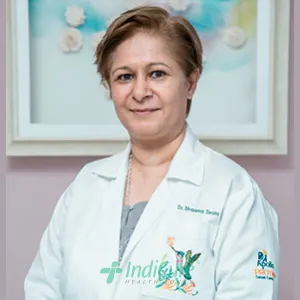
Dr. Bhawna Sirohi
Medical Oncologist
MBBS, DCH, FRCP,
Chennai
Dr. Bhawna Sirohi is a renowned Medical Oncologist in India with more than 25 years of experience in the field of Oncology. She is a well-known senior consultant who specializes in treating Breast cancers and Gastrointestinal cancers all over the world.
Dr. Bhawna has collaborated with some of the world’s best oncology centers and oncologists. She is presently working with Apollo Proton Cancer Center as the Lead – Medical Oncologist. Dr. Sirohi is also an honorary consultant at London’s Queen Mary’s University and has over 100 publications published in national and international journals.
She is the President of Royal Society of Medicine’s and the Chairman of the ICMR Task Force for Cancer Guidelines on Colorectal Cancer, NET, HCC, Pancreatic cancer, and Esophageal cancer, and an advisor to the NCI-AIIMS committee.

Dr. Meenu Walia
Medical Oncologist
MBBS, MD, DNB
Delhi
About Doctor: Dr. Meenu Walia has an experience of more than 27 years in the field of Medical Oncology and Hematology. She is the keen Clinical researcher and principal investigator for several randomized multi-centric international clinical research trials.
She is highly skilled in treating Abdominal Solid Organ Cancers, Gastro-Intestinal Cancers, and Leukemia/Lymphoma. She is a Member of the American Society of Clinical Oncologists and the European Society for Medical Oncology, among other important organizations (ESMO). Clinical research is a specific focus of hers. She has served as the Principal Investigator for a number of randomized multicenter international clinical trials.
She is a Member of the American Society of Clinical Oncologists and the European Society for Medical Oncology, among other important organizations (ESMO). Clinical research is a specific focus of hers. She has served as the Principal Investigator for a number of randomized multicenter international clinical trials.
Dr. Walia is the first DNB Medical Oncologist in the country and has been honored with various awards during her tenure. India Today Group has honored her with the certificate for excellence in recognition of the exemplary work and dedication in the field of healthcare. She was also awarded the “Bharat Jyoti Award” and certificate for excellence by Dr. Bhishma Narain Singh- The former Governor of Tamil Nadu and Assam for her meritorious services, outstanding performance, and remarkable role in healthcare.
Best Cancer Hospitals in India
These are our top cancer hospitals in India, ensuring you receive the healthcare you deserve.
Max Superspeciality Hospital, Shalimar Bagh, Delhi
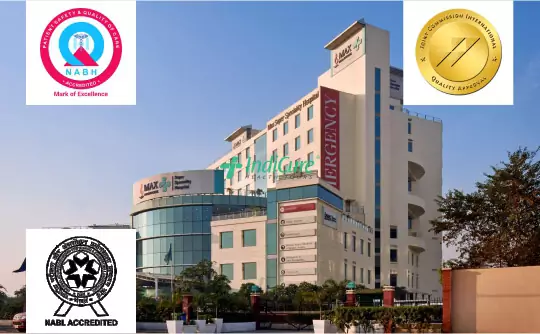
Location: Delhi
Speciality: Multi-Superspeciality
Accreditation: Accreditation : National Accreditation Board for Hospitals & Healthcare Providers (NABH), National Accreditation Board for Testing and Calibration Laboratories (NABL)
No. of Beds: Beds : 300
Max hospital, Shalimar Bagh is a tertiary care centre equipped with state-of-the-art technology to provide a comprehensive cardiac care program to its patients. This best heart hospital in India offers innovative treatments for end-stage heart failure patients, including procedures such as Pacemaker placement, ACD (Automated Cardiac Defibrillator) implantation, CRT (Cardiac Resynchronization Therapy), as well as corrective surgeries for heart defects (ASD, VSD, PDA) in both pediatric and adult patients. The institute serves as a one-stop destination for a wide range of cardiac treatments, encompassing Invasive and Interventional Cardiology, Electrophysiology, pacemaker and Arrhythmia services, as well as the management of abdominal and descending thoracic aneurysms and varicose veins.
Madhukar Rainbow Children’s Hospital, Delhi
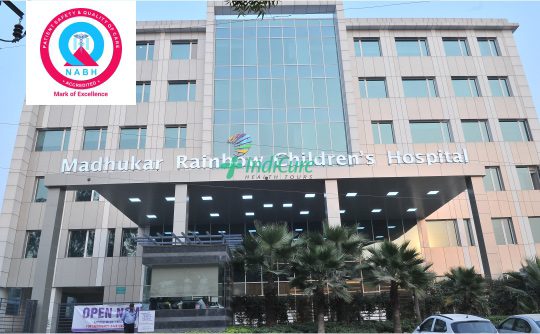
Location: New Delhi
Speciality: Multi-Superspeciality
Accreditation: Accreditation : National Accreditation Board for Hospitals & Healthcare Providers (NABH)
No. of Beds: Beds : 150
Madhukar Rainbow Children’s Hospital is a 150-bed multi-specialty hospital in Malviya Nagar, New Delhi, that was founded in 2018. It is approved by the National Accreditation Board for Hospitals and Healthcare Providers (NABH). In 2010, ‘CNBC, TV 18, ICICI Lombard at India HealthCare Awards’ named Rainbow Children’s Hospital ‘Best Children’s Hospital in the Country.’ Vice President Mr M. Venkaiah Naidu inaugurated the facility, which is the first standalone pediatric hospital in the NCR Delhi that is planned, equipped, and staffed only to treat children and adolescents under one roof. In 2010, ‘CNBC, TV 18, ICICI Lombard at India HealthCare Awards’ named Rainbow Children’s Hospital ‘Best Children’s Hospital in the Country.’ It features a team of well-trained technicians, highly experienced medical specialists, and personnel who look after the patients to assure their safety. A team of best pediatric surgeons in India, including pediatric neurologists, neurosurgeons, developmental pediatricians, and other medical specialists provide comprehensive care and services for children with problems of the brain, spinal cord, nerves, and muscles. For newborns, babies, and children, senior specialists are available 24 hours a day, 7 days a week to provide services such as advanced endoscopic and limited access operations. https://www.meditrawell.com/best-pediatric-surgeon-india/ best pediatric surgeons in India
Prostate Cancer Treatment
Prostate is the tiny walnut shaped and sized gland present in males in between the bladder and genital organs. The main function of the prostate is to produce seminal fluids which protect and nurture the sperms and help in transporting the sperms during ejaculation.
Prostate cancer is the most common type of cancer affecting men but mortality is less as it can be treated completely with the help of multiple treatment options like surgery, radiation therapy and chemotherapy.
The prostate cancer typically advances slowly and primarily remains restrained to the prostate gland and thus requires minimal treatment. However, some prostate cancers may need quick attention and aggressive treatment for complete cure.
Early detected prostate cancer that is confined to the glad itself has good chances of complete cure. Prostate cancer may not show any signs and symptoms when it is at its early stage but more advanced cancer may cause symptoms like Blood stained semen, discomfort and pain in pelvic region, difficulty in micturition, bone pain, erectile dysfunction etc.
It is thus important at this point to seek the doctor’s advice and get the lab test done which shall aid to know the stage of prostate cancer to determine the appropriate treatment accordingly. The stages of prostate cancer are:
- Stage I: Cancer is confined to a small area of prostate gland and cells are not at all aggressive.
- Stage II: Cancer is small but the cancer cells may reflect as aggressive or the cancer is large and may have grown enough that it involves prostate glands on both the sides.
- Stage III: Cancer has advanced outside the prostate and affected seminal vesicles and adjacent tissues.
- Stage IV: Cancer has advanced to plague nearby organs including urinary bladder, bones, lymph nodes, lungs or other tissues and organs.
What Causes Prostate Cancer?
The exact cause of prostate cancer is still unknown but there are certain risk factors that are identified to cause prostate cancer. These include:
- Age: The risk of getting prostate cancer increases with the advancing age.
- Race: It has been found that black men are at higher risk of getting prostate cancer than men of other color or race.
- Obesity: Obese patients usually develop more advance cancer that becomes difficult to treat.
- Family history: People may be at higher risk if they have a family history of prostate cancer or breast cancer.
Prostate Cancer Treatment Options
Prostate cancer can be treated with the following options which depend on the size and site of the cancer, stage of the cancer and extent to which the disease has spread.
- Radiation Therapy:
It comprises of high intensity energy to destroy the cancerous cells and is delivered in 2 ways;
- External beam radiation therapy:
Radiation from outside the body is focused on the prostate gland using high powered energy beams like protons or X-ray.
- Brachytherapy:
Radiation is delivered from inside the body. It involves placement of radioactive seeds which are rice-sized that emit a low dose of radiation for a long period. The seeds are implanted in the prostate using ultrasound guided needles.
- External beam radiation therapy:
- Hormone therapy:
The cancer cells of the prostate are dependent on the male hormone testosterone for their growth. Thus, hormone therapy aims at inhibiting the production of testosterone that may stop the growth of the cells or may cause them to die. This therapy includes;
- LH-RH (luteinizing hormone-releasing hormone)
agonists to stop the production of testosterone. The medicines include goserelin, leuprolide, histrelin and triptorelin.
- Anti-androgens block
the testosterone to reach the cancer cells. These include flutamide, bicalutamide and nilutamide.
- LH-RH (luteinizing hormone-releasing hormone)
- Chemotherapy:
It is used to destroy the fast growing cells by using injectable drugs. It is the treatment of choice for the men whose cancer has advanced to other areas of the body or for the men who have not responded well to the hormone therapy.
- Biological therapy:
Also known as immunotherapy in which your own body’s immune system is made to fight the cancer. In this way some of your immune cells are taken and genetically modified in the lab and are injected back into your body to fight the cancer cells.
- Surgery:
The surgery to treat prostate cancer is to remove the prostate gland and is known as Radical prostatectomy. Radical prostatectomy is the surgery done to remove the entire prostate and any nearby tissues i.e seminal vesicles and some nearby lymph nodes that may contain cancer. It is the surgery of choice in men whose cancer is limited to the prostate. Following are the different approaches of the prostatectomy;
- Laparoscopic prostatectomy:
This is a minimally invasive method in which the prostate is removed through small incisions in the abdomen with the help of laparoscope.
- Robot assisted laparoscopic prostatectomy:
The surgical instruments are attached to the robot (mechanical device),and the surgeon uses the controls to direct the device to move the instruments. This surgery is gaining immense popularity as it is a more precise, less traumatic and minimally invasive procedure. The most popular robotic prostatectomy includes the da Vinci surgical systems which aids to provide dexterity, precision and advanced visualization compared to open and laparoscopic surgery. Using da vinci robotic prostatectomy the surgery can be done through small incisions of 1-2 cm.
- Nerve sparing prostatectomy:
It is performed when the cancer is entwined with the nerves to maintain the normal function and structure of the nerve.
- Radical prostatectomy with retro pubic approach:
Traditional open surgery to remove the prostate gland. The prostate is removed through an incision on the lower abdomen.
- Radical prostatectomy with perineal approach:
Prostate is reached through an incision between the anus and scrotum.
- Laparoscopic prostatectomy:
When is Prostate Cancer Treatment needed?
Men younger than age 75 with limited prostate cancer who are expected to live at least 10 more years tend to get the most benefit from radical prostatectomy.
The ideal candidates for prostate cancer surgery are those whose cancer is limited only to the prostate, less than 75 years of age and are otherwise in good health.
How is Prostate Cancer Surgery done?
The Laparoscopic or robotic assisted or the da Vinci robotic prostatectomy in the minimally invasive procedure that provides with the best results in regards of less pain, less scarring and better outcomes after the surgery. The only difference between the laparoscopic and robotic assisted prostatectomy is that the first one is performed at hands of the surgeon using a laparoscope whereas the other one is done by the robot which is controlled and manipulated by the controls being operated by the surgeon.
Step 1: The surgery is performed under general or local anesthesia depending on the choice of surgeon.
Step 2: During the surgery 5-6 small keyholes of 1 cm size are made on the mid abdomen and a telescopic lens is put inside that provides the magnified view of the structures like nerves, blood vessels, muscles adjacent to the prostate, thus optimizing the preservation of these structures.
Step 3: Using the miniaturized robotic instruments which are inserted through these keyholes, the prostate gland is cut away from the bladder and removed through one of the key holes.
This surgery has an advantage of less blood loss than the traditional one. The surgery usually takes 2-4 hours to complete.
What Results can I Expect from Prostate Cancer Surgery?
Results of radical prostatectomy are quite good if the cancer is limited to the prostate. The aim of prostate removal surgery is to cure prostate cancer. Men whose prostate cancer has not spread to other areas have an 85% chance of surviving 10 years after radical prostatectomy.
However, if cancer has spread to the other parts, further treatment like radiation therapy would be required to cure cancer. One should do the regular medical check-ups to make sure that the cancer does not come back.
What is the Recovery after Prostate Cancer Surgery like?
The patient would need to stay at the hospital for 3-4 days after radical prostatectomy. A urinary catheter is inserted which needs to be there for a few days after the surgery. One would feel pain and discomfort which would be controlled with medications.
The patient can resume routine activities in about two weeks after the surgery. Strenuous activities, sexual activities need to wait for 8-10 weeks and may take months to return to its maximum level.
It is necessary to have a regular follow up after radical prostatectomy to make sure that cancer does not come back.
Questions to Ask
We at MediTraWell completely understand your concerns and it is always our endeavor to provide the best outcome for every patient. Following is the list of questions you must ask before you embark on your journey for prostate cancer treatment in India.
- Is it time for prostate cancer surgery?
- Is the oncologist board certified?
- How experienced is the surgeon?
- Which language does the surgeon speak?
- Is the treatment done in a well-equipped facility?
- What cancer treatment option is recommended for me?
- What about the risks involved?
- Does the surgeon use a certified anesthetist?
- How long will the recovery period be?
Preparation for the Surgery
Prepare to answer questions about your:
- Medical history and exams
- Previous surgeries
- Current medication review
- History of smoking, drugs, or alcohol