
Atrial Septal Defect Surgery Cost in India
Last updated: April 19, 2026
Starting from USD 3,500
INCLUDES
- FDA Approved Implant
- Surgery and Stay at the Hospital
- Pre-operative Investigations
- Medicines, Consumables & Food at the hospital
- Airport Transfers & MediTraWell assistance
DOES NOT INCLUDE
- Accommodation outside the Hospital
- Air tickets
- Medical Visa fee
STAY REQUIRED
- Stay at the Hospital - 1 to 2 days
- Stay at the Hotel - 7 to 8 days
- Stay in India - 8 to 10 days
With end to end services for your hassle-free Cancer Treatment in India, MediTraWell has made the entire process of seeking medical tourism in India easy and hassle free for you besides making it affordable.
Factors that Affect Atrial Septal Defect Surgery Cost in India
- Heart Surgeon’s Fees
One of the key costs you will face when considering Atrial Septal Defect surgery in India is the cardiac surgeon’s fee. MediTraWell Health Tours connects you with most experienced cardiac surgeons in India who are highly skilled and have continually conducted successful heart surgeries. While the surgeon’s fee can vary based on their experience, you can trust MediTraWell to recommend surgeons who prioritize your safety and deliver excellent outcomes when you choose heart surgery in India.
- Type of Surgical Approach
In pursuit of enhancing patient care, novel techniques, and technologies are frequently integrated into the surgical procedure. These innovative enhancements in surgical methods may lead to elevated expenses for your atrial septal defect surgery cost in India.
- Choice of Surgical Facility
Choosing an accredited surgical facility with skilled and qualified medical staff is crucial for the success of atrial septal defect surgery. Larger cities In India typically offer superior medical facilities and have more experienced surgeons, resulting in higher costs as compared to smaller cities in India. MediTraWell Health Tours chooses to associate only with surgical facilities in larger cities of India in order to prioritize quality of healthcare and ensure patient safety.
- Surgery-Related Expenses
Surgery-related costs for Atrial Septal Defect surgery in India encompass both pre-and post-operative expenses. Pre-operative costs are influenced by factors such as the patient’s age and medical condition, determining the necessity and type of investigations needed. Post-operative expenses may involve prescribed medications and subsequent follow-up appointments.
We Customize the Atrial Septal Defect Surgery Cost Quote to Suit Your Preferences
At MediTraWell, we consolidate most of the expenses for your Atrial Septal Defect Surgery Cost in India to provide you with an inclusive and cost-effective package tailored to your budget and individual requirements. After receiving medical reports, your case manager will provide an estimated surgery cost based on a discussion with the heart surgeon.
The final Atrial Septal Defect surgery cost in India can however be confirmed after your face-to-face consultation with the heart surgeon.
We at MediTraWell, understand that you travel with a budget in mind and do not like to be greeted by surprises after arrival in India. We thus club all these expenses and give you a package cost that is inclusive and affordable at the same time.
Your case manager shall give you an estimated cost of your surgery after discussing your medical reports with the surgeon. The final cost, however, shall be confirmed after your consultation with the surgeon.
Medi Trawell Services
Making Medical Travel to India Affordable & Hassle-free for 15+ Years
We Help you Choose the Right Treatment, Surgeon & Hospital

We Arrange Video/Telephonic Consultation with the Surgeon

We Assist you with Visa & Accommodation

We Receive you at the Airport and Drop you at Hotel/Hospital

We Assist you the at Hospital & Provide Post Operative Support
Our services are FREE for our patients.
In fact, we have Special Negotiated Rates with the Hospitals and you can avail Discounted Rates when you choose to Travel with MediTrawell. Container
Cardiac Procedures We Offer
Here is a compilation of the heart treatment options we provide in India.
- Holter Monitoring
- Alcohol Septal Ablation
- AICD
- Coronary Angiography
- Coronary Angioplasty (PTCA)
- Pacemaker Implantation
- Cardiac Bypass (Heart Bypass)
- ASD Device Closure
- Aortic Valve Replacement
- ASD Treatment
- VSD Treatment
- Cardiac Tumor Surgery
- EP Study
- Balloon Valvuloplasty
- Bentall Procedure
- Cardiac Ablation
- Minimally Invasive Heart Bypass
- Valve Replacement Surgery
- Pediatric Heart Surgery
- Robotic Heart Surgery
- Heart Transplant
- LVAD (Left Ventricular Assist Device)
- TAVR (Transcatheter Aortic Valve Replacement)
- Truncus Arteriosus Repair
Best cardiologist in India
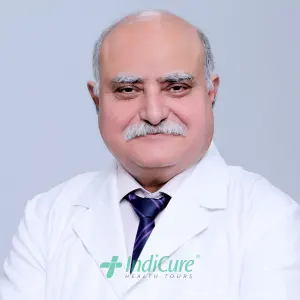
Dr. Ajay Kaul
Cardiac Surgeon
MBBS, MS, MCh, Fellowship in Heart & Lung transplant, Hannover Medical School, Fellowship in Minimally Invasive Cardiac Surgery, Lipzig Heart Centre, Germany
Delhi, NCR (Noida)
He graduated from Bombay University with a Master’s degree in Cardiothoracic and Vascular Surgery. He also has Fellowships in Cardiac Surgery, Cardiac Transplantation, and Minimally Invasive Surgery from prestigious institutions such as the Royal Prince Alfred Hospital in Germany, the Royal Melbourne Children’s Hospital in Melbourne, Hannover Medical School in Germany, and the Leipzig Cardiac Centre in Germany (Germany).
Dr. Ajay Kaul is a very prominent and accomplished cardiac surgeon in India. He has conducted over 15,000 Cardiac Surgeries and 4000 Total Arterial Coronary Bypass Surgeries in his 36-year career.
Royal Prince Alfred Hospital in Germany, the Royal Melbourne Children’s Hospital in Melbourne, Hannover Medical School in Germany, and the Leipzig Cardiac Centre in Germany (Germany).
Dr. Kaul is a multi-talented surgeon with expertise in complete Arterial Heart Bypass Surgery, Valve repair & replacement surgeries such as Aortic Valve Replacement, Mitral Valve Replacement, Pediatric Cardiac Surgery, Aneurysm Surgery, and Cardiac Failure Surgery. He has also received extensive training in cardiac transplantation and ventricular support devices. He is a member of the Cardiological Society of India and the Association of Cardiothoracic Surgery of India, among other organizations. Dr. Kaul has been featured in a number of notable news outlets, including ET Healthworld and NDTV establishing him as one of the best cardiac surgeons in India.
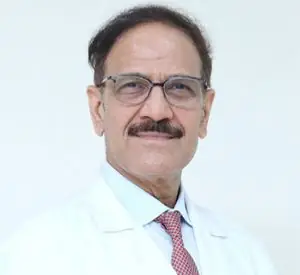
Dr Subhash Chandra
Interventional Cardiologist
MBBS, MD, DM, DNB, United States Medical Licensing Examination (USA) & PDF (Brussels, Belgium)
Delhi
Dr. Subash Chandra is a highly esteemed cardiologist in India. With over 25,000 complex cardiology procedures successfully performed, he has been honoured with numerous national and international awards.
With over 25,000 complex cardiology procedures successfully performed
He is currently working as the Chairman in Interventional Cardiology at BLK-Max Super Speciality Hospital, New Delhi and has previously worked at most of the renowned cardiac hospitals in India. He has had a long working stint as Director & Senior Consultant, Fortis Escorts Heart Institute, New Delh; Director – Narinder Mohan Heart Centre and Senior Consultant at Indraprastha Apollo Hospital, New Delhi.
Dr Chandra has received extensive training in the field of cardiology and has been a fellow in interventional cardiology at Rouen, France; Fellow CRT course at Crossings Brussels, Belgium and Fellow of Carotid Interventions again at Crossings, Brussels, Belgium.
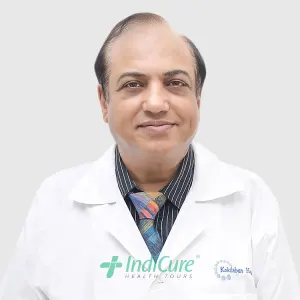
Dr. Nandkishore Kapadia
Cardiac Surgeon
MBBS, MS, MCh, Fellowships
Mumbai
Dr. Nandkishore Kapadia is regarded as one of India’s most prestigious cardiothoracic surgeons. He has over 28 years of expertise and has conducted over 5000 cardiovascular surgeries. Dr. Kapadia has performed over 10,000 CABG surgeries and 5000 additional open heart procedures, 500 minimally invasive cardiac treatments, 190 heart and lung transplants, and 150 ECMO and VAD implantations.
Dr. Kapadia earned his MBBS and MS degrees from the prestigious MGM Medical College in Indore. He then completed his Mch (Cardiovascular Surgery) at Vellore’s reputed Christian Medical College. Dr. Kapadia has completed Fellowships in Coronary Bypass Surgery & Heart Transplant, Valve Surgery, Heart Transplant, and Adult Cardiac Surgery and Heart Transplant in France and the United States, respectively.
conducted over 5000 cardiovascular surgeries. Dr. Kapadia has performed over 10,000 CABG surgeries and 5000 additional open heart procedures, 500 minimally invasive cardiac treatments, 190 heart and lung transplants, and 150 ECMO and VAD implantations.
Dr. Kapadia has received the coveted Mayor choix de Chirurgien award from the Mayor of Paris, as well as a special recognition from the Mayor of Philadelphia.Many innovative techniques and hybrid cardiac procedures have been developed by him, as well as adjusted immunosuppression protocols to suit Indian heart and lung transplant candidates. Request Consultation
Dr. Kapadia has received the coveted Mayor choix de Chirurgien award from the Mayor of Paris, as well as a special recognition from the Mayor of Philadelphia
Best Cancer Hospitals in India
These are our top cancer hospitals in India, ensuring you receive the healthcare you deserve.
Institute of Liver & Biliary Sciences, New Delhi
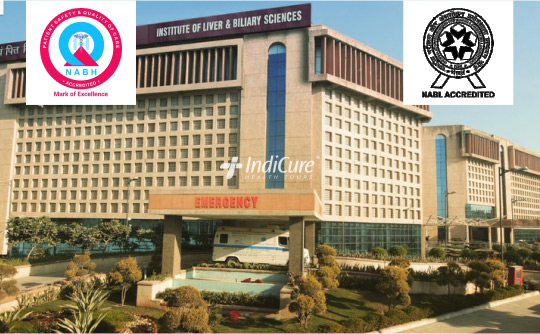
Location: New Delhi
Speciality: Multi-Superspeciality
Accreditation: Accreditation : National Accreditation Board for Hospitals & Healthcare Providers (NABH), National Accreditation Board for Testing and Calibration Laboratories (NABL)
No. of Beds: Beds : 180
The Institute of Liver and Biliary Sciences (ILBS) was founded by the Government of the National Capital Territory (NCT) under the Societies Registration Act – 1860 and is NABH and NABL accredited. The Public Works Department laid the foundation stone in 2003 and finished the first phase of ILBS in 2009. It was established by the Delhi government for the diagnosis and treatment of liver and biliary illnesses, as well as advanced training and research in the field. This liver and biliary hospital is the country’s first of its type and one of the best hospitals in New Delhi.
Rajiv Gandhi Cancer Institute & Research Centre
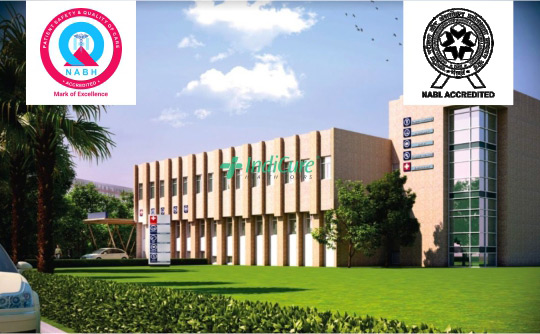
Location: New Delhi
Speciality: Multi-Superspeciality
Accreditation: Accreditation : National Accreditation Board for Hospitals & Healthcare Providers (NABH), National Accreditation Board for Testing and Calibration Laboratories (NABL)
No. of Beds: Beds : 302
The Rajiv Gandhi Cancer Institute and Research Centre was established in 1996 and is one of Asia’s leading cancer treatment institutes. It has continuously been named among India’s Best Oncology Hospitals (Week – Nielsen Survey 2014, 2015, 2016) and has received numerous honors, including Best Oncology Hospital in India (2014), Healthcare Leader Award (2014), and India’s Most Trusted Cancer Hospital (2014), (2016).
What is Atrial Septal Defect Closure?
A hole in the septum, the muscle wall that separates the heart’s two upper chambers, is known as an atrial septal defect (ASD) (atria). An ASD is a congenital defect that occurs when the septum does not form properly and is present at birth. It’s referred to as a “hole in the heart.”
Atrial septal abnormalities are the third most common congenital cardiac abnormality in children, and the most prevalent in adults. Women are more likely than men to get the illness.
A secundum ASD is a hole in the septum’s center. Blood can flow from one side of the atria to the other through the hole. The direction is determined by the amount of pressure in the atria.
Because they do not exhibit symptoms, many people are unaware that they have an ASD. When a chest X-ray for another illness reveals that the right side of the heart is larger than normal, some patients learn about the defect. After minor exertion or exercise, an ASD might induce symptoms such as shortness of breath, fainting, abnormal heart rhythms, or exhaustion by the age of 50.
When is Atrial Septal Defect Closure required?
Treatment isn’t usually required for a septal defect. If the hole is small and isn’t producing any major symptoms or affecting the child’s quality of life, it can simply be watched over time. As a child grows, septal abnormalities may close on their own.
Surgery may be recommended if a hole does not close on its own within the first two years of a child’s life or if the hole is greater than 8-10mm. Damage to the lungs can be long-term if huge holes aren’t closed.
Transcatheter correction and open-heart surgery are the two most used techniques for septal defects.
How is Atrial Septal Defect Closure done?
For adults and children, surgery involves sewing closed or patching the abnormal opening between the atria.
Step 1: While the heart is momentarily halted, the surgeon makes an incision in the breastbone to reach the heart, and the patient is placed on a cardiopulmonary bypass machine, which pumps blood to the body while bypassing the heart and lungs except for the coronary arteries. To access the defect, an incision is created in the right atrium of the heart.
Step 2: The patch is then meticulously stitched onto the opening in the septum. This stitching process involves either utilizing the patient’s pericardial tissue or employing a synthetic graft. This approach aims to seal the hole in the septum, promoting optimal healing and functionality of the cardiac structures.
Step 3: Sutures are used to close the heart, and the cardiopulmonary bypass machine is turned off. Temporary pacing wires are placed on the heart to prevent irregular cardiac rhythms after the operation. After the surgery, chest tubes are implanted to collect any remaining blood or fluid in the chest, and the skin is healed with stitches or staples.
What is the Recovery after Atrial Septal Defect Closure like?
After surgery, patients are taken to the intensive care unit and monitored. Pain is likely, and pain medication is given as appropriate. Patients also are on a respirator and have a breathing tube for the first few hours after surgery.
The length of the hospital stay depends on how quickly a patient recovers and can perform some physical activity.
What Results Can I Expect from Atrial Septal Defect Closure?
The outlook after ASD surgery is excellent. Most children only need one surgery to correct a septal defect. The patch can stay in place for the rest of the child’s life.
The benefits of septal defect repair become apparent almost soon after surgery. If the newborns are having feeding difficulties, they will feed significantly better after surgery. They are more prone to gaining weight. If a child’s activity level was low prior to surgery, it is frequently significantly higher thereafter.
Questions you must ask
Here is a set of questions you should consider asking before commencing your journey for Atrial Septal Defect surgery in India.
- Is the plastic surgeon board-certified?
- How experienced is the surgeon?
- Which language does the surgeon speak?
- Is the treatment done in a well-equipped facility?
- Is it possible to see before and after photographs?
- What will be expected of me to get the best results?
- What about the risks involved?
- How long will the recovery period be?
- Can I have feedback from real people?
Be ready to respond about:
- Medical history and exams
- Previous surgeries
- Current medication review
- History of smoking, drugs, or alcohol
- Pictures of target areas
- Surgical expectations