
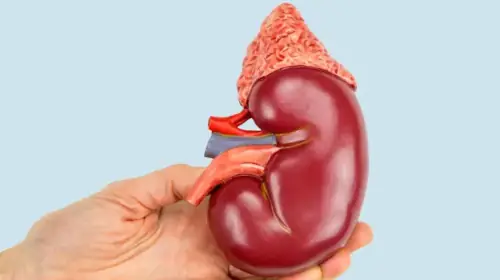
Kidney Transplant Cost in India
Last updated: May 3, 2026
Starting from USD 15,000
INCLUDES
- Surgery
- Stay at the Hospital
- Pre-operative Investigations
- Medicines, Consumables
- Food at the hospital
- Airport Transfers
- MediTraWell assistance
DOES NOT INCLUDE
- Accommodation outside the Hospital
- Air tickets
- Medical Visa fee
STAY REQUIRED
- Stay at the Hospital - 1 to 2 days
- Stay at the Hotel - 7 to 8 days
- Stay in India - 8 to 10 days
Factors that Affect Kidney Transplant Cost in India
- Transplant Surgeon’s Fees
A significant cost to consider when planning a kidney transplant in India is the surgeon’s fee. IndiCure Health Tours connects you with board-certified surgeons in India who are highly experienced and have a proven track record of successful transplant surgeries. Although the surgeon’s fee may vary depending on their experience and reputation, you can rely on IndiCure to recommend professionals who prioritize your safety and ensure excellent results for your kidney transplant surgery in India.
- Type of Surgical Approach
In an effort to enhance patient care, new techniques and technologies are frequently incorporated into the surgical process in India. However, these innovative advancements can lead to an increase in the final kidney transplant cost in India.
- Choice of Surgical Facility
Choosing an accredited surgical facility with skilled and qualified medical staff is crucial for the success of a kidney transplant in India. In India, larger cities like Mumbai and Delhi typically offer superior medical facilities and more experienced surgeons, resulting in higher costs. IndiCure Health Tours specifically recommends surgical facilities in larger cities of India to prioritize quality of care and ensure patient safety.
- Surgery-Related Expenses
Surgery-related costs include both pre-and post-operative expenses. Pre-operative costs are influenced by factors such as the patient’s age and medical condition, determining the necessity and type of investigations needed. Post-operative expenses may involve prescribed medications and subsequent follow-up appointments.
We at MediTraWell, understand that you travel with a budget in mind and do not like to be greeted by surprises after arrival in India. We thus club all these expenses and give you a package cost that is inclusive and affordable at the same time.
Your case manager shall give you an estimated cost of your surgery after discussing your medical reports with the surgeon. The final cost, however, shall be confirmed after your consultation with the surgeon.
Medi Trawell Services
Making Medical Travel to India Affordable & Hassle-free for 15+ Years

We Help you Choose the Right Treatment, Surgeon & Hospital

We Arrange Video/Telephonic Consultation with the Surgeon

We Assist you with Visa & Accommodation

We Receive you at the Airport and Drop you at Hotel/Hospital

We Assist you the at Hospital & Provide Post Operative Support
Our services are FREE for our patients.
In fact, we have Special Negotiated Rates with the Hospitals and you can avail Discounted Rates when you choose to Travel with MediTrawell. Container
Best Kidney Transplant Surgeons in India

Dr Bharat V Shah
Urology & Kidney Transplant Surgeon
MBBS, MD, DNB (Nephrology), Clinical Fellowship in Nephrology, University of Cincinnati Medical Centre, Clinical Research Fellowship in Nephrology New England Medical Centre, Boston, USA.
Mumbai
With over four decades of professional experience, Dr. Bharat V. Shah is considered one of the senior most nephrologists in India. He has held prominent roles, including heading the Renal and Nephrology departments at various esteemed hospitals in Mumbai.
Dr. Shah is a prolific author, having penned numerous books on Kidney failure and Kidney transplant, along with contributing to numerous journals and publications in the field. He is actively engaged in several ongoing research projects concerning renal disease and transplant procedures.
Dr. Shah presently serves as a Consultant Nephrologist within the Nephrology department at Sir H. N. Reliance Foundation Hospital and Research Centre.
Following the completion of his MBBS, MD, and DNB (Nephrology), Dr. Bharat Shah pursued further specialization with a Clinical Fellowship in Nephrology at the University of Cincinnati Medical Centre, Cincinnati, Ohio, USA, and a Clinical Research Fellowship in Nephrology at the New England Medical Centre, Boston, USA.
Dr Sandeep Guleria
Kidney Transplant Surgeon
MBBS, MS, DNB, FRCS (Edin.), FRCS (Eng.), FRCS (Glas.), DNBE, PLAB, MNAMS
New Delhi
Dr. Sandeep Guleria is a highly experienced transplant surgeon with 33 years of experience in the field of solid organ transplantation. He is a professor in the Department of Surgery at the All India Institute of Medical Sciences (AIIMS) in New Delhi, as well as a kidney transplant specialist at Indraprastha Apollo Hospitals in New Delhi.
Dr. Guleria is one of the distinct surgeons to have successfully performed more than 10,000 successful kidney transplants and consulted more than 200,000 patients in his career.
The team led by the famous specialist performed India’s first two kidney pancreas transplants. His expertise has earned him life membership in a number of organizations, including the Indian Society of Gastroenterology, INASL, and others. He has a large number of publications to his credit. Vascular access surgery, dialysis, peritoneal dialysis surgery, percutaneous renal biopsies, and renal transplant surgery are among his special interests.
The team led by the famous specialist performed India’s first two kidney pancreas transplants.
Dr. Guleria has many Firsts to his credit. He was the first to do cadaveric renal transplantation in New Delhi. He is the one to have introduced “DONOR CARD” in Delhi. He owns the credit to establish a Pediatric Transplant Unit at the All India Institute of Medical Sciences and also set up the All India Institute of Medical Sciences’ Laparoscopic Donor Nephrectomy programme. He has received many honors and awards which include Padma Shri by the President of India for his contribution to the field of medicine. Dr. Guleria has more than 250 publications to his credit in both national and international journals.

Dr Priyadarshni Ranjan
Kidney Transplant Surgeon And Urologist
MBBS, MS, MCh
Mohali
Dr Priyadarshni Ranjan is the most reputed and leading kidney transplant surgeon in the country currently heading the Advanced Kidney Care Unit at Fortis Hospital, Mohali.
He is an expert in performing kidney transplant surgery at more than 95% success rates which are at par with the leading kidney transplant centers across the world. He has performed the first successful Laparoscopic and Retroperitoneoscopic Kidney Cancer Surgeries at the Fortis Hospital Mohali.He has to his name around 45 international publications and two books in Urology and Kidney Transplantation.
He is amongst the handful urologists in India who are extensively skilled in performing complex tumor and non-tumor Kidney surgeries by Retroperitoneoscopy and Laparoscopy. He also has his name recorded in the Limca Book of Records for his extraordinary results in the treatment of kidney cancer. With this vast experience, he has around 3000 surgeries under his belt which includes Laparoscopic donor nephrectomies, kidney transplantation, Kidney cancer, Urinary bladder cancer, Prostate Operations for BPH etc.
He is amongst the handful urologists in India who are extensively skilled in performing complex tumor and non-tumor Kidney surgeries by Retroperitoneoscopy and Laparoscopy. He also has his name recorded in the Limca Book of Records for his extraordinary results in the treatment of kidney cancer.
Best Kidney Transplant Hospitals in India
Paras Hospital, Gurgaon

Location: Gurgaon
Speciality: Multi-Superspeciality
Accreditation: Accreditation : National Accreditation Board for Hospitals & Healthcare Providers (NABH), National Accreditation Board for Testing and Calibration Laboratories (NABL)
No. of Beds: Beds : 250
Paras Hospital is a NABH-accredited facility that was started in 2006 and now offers more than 55 different specialties under one roof. The Hospital has received numerous accolades Neurosciences (Neurology and Neurosurgery), Cardiac Sciences (Cardiology and Cardio-thoracic Surgery), Orthopedics (Trauma, Joint Replacement, and Spine Surgery), and Mother & Child Care are among its specialties. The Hospital has received numerous accolades, including: The region’s first neurology centre to operate on deep-seated tumors The first private hospital in the Delhi NCR to offer image-guided tumor navigation surgery. At the Six Sigma Healthcare Awards Function in 2015, the Breastfeeding Rooms in Public Places campaign was named Best Healthcare Campaign. At the 2017 Times Achievers Awards, we were named Best Hospital for Neurosurgery and Neurology in Delhi NCR. The hospital was also named Best Hospital for Neurosurgery and Neurology for International Patients.
Fortis Hospital, Noida
Location: Delhi (NCR)
Speciality: Multi-Superspeciality
Accreditation: Accreditation : National Accreditation Board for Hospitals & Healthcare Providers (NABH)
No. of Beds: Beds : 200
Renal Science and Liver Transplant have also risen to become the most important referral centres. The NABH accredited hospital of Fortis group in Noida was started in 2004 and is the only Fortis Escorts’ Heart Command Centre in the entire UP. It is the only corporate facility in the area that offers a full range of services, from diagnostics to organ transplantation (kidney transplant and liver transplant).
Questions you must ask
Here is a set of questions you should consider asking before commencing your medical tour for a kidney transplant surgery in India.
- Is it time for a Kidney transplant?
- Is the surgeon board certified?
- How experienced is the Surgeon?
- Which language does the surgeon speak?
- Is the treatment done in a well-equipped facility?
- Can you give me any information on outcomes and complication rates?
- How much pain can I expect, and how will it be managed in the hospital and after I go home?
- What about the risks involved?
- Does the surgeon use a certified anesthetist?
- How long will the recovery period be?
Be ready to respond about:
Prepare to answer questions about your:
- Medical history and exams
- Previous surgeries
- Current medication review
- History of smoking, drugs, or alcohol
Kidney Transplant in India
Kidney transplant also called kidney/renal transplantation is a complex and major surgical procedure. With advanced innovations in surgical technologies, kidney transplants in India are safe and yield good outcomes.
For a transplant, a kidney can either be taken from a living donor who is willing to donate one kidney to the patient, or from a dead person or cadaver. However, due to the long waiting time for the kidneys from cadavers, patients usually opt for a live donor transplant.
- Identify a donor from your country- preferably a close relative
- Investigate donor- patient compatibility in your country. If it is not available, get it done in a country closest to you. Else, you may have to come to India for investigations.
- When the compatibility is confirmed, both the patient and the donor shall be investigated for operability.
- Kidney transplant in India will happen after the above confirmations and completion of documents related to kidney transplant operation in India.
NOTE: IT IS IMPORTANT TO NOTE THAT INDICURE DOES NOT ARRANGE DONORS. THE DONOR FOR KIDNEY TRANSPLANT HAS TO BE A CLOSE RELATIVE OF THE PATIENT (SIBLING/ PARENTS/ CHILDREN/SPOUSE). IN CASE THE DONOR IS NOT A CLOSE RELATIVE, GOVERNMENT PERMISSION IS REQUIRED AND IS GIVEN ONLY IF IT IS ESTABLISHED THAT THERE IS NO COMMERCIAL TRANSACTION INVOLVED BETWEEN THE DONOR AND THE RECIPIENT.
As the latest techniques of kidney transplant are advancing, many people from around the world come for kidney transplantation in India. Owing to the low kidney transplant cost in India, highly skilled & experienced surgeons and state of art hospital facilities, India has emerged as one of the most favorable destinations for organ transplants in the world.
Kidney is one of the most vital organs of the human body that performs the important function of filtering waste from your blood and excreting that waste out of the body in the form of urine. It also assists in maintaining the body’s fluid and electrolyte balance. If the kidney ceases working normally, the waste starts accumulating in the body and makes you ill. You would need a kidney transplant to replace your diseased kidney with a new, healthy kidney.
The new healthy kidney can be sourced from the living person who is willing to donate a kidney or it can be obtained from the dead person or a cadaver.
The basic principle behind a kidney transplant from a living donor is that one can lead a healthy and normal life even with one kidney which is sufficient for the normal functioning of the human body.
Kidney transplant allows the person with renal failure to lead a normal and active life and makes the person free from lifelong reliance on dialysis and associated strict schedules.
However, a kidney transplant is not suitable for every single patient with kidney failure. To determine the compatibility and the chances of a successful kidney transplant, a series of tests are performed on both the donor and the patient. The tests include blood group typing, tissue, HLA typing and cross-matching.
Several disorders can damage the kidneys eventually making your kidneys stop working completely. The main causes of kidney damage is end-stage renal disease (ESRD) and kidney failure. Kidney failure can be acute which is caused due to short-term severe illness of the kidneys or it can be chronic kidney failure, which happens as a result of long-term ailments like diabetes, high blood pressure etc.
There are certain risk factors that make people prone to kidney failure and ESRD. These include:
- Severe or uncontrolled high blood pressure
- Type 1 or type 2 diabetes
- Heart disease
- Liver disease or liver failure
- Vascular disease like renal artery thrombosis, progressive systemic thrombosis, etc.
- Cancers including renal cell carcinoma, multiple myeloma, lymphoma, etc.
- Diseases like acute tubular necrosis, acquired obstructive nephropathy
- Inherited or congenital kidney disease like polycystic kidney disease, congenital obstructive nephropathy, etc.
- SLE, injury
- Sickle cell anemia
When is Kidney Transplant Required?
If you are diagnosed with ESRD or if your glomerular filtration rate, that means, the rate of filtering the waste out of the blood by your kidney is less than 15ml/min/1.73 sqm and if there is no other way of restoring the kidney functions, and if you are healthy enough to undergo surgery, you can be a good candidate for the kidney transplant surgery.
How is Kidney Transplant Done?
Before the transplant, the patient and the donor need to undergo a battery of tests like blood group (A, B, AB or O) and HLA (human leukocyte antigen) typing. If the HLA type of the patient matches with the donor, then it is more probable that the patient’s body will not reject the kidney. Once the matching is done and the donor is identified, cross-matching of the antibodies is done to make sure that the antibodies will not attack the organ. If the cross-matching test comes back negative, that means if the patient’s blood doesn’t show any antibody reaction after mixing with the donor’s blood then the surgeon can proceed with the transplant.
The kidney transplant surgery is a complex procedure performed under general anesthesia.
Step 1
As the anesthesia effect starts, the surgeon makes an incision in the abdomen to reach the diseased kidney. The surgeon then places the donor’s kidney in the abdomen by wiring the blood vessels of the kidney to the patient’s arteries and veins. This starts blood flow through the newly replaced kidney.
Step 2
The surgeon connects the ureters to the urinary bladder to let the patient micturate normally. Depending on the kidney disease, the surgeon will decide to leave the diseased kidney inside your body. If the diseased kidney can cause any problems, then removing them is the best option.
Step 3
Once the kidney transplant procedure is completed, the surgeon will carefully close the incisions with sutures to ensure proper healing and minimize the risk of infection. Both the patient and the donor will then be closely monitored and transferred to the Intensive Care Unit (ICU) for specialized care.
What is the Recovery After Kidney Transplant Like?
You will be taken to the ICU immediately after the surgery, where you will be staying for around 24-48 hours following which you will be shifted to the transplant care unit for another 1 week.
Both you and the donor shall experience little pain and discomfort at the site of the incision, which would be relieved by medicines. You may also feel numbness due to severed nerves in the area of the incision. You will be given medications to subdue your immune system so that it does not reject the new kidney. The surgeon shall also give you antifungal, antibacterial and antiviral drugs for protection against any infection.
You need to come to India 2-3 weeks prior to the scheduled transplant to complete the pre-operative requirements and after the surgery about 7-8 weeks are required. So, a total stay of 10-11 weeks is required for a kidney transplant in India.
What Results Can I Expect from Kidney Transplant?
The results of the kidney transplant are satisfying and good. Your new kidney will clean and filter your blood normally and thus you shall get rid of dialysis after the successful kidney transplant. The life expectancy of more than 90% of patients who underwent live donor kidney transplants increase by 5 years and of 80% of patients increases by more than 10 years.