

Minimally Invasive Heart Bypass Cost in India
Last updated: April 19, 2026
Starting from USD 14,000
INCLUDES
- FDA Approved Implant
- Surgery and Stay at the Hospital
- Pre-operative Investigations
- Medicines, Consumables & Food at the hospital
- Airport Transfers & MediTraWell assistance
DOES NOT INCLUDE
- Accommodation outside the Hospital
- Air tickets
- Medical Visa fee
STAY REQUIRED
- Stay at the Hospital - 1 to 2 days
- Stay at the Hotel - 7 to 8 days
- Stay in India - 8 to 10 days
With end to end services for your hassle-free Cancer Treatment in India, MediTraWell has made the entire process of seeking medical tourism in India easy and hassle free for you besides making it affordable.
Factors that Affect Minimally Invasive Heart Bypass Cost in India
- Cardiac Surgeon’s Fees
A significant component of a Minimally Invasive Heart Bypass Cost in India is the heart surgeon’s fees. MediTraWell recommends highly experienced, skilled, board-certified heart surgeons who can deliver excellent results. While the charges may vary based on the surgeon’s experience, you can be confident that you are in safe and capable hands cardiac surgeons recommended by MediTraWell Health Tours.
- Type of Surgical Approach
In the pursuit of achieving better outcomes for surgery and patient care, the medical field keeps introducing new technologies into surgical procedures. These enhancements are designed to reduce recovery times, improve outcomes and increase the overall effectiveness of medical treatments. While these advancements can significantly benefit patients, they may also lead to higher costs for Minimally Invasive Heart Bypass Cost in India.
- Your Choice of Surgical Facility
For a successful Minimally Invasive Heart Bypass in India, selecting an accredited medical facility in India with skilled and qualified medical staff is essential. Generally the larger cities in India provide superior medical facilities and more experienced heart surgeons, leading to higher costs of surgery. With the goal of prioritizing the safety of our foreign patient guests, MediTraWell Health Tours recommends surgical facilities in these larger cities of India.
- Surgery-Related Expenses
The surgery-related expenses include the costs incurred pre- and post-surgery. The costs incurred pre-surgery are associated with kind and number of investigations required, which depend on the age and medical condition of the patient. Post-surgical expenses include cost of prescription medications and expenses incurred for follow-up consultations.
We Customize Heart Bypass Surgery in India Quote to Suit Your Preferences
At MediTraWell Health Tours, we consolidate most of the expenses for your Minimally Invasive Heart Bypass Cost in India to provide you with an inclusive package tailored to your budget and individual requirements. After receiving medical reports, your case manager will provide an estimated cost based on a discussion with the heart surgeon.
The final Minimally Invasive Heart Bypass Cost in India can however be confirmed after your face-to-face consultation with the heart surgeon in India.
We at MediTraWell, understand that you travel with a budget in mind and do not like to be greeted by surprises after arrival in India. We thus club all these expenses and give you a package cost that is inclusive and affordable at the same time.
Your case manager shall give you an estimated cost of your surgery after discussing your medical reports with the surgeon. The final cost, however, shall be confirmed after your consultation with the surgeon.
Medi Trawell Services
Making Medical Travel to India Affordable & Hassle-free for 15+ Years

We Help you Choose the Right Treatment, Surgeon & Hospital

We Arrange Video/Telephonic Consultation with the Surgeon

We Assist you with Visa & Accommodation

We Receive you at the Airport and Drop you at Hotel/Hospital

We Assist you the at Hospital & Provide Post Operative Support
Our services are FREE for our patients.
In fact, we have Special Negotiated Rates with the Hospitals and you can avail Discounted Rates when you choose to Travel with MediTrawell. Container
Cardiac Procedures We Offer
Here is a compilation of the heart treatment options we provide in India.
- Holter Monitoring
- Alcohol Septal Ablation
- AICD
- Coronary Angiography
- Coronary Angioplasty (PTCA)
- Pacemaker Implantation
- Cardiac Bypass (Heart Bypass)
- ASD Device Closure
- Aortic Valve Replacement
- ASD Treatment
- VSD Treatment
- Cardiac Tumor Surgery
- EP Study
- Balloon Valvuloplasty
- Bentall Procedure
- Cardiac Ablation
- Minimally Invasive Heart Bypass
- Valve Replacement Surgery
- Pediatric Heart Surgery
- Robotic Heart Surgery
- Heart Transplant
- LVAD (Left Ventricular Assist Device)
- TAVR (Transcatheter Aortic Valve Replacement)
- Truncus Arteriosus Repair
Best cardiologist in India
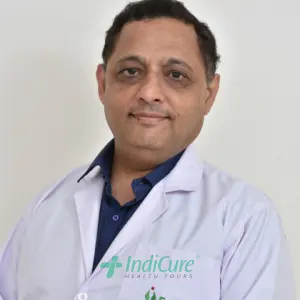
Dr. Anvay Mulay
Cardiac Surgeon
MBBS, MS, MCh
Mumbai
Currently associated with the Department of Heart Transplant as a Consultant and Head Cardiac Surgeon, Dr. Anvay Mulay is one of the most prominent and well-known cardiothoracic and vascular surgeons in India.
He has done more than 4000 successful beating heart bypass procedures and is a pioneer in adult cardiac surgery, particularly in the field of coronary artery bypass graft surgery (CABG). He has the largest series of beating heart coronary bypass surgeries to his credit.
4000 successful beating heart bypass procedures and is a pioneer in adult cardiac surgery
Aortic Root Replacements, Total Arterial Revascularization, Minimally Invasive Cardiac Surgery, Mitral, Aortic, and Tricuspid Valve Repair, Aortic Aneurysm / Aortic Dissections, and Surgery for Heart Failure are the areas of his expertise.
He has the largest series of beating heart coronary bypass surgeries to his credit
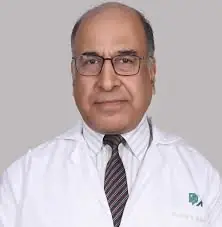
Dr Anoop K Ganjoo
Cardiac Surgeon
MBBS, MS, MCh (CTVS), DNB, FIACS, Fellowship, Cardiac Surgery, Milwaukee, USA
New Delhi
Dr. Anoop K Ganjoo is a highly experienced cardiac surgeon in India with over 33 years of dedicated service in cardiac care. He is widely respected for his substantial contributions to the field with 3 decades of experience and a robust educational background including MBBS, MS, MCh (AIIMS), DNB, and FIACS.
Dr. Ganjoo completed his entire medical education (MBBS, MS, MCH) at the prestigious All India Institute of Medical Sciences. Post which, he also completed an advanced fellowship in cardiac surgery under Dr. Dudley Johnson in Milwaukee, USA, spanning around 3 years.
(MBBS, MS, MCH) at the prestigious All India Institute of Medical Sciences
He has held reputable positions across various organizations in India, having served as the faculty of Sanjay Gandhi PGIMS for approximately 8 years and presently working as a Senior consultant at Indraprastha Apollo Hospital, New Delhi for last 10+ years.
advanced fellowship in cardiac surgery under Dr. Dudley Johnson in Milwaukee, USA, spanning around 3 years

Dr Ramji Mehrotra
Cardiac Surgeon
MBBS, MS, MCh (CTVS), Fellowship- Cardiac Surgery, Harvard Medical School, Boston, USA
New Delhi
Dr. Ramji Mehrotra is a prominent figure in Cardio Thoracic and Vascular Surgery (CTVS), and one of the best cardiac surgeons in India, boasting over 28 years of extensive experience. He is renowned for his expertise in Beating Heart Surgery, Total Arterial CABG, and has a legacy of numerous successful procedures. He has a record pf performing more than 18,000 cardiovascular surgeries and 3000+ pediatric surgeries.
Currently serving as the Vice Chairman and Chief of the Cardio Thoracic and Vascular Surgery (CTVS) Department at BLK Super Speciality Hospital in New Delhi, Dr Mehrotra has been associated with numerous prestigious institutions, including Harvard Medical School affiliates such as Boston Children’s Hospital and Brigham & Women’s Hospital in Boston, USA, as well as Fortis Escorts Heart Institute and Indraprastha Apollo Hospital in New Delhi, among others.
over 28 years of extensive experience
Dr Mehrotra performs a wide range of cardiac surgeries, with special interest in new age procedures like TAVI / TAVR, Surgeries for Heart Failure- LVAD, Heart Transplantation etc.
18,000 cardiovascular surgeries and 3000+ pediatric surgeries
Harvard Medical School affiliates such as Boston Children’s Hospital and Brigham & Women’s Hospital in Boston, USA
https://www.MediTraWell.com/tavi-procedure-cost-in-india/
Best Cancer Hospitals in India
These are our top cancer hospitals in India, ensuring you receive the healthcare you deserve.
Manipal Hospital, Dwarka
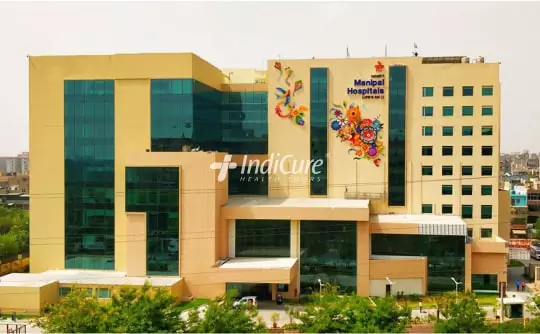
Location: New Delhi
Speciality: Multi-Superspeciality
Accreditation: Accreditation : National Accreditation Board for Hospitals and Healthcare (NABH)
No. of Beds: Beds : 380
Manipal Hospitals Dwarka is a multi-specialty hospital with paperless services and seamless integration. It is part of the Manipal Hospitals Group, which began as Kasturba Medical College in Manipal, Karnataka, in 1953 and is now India’s third-largest established player in healthcare in India. There are more than ten business hospitals, five teaching hospitals, and over 5900 beds in the group. Frost & Sullivan Healthcare Excellence Awards in 2011, Asian HR Leadership Awards in 2013 – Under the categories ‘Institution Building and Diversity & Human Resources,’ Asia Training and Development Excellence Awards in 2014, Golden Peacock National Training Award in 2014, and Asia Training and Development Excellence Awards in 2015.
Care Hospitals, Banjara Hills
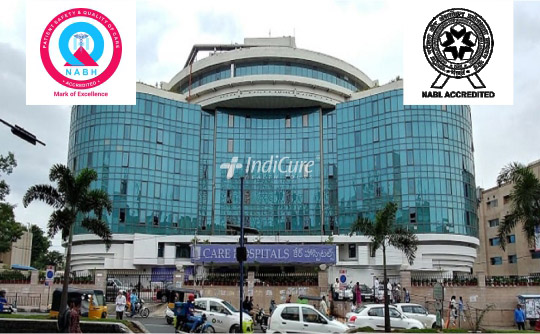
Location: Hyderabad
Speciality: Multi-Superspeciality
Accreditation: Accreditation : NABH, NABL
No. of Beds: Beds : 435
The CARE Hospitals Group is a multispecialty healthcare provider, with 14 hospitals serving 6 cities across 5 states of India. The group’s flagship CARE Hospitals, located in the poshest Banjara Hills in Hyderabad was set up in 2000. The hospital has grown to be one of the most renowned and best hospitals in Hyderabad in a span of fewer than two decades. More than 5000 non-cardiac and 1700 cardiothoracic procedures are conducted each year. Every year, modern cath laboratories do around 4000 cardiac procedures.
What is Minimally Invasive Heart Bypass (CABG)?
A less invasive alternative to coronary artery bypass graft surgery is minimally invasive coronary artery bypass surgery, often known as beating heart surgery (CABG). Traditional CABG surgery has risks, such as the need for a heart-lung bypass machine and a longer recovery time. Minimally invasive bypass surgery can restore blood flow to the heart without the risks, complications, and need for a heart-lung bypass machine.
Rather than cutting through the breastbone as in open-heart surgery, minimally invasive heart surgery entails making small incisions in the right side of the chest to reach the heart between the ribs.
You don’t require a heart-lung bypass machine since beating heart surgery is done while your heart is still beating. Minimally invasive coronary artery bypass surgery is divided into two types:
Minimally invasive direct coronary artery bypass (MIDCAB)
If your doctor chooses MIDCAB surgery for you, you will not require the use of a heart-lung bypass machine to keep your heart beating throughout the surgery. In contrast to standard CABG surgery, your doctor will make tiny incisions in your chest to obtain access to your coronary arteries. In contrast to typical CABG surgery, which exposes the entire heart, the smaller incisions just expose the portions of the arteries that require grafts.
Off-pump coronary artery bypass (OPCAB)
OPCAB is a type of minimally invasive coronary artery bypass surgery that does not require the use of a heart-lung bypass machine and requires a smaller incision. Your cardiovascular surgeon will utilize an artery or vein from another part of the body to bypass the blocked vessel and restore normal blood flow during an off-pump coronary artery bypass procedure. Patients who undergo OPCAB have less pain and a faster recovery period than those who have standard CABG procedures.
When compared to open-heart surgery, the following are some of the potential advantages of minimally invasive heart bypass surgery:
- Blood loss is reduced.
- Infection risk is reduced.
- Pain and trauma are lessened.
- A shorter stay in the hospital, a faster recovery, and a faster return to normal activities
- Scars are smaller and less apparent
Besides heart bypass, a variety of cardiac problems can be treated using minimally invasive heart surgery. This includes:
- Aortic valve replacement
- Atrial septal defect and patent foramen ovale closure
- Atrioventricular septal defect surgery
- Maze procedure for atrial fibrillation
- Mitral valve repair or replacement
- Saphenous vein harvest for coronary artery bypass surgery
- Tricuspid valve repair or replacement
When is Minimally Invasive Heart Bypass (CABG) required?
Not everyone is a candidate for minimally invasive heart bypass surgery. Your doctor and treatment team will work with you to see if it’s a viable therapy choice for you.
The ideal candidates are those who:
- Have one to three vessels that need to be bypassed
- Is too high risk (older age or suffers from COPD) to undergo traditional CABG surgery
Your doctor will likely evaluate your medical history and run tests to learn more about your heart health in order to assess whether minimally invasive heart surgery is the best option for you.
How is Minimally Invasive Heart Bypass (CABG) done?
The procedure for minimally invasive coronary bypass surgery can be done in a number of ways:
Robotic Heart Surgery
In this method, the surgeon uses a robot to bypass the blocked vessel. The surgeon controls the robotic arms remotely while watching the heart on a 3D monitor. The procedure takes place in a Cath lab, where a small, flexible catheter is inserted into an artery in the groin. This catheter contains a tiny device to assist in the bypass.
Thoracoscopy surgery
In this approach, the surgeon makes a small incision in the chest and inserts a thoracoscope, a tool equipped with a video camera. Surgical instruments are passed through the thoracoscope to the heart, allowing the surgeon to perform the procedure with minimal disruption to the surrounding tissue.
Last Step
The surgeon creates a 2–3-inch incision between the ribs (often called a mini-thoracotomy) to access and bypass the blocked vessel. This method eliminates the need to cut through the sternum (breastbone), resulting in less trauma, faster healing, and reduced pain compared to traditional open-heart surgery.
What is the Recovery after CABG like?
Recovery time is shorter following a minimally invasive coronary bypass than it is after a standard CABG. You’ll generally spend a day or so in the intensive care unit (ICU). and about 4-5 days in a private hospital room to recover from the procedure. Within a week of your operation, you will have a follow-up appointment.
As you restore strength, it may take a few weeks for you to recover. You can be referred to a cardiac rehabilitation program to help you return to your regular activities safely.
What Results Can I Expect from CABG?
The cardiac symptoms will be relieved and your quality of life will be improved with minimally invasive heart bypass surgery.
To keep track of your heart condition, you’ll need to see a doctor regularly. Your heart’s health may be assessed through tests.
Your doctor will also advise you to live a heart-healthy lifestyle, which includes eating a balanced diet, exercising regularly, managing stress, and not smoking. A tailored program of education and exercise to promote health after heart surgery is also recommended (cardiac rehabilitation).
Questions you must ask
Here is a set of questions you should consider asking before commencing your medical travel for Minimally Invasive Heart Bypass in India.
- Is the heart surgeon board certified?
- How experienced is the Surgeon?
- Which language does the surgeon speak?
- Is the treatment done in a well-equipped facility?
- What treatment option is recommended for me?
- What about the risks involved?
- Does the surgeon use a certified anesthetist?
- How long will the recovery period be?
Be ready to respond about:
Prepare to answer questions about your:
- Medical history and exams
- Previous surgeries
- Current medication review
- History of smoking, drugs, or alcohol