

Colon Cancer Treatment Cost in India
Last updated: April 19, 2026
Colon Cancer Treatment Cost in India depends on the type of treatment required, your medical condition, hospital and the city where you choose to get the treatment done.
Typical Costs for Colon Cancer Treatment in India looks like:
| Procedure | Cost (Range in US $) |
|---|---|
| Investigations | 500-1,000 |
| Chemotherapy | 300-2,000 per cycle |
| Radiotherapy | 3,500-5,500 |
| Surgery | |
| Polypectomy | 4,500-5,500 |
| Colectomy | 5,000-7,000 |
| Cryosurgery | 1,500-3,000 |
| Radiofrequency Ablation | 1,600-3,500 |
With end to end services for your hassle-free Cancer Treatment in India, MediTraWell has made the entire process of seeking medical tourism in India easy and hassle free for you besides making it affordable.
Factors that affect Colon Cancer Treatment Cost in India:
- Type of Treatment
Many times, the best option might include more than one type of treatment. Surgery, alone or with other treatments, is used to treat most uterine cancers. The cost associated with each type of treatment is different. MediTraWell recommends you to understand the options by consulting our expert oncologists.
- Number of Chemotherapy and Radiation Cycles
The overall oral cancer treatment cost depends on the number of chemotherapy or radiation therapy cycles that a patient has to undergo. In some patients, the doctors might advise giving more than a couple of cycles of chemotherapy or radiation therapy to kill the cancerous cells.
- Oncologist’s Fees
An important expense when it comes to your oral cancer treatment in India is going to be your oncologist’s fees. MediTraWell recommends highly experienced, skilled, board-certified surgeons who are capable of delivering successful surgeries. Although the charges may vary depending on the experience of the surgeon, you can be assured that you are in safe and skilled hands when you choose cancer treatment in India with MediTraWell.
- Surgical Facility
Having your treatment for oral cancer in an accredited surgical facility by skilled and qualified medical staff is a critical factor. Moreover, the geographical location of this facility in India also affects the quote. But, MediTraWell provides you with a projected estimate that will be all inclusive and affordable.
- Pre and Post Treatment Expenses
The pre-surgical/treatment expenses are associated with the stage of the cancer and medical condition of the patient and thus the number and type of investigations and treatment required. Post-treatment expenses may include prescription medications and follow-up consultations.
We at MediTraWell, understand that you travel with a budget in mind and do not like to be greeted by surprises after arrival in India. We thus club all these expenses and give you a package cost that is inclusive and affordable at the same time.
Your case manager shall give you an estimated cost of your surgery after discussing your medical reports with the surgeon. The final cost, however, shall be confirmed after your consultation with the surgeon.
Medi Trawell Services
Making Medical Travel to India Affordable & Hassle-free for 15+ Years

We Help you Choose the Right Treatment, Surgeon & Hospital

We Arrange Video/Telephonic Consultation with the Surgeon

We Assist you with Visa & Accommodation

We Receive you at the Airport and Drop you at Hotel/Hospital

We Assist you the at Hospital & Provide Post Operative Support
Our services are FREE for our patients.
In fact, we have Special Negotiated Rates with the Hospitals and you can avail Discounted Rates when you choose to Travel with MediTrawell. Container
Cancer Treatments We Offer
Here is a compilation of the cancer treatment options we provide in India.
- Leukemia
- Multiple Myeloma
- Aplastic Anemia
- Osteosarcoma
- Squamous Cell Carcinoma
- Pancreatic Cancer
- Eye Cancer
- Bladder Cancer
- Cervical Cancer
- Penile Cancer
- Endometrial Cancer
- Skin Cancer
- Bone Cancer
- Esophagus Cancer
- Kidney Cancer
- Testicular Cancer
- Breast Cancer
- Lung Cancer
- Ovarian Cancer
- Gallbladder Cancer
- Thyroid Cancer
- Colon Cancer
- Prostate Cancer
- Blood Cancer
Best Oncologists in India
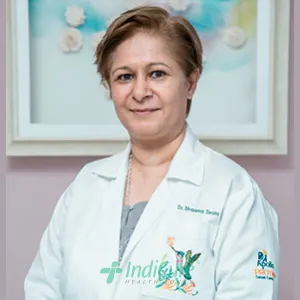
Dr. Bhawna Sirohi
Medical Oncologist
MBBS, DCH, FRCP,
Chennai
Dr. Bhawna Sirohi is a renowned Medical Oncologist in India with more than 25 years of experience in the field of Oncology. She is a well-known senior consultant who specializes in treating Breast cancers and Gastrointestinal cancers all over the world.
Dr. Bhawna has collaborated with some of the world’s best oncology centers and oncologists. She is presently working with Apollo Proton Cancer Center as the Lead – Medical Oncologist. Dr. Sirohi is also an honorary consultant at London’s Queen Mary’s University and has over 100 publications published in national and international journals.
She is the President of Royal Society of Medicine’s and the Chairman of the ICMR Task Force for Cancer Guidelines on Colorectal Cancer, NET, HCC, Pancreatic cancer, and Esophageal cancer, and an advisor to the NCI-AIIMS committee.
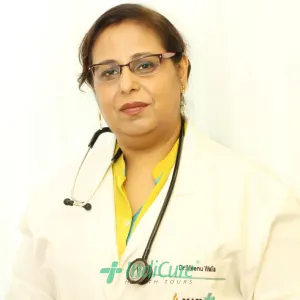
Dr. Meenu Walia
Medical Oncologist
MBBS, MD, DNB
Delhi
About Doctor: Dr. Meenu Walia has an experience of more than 27 years in the field of Medical Oncology and Hematology. She is the keen Clinical researcher and principal investigator for several randomized multi-centric international clinical research trials.
She is highly skilled in treating Abdominal Solid Organ Cancers, Gastro-Intestinal Cancers, and Leukemia/Lymphoma. She is a Member of the American Society of Clinical Oncologists and the European Society for Medical Oncology, among other important organizations (ESMO). Clinical research is a specific focus of hers. She has served as the Principal Investigator for a number of randomized multicenter international clinical trials.
She is a Member of the American Society of Clinical Oncologists and the European Society for Medical Oncology, among other important organizations (ESMO). Clinical research is a specific focus of hers. She has served as the Principal Investigator for a number of randomized multicenter international clinical trials.
Dr. Walia is the first DNB Medical Oncologist in the country and has been honored with various awards during her tenure. India Today Group has honored her with the certificate for excellence in recognition of the exemplary work and dedication in the field of healthcare. She was also awarded the “Bharat Jyoti Award” and certificate for excellence by Dr. Bhishma Narain Singh- The former Governor of Tamil Nadu and Assam for her meritorious services, outstanding performance, and remarkable role in healthcare.

Dr. K R Gopi
Medical Oncologist
MBBS, MD, DNB
Chennai
Dr. K R Gopi is an extensively trained and skilled medical oncologist in India with rich professional experience spanning over 30 years. Having worked for over 15 years in a few of the leading medical facilities both in India and UK has further added to his expertise in this discipline.
He is currently empanelled with Global Hospital in Chennai as a Senior Consultant in the Department of Medical Oncology. He has expertise in Haemato-oncology, Medical Oncology, and Palliative Medicine.
His areas of expertise include Haemato-oncology, Palliative medicine, Chemotherapy, management of all types of malignancies, Elderly/Frail patient management in Oncology.
Best Cancer Hospitals in India
These are our top cancer hospitals in India, ensuring you receive the healthcare you deserve.
Apollo Cradle & Children’s Hospital, Bangalore
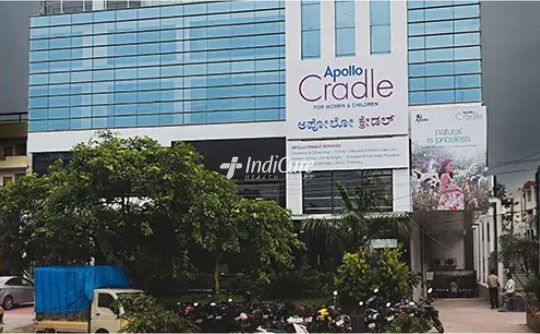
Location: Bangalore
Speciality: Multi-Superspeciality
Loading...
No. of Beds: Beds : 28
Apollo Cradle & Children’s Hospital, Jayanagar, was founded in 2013 and is a prominent and most-trusted single-specialty maternity hospital. Women chose the hospital for its high-quality care and advanced maternity therapy in all major specialties, such as gynecology, laparoscopy, neonatology, pediatrics, fertility, fetal medicine, and NICU. The Apollo Cradle & Children’s Hospital in Jayanagar has 28 beds, two operating rooms with laminar flow and HEPA filters, a specialized labor room, delivery rooms, cutting-edge ultrasound imaging, a level-III NICU, and a surgical ICU. Its High Dependency Unit allows for close monitoring of moms and newborns who require constant monitoring.
ART Fertility Clinics, New Delhi

Location: New Delhi
Speciality: Multi-Superspeciality
Loading...
Loading...
In 2015, IVI RMA Global launched ART Fertility Clinics in the Middle East under the brand name IVI Middle East. IVI RMA sold its ownership to Gulf Capital in January 2020, and the company was renamed ART Fertility Clinics. Mr. Suresh Soni, Chief Executive Officer, and Prof. Dr. Human Fatemi, Group Medical Director, have led ART Fertility Clinics since its establishment (MD, Ph.D. at the University of Brussels, Belgium). In the last six years, ART Fertility Clinics has grown to become the top institute for Human Reproductive Medicine in the Middle East, with clinics in Abu Dhabi, Muscat, and Dubai.
Colon Cancer Treatment
What is Colon
Colon is a 6 feet long tube-like organ, a very important part of the digestive tract that connects the small intestine to the rectum. Colon and rectum together comprise the large intestine, that is primarily meant for the storage and managing the waste products generated by the body. Colon also helps in absorption of the water from the food.
Colon Cancer
Cancer that begins in the colon or rectum is termed as colon cancer, rectal cancer or colorectal cancer. Mostly colon cancers are adenocarcinomas which start when mutation takes place in the lining of the wall of the colon or rectum. The cancer usually begins with the formation of polyps often called adenoma in the intestine. Polyps are the abnormal growth of tissue that become precancerous initially and then become cancerous.
Any change in the bowel habits like diarrhea, constipation and change in stool consistency, rectal bleeding or blood in the stool, abdominal pain and discomfort are some of the symptoms of the colon cancer which develops at the later stage and can go unnoticed in the earlier stage. To prevent further spread of the disease and plan the appropriate treatment regime to cure cancer, staging the cancer is important.
The colon cancer can be staged as:
- Stage I: Cancer has begun but confined to the inner wall lining of the colon.
- Stage II: Cancer has spread to the organs adjacent to the colon or rectum but has not invaded the lymph nodes.
- Stage III: Cancer has invaded the lymph nodes but has not spread to distant organs of the body
- Stage IV: Cancer has spread to lymph nodes and is carried to the distant organs through the lymphatic system. Lungs and liver are the common organs to get affected first.
Colon Cancer Causes
It is difficult to pinpoint the exact cause of Colon cancer. But the factors that increase the risk of developing colon cancer are;
- Advancing age
- Race: African and American have greater possibility of colon cancer
- History of adenomatous polyps
- Inflammation of the intestine as in ulcerative colitis, Crohn’s disease
- Genetic inheritance
- Any family history of colon cancer or polyps
- Dietary habits that include intake of low fiber and high fat diet.
- Sedentary lifestyle
- Smoking, alcoholism, diabetes
- Overweight and obesity
- Exposure to radiation therapy
Colon Cancer Treatment Options
There are various treatment options for colon cancer. The treating doctor would suggest the best treatment for the patient or a combination of these depending upon the medical condition of the patient:
- Surgery:
Surgery aims at removing the colon or rectum or a part of it affected by the cancer, with or without the adjacent lymph nodes using one of the following approaches. The type of surgery depends on the type, size, location and the extent of the cancer spread.
- Polypectomy:
Polypectomy involves removal of the polyps which are small adenomatous growths that are present in the inner lining of the wall of the colon. They are removed using colonoscopy.
- Colectomy:
Colectomy involves removing the part or whole of the colon with the cancer and some of the surrounding tissue. This can be done in two ways:
- Traditional open colectomy:
involves removal of the part or whole of the colon through a single large incision in the abdomen.
- Laparoscopic colectomy:
most commonly used procedure in which colectomy is done through multiple small incisions of about 5-10mm size using laparoscope and specialized laparoscopic surgical instruments.
- Traditional open colectomy:
- Polypectomy:
- Chemotherapy:
It involves giving medicines either intravenously or orally to attack and kill the cancerous cells. This therapy can be used before the surgery in order to shrink the size of the tumor or after the surgery to eliminate the cancer cells, if left any. Chemotherapy is also given to slow down the advancing cancer and to relieve the symptoms in case of extensive cancer.
- Radiation therapy:
It involves delivery of high powered energy beams like protons or X-rays to specifically target cancer cells without or minimally affecting the normal healthy cells of the body. It can be used in combination with chemotherapy either before or after the surgery, or may be used for relieving the symptoms associated with cancer if the cancer is extensive and cure is not possible.
Colon Cancer Symptoms
In the initial stages of colon cancer, many patients show no signs or symptoms. Symptoms will likely vary depending on the size and location of the cancer in your large intestine.
Some of the typical symptoms that patients at an advanced stage exhibit:
- Consistent gastrointestinal changes, such as diarrhea or constipation, or a change in stool consistency
- Blood in your feces or rectal bleeding
- Consistent stomach pain, such as cramps, gas, or bloating
- Feeling as if your bowels aren’t totally empty
- Weakness or exhaustion
- Unexplained Weight loss
When is Colon Cancer Treatment Needed?
If you are suffering from any of the aforementioned symptoms, you should see a doctor immediately who would advise tests to confirm the diagnosis. If you are diagnosed with colon cancer, you need to start the treatment without any delay.
What Results can I Expect from the Surgery?
The results of colon surgery depend on the stage of pancreas cancer. If detected early, there is a good chance of complete recovery.
What is the Recovery after Colectomy like?
After the surgery, the patient is moved to the recovery where he/she shall be kept under observation. One may experience pain and discomfort, which is relieved with medicines. The patient is given fluids to recover well. One can expect to return to normal activities after 3-4 weeks of the surgery as the body needs time for recovering from the stress of the surgery. One should restrict lifting heavy objects. Walking should be encouraged.
How is Colectomy done?
Colectomy or the Colon Resection Surgery:

Questions to Ask
We at MediTraWell completely understand your concerns and it is always our endeavor to provide the best outcome for every patient. Following is the list of questions you must ask before you embark on your journey for colon cancer treatment in India.
- Is it time for colon cancer surgery?
- Is the oncologist board certified?
- How experienced is the surgeon?
- Which language does the surgeon speak?
- Is the treatment done in a well-equipped facility?
- What cancer treatment option is recommended for me?
- What about the risks involved?
- Does the surgeon use a certified anesthetist?
- How long will the recovery period be?
Preparation for the Surgery
Prepare to answer questions about your:
- Medical history and exams
- Previous surgeries
- Current medication review
- History of smoking, drugs, or alcohol