

Cardiac Resynchronization Therapy Cost in India
Last updated: April 19, 2026
Starting from USD 9,000
INCLUDES
- FDA Approved Implant
- Surgery and Stay at the Hospital
- Pre-operative Investigations
- Medicines, Consumables & Food at the hospital
- Airport Transfers & MediTraWell assistance
DOES NOT INCLUDE
- Accommodation outside the Hospital
- Air tickets
- Medical Visa fee
STAY REQUIRED
- Stay at the Hospital - 1 to 2 days
- Stay at the Hotel - 7 to 8 days
- Stay in India - 8 to 10 days
With end to end services for your hassle-free Cancer Treatment in India, MediTraWell has made the entire process of seeking medical tourism in India easy and hassle free for you besides making it affordable.
Factors that Affect Cardiac Resynchronization Therapy Cost in India
- Interventional Cardiologist’s Fees
A significant component of a Cardiac Resynchronization Therapy Cost in India is the heart surgeon’s fees. MediTraWell only recommends highly experienced, skilled, board-certified heart surgeons who have proved track record of consistently delivering excellent results. While the charges may vary based on the surgeon’s experience, you can be confident that you are in safe and capable hands when opting for affordable heart surgery in India with MediTraWell Health Tours.
- Type of Surgical Approach
In the pursuit of enhancing patient care and efficiency of procedure, the medical field continually introduces new techniques and technologies into surgical procedures. These innovative advancements are designed to improve outcomes, reduce recovery times, and increase the overall effectiveness of treatments. While these advancements can significantly benefit patient care, they may also lead to higher Cardiac Resynchronization Therapy Cost in India.
- Your Choice of Surgical Facility
Selecting an accredited medical facility with skilled and qualified medical staff is essential for the success of Cardiac Resynchronization Therapy in India. Larger cities in India generally have better medical facilities and more experienced heart surgeons, leading to higher costs. MediTraWell Health Tours recommends surgical facilities in these larger cities to prioritize quality of care and ensure safety of our overseas patient guests.
- Surgery-Related Expenses
The costs related to surgery include expenses incurred pre- and post-surgery. The expenses related to pre-surgery vary depending on the age and medical condition of the patient and thus requiring different number and type of investigations. Expenses post-surgery include costs incurred for prescription medications and follow-up consultations.
We Customize Cardiac Resynchronization Therapy in in India Quote to Suit Your Preferences
At MediTraWell Health Tours, we consolidate most of the expenses for your Cardiac Resynchronization Therapy in India to provide you with an all-inclusive budget. After receiving medical reports, your case manager will provide an estimated cost based on a discussion with the heart surgeon in India.
The final Cardiac Resynchronization Therapy cost in India can however be confirmed after your face-to-face consultation with the heart surgeon in India.
We at MediTraWell, understand that you travel with a budget in mind and do not like to be greeted by surprises after arrival in India. We thus club all these expenses and give you a package cost that is inclusive and affordable at the same time.
Your case manager shall give you an estimated cost of your surgery after discussing your medical reports with the surgeon. The final cost, however, shall be confirmed after your consultation with the surgeon.
Medi Trawell Services
Making Medical Travel to India Affordable & Hassle-free for 15+ Years

We Help you Choose the Right Treatment, Surgeon & Hospital

We Arrange Video/Telephonic Consultation with the Surgeon

We Assist you with Visa & Accommodation

We Receive you at the Airport and Drop you at Hotel/Hospital

We Assist you the at Hospital & Provide Post Operative Support
Our services are FREE for our patients.
In fact, we have Special Negotiated Rates with the Hospitals and you can avail Discounted Rates when you choose to Travel with MediTrawell. Container
Cardiac Procedures We Offer
Here is a compilation of the heart treatment options we provide in India.
- Holter Monitoring
- Alcohol Septal Ablation
- AICD
- Coronary Angiography
- Coronary Angioplasty (PTCA)
- Pacemaker Implantation
- Cardiac Bypass (Heart Bypass)
- ASD Device Closure
- Aortic Valve Replacement
- ASD Treatment
- VSD Treatment
- Cardiac Tumor Surgery
- EP Study
- Balloon Valvuloplasty
- Bentall Procedure
- Cardiac Ablation
- Minimally Invasive Heart Bypass
- Valve Replacement Surgery
- Pediatric Heart Surgery
- Robotic Heart Surgery
- Heart Transplant
- LVAD (Left Ventricular Assist Device)
- TAVR (Transcatheter Aortic Valve Replacement)
- Truncus Arteriosus Repair
Best cardiologist in India
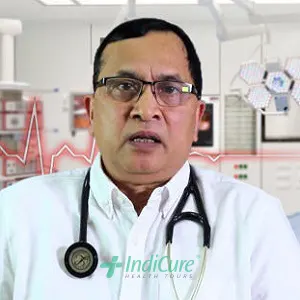
Dr. Bhabha Nanda Das
Cardiac Surgeon
MBBS, MS, MCh, Fellowships
New Delhi
Dr. BN Das is a well-known and well-respected cardiothoracic surgeon in Delhi. With more than 36 years of expertise, he has conducted over 20,000 heart procedures to date. Dr. Das received his MBBS, MS, and McH degrees from some of Delhi’s most prestigious institutions. Following that, he was awarded a Fellowship by the World Health Organization.
CABG on a beating heart, Aortic Aneurysm Surgery, Double Valve Replacement/Mitral Valve Replacement/Aortic Valve Replacement, All Types of Congenital Anomalies, and Intra Cardiac Repair are among Dr B N Das’s specialties.
With more than 36 years of expertise, he has conducted over 20,000 heart procedures to date
a Fellowship by the World Health Organization

Dr. Sandeep Attawar
Cardiac Surgeon
MBBS, MS, M.Ch (Cardiothoracic Surgery)
Hyderabad
Dr. Sandeep Attawar is a known expert in the field of heart and lung transplantation and is one of the leading cardiac surgeons in India. He has performed over 10,000 open and closed heart procedures, over 300 adult heart and lung transplants, and over two dozen LVAD implants over his career. As of August 2021, he had conducted over 26 double-lung transplants during COVID, one of the greatest amounts in the world.
From infants to octogenarians, he has done a wide range of difficult cardiac surgeries on patients of all ages. Those under his care have a high degree of satisfaction, which is commensurate with his outstanding outcomes.
He has performed over 10,000 open and closed heart procedures, over 300 adult heart and lung transplants, and over two dozen LVAD implants over his career. As of August 2021, he had conducted over 26 double-lung transplants during COVID, one of the greatest amounts in the world
Dr. Attawar is also a member of the International Society for Minimally Invasive Cardiac Surgery (ISMICS), the International Society for Heart and Lung Transplantation (ISHLT), the Minimally Invasive Robotic Association (MIRA), the Society of Thoracic Surgeons (STS), and the European Association of Cardio-Thoracic Surgery (EACTS). He has had work published in prestigious journals such as the Annals of Thoracic Surgery (ATS) and is a member of the Journal of Thoracic Surgery’s editorial board. He is also a member of the ISHLT I2C2 committee’s worldwide faculty, which oversees policies on mechanically assisted circulatory therapy. He is interested in furthering the field of mechanically aided circulation employing Left Ventricular Assist Devices as a proctor for HM3, Jarvik 2000, and ReliantHeart (LVADs).
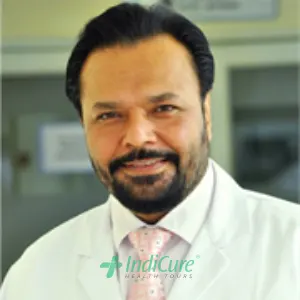
Dr. (Col.) Manjinder Singh Sandhu
Interventional Cardiologist
MBBS, MD, DM, DNB, Fellowship- American College of Cardiology
Gurgaon
Dr. Majindar Sandhu, who has been practicing for over 27 years, is one of India’s most experienced and well-respected cardiologists. He has had the privilege of accompanying the President of India on visits as his Cardiologist. He graduated from AFMC Pune with a master’s degree in medicine and a bachelor’s degree in medicine. He then completed his DNB and DM (Cardiology) at PGIMER in Chandigarh.
He has had the privilege of accompanying the President of India on visits as his Cardiologist.
Dr. Sandhu has been educating postgraduate students in medicine and cardiology for many years. He has also served as the Principal Investigator in the Department of Biotechnology, Ministry of Science and Technology, Government of India, research projects.
Many honors have been bestowed upon him, including Fellowship of the American College of Cardiology (FACC) and the Society of Cardiac Angiography and Interventions (SCAI) (FSCAI).
Fellowship of the American College of Cardiology (FACC) and the Society of Cardiac Angiography and Interventions (SCAI) (FSCAI).
Best Cancer Hospitals in India
These are our top cancer hospitals in India, ensuring you receive the healthcare you deserve.
Krishna Institute of Medical Sciences, Secunderabad, Hyderabad
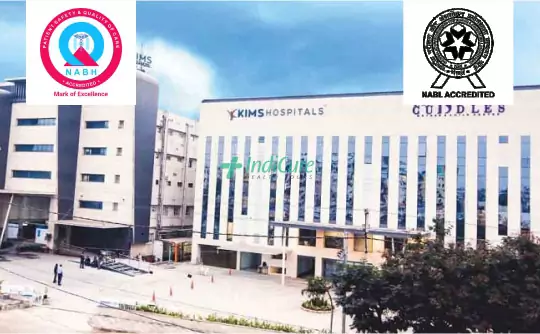
Location: Hyderabad
Speciality: Multi-Superspeciality
Loading...
No. of Beds: Accreditation : NABH, NABL, ISO, NABCB
KIMS Hospitals are one of the largest corporate Hospitals group in South India with over 2000 beds spread across 6 locations in the states of Telangana and Andhra Pradesh. The flagship and the largest hospital is in Secunderabad, which is a 1000 bedded hospital, ISO, NABH, NABL, and NABCB accredited assuring the best quality of healthcare services. KIMS is one of the first hospitals in Southern India to install 4-Arm HD da Vinci Robot technology. The hospital has received the Association of Healthcare Providers (India) (“AHPI”) award for nursing excellence in 2016 and was ranked number one multi-specialty hospital in Hyderabad by the Times of India Survey in 2015. KIMS was the first hospital in Andhra Pradesh and Telangana to have been Green OT certified in 2015.
Metro Hospital, Faridabad, New Delhi
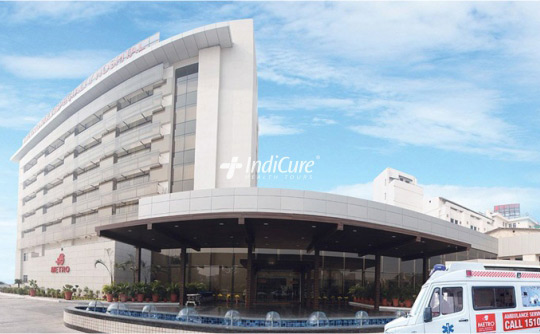
Location: New Delhi (NCR)
Speciality: Multi-Superspeciality
Accreditation: Accreditation : Joint Commission International (JCI, USA), National Accreditation Board for Hospitals & Healthcare Providers (NABH), National Accreditation Board for Testing and Calibration Laboratories (NABL)
No. of Beds: Beds : 400
Since 2002, Metro Hospital in Faridabad has served as Haryana’s first dedicated heart hospital, ‘offering international grade health treatment at an accessible cost to the populace.’ The multispecialty hospital is designed to provide the highest levels of professional expertise and world-class care in all major disciplines of cardiology, neurology, orthopedics, oncology, and all support specialties such as bariatric and minimally invasive surgery, internal medicine, general surgery, urology, nephrology, gastroenterology, rehabilitative services, and pulmonology, among others. The hospital is spread across 8 acres of land in the heart of the city, has 400 beds and will be expanded in the near future. The Metro Hospital is one of the region’s largest tertiary centres, routinely ranking among the top multispecialty hospitals in Delhi-NCR.
What is Cardiac Resynchronization Therapy (CRT-D)?
Cardiac resynchronization therapy is a procedure in which a device is implanted in your chest to help your heart’s chambers squeeze (contract) more efficiently and in a more organized way.
A biventricular pacemaker (also known as a cardiac resynchronization device) delivers electrical signals to both lower chambers of the heart after cardiac resynchronization therapy (CRT). The signals cause your ventricles to contract in a more coordinated manner, resulting in better blood pumping out of your heart.
CRT therapy means you will have the pacemaker placed under your skin by minor surgery. Wires from the device are connected to the ventricles on both sides of your heart. The CRT device sends electrical signals to the ventricles to make them pump together the way they should. This type of electrical stimulation is called biventricular pacing.
If your heart rhythm is dangerously unpredictable, the device may also include an implantable cardioverter-defibrillator (ICD), which can give an electrical shock to reset your heartbeat.
Cardiac resynchronization therapy devices include:
- Cardiac resynchronization therapy with a pacemaker (CRT-P): The pacemaker for cardiac resynchronization therapy comprises three leads that link to the right upper chamber (right atria) and both lower chambers of your heart (ventricles).
- Cardiac resynchronization therapy with a pacemaker and an ICD (CRT-D) : People with heart failure who are also at risk of sudden cardiac death may benefit from this device. It can identify problematic heart rhythms and provide a more powerful energy shock than a pacemaker can, which can reset your heartbeat.
When is Cardiac Catheterization Required?
Cardiac resynchronization therapy is a treatment for heart failure in patients who have uncoordinated ventricular contractions.
Your heart muscle is weakened with heart failure, and it may not be able to pump enough blood to support your body. This can be exacerbated if the chambers of your heart aren’t in rhythm with one another.
Cardiac resynchronization treatment can help you manage your heart failure symptoms and reduce your risk of consequences, including death.
How is Cardiac Resynchronization Therapy Done?
Step 1
Your doctor will make a small cut (incision) in your upper chest, and create a pocket under the skin. This pocket will safely house the wires and the computer battery pack, which powers and controls the CRT device, ensuring it functions properly.
Step 2
Your doctor will put IV lines in the large vein that feeds your heart. He or she will put CRT wires (leads) into the vein and feed them into your heart. Special X-rays will be taken to make sure the leads are in the right place on both sides of your heart.
Step 3
Once the leads are properly placed and working, they will be connected to the CRT pacemaker. The pacemaker will be inserted through the incision and under your skin. The incision will be closed with sutures or staples, and a dressing will be applied.
What is the Recovery after Cardiac Resynchronization Therapy like?
After cardiac resynchronization therapy, you’ll spend 1-2 nights in the hospital. Before you leave the hospital, your doctor will test your device to ensure that it is properly programmed. After a few days, most people can resume their normal activities.
It is critical that you follow your doctor’s instructions to the letter. For the first six weeks, you may need to minimize activities including lifting, straining, and stretching. Inquire with your doctor about when you can resume specific activities.
Make sure your doctor checks the device’s functionality on a regular basis. At least once every six months, this should be done.
What Results Can I Expect from Cardiac Resynchronization Therapy?
In around 7 out of 10 cases of heart failure, cardiac resynchronization therapy is effective. CRT does not work for everyone with heart failure. If you have advanced heart failure, for example, you are less likely to react to CRT. If you have mild to moderate heart failure, CRT may help you live longer, improve your heart function, and enhance your quality of life.
Questions you must ask
Here is a set of questions you should consider asking before commencing your medical journey for the Cardiac Resynchronization Therapy in India.
- Is the heart surgeon board certified?
- How experienced is the Surgeon?
- Which language does the surgeon speak?
- Is the treatment done in a well-equipped facility?
- What treatment option is recommended for me?
- What about the risks involved?
- Does the surgeon use a certified anesthetist?
- How long will the recovery period be?
Be ready to respond about:
Prepare to answer questions about your:
- Medical history and exams
- Previous surgeries
- Current medication review
- History of smoking, drugs, or alcohol