

Bone Marrow Transplant Cost in India
Last updated: May 3, 2026
Starting from USD 14,000
INCLUDES
- Surgery
- Stay at the Hospital
- Pre-operative Investigations
- Medicines, Consumables
- Food at the hospital
- Airport Transfers
- MediTraWell assistance
DOES NOT INCLUDE
- Accommodation outside the Hospital
- Air tickets
- Medical Visa fee
STAY REQUIRED
- Stay at the Hospital - 1 to 2 days
- Stay at the Hotel - 7 to 8 days
- Stay in India - 8 to 10 days
Factors that Affect Bone Marrow Transplant Cost in India
- Type of Bone Marrow Transplant
Whether you need an Autologous bone marrow transplant (bone marrow cells are derived from the patient himself) or an Allogeneic bone marrow transplant (a close match donates the bone marrow to the patient) predominantly determines the cost of a bone marrow transplant in India.
- Transplant Surgeon’s Fees:
One of the key costs you will face when contemplating a bone marrow transplant surgery in India is the surgeon’s fee. IndiCure connects you with board-certified surgeons in India who are highly skilled and have delivered successful transplantation surgeries over a long period of time. While the surgeon’s fee can vary based on their experience and reputation, you can trust IndiCure Health Tours to recommend the surgeons who prioritize your safety and deliver excellent outcomes when you choose to have bone marrow transplant surgery done in India.
- Choice of Surgical Facility
Choosing an accredited surgical facility with skilled and qualified medical staff is crucial for the success of a bone marrow transplant in India. In India, larger cities typically offer superior medical facilities and more experienced surgeons, resulting in higher costs for bone marrow transplant in India. IndiCure Health Tours specifically recommends surgical facilities in larger cities of India to prioritize quality of care and ensure patient safety.
- Pre and Post Treatment Expenses
Bone marrow transplant surgery related costs encompass both pre- and post-operative expenses. Pre-operative costs are influenced by factors such as the patient’s age and medical condition, determining the necessity and type of investigations needed. Post-operative expenses may involve prescribed medications and subsequent follow-up appointments.
We at MediTraWell, understand that you travel with a budget in mind and do not like to be greeted by surprises after arrival in India. We thus club all these expenses and give you a package cost that is inclusive and affordable at the same time.
Your case manager shall give you an estimated cost of your surgery after discussing your medical reports with the surgeon. The final cost, however, shall be confirmed after your consultation with the surgeon.
Medi Trawell Services
Making Medical Travel to India Affordable & Hassle-free for 15+ Years

We Help you Choose the Right Treatment, Surgeon & Hospital

We Arrange Video/Telephonic Consultation with the Surgeon

We Assist you with Visa & Accommodation

We Receive you at the Airport and Drop you at Hotel/Hospital

We Assist you the at Hospital & Provide Post Operative Support
Our services are FREE for our patients.
In fact, we have Special Negotiated Rates with the Hospitals and you can avail Discounted Rates when you choose to Travel with MediTrawell. Container
Best Bone Marrow Transplant Surgeons in India
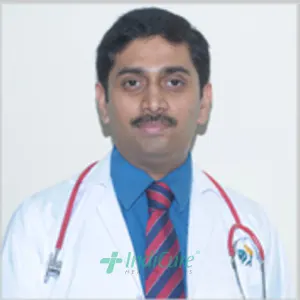
Dr. P Anoop
Hematologist And Pediatric Hemato-Oncologist
MBBS, MD, DCH, FRCPCH, FRCP, CCST
Bangalore
Dr. Anoop is an internationally trained Hematologist and Pediatric Hemato-Oncologist having received his training from a few of the world-renowned Hemato-Oncology centers in the UK such as St George’s Hospital, Great Ormond Street Hospital, and Royal Marsden Hospital.
training from a few of the world-renowned Hemato-Oncology centers in the UK such as St George’s Hospital, Great Ormond Street Hospital, and Royal Marsden Hospital
He worked for around a decade in the United Kingdom where he pursued extensive skills under the leadership of many internationally renowned experts in Hematology and Oncology. Blood disorders in adults and children, as well as solid organ malignancies in children, are his areas of expertise.
He is also affiliated with a few of the reputed professional bodies such as the British Society for Hematology, Royal College of Pathologists, Royal College of Pediatrics & Child Health, European Hematology Association, etc. He has given talks on lymphoma (Lugano, Switzerland), leukemia (London, UK), stem cell mobilization (Baltimore, USA), autoimmune hemolytic anemia (Guildford, UK), and clinical trials at scientific conferences (Oslo, Norway). Dr. Anoop has been published in both international and national medical journals, making him one of the best haematologists in India.
British Society for Hematology, Royal College of Pathologists, Royal College of Pediatrics & Child Health, European Hematology Association
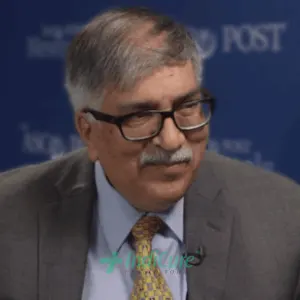
Dr. Rakesh Chopra
Hematologist & Medical Oncologist
MBBS, MD
Gurgaoni
Dr. Rakesh Chopra has an extensive experience of over two decades in the field of hematology and medical oncology and regarded as one of the best haematologists in India. He is a medical graduate from Delhi University and pursued his advanced training in oncology from prestigious medical institutes such as the Tata Memorial Hospital Mumbai, the Jewish Long Island Hospital, New York, and the Memorial Sloan Kettering Institute, New York.
Tata Memorial Hospital Mumbai, the Jewish Long Island Hospital, New York, and the Memorial Sloan Kettering Institute, New York
Dr. Chopra further specialized in cancer research and treatment by undertaking great opportunities to advance his knowledge and skills in the treatment of cancer. He is on the Editorial Board of the Journal of Clinical Oncology and has most recently been appointed as Hon. Adjunct Professor, Internal Medicine, and University of Nebraska Medical Center Nebraska’s Health Science Center.
Chemotherapy and targeted chemotherapy for cancer treatment are his specialties. Colonoscopy, Proctosigmoidoscopy, and Sigmoidoscopy, Endoscopy (Esophagus, Stomach, Small Intestine), Gastroenterology Operations, and Hemorrhoidectomy or Excision of Anal Tags are some of the major procedures he works on.
He is on the Editorial Board of the Journal of Clinical Oncology and has most recently been appointed as Hon. Adjunct Professor, Internal Medicine, and University of Nebraska Medical Center Nebraska’s Health Science Center
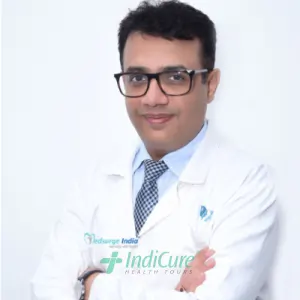
Dr. Gaurav Kharya
Hematologist And Pediatric Oncologist
MBBS, DCH, DNB, Fellowship in Pediatric hemato-oncology & BMT
New Delhi
Dr. Gaurav Kharya is the one of the most dynamic and coveted Pediatric Hemato-oncologist currently working as a Senior Consultant & Head of Pediatric Hemato-oncology Immunology & Bone Marrow Transplant Unit at Indraprastha Apollo Hospitals, Delhi.
he went to the United Kingdom and worked at the Great North Children’s hospital, Newcastle as a fellow in pediatric hemato-oncology, immunology & bone marrow transplant
He completed his graduation and post-graduation from a few of the prestigious medical institutes in the country following which he went to the United Kingdom and worked at the Great North Children’s hospital, Newcastle as a fellow in pediatric hemato-oncology, immunology & bone marrow transplant. He gained further skills and expertise in the field of pediatric hematology and BMT by serving at St Mary’s hospital, Imperial College NHS Trust, London, United Kingdom for a few years.
Dr. Kharya has extensive skills and expertise in the transplantation of the children suffering from different benign or malignant blood disorders and immunological diseases. Dr. Kharya has to his credit the first haploidentical bone marrow transplant for sickle cell disease in India. He has also performed the in vitro TCR alpha beta CD 19 depleted haploidentical BMT in a 4-month-old baby suffering from severe combined immunodeficiency who is the smallest child transplanted in the country so far.
pediatric hematology and BMT by serving at St Mary’s hospital, Imperial College NHS Trust, London, United Kingdom for a few years
Dr. Kharya has to his credit the first haploidentical bone marrow transplant for sickle cell disease in India. He has also performed the in vitro TCR alpha beta CD 19 depleted haploidentical BMT in a 4-month-old baby suffering from severe combined immunodeficiency who is the smallest child transplanted in the country so far
Best Bone Marrow Transplant Hospitals in India
Medicover Cancer Institute, Hyderabad
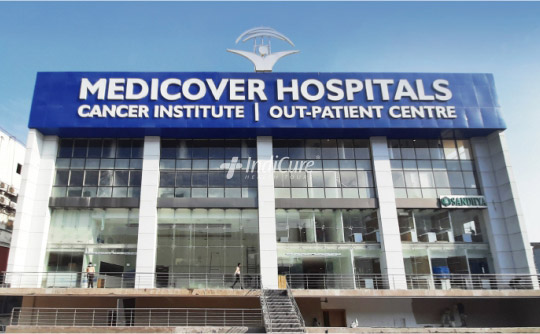
Location: Hyderabad
Speciality: Multi-Superspeciality
Loading...
Loading...
The Medicover Cancer Institute in Hyderabad is the country’s leading single-specialty oncology and cancer care facility. The facility is equipped to handle all aspects of cancer treatment, including prevention, treatment, and rehabilitation. Patients are treated with targeted therapy, chemotherapy, hormonal therapy, and immunotherapy at the hospital. The surgical oncology, radiation oncology, medical oncology, and nuclear medicine teams of Medicover Cancer Institute in Hyderabad are among the best in the country. They cooperate with professionals from various departments to give a multidisciplinary treatment plan that is well-planned.
Sarvodya Hospital, Faridabad

Location: Delhi (NCR)
Speciality: Multi-Superspeciality
Accreditation: Accreditation : National Accreditation Board for Hospitals & Healthcare Providers (NABH), National Accreditation Board for Testing and Calibration Laboratories (NABL)
No. of Beds: Beds : 300
Sarvodaya Hospital was founded in 1997 and is NABH and NABL accredited. It’s a full-fledged super specialty hospital. ‘The Global Healthcare Awards, 2014’ named Sarvodaya Faridabad’s Best Super Specialty Hospital. Cardiology, Cardiothoracic & Vascular Surgery, Neuro Sciences, Minimally Invasive Surgery, Gastroenterology & GI Surgery, Orthopedics & Joint Replacement, Gynecology, Pediatrics, Urology, and Nephrology are some of the areas in which the hospital specializes.
What is Bone Marrow Transplant?
Bone marrow is an essential spongy, fatty tissue substance present inside the bones of the human body. It produces the blood-forming cells in the human body that include :
- Red blood cells that carry oxygen and essential nutrients throughout the body
- White blood cells that protect our body from any infections
- Platelets for blood clot formation to prevent excessive blood loss during injury.
Apart from these cells, the bone marrow also contains hematopoietic stem cells (HSC) which are unspecialized and immature stem cells that have the ability to divide and become either the stem cell or differentiate and mature into other different kinds of blood cells.
Bone marrow cells start to malfunction as a result of diseases like leukemia, aplastic anemia, cancers, or other immune deficiency disorders and start yielding defective or abnormal blood cells that affect the normal functioning of the human body.
Bone marrow transplant is required when the bone marrow in the human body is not healthy enough to perform its normal function which can be due to any disease, chronic infections, or aggressive cancer treatments.
Some of the common reasons to undergo bone marrow transplant include:
- Cancers like leukemia, lymphoma, and multiple myeloma that affect the bone marrow cells.
- Aplastic anemia in which the bone marrow stops producing new blood cells.
- Inherited blood disorders like sickle cell anemia and thalassemia
- Congenital neutropenia resulting in recurrent infections
- Damage to bone marrow due to aggressive chemotherapy etc.
- Bone Marrow Transplant is a major and complex procedure and requires thorough and meticulous planning and forethought.
Bone marrow transplant is of two types:
Allogeneic bone marrow transplant: When the donor is some other person whose tissue has the same genetic type as the patient, the bone marrow transplant is termed as allogeneic transplant. The donor is most likely to be a brother or sister of the patient. However, it is only in 35% of the cases that a sibling’s marrow is a perfect match.
Autologous bone marrow transplant: When healthy stem cells are taken from the patient’s own body and replaced with diseased blood cells, the procedure is termed as autologous bone marrow transplant.
When is a Bone Marrow Transplant Required?
Bone Marrow Transplant is a complex and major procedure. There are risks and complications associated with the procedure and the procedure is thus recommended to select few patients when other treatments have failed.
Bone Marrow Transplant is recommended if other treatments are not working and there is a higher risk of the condition returning without the transplant and if the physician feels that the benefits of the transplant outweigh the risks associated with the procedure. The best candidates for bone marrow transplant are those in otherwise good health and have stem cells available from a sibling, or another family member.
How is a Bone Marrow Transplant done?
The procedure needs meticulous planning and the surgeon thoroughly assesses the patient to make sure that he/she is healthy enough to survive and accept the transplant. For this, a series of tests are done to assess the patient’s vital organs like heart, lungs, kidneys, and liver to ensure the patient is physically capable of accepting the transplant.
If the surgeon thinks that a transplant can be done, he proceeds with harvesting of stem cells.
Harvesting stem cells:
If the patient is undergoing an allogeneic transplant, bone marrow is harvested from the donor one or two days prior to the transplant procedure. The stem cells are collected in two ways:
- Bone marrow harvesting: The donor is given general anesthesia and the cells are collected using a needle from the rear part of the hip bone or the iliac crest where the stem cells are located in abundance.
- Leukapheresis: This is done in cases of autologous transplant in which the blood is drawn intravenously from the patient’s body and the machine is used that separates the white blood cells containing stem cells from the blood.
Preoperative regimen:
Before the transplant, the patient undergoes chemotherapy or radiation therapy to kill the cancerous cells and to make room for the new bone marrow cells often known as conditioning of the patient.
Stem cell transplant:
For transplant, the central venous catheter or a port is installed on the upper right portion of the chest wall of the patient and the new stem cells are infused through this port that helps them to flow directly to your heart from where they are dispersed all over the body through the blood. Gradually the cells become established in the bone marrow to grow.
Engraftment:
The post is kept at the same place as the infusion is done in multiple sessions that aid the new stem cells to integrate into the body. This process is known as engraftment. The patient receives the blood transfusion, fluids, antibiotics, and platelet transfusion through this port so as to fight the infection and to help your body accept the new marrow.
Monitoring for complications:
After the infusion, you will be closely monitored for any signs of complications or rejection. Precautions are taken to prevent any infections. The patient is constantly monitored to check if engraftment has occurred or not and to monitor organ function. Once the healthy bone marrow begins to produce normal cells, transfusion is stopped.
What is the Recovery after Bone Marrow Transplant like?
Recovery after a bone marrow transplant is a long and stressful process for both the patient and the family. The initial few weeks are very critical as there are high chances of complications and rejections of the transplant.
But, subsequently, the patient starts to feel better as the blood count begins to grow and his immune system becomes stronger. Full recovery may take up to a year or two.
You shall need a total of 16-18 weeks for a bone marrow transplant in India after which you can fly back to your country.
What Results Can I Expect from Bone Marrow Transplant?
It is a complex but lifesaving procedure that has improved in the past few years. After a successful bone marrow transplant, you will be able to live a normal life once again which was not possible otherwise.
Questions you must ask
Here is a set of questions you should consider asking before commencing your journey for a bone marrow transplant in India.
- Is it time for a Bone Marrow transplant?
- Is the surgeon board certified?
- How experienced is the Surgeon?
- Which language does the surgeon speak?
- Is the treatment done in a well-equipped facility?
- Can you give me any information on outcomes and complication rates?
- How much pain can I expect, and how will it be managed in the hospital and after I go home?
- What about the risks involved?
- Does the surgeon use a certified anesthetist?
- How long will the recovery period be?
Be ready to respond about:
Prepare to answer questions about your:
- Medical history and exams
- Previous surgeries
- Current medication review
- History of smoking, drugs, or alcohol