

Pyeloplasty Cost in India
Last updated: May 3, 2026
Starting from USD 1700
INCLUDES
- Surgery
- Stay at the Hospital
- Pre-operative Investigations
- Medicines, Consumables
- Food at the hospital
- Airport Transfers
- MediTraWell assistance
DOES NOT INCLUDE
- Accommodation outside the Hospital
- Air tickets
- Medical Visa fee
STAY REQUIRED
- Stay at the Hospital - 1 to 2 days
- Stay at the Hotel - 7 to 8 days
- Stay in India - 8 to 10 days
Factors that Affect Pyeloplasty Cost in India
- Urologist’s Fees
One of the key costs you will face when contemplating Pyeloplasty surgery in India is the urologist’s fee. IndiCure connects you with board-certified urologists in India who are highly skilled and have delivered successful surgeries. While the urologist’s fee can vary based on their experience, you can trust IndiCure to recommend doctors who prioritize your safety and deliver excellent outcomes when you choose Pyeloplasty in India.
- Type of Surgical Approach
There are various methods to perform the surgery, such as Open, Laparoscopic, or Robotic techniques, each influencing the cost of pyeloplasty. Additionally, a significant portion of the overall expense may come from using customized surgical instruments or advanced computer technology. As new techniques and technologies are introduced to enhance patient care, these innovative advancements in the surgical approach can also contribute to higher costs of Pyeloplasty in India.
- Your Choice of Surgical Facility
Choosing an accredited medical facility with skilled and qualified medical staff is crucial for the success of Pyeloplasty surgery in India. In India, larger cities typically offer superior medical facilities and more experienced surgeons, resulting in higher costs. IndiCure Health Tours specifically recommends surgical facilities in larger cities of India to prioritize quality of care and ensure patient safety.
- Surgery-Related Expenses
The surgery-related expenses include the pre- and post-surgical expenses. The pre-surgical expenses are associated with the age and medical condition of the patient and thus the number and type of investigations required. Post-surgical expenses may include prescription medications and follow-up consultations.
We at MediTraWell, understand that you travel with a budget in mind and do not like to be greeted by surprises after arrival in India. We thus club all these expenses and give you a package cost that is inclusive and affordable at the same time.
Your case manager shall give you an estimated cost of your surgery after discussing your medical reports with the surgeon. The final cost, however, shall be confirmed after your consultation with the surgeon.
Medi Trawell Services
Making Medical Travel to India Affordable & Hassle-free for 15+ Years

We Help you Choose the Right Treatment, Surgeon & Hospital

We Arrange Video/Telephonic Consultation with the Surgeon

We Assist you with Visa & Accommodation

We Receive you at the Airport and Drop you at Hotel/Hospital

We Assist you the at Hospital & Provide Post Operative Support
Our services are FREE for our patients.
In fact, we have Special Negotiated Rates with the Hospitals and you can avail Discounted Rates when you choose to Travel with MediTrawell. Container
Best Urologists in India

Dr Priyadarshni Ranjan
Kidney Transplant Surgeon And Urologist
MBBS, MS, MCh
Mohali
Dr Priyadarshni Ranjan is the most reputed and leading kidney transplant surgeon in the country currently heading the Advanced Kidney Care Unit at Fortis Hospital, Mohali.
He is an expert in performing kidney transplant surgery at more than 95% success rates which are at par with the leading kidney transplant centers across the world. He has performed the first successful Laparoscopic and Retroperitoneoscopic Kidney Cancer Surgeries at the Fortis Hospital Mohali.He has to his name around 45 international publications and two books in Urology and Kidney Transplantation.
He is amongst the handful urologists in India who are extensively skilled in performing complex tumor and non-tumor Kidney surgeries by Retroperitoneoscopy and Laparoscopy. He also has his name recorded in the Limca Book of Records for his extraordinary results in the treatment of kidney cancer. With this vast experience, he has around 3000 surgeries under his belt which includes Laparoscopic donor nephrectomies, kidney transplantation, Kidney cancer, Urinary bladder cancer, Prostate Operations for BPH etc.
He is amongst the handful urologists in India who are extensively skilled in performing complex tumor and non-tumor Kidney surgeries by Retroperitoneoscopy and Laparoscopy. He also has his name recorded in the Limca Book of Records for his extraordinary results in the treatment of kidney cancer.

Dr. Sanjay Gogoi
Urologist And Renal Transplant Surgeon
MBBS, MS, MCH, DNB
Gurgaon
Dr. Sanjay Gogoi is the Director and Head of the Department of Urology and Renal Transplantation at FMRI, Gurgaon. Being extensively accomplished in Robotic from the Intuitive Surgical, California, he is expertise in minimally invasive transplant techniques of Laparoscopic and Robot-Assisted Transplantation.
He also has expertise in robotic and reconstructive procedures of kidneys, ureters, and bladder, in both adult and pediatric patients. He also has various national and international publications to his credit.
He is an expert in Robotic Urology, Reconstructive Urology, Pediatric Urology, Uro-oncology, renal transplantation, Endourology, Female Urology
Being extensively accomplished in Robotic from the Intuitive Surgical, California, he is expertise in minimally invasive transplant techniques of Laparoscopic and Robot-Assisted Transplantation.
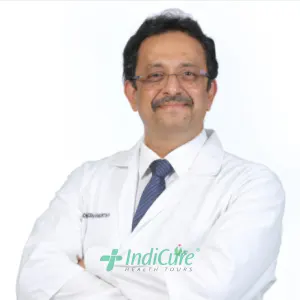
Dr Mohan Keshavmurthy
Urologist & Renal Transplant Surgeon
MBBS, MS, MCH, FRCS, FASTS
Bangalore
Dr. Keshavamurthy Mohan is one of the most eminent and reputed Urologist, Renal Transplant Surgeon having an extensive surgical experience of over 25 years.
He has performed over 2500 kidney transplants, 75 pancreas transplants, 2500 laser RIRS, and URS, and over 3000 Laser TURP procedures.
He was a meritorious and award winning student during his medical graduation following which he has done advanced training in Solid organ transplantation from QE II HSX, Halifax, Canada and also pursued Fellowship of American society of Transplantation. He is acknowledged for establishing the most successful kidney transplant programs in West and East Africa as well as the Middle East.
He is an expert in performing Laser Urology, complex reconstruction of the urinary tract, major uro-ontological procedures, Trans-urethral prostate procedures, kidney transplants, and pancreas transplants.
Best Urology Hospitals in India
Jaypee Hospital, Noida
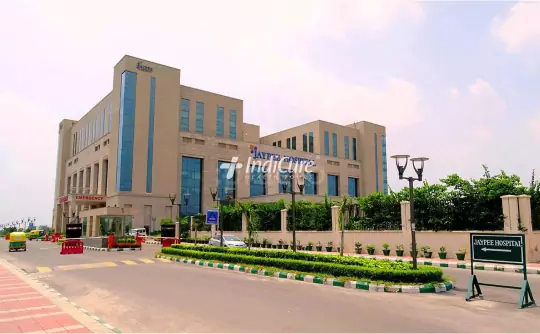
Location: Delhi (NCR)
Speciality: Multi-Superspeciality
Accreditation: Accreditation : National Accreditation Board for Hospitals & Healthcare Providers (NABH)
No. of Beds: Beds : 1200
Jaypee Hospital at Noida is the flagship hospital of the Jaypee Group, one of the top industrial houses in India involved in Engineering and Construction, Power, Cement, Real Estate, Hospitality, Expressways, IT, Sports & Education. Jaypee Hospital is the group’s herald in the healthcare space. Spread over a sprawling twenty-five-acre campus in Noida, Japyee is a 1200 bedded tertiary care multi-specialty hospital. Accredited by NABH, the hospital is home to a few of the most advanced technology and has already established a name of its own in clinical excellence, and is counted among the best hospitals in Delhi and India.
Centre for Sight, Rajouri Garden, Delhi
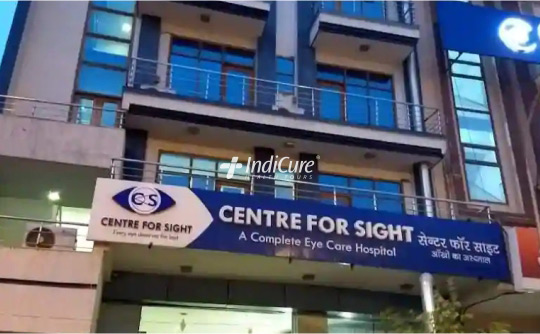
Location: New Delhi
Speciality: Multi-Superspeciality
Loading...
Loading...
The Centre for Sight Eye Hospital in Rajouri Garden, Delhi, is a leading, contemporary, single-specialty eye-care facility. It opened its doors in 1996 as a dedicated healthcare centre dedicated to offering high-quality eye care to all patients. The institution has a reputation for doing advanced treatments such as PRK/Surface ablation, blade LASIK, and alternative refractive surgeries such as EPI-LASIK for PRK, implantable contact lens, refractive lens exchange, collagen cross-linking, ITACS, and SBK in place of LASIK. SMILE EYE surgery, cataract surgery, and oculoplasty operations are also performed in the hospital.
What is Pyeloplasty?
Pyeloplasty is a procedure that allows urine to flow freely from the kidney to the lengthy tube that connects the kidney to the bladder (ureter). The ureteropelvic junction (UPJ) blockage is the name for this type of obstruction.
The surgery’s purpose is to establish a free flow of urine, which will relieve edema and pressure in the kidney. Pyeloplasty is the most common surgical surgery for the treatment of kidney enlargement caused by urine collecting (hydronephrosis). The procedure clears the obstruction between the ureter and the renal pelvis (UPJ blockage). It reconnects the healthy segment of the ureter to the kidney’s drainage system after removing the constricted or obstructed portion.
Types of Pyeloplasty
1) Open Pyeloplasty: The incision can be made in the lower back, right beneath the 12th rib, across the abdomen, or in the flank region, which is the most traditional technique of performing the surgery. In each case, a lengthy cut is done, exposing the kidney by removing the skin, intermediate tissue, and muscles. The ureter is then rejoined to the renal pelvis after the constricted part of the junction is cut and removed. A stent is sometimes put in the narrowed area to keep the area open and allow for easy urine drainage. Muscles, skin, and other tissues are sewn up after the treatment. The patient is required to stay in the hospital for 3-4 days, with a recovery period of 1-3 months.
2) Laparoscopic Pyeloplasty: The treatment was initially carried out in 1993 and since then has steadily gained acceptance among patients and surgeons alike. Small cuts and microscopic instruments replace huge incisions in this surgery, which is similar to open pyeloplasty. Even though the surgery necessitates specialized expertise, it is a preferred option due to the shorter hospital stay and speedier recovery.
When is Pyeloplasty Required?
Pyeloplasty may be necessary for both adults and children to correct a ureteropelvic junction (UPJ) obstruction, a condition that impairs the flow of urine from the kidney to the bladder. This blockage is relatively common, affecting approximately one in every 1,500 babies, with the incidence being twice as high in males compared to females.
In infants, if the obstruction does not resolve on its own within the first 18 months of life, surgical intervention through pyeloplasty is often recommended.
While UPJ obstruction is frequently diagnosed in infants, it can also develop later in life. Adults, teenagers, and older children may experience this condition due to congenital factors or acquired causes, such as kidney stones or scarring from previous surgeries.
If the obstruction leads to significant kidney blockage, pyeloplasty may be required to restore normal urinary flow and prevent further complications.
How is Pyeloplasty done?
The following steps outline how pyeloplasty surgery is performed in babies and infants:
Step 1
During an open pyeloplasty, a small incision of approximately two to three inches is made just below your baby’s rib cage. This incision allows the surgeon to access the ureter, where the obstructed segment causing the blockage is carefully removed.
Step 2
Once the obstructed portion of the ureter is excised, the healthy section of the ureter is meticulously reconnected to the renal pelvis. This reconnection is done using the normal caliber ureter, ensuring a clear passage for urine to flow from the kidney to the bladder.
Step 3
A stent—a small, flexible silicone tube—is temporarily placed within the kidney. This stent helps maintain the open passage and allows urine to bypass the surgical site. The stent will be left in and it will be removed during a follow-up procedure.
The following steps outline how pyeloplasty surgery is performed in children and adults:
Step 1
The surgeon will begin by making a series of small incisions in your baby’s abdomen, typically ranging from eight to ten millimeters in length. These tiny incisions are strategically placed to allow the surgeon to access the affected area with minimal disruption to surrounding tissues.
Step 2
Your surgeon’s assistant robot contains three to four robotic arms. Two to three people are holding instruments, and one is holding a camera. The devices have a similar range of motion to the human hand and can remove the narrow/scarred area of the UPJ blockage while reconnecting the normal tissue.
What is the Recovery after Pyeloplasty like?
Recovery from pyeloplasty involves a gradual return to normal activities, with careful monitoring by your healthcare team to ensure proper healing. Here’s what you can expect:
- Post-Surgery Monitoring:
After the surgery, your healthcare professional will closely monitor your progress for several months to ensure that the urinary flow has been successfully restored and that there are no complications. Regular follow-up appointments, including imaging tests like ultrasounds or scans, may be scheduled to assess kidney function and confirm that the obstruction has been fully resolved.
- Returning to Normal Activities:
Your healthcare provider will give specific instructions on how and when to resume your regular activities. It’s important to follow these guidelines to avoid strain on the surgical site and ensure a smooth recovery.
- Immediate Post-Surgery Care:
In the first few days after surgery, you’ll be encouraged to take short walks as soon as possible. This helps improve circulation, promotes healing, and reduces the risk of blood clots. Although it might feel challenging initially, moving around soon after surgery is crucial for your recovery.
- Resuming Physical Activities:
Heavy lifting, strenuous activities, and vigorous exercise should be avoided for about four to six weeks following the surgery. This timeframe allows the surgical area to heal properly and reduces the risk of complications, such as hernias or reopening of the incisions. After this period, and with your healthcare provider’s approval, you can gradually resume lifting heavy objects and engaging in more intense physical activities.
- Long-Term Considerations:
Even after resuming normal activities, it’s important to listen to your body and avoid pushing yourself too hard, too quickly. If you experience any unusual pain, discomfort, or other symptoms, contact your healthcare provider immediately. By following your recovery plan and attending all scheduled follow-up appointments, you can ensure the best possible outcome from your pyeloplasty.
What Results Can I Expect from Pyeloplasty?
Pyeloplasty is a highly effective and rewarding procedure, with success rates ranging from 85% to 100%. It is considered the most successful surgical option for treating UPJ obstruction, offering superior outcomes compared to other methods.
Questions you must ask
Here is a set of questions you should consider asking before commencing your journey for Pyeloplasty surgery in India.
- Is it time for a Pyeloplasty surgery?
- Is the urologist board certified?
- How experienced is the Surgeon?
- Which language does the surgeon speak?
- Is the treatment done in a well-equipped facility?
- Can you give me any information on outcomes and complication rates?
- How much pain can I expect, and how will it be managed in the hospital and after I go home?
- What about the risks involved?
- Does the surgeon use a certified anesthetist?
- How long will the recovery period be?
Be ready to respond about:
Prepare to answer questions about your:
- Medical history and exams
- Previous surgeries
- Current medication review
- History of smoking, drugs, or alcohol