

Vitrectomy Cost in India
Last updated: May 3, 2026
Starting from USD 1100
Vitrectomy Cost in India starts from US $1,100 and varies with the severity of your medical condition, your medical history, surgeon, facility and the city where you choose to get the surgery done.
Surgery Information
| Surgery Time | 1-2 hours |
|---|---|
| Anesthesia Type | IV Sedation |
| Hospitalization | 0-1 days |
| Stitch Removal | 1st follow-up |
| Recovery Time | 4-6 weeks |
INCLUDES
- Surgery
- Stay at the Hospital
- Pre-operative Investigations
- Medicines, Consumables
- Food at the hospital
- Airport Transfers
- MediTraWell assistance
DOES NOT INCLUDE
- Accommodation outside the Hospital
- Air tickets
- Medical Visa fee
STAY REQUIRED
- Stay at the Hospital - 1 to 2 days
- Stay at the Hotel - 7 to 8 days
- Stay in India - 8 to 10 days
Factors that affect Vitrectomy Cost in India:
- Ophthalmologist’s Fees
An important expense when it comes to your vitrectomy is going to be your ophthalmologist’s fees. IndiCure recommends highly experienced, skilled, board-certified surgeons who are capable of delivering successful surgeries. Although the charges may vary depending on the experience of the surgeon, you can be assured that you are in safe and skilled hands when you choose eye treatment in India with IndiCure.
- Type of Surgical Approach
A significant portion of the overall cost of the surgery arises from the use of any customized surgical instruments or specialized computer technology. With the hopes of improving patient care, new techniques and technologies are often introduced to the surgical process. Such innovative advancements in the surgical approach can increase costs.
- Surgical Facility
Having your retinal detachment surgery in an accredited surgical facility by skilled and qualified medical staff is a critical factor. Moreover, the geographical location of this facility in India also affects the quote. But, IndiCure provides you with a projected estimate that will be all inclusive and affordable.
- Treatment-Related Expenses
The treatment-related expenses include the pre- and post-treatment expenses. The pre-treatment expenses are associated with the age and medical condition of the patient and thus the number and type of investigations required. Post-treatment expenses may include prescription medications and follow-up consultations.
We at MediTraWell, understand that you travel with a budget in mind and do not like to be greeted by surprises after arrival in India. We thus club all these expenses and give you a package cost that is inclusive and affordable at the same time.
Your case manager shall give you an estimated cost of your surgery after discussing your medical reports with the surgeon. The final cost, however, shall be confirmed after your consultation with the surgeon.
Medi Trawell Services
Making Medical Travel to India Affordable & Hassle-free for 15+ Years

We Help you Choose the Right Treatment, Surgeon & Hospital

We Arrange Video/Telephonic Consultation with the Surgeon

We Assist you with Visa & Accommodation

We Receive you at the Airport and Drop you at Hotel/Hospital

We Assist you the at Hospital & Provide Post Operative Support
Our services are FREE for our patients.
In fact, we have Special Negotiated Rates with the Hospitals and you can avail Discounted Rates when you choose to Travel with MediTrawell. Container
Best Ophthalmologists in India
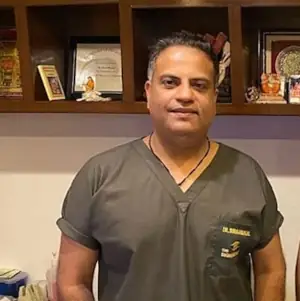
Dr Suraj Munjal
LASIK
MBBS, MS
Delhi
Dr Suraj Munjal is a well renowned name in Eye care not only in Delhi NCR, but the entire North India. With proficiency in refractive surgeries and corneal transplants, Dr Munjal is considered one of the best eye doctors in India and manages a wide array of complex and referred cases from across India and other countries. He is widely regarded as the best eye doctor in Delhi and has amassed extensive experience in performing successful LASIK surgeries.
With his dedication to delivering exceptional eye care, Dr Munjal is committed to providing affordable and personalized treatments without compromising on ethics. His commitment has led him to perform surgeries in various Middle Eastern countries, including Iraq, Dubai, Kurdistan, and Bahrain, at the invitation of local governments.
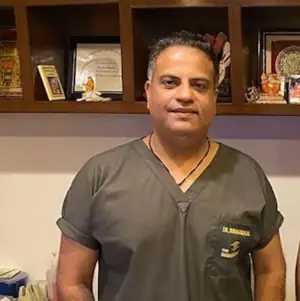
Dr Suraj Munjal
LASIK
MBBS, MS
Delhi
Dr Suraj Munjal is a well renowned name in Eye care not only in Delhi NCR, but the entire North India. With proficiency in refractive surgeries and corneal transplants, Dr Munjal is considered one of the best eye doctors in India and manages a wide array of complex and referred cases from across India and other countries. He is widely regarded as the best eye doctor in Delhi and has amassed extensive experience in performing successful LASIK surgeries.
With his dedication to delivering exceptional eye care, Dr Munjal is committed to providing affordable and personalized treatments without compromising on ethics. His commitment has led him to perform surgeries in various Middle Eastern countries, including Iraq, Dubai, Kurdistan, and Bahrain, at the invitation of local governments.

Dr. Nishikant Borse
Retinal Surgery
MBBS, MS, FMRF, FASRS
Mumbai
Dr. Nishikant Borse is not only regarded as one of the best ophthalmologists in Mumbai, but also one of the best eye doctors in India. With more than 25 years of experience and more than 10,000 surgeries to his credit with challenging retina cases, he is one of India’s top retina surgeons. After completing his medical studies at the illustrious Grant Medical College in Mumbai and earning a Master’s degree in Ophthalmology, he underwent advanced training and Fellowship at the prestigious Sankara Nethralaya in Chennai.
Dr. Borse is frequently asked to speak as a guest speaker at conferences all around the country and the world. He has led various training sessions for teaching the complexities of retinal surgery in Mumbai and other areas of the country. He has carried out real retinal procedures at numerous conferences. He has had a number of research papers published in both domestic and foreign journals.
Dr. Borse has been many awards nationally and internationally, like The Rhett Buckler Award by the American Society of Retina Specialists, Cesare Forlini Award by the European Vitreoretinal Society, C S Reshmi Award by the All India Ophthalmological Society,
He is a member of the Bombay Ophthalmologists Association, the Maharashtra Ophthalmological Society, the All India Ophthalmological Society, the Vitreo-Retinal Society of India, the American Academy of Ophthalmology, and the International Society of Ocular Trauma. He is also a Fellow of the American Society of Retina Specialists.
American Academy of Ophthalmology, and the International Society of Ocular Trauma. He is also a Fellow of the American Society of Retina Specialists
Best Eye Hospitals in India
Apollo Cradle Royale, Nehru Place, Delhi

Location: New Delhi
Speciality: Women & child care, IVF
Accreditation: Accreditation : NABH
No. of Beds: 18
Apollo Cradle Royale in Delhi excels in Gynaecology, Maternity, Paediatrics, Paediatric Surgery, and Neonatology, serving as a centre of excellence in these specialized healthcare areas. Spanning an expansive 35,000 square feet, Apollo Cradle is a premium healthcare facility that provides a wide range of services. The hospital offers procedures such as IVF, IUI, fertilization, IVF-ET, IUD placement, laparoscopic sterilization, complex pregnancy treatment, gynecological endoscopy/laparoscopy, abdominal hysterectomy, clitoral hood reduction, and hysterectomy (both abdominal and vaginal). Apollo Cradle boasts an advanced level III Neonatal Intensive Care Unit (NICU) that offers top-notch care. Additionally, for women requiring emergency care, there is an additional Intensive Care Unit (ICU).
ART Fertility Clinics, Gurgaon

Location: Gurgaon
Speciality: IVF & Infertility
Loading...
Loading...
ART Fertility Clinics, Gurgaon, has already established itself as a premier single-specialty facility for assisted reproductive technology since its inception in 2021. Treatments such as IVF, ICSI, IUI, PGT-A/PGT-SR, PGT-M, semen analysis, and laparoscopy are available at ART Fertility Clinics in Gurugram. In addition, male infertility tests such as FNA, TESE, and Micro TESE are also carried out. The clinical staff at ART Fertility Clinics in Delhi is knowledgeable and skilled, having received training from prestigious medical and human reproduction programs. The ART Fertility Clinics provide individualized treatment regimens and employ sensitive and caring nurses and counselors. The hospital’s facilities and layout are developed with patient safety in mind. It is large, clean, and sanitary. The hospital is operated by ESHRE-certified fertility doctors and adheres to WHO guidelines.
Vitrectomy
Vitrectomy surgery involves the removal of some or all of the vitreous humour or fluid from the eye and its replacement. The treatment is considered to be quite successful, and it is frequently performed in conjunction with other eye surgeries.
Vitrectomy treatments are commonly performed to enable surgeons access to the back of the eye during retinal surgery. It’s also used to drain vitreous fluid that has turned cloudy or bloody, or is clogged with floaters or tissue clumps.
Common reasons for a vitrectomy surgery, and other surgeries associated with it include:
- bleeding inside of the eye
- eye infections
- major eye trauma or injury
- problems after cataract (cloudy lens) surgery
- vitreous floaters or tiny bits of tissue in the vitreous fluid
- damaged retinal tissue or scar tissue on the retina
- injury from a dislodged, misplaced, or infected intraocular lens (IOL)
- detached retina where the retina becomes loose and moves around the eye
- trauma or injury that occurs during cornea, cataract, or glaucoma surgery
- diabetic retinopathy when the retina has been damaged by long periods of uncontrolled diabetes
- macular degeneration or a macular hole where there is a small hole, tear, or defect in the macula or central tissue of the retina
- swelling of the central retinal tissue
- swelling of the eye
Types of Vitrectomy
- Posterior Pars Plana Vitrectomy: A posterior or pars plana vitrectomy is used to treat illnesses of the posterior portion of the eye.
- Anterior Vitrectomy: The vitreous gel enters the anterior (front) chamber of the eye through the pupil in rare situations. An anterior vitrectomy may be performed to reduce the likelihood of future difficulties caused by leaking vitreous gel and to facilitate visual recovery.
The goals of surgery are:
- To treat the pathology (abnormal condition) causing visual loss
- To reduce the likelihood of recurrence
- To minimize the risk of complications
Vitrectomy alone cures only a few disorders. At least one extra procedure is usually linked with vitrectomies.
Vitrectomy is sometimes paired with scleral buckling, a surgery that involves stitching a piece of silicone sponge, rubber, or semi-hard plastic onto the sclera or placing a band around the eye to reduce retinal traction in eyes with retinal detachment. It can be difficult to perform vitrectomy in eyes that have been damaged by trauma or in critically preterm newborns with retinopathy of prematurity.
Am I a good Candidate?
You may be recommended vitrectomy if you experience the following conditions:
- Vision-blocking vitreous opacity (clouding)
- Conditions caused by abnormal pulling on the retina
- Conditions needing retinal or other eye surgery
- To diagnose a vitreoretinal condition (diagnostic vitrectomy)
- When placing a therapeutic device or drug delivery
Questions to Ask
We at IndiCure completely understand your concerns and it is always our endeavor to provide the best outcome for every patient. Following is the list of questions you must ask before you embark on your journey for vitrectomy with retinal detachment in India.
- Is it time for vitrectomy with retinal detachment?
- Is the surgeon board certified?
- How experienced is the Surgeon?
- Which language does the surgeon speak?
- Is the surgery done in a well-equipped facility?
- Can you give me any information on outcomes and complication rates?
- How much pain can I expect, and how will it be managed in the hospital and after I go home?
- What surgical option is recommended for me?
- What about the risks involved?
- Does the surgeon use a certified anesthetist?
- How long will the recovery period be?
Preparation
Prepare to answer questions about your:
- Medical history and exams
- Previous surgeries
- Current medication review
- History of smoking, drugs, or alcohol
Surgical Procedure
Step 1
Three little holes (ports) are drilled into the white (sclera) of your eye to begin the procedure. The first permits a continuous flow of fluid into your eye, known as a ‘infusion.’ The second port is for inserting a specific fibre-optic ‘light pipe’ to offer illumination to your eye, while the third is for all other tools that require access to the eye during the surgery, such as a ‘cutter’ for vitreous removal.
Step 2
After that, cryotherapy will be used. The fluid in your eye will then be replaced with air, and you may hear a whistling sound as this occurs. At the end of the operation, this air will be replaced with a gas, which is commonly C3F8 or SF6.
Step 3
To offer a protective covering, a pad and shield will be placed over your eye at the conclusion of the operation.
Results
The results are gratifying after the surgery. Advances in instrumentation, techniques, and understanding of diseases of the vitreous and retina have made vitrectomy quite successful. Surgery for diseases that were once incurable, such as macular hole, is now routinely performed with excellent results.
Recovery
Vitrectomy operations are frequently performed in conjunction with other eye surgeries, therefore recovery times and recommendations vary.
Driving, reading, and exercise are all things that should be avoided for a few days after the surgery.
To assist the eyes heal properly, some people will be advised to rest face down for a period of time. Eye drops are frequently administered to aid in the prevention of infection and the reduction of irritation. The overall recuperation time for vitrectomy surgery is usually between 4 and 6 weeks.