
Ventricular Septal Defect Treatment Cost in India
Last updated: April 19, 2026
Starting from USD 4,500
The Ventricular Septal Defect Treatment Cost in India starts from USD 4,500. It varies depending on the patient’s medical condition, medical history, the surgeon, the facility, and the city in India where you choose to get the surgery done.
The cost for ventricular septal defect treatment quoted in India above is indicative and should not be taken as the final cost of the surgery. The final cost can be ascertained after the surgeon in India has physically evaluated the patient. The cost in Indian Rupees can vary based on the exchange rate.
INCLUDES
- FDA Approved Implant
- Surgery and Stay at the Hospital
- Pre-operative Investigations
- Medicines, Consumables & Food at the hospital
- Airport Transfers & MediTraWell assistance
DOES NOT INCLUDE
- Accommodation outside the Hospital
- Air tickets
- Medical Visa fee
STAY REQUIRED
- Stay at the Hospital - 1 to 2 days
- Stay at the Hotel - 7 to 8 days
- Stay in India - 8 to 10 days
With end to end services for your hassle-free Cancer Treatment in India, MediTraWell has made the entire process of seeking medical tourism in India easy and hassle free for you besides making it affordable.
Factors that affect Ventricular Septal Defect (VSD) Treatment cost in India
- Pediatric Cardiac Surgeon’s Fees
A significant component of the Ventricular Septal Defect Treatment Cost in India is the heart surgeon’s fees. MediTraWell Health Tours recommends highly experienced, skilled, board-certified heart surgeons in India who can deliver excellent results. While the charges may vary based on the surgeon’s experience, you can be confident that you are in safe and capable hands when opting for affordable heart surgery in India with MediTraWell Health Tours.
- Type of Surgical Approach
In the pursuit of enhancing patient care, the medical field continually introduces new techniques and technologies into surgical procedures. These innovative advancements are designed to improve outcomes, reduce recovery times, and increase the overall effectiveness of treatments. While these advancements can significantly benefit patient care, they may also lead to higher Ventricular Septal Defect Treatment Cost in India.
- Your Choice of Surgical Facility
Selecting an accredited medical facility with skilled and qualified medical staff is essential for the success of your Ventricular Septal Defect (VSD) Treatment in India. Larger cities in India generally provide superior medical facilities and more experienced surgeons, leading to higher costs. MediTraWell Health Tours recommends surgical facilities in these larger cities in India to prioritize quality of care and ensure safety of our international patient guests.
- Surgery-Related Expenses
The surgery-related expenses include the pre- and post-surgical expenses. The pre-surgical expenses are associated with the age and medical condition of the patient and thus the number and type of investigations required. Post-surgical expenses may include prescription medications and follow-up consultations.
We Customize Ventricular Septal Defect (VSD) Treatment in India Quote to Suit Your Preferences
At MediTraWell Health Tours, we consolidate most of the expenses for your Ventricular Septal Defect (VSD) Treatment in India to provide an inclusive and cost-effective package tailored to your budget and individual requirements. After receiving medical reports, your Case Manager will provide an estimated cost based on a discussion with the heart surgeon in India.
The final Ventricular Septal Defect (VSD) Treatment cost in India can however be confirmed after your face-to-face consultation with the heart surgeon in India.
We at MediTraWell, understand that you travel with a budget in mind and do not like to be greeted by surprises after arrival in India. We thus club all these expenses and give you a package cost that is inclusive and affordable at the same time.
Your case manager shall give you an estimated cost of your surgery after discussing your medical reports with the surgeon. The final cost, however, shall be confirmed after your consultation with the surgeon.
Medi Trawell Services
Making Medical Travel to India Affordable & Hassle-free for 15+ Years

We Help you Choose the Right Treatment, Surgeon & Hospital
We Arrange Video/Telephonic Consultation with the Surgeon

We Assist you with Visa & Accommodation

We Receive you at the Airport and Drop you at Hotel/Hospital

We Assist you the at Hospital & Provide Post Operative Support
Our services are FREE for our patients.
In fact, we have Special Negotiated Rates with the Hospitals and you can avail Discounted Rates when you choose to Travel with MediTrawell. Container
Cardiac Procedures We Offer
Here is a compilation of the heart treatment options we provide in India.
- Holter Monitoring
- Alcohol Septal Ablation
- AICD
- Coronary Angiography
- Coronary Angioplasty (PTCA)
- Pacemaker Implantation
- Cardiac Bypass (Heart Bypass)
- ASD Device Closure
- Aortic Valve Replacement
- ASD Treatment
- VSD Treatment
- Cardiac Tumor Surgery
- EP Study
- Balloon Valvuloplasty
- Bentall Procedure
- Cardiac Ablation
- Minimally Invasive Heart Bypass
- Valve Replacement Surgery
- Pediatric Heart Surgery
- Robotic Heart Surgery
- Heart Transplant
- LVAD (Left Ventricular Assist Device)
- TAVR (Transcatheter Aortic Valve Replacement)
- Truncus Arteriosus Repair
Best cardiologist in India
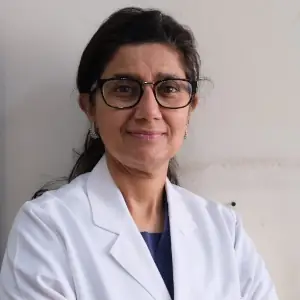
Dr Aparna Jaswal
Interventional Cardiologist
MBBS, MD, DNB, Training, Cardiac Electrophysiology at St. Luke's Hospital in Milwaukee, USA
Delhi
Dr. Aparna Jaswal is a highly recognized Cardiologist in India, specializing in EPS & RFA of complex arrhythmias, AICD implantation, and biventricular pacing.
She joined Fortis Escorts Heart Institute & Research Centre in New Delhi in 1998, and has been an integral part of the Department of Cardiac Electrophysiology since then. Dr. Jaswal regularly performs electrophysiological studies and radio frequency catheter ablation for various cardiac arrhythmias. She has received training in Cardiac Electrophysiology at St. Luke’s Hospital in Milwaukee, USA, and holds the ‘Certified Cardiac Device Specialist’ certification from IBHRE, HRS.
Dr. Jaswal is involved in numerous research projects and actively participates in national and international research trials. She is frequently invited as a faculty member to various national and international symposia and workshops. Notably, she initiated the EP program in Mauritius in November 2010. She also received a Fellowship from Heart Rhythm Society, USA in 2011.
https://www.meditrawell.com/eps-rfa-treatment-cost-in-india/
https://www.meditrawell.com/aicd-cost-india/
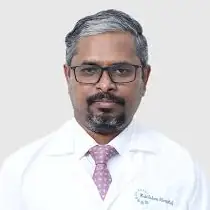
Dr Mahesh Ghogare
Interventional Cardiologist
MBBS, MD, DM, Member- American College of Cardiology, Fellowship, European Society of Cardiology (FESC)
Mumbai
Dr Mahesh Ghogare is a renowned cardiologist in India with an experience of around 15 years. He has achieved proficiency in coronary angiographies and angioplasties using the radial approach, a highly skilled technique involving the hand vessel. With an experience performing more than 3500 angiographies and more than 500 angioplasties primarily through the radial route, Dr Ghogare demonstrates expertise in this method. Additionally, he specializes in complex congenital 2D and 3D echocardiograms. His training includes interventions for pediatric cardiac conditions such as ASD device closure and PDA device closure.
Dr Ghogare completed his super specialization (DM Cardiology) in adult and pediatric cardiology at LTMMC and LTMGH, Sion Hospital, Mumbai. Following this, he served as an Assistant Professor in the Department of Cardiology. Presently he is working as Senior consultant at Apollo Hospital, Navi Mumbai.
https://www.MediTraWell.com/asd-device-closure-cost-india/
https://www.MediTraWell.com/pda-device-closure-cost-india/
ASD device closure
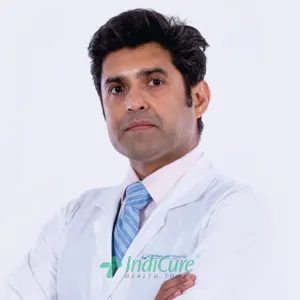
Dr. Sandeep Attawar
Cardiac Surgeon
MBBS, MS, M.Ch (Cardiothoracic Surgery)
Hyderabad
Dr. Sandeep Attawar is a known expert in the field of heart and lung transplantation and is one of the leading cardiac surgeons in India. He has performed over 10,000 open and closed heart procedures, over 300 adult heart and lung transplants, and over two dozen LVAD implants over his career. As of August 2021, he had conducted over 26 double-lung transplants during COVID, one of the greatest amounts in the world.
From infants to octogenarians, he has done a wide range of difficult cardiac surgeries on patients of all ages. Those under his care have a high degree of satisfaction, which is commensurate with his outstanding outcomes.
He has performed over 10,000 open and closed heart procedures, over 300 adult heart and lung transplants, and over two dozen LVAD implants over his career. As of August 2021, he had conducted over 26 double-lung transplants during COVID, one of the greatest amounts in the world
Dr. Attawar is also a member of the International Society for Minimally Invasive Cardiac Surgery (ISMICS), the International Society for Heart and Lung Transplantation (ISHLT), the Minimally Invasive Robotic Association (MIRA), the Society of Thoracic Surgeons (STS), and the European Association of Cardio-Thoracic Surgery (EACTS). He has had work published in prestigious journals such as the Annals of Thoracic Surgery (ATS) and is a member of the Journal of Thoracic Surgery’s editorial board. He is also a member of the ISHLT I2C2 committee’s worldwide faculty, which oversees policies on mechanically assisted circulatory therapy. He is interested in furthering the field of mechanically aided circulation employing Left Ventricular Assist Devices as a proctor for HM3, Jarvik 2000, and ReliantHeart (LVADs).
Best Cancer Hospitals in India
These are our top cancer hospitals in India, ensuring you receive the healthcare you deserve.
Apollo Spectra Hospital, Tardeo, Mumbai
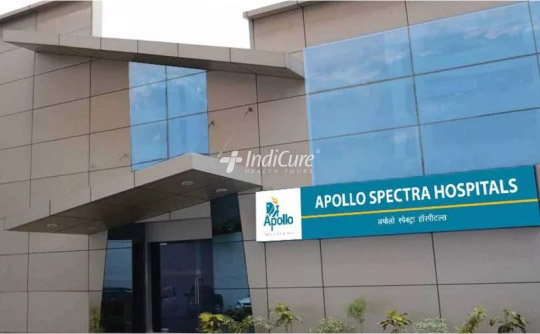
Location: Mumbai
Speciality: Multi-Superspeciality
Accreditation: Accreditation : National Accreditation Board for Hospitals & Healthcare Providers (NABH)
No. of Beds: Beds : 30
Apollo Spectra Hospital has a capacity of 30 beds and offers world-class medical care. ENT, Bariatric Surgery, Urology, Orthopedics and Spine, General and Laparoscopic Surgery, and Varicose Veins are among the surgical specialties offered at the hospital. The hospital has a total area of 15000 square feet, provides personalized services and best possible outcomes for patients.
Desire Aesthetics Clinic, Chennai
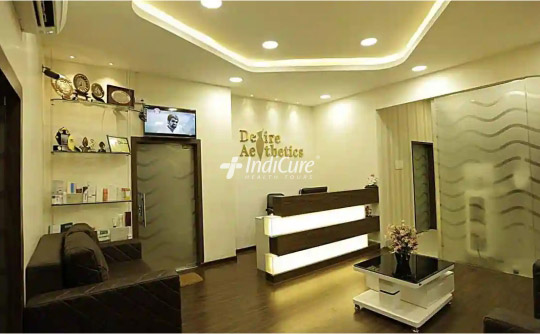
Location: Chennai
Speciality: Multi-Superspeciality
Loading...
No. of Beds: Beds : 310
Desire Aesthetics Clinic, based in Chennai, provides a variety of cosmetic and reconstructive surgical services. The clinic is equipped with cutting-edge equipment and is dedicated to providing cosmetic and plastic surgery services at a reasonable cost. Dr. A. Sivakumar, a prominent cosmetic and reconstructive surgeon, is the clinic’s director. Through a team of cosmetic and plastic surgeons with a combined 50 years of experience, the clinic has been providing medical and surgical aesthetic procedures.
What is Ventricular Septal Defect (VSD) Treatment?
A hole in the heart, known as a ventricular septal defect (VSD), is a common birth abnormality (congenital). The hole (defect) is in the septum, which separates the heart’s lower chambers (ventricles) and permits blood to flow from the left to the right side. The oxygen-rich blood is then pumped back to the lungs rather than out to the body, putting more strain on the heart.
A tiny ventricular septal defect may not cause any issues, and many VSDs close on their own. VSDs that are medium or bigger may require surgical treatment early in life to avoid problems.
Signs and symptoms of serious heart defects often appear during the first few days, weeks, or months of a child’s life.
Symptoms of a Ventricular Septal Defect (VSD) in a baby include:
- Failure to thrive due to poor eating
- Breathing quickly or feeling out of breath
- Easy to exhaustion
A ventricular septal defect may go undetected by you and your doctor at birth. Symptoms may not develop until later in childhood, if at all, if the abnormality is minor. The signs and symptoms vary depending on the size of the hole and any other cardiac abnormalities that may be present.
If your doctor hears a murmur while listening to your baby’s heart with a stethoscope during a routine visit, he or she may suspect a heart abnormality. A VSD may not be diagnosed until a person reaches maturity.
Problems early in the heart’s development produce congenital cardiac abnormalities, but there’s often no definite cause. Environmental and genetic factors may both play a role. VSDs can occur on their own or in conjunction with other congenital cardiac abnormalities.
When is Ventricular Septal Defect (VSD) Treatment required?
Surgical correction is typically done on babies in their first year. Children and adults with a medium or large ventricular septal defect, or one that is causing symptoms, may require surgery to close the defect.
How is Ventricular Septal Defect (VSD) Treatment done?
Step 1
The surgical process begins with the patient being placed under general anesthesia. The surgeon then makes an incision in the chest to access the heart. This approach allows the surgeon to have a clear and direct view of the ventricular septum.
Step 2
Once the heart is exposed, the surgeon repairs the hole in one of two ways: Primary Repair: In some cases, the surgeon stitches the hole directly using sutures. This method is typically used for smaller defects. For larger holes, the surgeon uses a mesh cloth patch.
Step 3
Over time, the body’s natural tissue growth processes take over. The heart tissue grows around and over the patch, eventually absorbing it into the muscle. This effectively closes the defect and restores normal heart function.
What is the Recovery after Ventricular Septal Defect (VSD) Treatment like?
Your child will be admitted to the intensive care unit (ICU) right after the procedure. To keep your child as comfortable as possible, pain medication and sedatives will be administered. Most kids can resume their typical activities after 1-2 months of the procedure.
What Results Can I Expect from Ventricular Septal Defect (VSD) Treatment?
Adults who have closed VSDs and no other heart or lung problems should expect to live a normal life. Only 6% of patients have undergone a re-operation to plug minor leaks that occurred around the patch in the 40 years after the surgery has been extensively used for VSD treatment.
Questions you must ask
Here is a set of questions you should consider asking before commencing your medical journey for Ventricular Septal Defect (VSD) Treatment in India.
- Is the heart surgeon board certified?
- How experienced is the Surgeon?
- Which language does the surgeon speak?
- Is the treatment done in a well-equipped facility?
- What treatment option is recommended for me?
- What about the risks involved?
- Does the surgeon use a certified anesthetist?
- How long will the recovery period be?
Be ready to respond about:
Prepare to answer questions about your:
- Medical history and exams
- Previous surgeries
- Current medication review
- History of smoking, drugs, or alcohol