

Cochlear Implant Cost in India
Last updated: May 3, 2026
Starting from USD 13000 Single Ear
The Cochlear Implant Cost in India starts from USD 13,000 for a single ear. It varies depending on the patient’s medical history, the type, make, and brand of the implant, the surgeon, the facility, and the city where you choose to get the surgery done.
The cost quoted above is indicative and should not be taken as the final cost of the surgery. The final cost can be ascertained after our surgeon in India has evaluated the patient. The cost in Indian Rupees can vary based on the exchange rate.
INCLUDES
- Surgery
- Stay at the Hospital
- Pre-operative Investigations
- Medicines, Consumables
- Food at the hospital
- Airport Transfers
- MediTraWell assistance
DOES NOT INCLUDE
- Accommodation outside the Hospital
- Air tickets
- Medical Visa fee
STAY REQUIRED
- Stay at the Hospital - 1 to 2 days
- Stay at the Hotel - 7 to 8 days
- Stay in India - 8 to 10 days
Factors that affect Cochlear Implant Cost in India:
- Type of Implant and Surgical Approach
A substantial part of the cochlear implant cost in India comes from the implant itself, with costs varying based on the brand, model, and version. Additionally, whether the patient opts to undergo rehabilitation in India or returns home for continued rehab services also impacts the overall cochlear implant surgery cost in India.
- Surgeon’s Fees
A significant component of the Cochlear implant cost in India is the ENT surgeon’s fees. IndiCure recommends highly experienced, skilled, board-certified ENT surgeons who can deliver excellent results. While the charges may vary based on the surgeon’s experience, you can be confident that you are in safe and capable hands when opting for a cochlear implant surgery in India with IndiCure Health Tours.
- Your Choice of Surgical Facility
Selecting an accredited medical facility with skilled and qualified medical staff is essential for the success of your cochlear implant surgery in India. Larger cities in India generally provide superior medical facilities and more experienced surgeons, leading to higher costs. IndiCure Health Tours recommends surgical facilities in these larger cities to prioritize quality of care and ensure patient safety.
- Surgery-Related Expenses
Surgery-related expenses encompass both pre- and post-surgical costs. Pre-surgical expenses involve determining candidacy and reviewing the patient’s medical history, as well as routine exams and tests to ensure suitability for the procedure. Post-surgical expenses may include prescription medications, rehabilitation stays, and follow-up consultations.
We at MediTraWell, understand that you travel with a budget in mind and do not like to be greeted by surprises after arrival in India. We thus club all these expenses and give you a package cost that is inclusive and affordable at the same time.
Your case manager shall give you an estimated cost of your surgery after discussing your medical reports with the surgeon. The final cost, however, shall be confirmed after your consultation with the surgeon.
Medi Trawell Services
Making Medical Travel to India Affordable & Hassle-free for 15+ Years

We Help you Choose the Right Treatment, Surgeon & Hospital

We Arrange Video/Telephonic Consultation with the Surgeon

We Assist you with Visa & Accommodation

We Receive you at the Airport and Drop you at Hotel/Hospital

We Assist you the at Hospital & Provide Post Operative Support
Our services are FREE for our patients.
In fact, we have Special Negotiated Rates with the Hospitals and you can avail Discounted Rates when you choose to Travel with MediTrawell. Container
Best Cochlear Implant Surgeons in India
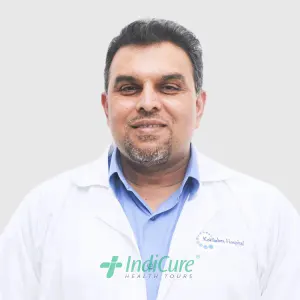
Dr. Sanjiv Badhwar
Cochlear Implant & ENT Surgeon
MBBS, MS, Fellowship
Mumbai
Dr. Sanjiv Badhwar is a renowned ENT surgeon who has more than 26 years of experience. He is an expert at pediatric airway management, surgery for sleep apnea, balloon sinuplasty, cochlear implant and middle ear implant, and robotic head and neck surgery.
Dr. Badhwar has participated at numerous national and international conferences. He has won a number of prizes and accolades for his flawless and outstanding accomplishments in the field of medicine.
Dr. Badhwar has studied and worked at a few of the most prestigious institutions across the world. He received training in balloon sinuplasty from the Sinus Centre of the South in Ocean Springs, Mississippi, the United States; training in sialendoscopy from the European Sialendoscopy Center in Geneva, Switzerland; and training in robotic head and neck surgery from the University of Pennsylvania, Severance Hospital, South Korea.

Dr. K Krishna Kumar
Cochlear Implant & ENT Surgeon
MBBS, MS, Diploma
Chennai
Dr. K Krishna Kumar has more than 47 years of experience as an ENT surgeon. He is an expert in performing microdebrider, and advanced coblation technologies.
In the Tamil Nadu AOI Conference, he received a Gold Medal for Best Paper in “Advances in Nasal Endoscopy” and a Gold Medal for Best Paper in “Laryngeal Tuberculosis.” He has been doing endoscopic surgeries since 1992, making him one of Chennai’s top ENT surgeons. He is knowledgeable about the newest Advanced Coblation technology including the Microdebrider. Advanced Endoscopic Surgery training was completed by Dr. Kumar in New York in 2007 and Advanced Coblation Surgery training in Bergen, Norway, in 2011.
He is a member of the American Academy of Otolaryngologists, Indian Association of Otolaryngologists and Head and Neck Surgeons, Indian Society of Otology, Indian Medical Association (IMA), Association of Otolaryngologists of India (AOI), and the Indian Society of Otology.

Dr. Someshwar Singh
Cochlear Implant & ENT Surgeon
MBBS, MS, FRCS
New Delhi
Dr. Someshwar is a renowned otorhinolaryngologist with more than 23 years of expertise. His areas of expertise include advanced otology, bone-anchored hearing aid surgery, and cochlear implants.
He has held the position of Senior Consultant in ENT at Max Healthcare, Artemis Health Institute, and Columbia Asia Hospitals in NCR Delhi. He is a member of important organizations including the British Cochlear Implant Group, the Delhi Medical Council, and the Haryana Medical Council.
He has been awarded by the Otolaryngological Research Society, London, UK, with the PHILIP STELL AWARD.
Best Cochlear Implant Hospitals in India
Apollo Cradle Maternity & Children’s Hospital, Jubilee Hills, Hyderabad
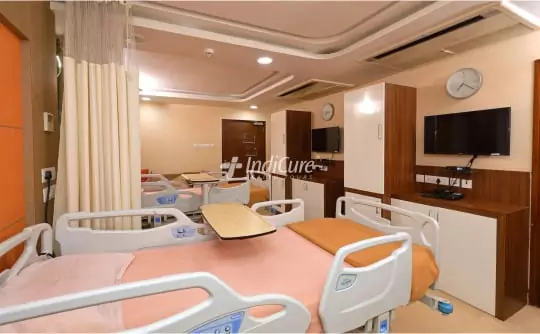
Location: Hyderabad
Speciality: Gynecology, IVF & Pediatrics
Loading...
Loading...
Apollo Cradle Maternity & Children’s Hospital Jubilee Hills is known as a Centre of Excellence in Women’s and Children’s care. It is a member of the Apollo Group of Hospitals, which strives to make high-quality, international healthcare accessible to everyone. Gynecology and Obstetrics, Maternity, Pediatrics, Neonatology, Fetal Medicine, High-risk Pregnancy, and Fertility are among the hospital’s specialties. This Hospital embodies its three core concepts, namely clinical quality, personalized care, and state-of-the-art infrastructure, with attractively designed furnishings and a welcoming ambiance.
Nova IVF- Vashi, Andheri & Chembur, Mumbai
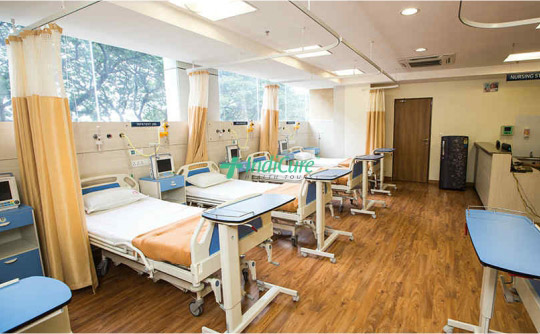
Location: Mumbai
Speciality: Multi-Superspeciality
Loading...
Loading...
Nova IVF Fertility (NIF) is a fertility clinic that offers the most modern and cutting-edge fertility treatments. Over the last eight years, they have grown to over 40 centers, achieving over 40,000 pregnancies. NIF offers three fertility clinics in Mumbai, one in Andheri, the other in Chembur, and the third in Vashi. All of these Nova IVF clinics provide the highest level of reproductive healthcare treatment, which is supported by a team of renowned IVF doctors, gynecologists, embryologists, staff, and other technicians, all of which have extensive experience in this field. The team stays up to speed on the newest clinical expertise to ensure the most effective male and female infertility therapy. Not to mention, the clinic is outfitted with cutting-edge technology, making Nova one of the top IVF clinics in the world.
Questions to Ask
We at IndiCure completely understand your concerns and it is always our endeavor to provide the best outcome for every patient. Following is the list of questions you must ask before you embark on your journey for a cochlear implant in India.
- Is it time for a cochlear implant?
- Is the ENT surgeon board certified?
- How experienced is the Surgeon?
- Which language does the surgeon speak?
- Is the surgery done in a well-equipped facility?
- Can you give me any information on outcomes and complication rates?
- How much pain can I expect, and how will it be managed in the hospital and after I go home?
- Is speech therapy necessary after surgery?
- What about the risks involved?
- Does the surgeon use a certified anesthetist?
- How long will the recovery period be?
Preparation for the Surgery
Prepare to answer questions about your:
- Medical history and exams
- Previous surgeries
- Current medication review
- Surgical expectations
- Social Planning
Cochlear Implant
A cochlear implant is an electronic device that electronically stimulates the hearing nerve. It enhances hearing when hearing aids do not offer the level of sound clarity required to understand speech and spoken language.
A cochlear Implant is a life-changing option for those who are unable to hear effectively with hearing aids, due to severe hearing loss brought on by inner ear damage.
How does Cochlear Implant Work?
A cochlear implant bypasses damaged areas of the ear to send sound impulses to the hearing (auditory) nerve, as opposed to hearing aids which only amplify sound.
A Cochlear Implant has two parts- External & Internal
The External portion is located behind the ear. It has a microphone that is used to capture sounds. After processing the sound, it sends it to the implant inside.
During an outpatient procedure, the internal component is positioned behind the skin behind the ear. The cochlea, a component of the inner ear, is reached by a thin wire and a few tiny electrodes. The cochlear nerve receives impulses from the wire and relays them to the brain, where the sound data is processed to create a hearing sensation.
Although normal hearing is not restored, with the right therapy and practice, the improved hearing experience can lead to greater communication through easier lip reading and listening as well as heightened awareness of sounds in the surroundings. An individual with hearing loss may be able to hear and understand speech again or with improved clarity with the aid of a cochlear implant.
A hearing aid is not the same as a cochlear implant. Although a hearing aid increases sound volume, it may not greatly enhance speech comprehension.
A cochlear implant should be taken into consideration when a person finds it difficult to understand speech despite wearing hearing aids. The cochlear implant can greatly improve hearing in adults when the system is tuned properly and the patient is dedicated to rehabilitation therapy. Infants and toddlers with cochlear implants may benefit from listening and language development.
Cochlear Implant Surgery & Therapy in Children
A cochlear implant should be taken into consideration if the development of spoken language is a priority for the family of a young kid with considerable hearing loss.
The care given following the procedure and a long-term commitment from the patient and family to acclimate to the new way of hearing with a cochlear implant are both crucial to a successful cochlear implant surgery. Highly skilled specialists with a focus on hearing and spoken language should deliver weekly auditory rehabilitation. This is crucial in directing rehabilitation toward the intended outcome. This is especially true for young children, who must catch up in their speaking and listening abilities development.
With a cochlear implant, a child’s spoken and listening language development is influenced by a number of factors, including:
- Age at the time of the procedure (younger is better)
- Past surgical experience with hearing and language
- A home environment rich in languages and consistent rehabilitative therapy
The family should look for a qualified group that provides a thorough surgical, audiological, and rehabilitation programme that works in conjunction with the family’s preferred educational alternatives and institution.
Who is a Good Candidate for Cochlear Implant?
If you have hearing loss and still rely extensively on lipreading, you, your healthcare provider, and an audiologist might think about getting a cochlear implant.
Children under the age of one year who have severe hearing loss in both ears may be candidates for cochlear implants. Cochlear implants may also be given to older kids who have severe hearing loss.
In general, the following people are candidates for cochlear implant surgery:
- Those who have hearing loss and when hearing aids do not help
- Those who have low hearing clarity in both ears
- Those who miss half or more of spoken words, even when wearing hearing aids, without lip reading
- Those who strongly rely on lip reading even while using hearing aids,
A partially implanted cochlear implant is used to preserve hearing in cases of more moderate hearing loss such that a hearing aid and the cochlear implant can be worn in the same ear simultaneously.
To completely benefit from electrical hearing, however, a fully placed cochlear implant is required in situations with more severe hearing loss.
Everybody benefits differently from cochlear implants. Four to six weeks following surgery, or when the cochlear implant is turned on, the majority of people see a noticeable improvement in their awareness of sounds. The majority of people see the biggest improvements within the first six months. Speech understanding develops more gradually. Each person experiences this improvement to varying degrees. Auditory, or hearing, therapy following surgery can help with improvements in speech comprehension.
How is Cochlear Implant Surgery Done?
You would be advised to undergo a series of investigations- audiology tests, blood tests, CT, MRI, ECG etc to determine if you would benefit from a cochlear implant and if you are a good candidate for the surgery.
The surgery is done in a hospital setting under general anesthesia and takes anywhere between 2-4 hours.
Step 1
The surgeon makes a slit behind the ear and the mastoid bone is then opened. After the surgeon locates the facial nerves, he/she opens the cochlea and cuts a gap between them to have access to it.
Step 2
He or she places the cochlea with the implant electrodes.The receiver, an electronic device, is attached to the skull in this location by the surgeon by placing it under the skin behind the ear.
Step 3
The surgeon then stitches up the incisions and you are transported into the recovery area and are kept under close observation. After a few hours you are shifted to the hospital room where you would stay for 2-3 days.
What is the Recovery after Cochlear Implant Surgery Like?
You will receive instructions on how to take care of the incisions before leaving the hospital. Additionally, you’ll learn how to take care of your stitches and change dressings. After a day or two, you can wash your ears as usual. To check the incisions and remove the stitches, a follow-up visit is scheduled for either at activation or around a week later.
After the initial operation, you will need some time to recover before the implant device is turned on or activated. The external components of the cochlear implant will be added four to six weeks after the operation.
The inside gadget is then programmed and turned on, which prompts it to stimulate the auditory nerve in reaction to sounds.
The fundamentals of utilizing and maintaining the implant will also be covered. For modifications, you might need to come back multiple times over a few days. Over the course of several months, more adjusting will be done. The process of becoming familiar with a cochlear implant is slow. Visits with audiologists and speech-language pathologists will probably be necessary. With dedication, a cochlear implant can help you live a better quality of life.
What Results can I Expect from Cochlear Implant Surgery?
Cochlear implants have a great success record as medical prostheses. Only 0.2% of recipients reject them, making it a highly successful and acceptable procedure.
Adults gain right away from implant insertion. After the initial tuning sessions, the sound quality keeps getting better for around three months. The children will have to undergo longer rehabilitation to get the best from cochlear implant surgery.
Following a successful procedure and recovery, a person might be able to:
- Perceive various sounds, such as footsteps, a door shutting, or the ringing of a phone
- Reduced need to lip-read when understanding speech
- Recognize voices on the telephone
- Viewing television without closed captions
- Play music
However, it is important to note that cochlear implant surgery results vary from patient to patient. The age at which hearing was lost and the interval between hearing loss and cochlear implant surgery are variables that can impact the success of the procedure.
If a child is born with a profound hearing loss, obtaining a cochlear implant at an early age usually yields the best results.
The best outcomes for adults are typically linked to a shorter time of profound hearing loss prior to cochlear implantation. Although both types of adults generally do better following cochlear implantation, those with little to no familiarity with sound seem to benefit less from them.
Predicted results include:
Improved Hearing: When utilizing the device, many people who meet the requirements for cochlear implantation may gradually experience improved hearing.
Improved Tinnitus: Tinnitus, or ear noise, is not the main reason for receiving a cochlear implant, but while being used, the cochlear implant may partially suppress or lessen the severity of tinnitus.