

PDA Device Closure Cost in India
Last updated: April 19, 2026
Starting from USD 14,000
INCLUDES
- FDA Approved Implant
- Surgery and Stay at the Hospital
- Pre-operative Investigations
- Medicines, Consumables & Food at the hospital
- Airport Transfers & MediTraWell assistance
DOES NOT INCLUDE
- Accommodation outside the Hospital
- Air tickets
- Medical Visa fee
STAY REQUIRED
- Stay at the Hospital - 1 to 2 days
- Stay at the Hotel - 7 to 8 days
- Stay in India - 8 to 10 days
With end to end services for your hassle-free Cancer Treatment in India, MediTraWell has made the entire process of seeking medical tourism in India easy and hassle free for you besides making it affordable.
Factors that Affect PDA Device Closure Cost in India
- Cardiologist’s Fees
A significant component of a PDA device closure cost in India is the heart surgeon’s fees. MediTraWell recommends highly experienced, skilled, board-certified heart surgeons who can deliver excellent results. While the charges may vary based on the surgeon’s experience, you can be confident that you are in safe and capable hands when opting for affordable heart surgery in India with MediTraWell Health Tours.
- Type of Surgical Approach
In the pursuit of enhancing patient care, the medical field continually introduces new techniques and technologies into surgical procedures. These innovative advancements are designed to improve outcomes, reduce recovery times, and increase the overall effectiveness of treatments. While these advancements can significantly benefit patient care, they may also lead to higher cost of PDA device closure in India.
- Your Choice of Surgical Facility
Selecting an accredited medical facility with skilled and qualified medical staff is essential for the success of the PDA device closure procedure in India. Larger cities in India generally provide superior medical facilities and more experienced heart surgeons, leading to higher costs. MediTraWell Health Tours recommends surgical facilities in these larger cities to prioritize quality of care and ensure safety of our international patient guests.
- Surgery-Related Expenses
The surgery-related expenses include the pre- and post-surgical expenses. The pre-surgical expenses are associated with the age and medical condition of the patient and thus the number and type of investigations required. Post-surgical expenses may include prescription medications and follow-up consultations.
We Customize PDA Device Closure Procedure Quote to Suit Your Preferences
At MediTraWell, we consolidate most of the expenses for your PDA Device Closure cost in India to provide you with an inclusive and cost-effective package tailored to your budget and individual requirements. After receiving medical reports, your case manager will provide an estimated cost based on a discussion with the heart surgeon in India.
The final PDA Device Closure cost in India can however be confirmed after your face-to-face consultation with the heart surgeon.
We at MediTraWell, understand that you travel with a budget in mind and do not like to be greeted by surprises after arrival in India. We thus club all these expenses and give you a package cost that is inclusive and affordable at the same time.
Your case manager shall give you an estimated cost of your surgery after discussing your medical reports with the surgeon. The final cost, however, shall be confirmed after your consultation with the surgeon.
Medi Trawell Services
Making Medical Travel to India Affordable & Hassle-free for 15+ Years

We Help you Choose the Right Treatment, Surgeon & Hospital

We Arrange Video/Telephonic Consultation with the Surgeon

We Assist you with Visa & Accommodation

We Receive you at the Airport and Drop you at Hotel/Hospital

We Assist you the at Hospital & Provide Post Operative Support
Our services are FREE for our patients.
In fact, we have Special Negotiated Rates with the Hospitals and you can avail Discounted Rates when you choose to Travel with MediTrawell. Container
Cardiac Procedures We Offer
Here is a compilation of the heart treatment options we provide in India.
- Holter Monitoring
- Alcohol Septal Ablation
- AICD
- Coronary Angiography
- Coronary Angioplasty (PTCA)
- Pacemaker Implantation
- Cardiac Bypass (Heart Bypass)
- ASD Device Closure
- Aortic Valve Replacement
- ASD Treatment
- VSD Treatment
- Cardiac Tumor Surgery
- EP Study
- Balloon Valvuloplasty
- Bentall Procedure
- Cardiac Ablation
- Minimally Invasive Heart Bypass
- Valve Replacement Surgery
- Pediatric Heart Surgery
- Robotic Heart Surgery
- Heart Transplant
- LVAD (Left Ventricular Assist Device)
- TAVR (Transcatheter Aortic Valve Replacement)
- Truncus Arteriosus Repair
Best cardiologist in India
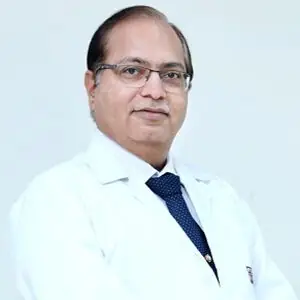
Dr Ramji Mehrotra
Cardiac Surgeon
MBBS, MS, MCh (CTVS), Fellowship- Cardiac Surgery, Harvard Medical School, Boston, USA
New Delhi
Dr. Ramji Mehrotra is a prominent figure in Cardio Thoracic and Vascular Surgery (CTVS), and one of the best cardiac surgeons in India, boasting over 28 years of extensive experience. He is renowned for his expertise in Beating Heart Surgery, Total Arterial CABG, and has a legacy of numerous successful procedures. He has a record pf performing more than 18,000 cardiovascular surgeries and 3000+ pediatric surgeries.
Currently serving as the Vice Chairman and Chief of the Cardio Thoracic and Vascular Surgery (CTVS) Department at BLK Super Speciality Hospital in New Delhi, Dr Mehrotra has been associated with numerous prestigious institutions, including Harvard Medical School affiliates such as Boston Children’s Hospital and Brigham & Women’s Hospital in Boston, USA, as well as Fortis Escorts Heart Institute and Indraprastha Apollo Hospital in New Delhi, among others.
over 28 years of extensive experience
Dr Mehrotra performs a wide range of cardiac surgeries, with special interest in new age procedures like TAVI / TAVR, Surgeries for Heart Failure- LVAD, Heart Transplantation etc.
18,000 cardiovascular surgeries and 3000+ pediatric surgeries
Harvard Medical School affiliates such as Boston Children’s Hospital and Brigham & Women’s Hospital in Boston, USA
https://www.MediTraWell.com/tavi-procedure-cost-in-india/

Dr K K Saxena
Cardiology
MBBS, MD, DM, Fellowship, Interventional Cardiology, Royal Adelaide Hospital, Australia
Delhi
Dr. K K Saxena is a well renowned cardiologist in India with over 35 years of experience, establishing him as a seasoned expert in heart care. Dr. Saxena holds MBBS, MD, and DM degrees, besides having a Research Fellowship in Interventional Cardiology and Cardiovascular Investigational Unit from Royal Adelaide Hospital, Australia, reflecting his dedication to advancing his expertise in cardiology.
Dr Saxena is skilled in performing various procedures such as angioplasty, echocardiography, stress tests, pacemaker implantation, and cardiac catheterization.
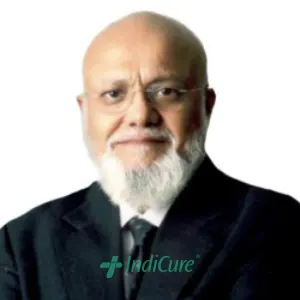
Dr. S.S. Bhattacharya
Cardiac Surgeon
MBBS, MS, MCh
Mumbai
Dr. S.S. Bhattacharya is a famous Cardiac Surgeon in India with more than 36 years of experience. He was involved in the development of several surgical devices, including the Arterial Retractor for Mitral Valve Replacement and the Internal Mammary Artery Retractor for the removal of bilateral Internal Mammary Arteries.
He has articles published in international and national peer-reviewed journals. He has given talks at conferences where he has shared his research findings.
He has successfully treated over 15,000 cases, many of which were complex cases. Dr. Bhattacharya was also honored with a memorial award for his pioneering work in cardiothoracic and vascular surgery.
Best Cancer Hospitals in India
These are our top cancer hospitals in India, ensuring you receive the healthcare you deserve.
Apollo Hospital, Jubilee Hills, Hyderabad
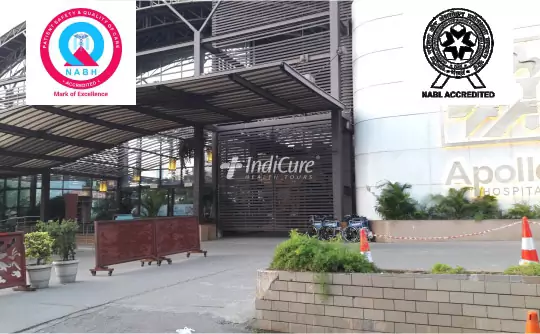
Location: Hyderabad
Speciality: Multi-Superspeciality
Accreditation: Accreditation : Joint Commission International (JCI, USA), National Accreditation Board for Hospitals & Healthcare Providers (NABH)
No. of Beds: Beds : 350
Apollo Heart Institute at Apollo Hospital, Hyderabad comprises a committed group of healthcare professionals, including doctors and medical staff, who spearhead the most extensive range of cardiac services in the region. The services encompass diagnostics and preventive healthcare, emergency medical care, as well as in-patient and post-operative care. The hospital has consistently pioneered advancements in various specialized fields such as interventional cardiology, cardiac surgery, structural heart interventions, pediatric surgery, electrophysiology, robotic surgical procedures, robotic cardiology, and heart transplantation. With over 1.5 lakh cardiac procedures performed with a success rate of around 99%, Apollo Hospital Hyderabad stands tall in the field of cardiac care.
Apollo Cradle & Children’s Hospital, Bangalore
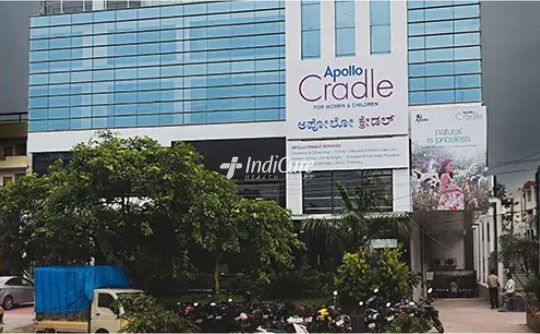
Location: Bangalore
Speciality: Multi-Superspeciality
Loading...
No. of Beds: Beds : 28
Apollo Cradle & Children’s Hospital, Jayanagar, was founded in 2013 and is a prominent and most-trusted single-specialty maternity hospital. Women chose the hospital for its high-quality care and advanced maternity therapy in all major specialties, such as gynecology, laparoscopy, neonatology, pediatrics, fertility, fetal medicine, and NICU. The Apollo Cradle & Children’s Hospital in Jayanagar has 28 beds, two operating rooms with laminar flow and HEPA filters, a specialized labor room, delivery rooms, cutting-edge ultrasound imaging, a level-III NICU, and a surgical ICU. Its High Dependency Unit allows for close monitoring of moms and newborns who require constant monitoring.
What is PDA Device Closure?
A PDA is a hole in the aorta that isn’t closed.
The fetus’s blood does not need to get to the lungs to get oxygenated before birth. The ductus arteriosus is a hole in the heart that allows blood to bypass the circulatory system and go straight to the lungs. However, the blood must get oxygen in the lungs when the infant is born, and this hole is meant to close. If the ductus arteriosus remains open (or patent), blood may bypass this crucial step in the circulation process. The patent ductus arteriosus is the name for the open hole (PDA).
Because the heart and lungs do not have to work as hard when the PDA is tiny, it will not cause symptoms. A specific sort of murmur could be the only abnormal finding (noise heard with a stethoscope).
The infant may breathe faster and harder than usual if the PDA is big. Infants may struggle to eat and grow at a typical pace. Symptoms may not appear for several weeks after the baby is born. Because more blood than usual is pumped into the lungs, high pressure might develop in the blood vessels. The blood arteries in the lungs may be permanently damaged as a result of this over time.
The PDA may usually be closed by introducing catheters (long thin tubes) into the blood vessels in the leg to reach the heart and the PDA and then placing a coil or other device into the PDA like a plug through the catheters.
When is PDA Device Closure required?
Any infant, either full-term or preterm, who has a hemodynamically severe PDA that needs to be closed.
How is PDA Device Closure done?
The transcatheter PDA closure will take approximately 45 minutes and is done under general anesthesia.
Step 1
A catheter will be inserted into the femoral vein in the baby’s groin by the cardiologist. They’ll use X-ray imaging to route the catheter to the heart and find the PDA. They’ll next put an occlusion device into the baby’s PDA through the catheter.
Step 2
This device will block the vessel and prevent blood from going into the lungs after it is in place. Finally, doctors will remove the catheter with care and cover the groin access point with a small bandage.
What is the Recovery after PDA Device Closure like?
Most patients with a modest unrepaired PDA or a treated PDA don’t need to take any additional precautions and can go about their daily lives without risk. Even if you don’t have pulmonary hypertension, your cardiologist may advise you to limit your physical activity for a short time after surgery or catheter closure.
What Results Can I Expect from PDA Device Closure?
The long-term outlook is excellent, and usually, no medicines and no additional surgery or catheterization are needed.
Questions you must ask
Here is a set of questions you should consider asking before commencing your journey for PDA Device Closure procedure in India.
- Is the heart surgeon board certified?
- How experienced is the Surgeon?
- Which language does the surgeon speak?
- Is the treatment done in a well-equipped facility?
- What treatment option is recommended for me?
- What about the risks involved?
- Does the surgeon use a certified anesthetist?
- How long will the recovery period be?
Be ready to respond about:
Prepare to answer questions about your:
- Medical history and exams
- Previous surgeries
- Current medication review
- History of smoking, drugs, or alcohol