

LASIK Eye Surgery Cost in India
Last updated: May 3, 2026
Starting from USD 550
ICL surgery Cost in India starts from US $1,350 and varies depending on the type of lens, type of technology, surgeon, facility and the city where you choose to get the cataract operation done.
INCLUDES
- Surgery
- Stay at the Hospital
- Pre-operative Investigations
- Medicines, Consumables
- Food at the hospital
- Airport Transfers
- MediTraWell assistance
DOES NOT INCLUDE
- Accommodation outside the Hospital
- Air tickets
- Medical Visa fee
STAY REQUIRED
- Stay at the Hospital - 1 to 2 days
- Stay at the Hotel - 7 to 8 days
- Stay in India - 8 to 10 days
The cost of ICL surgery in India is influenced by following factors:
- Ophthalmologist’s fees
The fees of the ophthalmologist constitute a significant portion of the ICL surgery cost in India. IndiCure collaborates with highly qualified, certified and experienced surgeons who can deliver successful surgeries. The fees may vary according to the surgeon’s experience, but you can rest assured that you are receiving the highest quality of care when you opt for IndiCure Health Tours for your eye treatment in India.
- Lens type
There are various types and brands of ICLs available for your ICL surgery in India. The cost of ICL surgery in India fluctuates considerably depending on the lens selected. Your surgeon will assist you in making an informed decision regarding the lens type.
- Surgical technique
The cost of ICL eye surgery in India also depends on the utilization of any customized surgical instruments or specialized computer technology. Occasionally, new techniques and technologies are introduced to the surgical process to enhance patient outcomes. These innovations can increase the cost of the surgery.
- Surgical facility
It is essential to have your ICL eye surgery in an accredited surgical facility with competent and skilled medical staff. The geographical location of this facility in India also affects the quotation. IndiCure Health Tours provides you with a projected estimate that will be comprehensive and affordable.
- Surgery-related expenses
These expenses include the pre- and post-surgical expenses. The pre-surgical expenses are associated with the age and medical condition of the patient and thus the number and type of investigations required. Post-surgical expenses may include prescription medications and follow-up consultations.
We at MediTraWell, understand that you travel with a budget in mind and do not like to be greeted by surprises after arrival in India. We thus club all these expenses and give you a package cost that is inclusive and affordable at the same time.
Your case manager shall give you an estimated cost of your surgery after discussing your medical reports with the surgeon. The final cost, however, shall be confirmed after your consultation with the surgeon.
Medi Trawell Services
Making Medical Travel to India Affordable & Hassle-free for 15+ Years

We Help you Choose the Right Treatment, Surgeon & Hospital

We Arrange Video/Telephonic Consultation with the Surgeon

We Assist you with Visa & Accommodation

We Receive you at the Airport and Drop you at Hotel/Hospital

We Assist you the at Hospital & Provide Post Operative Support
Our services are FREE for our patients.
In fact, we have Special Negotiated Rates with the Hospitals and you can avail Discounted Rates when you choose to Travel with MediTrawell. Container
Best Ophthalmologists in India
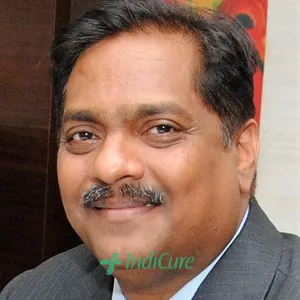
Dr. Nishikant Borse
Retinal Surgery
MBBS, MS, FMRF, FASRS
Mumbai
Dr. Nishikant Borse is not only regarded as one of the best ophthalmologists in Mumbai, but also one of the best eye doctors in India. With more than 25 years of experience and more than 10,000 surgeries to his credit with challenging retina cases, he is one of India’s top retina surgeons. After completing his medical studies at the illustrious Grant Medical College in Mumbai and earning a Master’s degree in Ophthalmology, he underwent advanced training and Fellowship at the prestigious Sankara Nethralaya in Chennai.
Dr. Borse is frequently asked to speak as a guest speaker at conferences all around the country and the world. He has led various training sessions for teaching the complexities of retinal surgery in Mumbai and other areas of the country. He has carried out real retinal procedures at numerous conferences. He has had a number of research papers published in both domestic and foreign journals.
Dr. Borse has been many awards nationally and internationally, like The Rhett Buckler Award by the American Society of Retina Specialists, Cesare Forlini Award by the European Vitreoretinal Society, C S Reshmi Award by the All India Ophthalmological Society,
He is a member of the Bombay Ophthalmologists Association, the Maharashtra Ophthalmological Society, the All India Ophthalmological Society, the Vitreo-Retinal Society of India, the American Academy of Ophthalmology, and the International Society of Ocular Trauma. He is also a Fellow of the American Society of Retina Specialists.
American Academy of Ophthalmology, and the International Society of Ocular Trauma. He is also a Fellow of the American Society of Retina Specialists
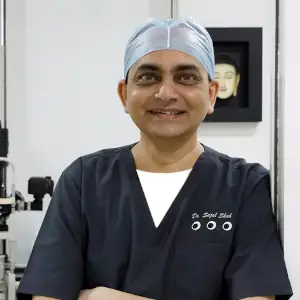
Dr Sujal Shah
LASIK, Cataract & Cornea Surgery
MBBS, MS, Fellowships- Cleveland Clinic; University of Southern California (USC)
Mumbai
Dr. Sujal Shah is a highly esteemed eye doctor in India. He completed his primary medical training and internship at Seth G.S. Medical College & KEM Hospital in Mumbai, followed by an Ophthalmology residency at the prestigious Sankara Nethralaya Eye Hospital in Chennai. He further honed his expertise through specialized fellowships at leading institutions worldwide.
Dr. Shah is passionate about vision correction and brings this dedication to every patient he treats, a commitment that distinguishes him as an exceptional eye surgeon.
Dr. Shah completed a fellowship in Cornea and Refractive Surgery at the Doheny Eye Institute, University of Southern California (USC) in Los Angeles, where he engaged in fundamental research in refractive surgery. He also completed a fellowship in Refractive Surgery at the Cleveland Clinic Foundation in Cleveland. He further completed a fellowship in Cornea, Refractive Surgery, and Uveitis at the Jules Stein Eye Institute, University of California Los Angeles (UCLA).
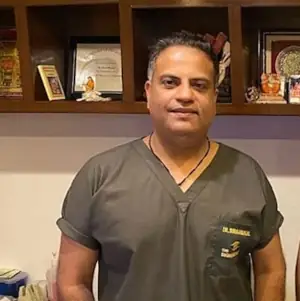
Dr Suraj Munjal
LASIK
MBBS, MS
Delhi
Dr Suraj Munjal is a well renowned name in Eye care not only in Delhi NCR, but the entire North India. With proficiency in refractive surgeries and corneal transplants, Dr Munjal is considered one of the best eye doctors in India and manages a wide array of complex and referred cases from across India and other countries. He is widely regarded as the best eye doctor in Delhi and has amassed extensive experience in performing successful LASIK surgeries.
With his dedication to delivering exceptional eye care, Dr Munjal is committed to providing affordable and personalized treatments without compromising on ethics. His commitment has led him to perform surgeries in various Middle Eastern countries, including Iraq, Dubai, Kurdistan, and Bahrain, at the invitation of local governments.
Best Eye Hospitals in India
Nova IVF- Vashi, Andheri & Chembur, Mumbai
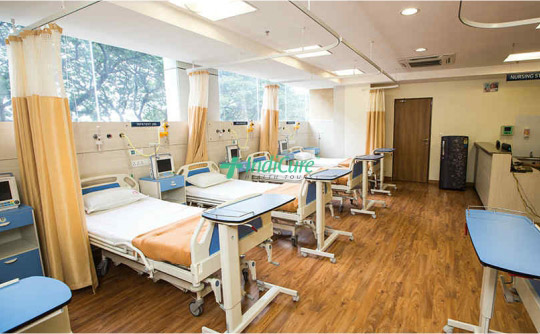
Location: Mumbai
Speciality: Multi-Superspeciality
Loading...
Loading...
Nova IVF Fertility (NIF) is a fertility clinic that offers the most modern and cutting-edge fertility treatments. Over the last eight years, they have grown to over 40 centers, achieving over 40,000 pregnancies. NIF offers three fertility clinics in Mumbai, one in Andheri, the other in Chembur, and the third in Vashi. All of these Nova IVF clinics provide the highest level of reproductive healthcare treatment, which is supported by a team of renowned IVF doctors, gynecologists, embryologists, staff, and other technicians, all of which have extensive experience in this field. The team stays up to speed on the newest clinical expertise to ensure the most effective male and female infertility therapy. Not to mention, the clinic is outfitted with cutting-edge technology, making Nova one of the top IVF clinics in the world.
Nova IVF, Chennai
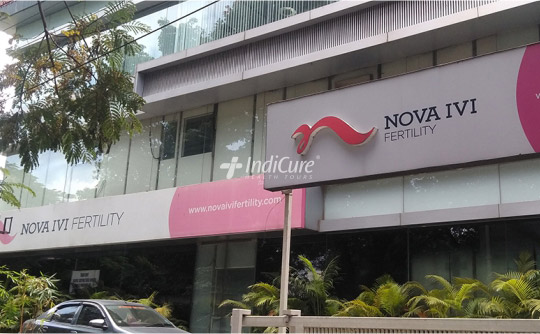
Location: Chennai
Speciality: IVF & Infertility
Loading...
No. of Beds: 10
Nova IVF Fertility Chennai is part of India’s largest chain of fertility and IVF clinics. The facility provides the most up-to-date infertility treatments and techniques while overlooking the scenic splendor of the seaside. The centre also provides pre-genetic counseling and treatments in addition to basic and advanced reproductive treatment.
More about ICL Eye Surgery
A refractive defect is a problem with how the eye focuses light. It can be corrected with glasses, contact lenses, or eye surgery. One type of eye surgery is the Implantable Collamer Lens (ICL), which is also known as an implantable contact lens. This is a thin clear lens that is surgically inserted into the eye to permanently fix near-sightedness (myopia), far-sightedness (hypermetropia), and astigmatism.
ICL surgery works like regular contact lenses or glasses by correcting the refractive defect. The difference is that ICL stays inside the eye forever, unlike regular contact lenses that you have to wear on your eye surface. The lens is placed between the iris (the coloured part of the eye) and the natural lens, and it does not need to be removed or changed. The lens can be easily replaced if your vision changes a lot over time.
Surgery Information
| Surgery Time | 30 minutes |
|---|---|
| Anesthesia Type | Local Anesthesia |
| Hospitalization | Outpatient |
| Recovery Time | 2-3 weeks |
Surgical Procedure
The ICL technique is a simple, 15-minute outpatient surgery with a low risk of complications.
Step 1
You’ll be made to lie down on your back. A topical or local anesthetic will be given to you. This numbs your eye and prevents you from feeling anything.
Step 2
Your surgeon will clean your eye area and use a tool to hold your eyelids apart. They will make a small cut in your eye and put some gel on your cornea to keep it safe.
Step 3
The ICL will be inserted through the incision. Because the lens is so thin, it may be folded and then unfolded in the eye.
Step 4
The surgeon will close the incision with tiny stitches. They’ll apply eye drops or ointment to the affected eye before covering it with an eye patch.
Some of the benefits of having an ICL Surgery are:
- High Definition Vision– Before ICL surgery, corrective laser eye surgery was the only way to permanently improve your vision without glasses or contact lenses. But ICL changed that. Now you can enjoy high-definition vision correction, which is more crisp, clear, vivid, and has more depth and dimension.
- Fast Results– Patients see a big improvement in their vision quality right after the surgery. The vision quality they get is often much better than other vision correction methods.
- Permanent and Reversible– The best thing about ICL surgery is that it can permanently improve your vision, but it can also be easily removed or replaced if needed. Because ICL does not remove or change any part of your natural cornea, you don’t have to worry about your cornea as much as with other methods.
- Invisible and Unnoticeable– The ICL is put between the natural lens and the iris, and it cannot be seen or felt by you or anyone else. Its position in the eye also helps to keep the iris working and stable.
- No Dry Eyes– ICL does not cause dry eyes. If you have dry eyes, talk to your doctor if ICL is the best way to correct your vision.
- Quick Recovery– Because the opening in your eye for ICL is very small, the recovery from ICL is fast and painless, taking only one day. Patients may feel some minor discomfort and can go back to work the next day.
- UV Protection– UV radiation can damage your eyes if you are exposed to it for a long time, and more exposure increases your risk of getting eye problems like cataracts and some retinal problems. The ICL lens material also has a UV ray blocker, which stops harmful UVA and UVB rays from getting into your eye, greatly reducing the risk of UV-related eye problems.
- Treatment Flexibility– As you get older, your vision will get worse, and you will most likely need cataract surgery. Because ICL keeps the eye’s anatomy intact, you have more options for future treatments because the lens can be easily replaced.
Am I a good candidate for ICL Eye Surgery?
Following are the features of a good candidate for ICL surgery:
- You are between the ages of 21 and 40
- You vision is stable
- You’re currently wearing glasses that are uncomfortable or have extreme high eye power
- You have trouble wearing contact lenses
- You are not candidate for LASIK or Advanced Surface Ablation laser eye surgery due to thin cornea
- You have dry eyes
Questions to ask before ICL Eye Surgery
Here are some important questions you should ask before you decide to have ICL eye surgery in India.
- Do I need ICL surgery now?
- Is the surgeon qualified and certified?
- How much expertise does the surgeon have?
- What language does the surgeon speak?
- Is the surgery performed in a modern and well-equipped facility?
- Can you provide me with some data on the outcomes and complications of the surgery?
- How much discomfort will I experience, and how will it be controlled in the hospital and at home?
- What is the best surgical option for me?
- What are the potential risks involved?
- Does the surgeon work with a certified anesthetist?
- How long will it take me to recover?
What Results Can I Expect from ICL surgery?
ICL surgery in India has very good outcomes. Research shows that it is one of the most effective refractive treatments available today. Most of the patients who have undergone this surgery are very happy with the results.
It can correct severe myopia that other surgeries cannot. The lens is less likely to cause dry eyes, which is great if you suffer from dry eyes often. It is designed to last for a lifetime, but it can also be taken out if needed.
What is the Recovery after ICL surgery like?
The clarity of your vision may depend on how long the drops last, but you should be able to see well the day after. Your eyes will take some time to heal and your vision may change slightly during the first few weeks. You may feel some discomfort or irritation in your eyes for a few days. You should avoid strenuous activities for two days. The healing process is quick.
You will need to use drops that prevent infection and inflammation for a few weeks after ICL surgery. You can resume your normal routine within a week of ICL surgery in India, but you should not drive until you get clearance.