

Heart Transplant Cost in India
Last updated: May 3, 2026
Starting from USD 14,000
The Heart Transplant cost in India starts from USD 30,000 and varies depending on the surgeon, the surgical facility, and the city where you choose to get the surgery done.
The cost quoted above is indicative and should not be taken as the final cost of the surgery. The final cost can be ascertained after the surgeon has evaluated the patient. The cost in Indian Rupees can vary based on the exchange rate.
INCLUDES
- Surgery
- Stay at the Hospital
- Pre-operative Investigations
- Medicines, Consumables
- Food at the hospital
- Airport Transfers
- MediTraWell assistance
DOES NOT INCLUDE
- Accommodation outside the Hospital
- Air tickets
- Medical Visa fee
STAY REQUIRED
- Stay at the Hospital - 1 to 2 days
- Stay at the Hotel - 7 to 8 days
- Stay in India - 8 to 10 days
Whether you choose one visit for your Gastroenterology tourism in India or would require to visit again, IndiCure will make sure your trip is seamless and hassle-free. Our team of dental clinics and dental surgeons offer nothing but the best in class care using the top notch technology. We vow to be with you every step of the way practicing our old age Indian custom of Atithi Devo Bhava! (the guest is God)
Factors that affect Heart Transplant cost in India
- Surgeon’s Fees
One of the key costs you will face when contemplating a heart transplant in India is the cardiac surgeon’s fee. IndiCure connects you with board-certified surgeons in India who are highly skilled and have delivered successful heart surgeries. While the surgeon’s fee can vary based on their experience, you can trust IndiCure to recommend surgeons who prioritize your safety and deliver excellent outcomes when you choose heart transplant surgery in India.
- Type of Surgical Approach
With the hopes of improving patient care, new techniques and technologies are often introduced to the surgical process. Such innovative advancements in the surgical approach can increase costs.
- Choice of Surgical Facility
Choosing an accredited surgical facility with skilled and qualified medical staff is crucial for the success of heart transplant in India. In India, larger cities typically offer superior medical facilities and more experienced surgeons, resulting in higher costs. IndiCure Health Tours specifically recommends surgical facilities in larger cities of India to prioritize quality of care and ensure patient safety.
- Surgery-Related Expenses
Surgery-related costs encompass both pre-and post-operative expenses. Pre-operative costs are influenced by factors such as the patient’s age and medical condition, determining the necessity and type of investigations needed. Post-operative expenses may involve prescribed medications and subsequent follow-up appointments.
We at MediTraWell, understand that you travel with a budget in mind and do not like to be greeted by surprises after arrival in India. We thus club all these expenses and give you a package cost that is inclusive and affordable at the same time.
Your case manager shall give you an estimated cost of your surgery after discussing your medical reports with the surgeon. The final cost, however, shall be confirmed after your consultation with the surgeon.
Medi Trawell Services
Making Medical Travel to India Affordable & Hassle-free for 15+ Years

We Help you Choose the Right Treatment, Surgeon & Hospital

We Arrange Video/Telephonic Consultation with the Surgeon

We Assist you with Visa & Accommodation

We Receive you at the Airport and Drop you at Hotel/Hospital

We Assist you the at Hospital & Provide Post Operative Support
Our services are FREE for our patients.
In fact, we have Special Negotiated Rates with the Hospitals and you can avail Discounted Rates when you choose to Travel with MediTrawell. Container
Best Cardiologists in India
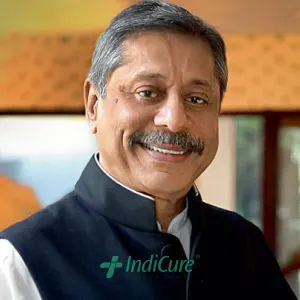
Dr. Naresh Trehan
Cardiac Surgeon
MBBS, Diplomate American Board
Gurgaon
With over 40 years of expertise, Dr. Naresh is considered one of the most successful cardiac surgeon in India, having conducted over 48000 cardiac procedures. He is also the founder of prestigious Escorts Heart Institute and Research Center and Chairman & Managing Director of Medanta, The Medicity.
Cardiomyoplasty, myocardial total arterial revascularization, transmyocardial laser revascularization, reduction ventriculoplasty (Batista Operation), heart port access surgery, aortic valve surgery, and robotically assisted cardiac surgery are among the cardiothoracic surgeries in which he specializes. Dr. Trehan also specializes in Cardiovascular Diseases and Cardiothoracic Surgery, such as thoracic surgeries for chest wall deformities, heart attacks, heart failure, and video-assisted minimally invasive cardiac surgery, among other procedures.
Diplomate in Surgery and Cardio-thoracic surgery in the United States
Dr. Naresh completed his medical education at King George’s Medical University in Lucknow in 1968, followed by Diplomate in Surgery and Cardio-thoracic surgery in the United States. In 2002, he was also awarded a Fellowship by the Royal Australasian College of Surgeons. Since 1991, he has been the President of India’s personal surgeon. Dr. Naresh Trehan has received numerous honors, including the Padma Shri, Padma Bhushan, and Lal Bahadur Shastri National Award, among others.
Fellowship by the Royal Australasian College of Surgeons
Padma Shri, Padma Bhushan, and Lal Bahadur Shastri National Award, among others
Former president of the International Society for Minimally Invasive Cardiac Surgery (ISMICS) in the United States, as well as a member of important organizations such as the Society of Thoracic Surgeons in the United States and the European Association for Cardio-thoracic Surgery, to mention a few.
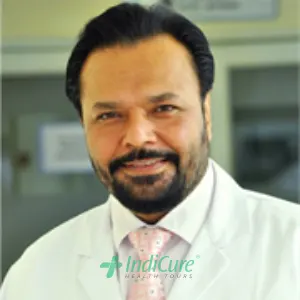
Dr. (Col.) Manjinder Singh Sandhu
Interventional Cardiologist
MBBS, MD, DM, DNB, Fellowship- American College of Cardiology
Gurgaon
Dr. Majindar Sandhu, who has been practicing for over 27 years, is one of India’s most experienced and well-respected cardiologists. He has had the privilege of accompanying the President of India on visits as his Cardiologist. He graduated from AFMC Pune with a master’s degree in medicine and a bachelor’s degree in medicine. He then completed his DNB and DM (Cardiology) at PGIMER in Chandigarh.
He has had the privilege of accompanying the President of India on visits as his Cardiologist.
Dr. Sandhu has been educating postgraduate students in medicine and cardiology for many years. He has also served as the Principal Investigator in the Department of Biotechnology, Ministry of Science and Technology, Government of India, research projects.
Many honors have been bestowed upon him, including Fellowship of the American College of Cardiology (FACC) and the Society of Cardiac Angiography and Interventions (SCAI) (FSCAI).
Fellowship of the American College of Cardiology (FACC) and the Society of Cardiac Angiography and Interventions (SCAI) (FSCAI).
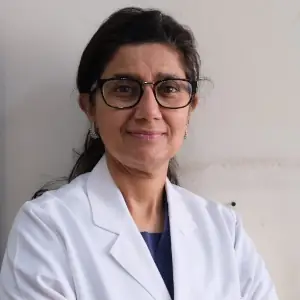
Dr Aparna Jaswal
Interventional Cardiologist
MBBS, MD, DNB, Training, Cardiac Electrophysiology at St. Luke's Hospital in Milwaukee, USA
Delhi
Dr. Aparna Jaswal is a highly recognized Cardiologist in India, specializing in EPS & RFA of complex arrhythmias, AICD implantation, and biventricular pacing.
She joined Fortis Escorts Heart Institute & Research Centre in New Delhi in 1998, and has been an integral part of the Department of Cardiac Electrophysiology since then. Dr. Jaswal regularly performs electrophysiological studies and radio frequency catheter ablation for various cardiac arrhythmias. She has received training in Cardiac Electrophysiology at St. Luke’s Hospital in Milwaukee, USA, and holds the ‘Certified Cardiac Device Specialist’ certification from IBHRE, HRS.
Dr. Jaswal is involved in numerous research projects and actively participates in national and international research trials. She is frequently invited as a faculty member to various national and international symposia and workshops. Notably, she initiated the EP program in Mauritius in November 2010. She also received a Fellowship from Heart Rhythm Society, USA in 2011.
https://www.meditrawell.com/eps-rfa-treatment-cost-in-india/
https://www.meditrawell.com/aicd-cost-india/
Best Heart Hospitals in India
Shroff Eye Hospital, Mumbai
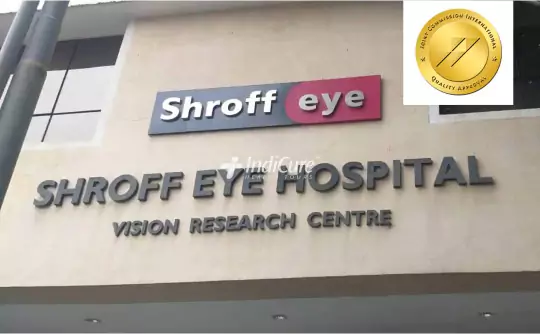
Location: Mumbai
Speciality: Multi-Superspeciality
Accreditation: Accreditation : JCI, ISO
No. of Beds: Beds : 300
Shroff Eye Hospital is counted among the best eye hospitals, not only in Mumbai but in India and beyond. Established in 1919 by renowned Dr. C N Shroff, Shroff Eye Hospital has stood for excellence in eye care since its inception. With more than 94 years of experience in delivering eye care, the hospital offers a full array of state-of-the-art equipment and a high safety environment to treat eye problems accurately, safely, and effectively. Accredited by JCI and ISO certification, the hospital has many firsts to its credit not only in performing eye treatments for the first time in India; but being the first eye hospital to have JCI accreditation.
Apollo Spectra Hospital, Bangalore
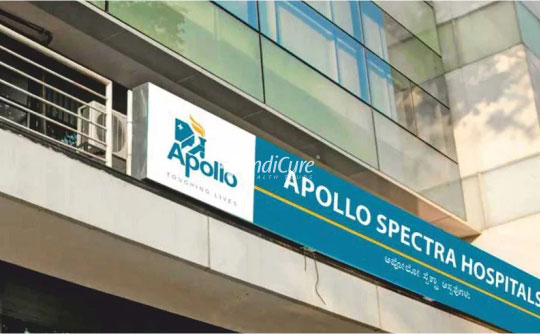
Location: Bangalore
Speciality: Multi-Superspeciality
Loading...
No. of Beds: Beds : 20
Apollo Spectra Hospital – Koramangala provides top-notch medical services with all the bells and whistles. The hospital, with a capacity of 20 beds, is dedicated to providing world-class medical services. Orthopedics & Spine, Varicose Veins, Urology, Bariatric Surgery, ENT, General and Laparoscopic Surgery, and more surgical specialties are available at the facility. The hospital uses sophisticated technologies to give tailored care for speedier recovery and minimal infection risk, thanks to its world-class infrastructure and top doctors.
What is Heart Transplant?
A Heart transplant is a complex and major surgical procedure. With advanced innovations in surgical technologies, heart transplant in India is safe and yields great outcomes. The success rate of heart transplant in India is as good as the best in the world. The survival rate after 1 year of heart transplant is 85-90%, and according to a new study, living for 15 to 20 years following a heart transplant is becoming the norm, not the exception.
As the latest techniques of heart transplant are advancing, many people from around the world come for heart transplantation in India. Owing to the low cost of heart transplant in India, highly skilled & experienced surgeons and state of art hospital facilities, India has emerged as one of the most favorable destinations for organ transplants in the world.
With end-to-end services for your hassle-free organ transplant in India with IndiCure, medical tourism in India has been made quite easy besides being affordable.
A heart transplant, also known as a cardiac transplant, is a surgical operation used to treat patients with end-stage heart failure or severe coronary artery disease who have failed to respond to other medical or surgical treatments. The operation entails replacing the patient’s damaged heart with the healthy heart of another patient who has been certified brain dead.
When other treatment options for heart conditions have failed, resulting in heart failure, a heart transplant is performed. Adults can get heart failure as a result of:
- A weakening of the heart muscle (cardiomyopathy)
- Coronary artery disease
- Heart valve disease
- Certain Congenital heart defects
- Dangerous recurring abnormal heart rhythms (ventricular arrhythmias) not controlled by other treatments
- Failure of a previous heart transplant
Cardiac failure in children is most commonly caused by a congenital heart abnormality or cardiomyopathy.
In persons with specific illnesses, another organ transplant may be performed at the same time as a heart transplant (multiorgan transplant).
Multiorgan transplants include:
- Heart-kidney transplant: Patients with kidney failure in addition to heart failure are candidates for Heart-kidney transplant.
- Heart-liver transplant: This procedure may be an option for people with certain liver and heart conditions.
- Heart-lung transplant: Doctors may recommend this treatment in rare cases for persons with serious lung and heart problems who cannot be managed with a heart transplant or a lung transplant alone.
When is Heart Transplant required?
Heart transplant candidates are those who’ve experienced heart disease or heart failure due to a variety of causes, including:
- a congenital defect
- coronary artery disease
- a valve dysfunction or disease
- a weakened heart muscle, or cardiomyopathy
You might not be a good candidate for a heart transplant if you:
- Are of a certain age that would make it difficult for you to recover from transplant surgery
- Have another medical condition that, independent of obtaining a donor’s heart, could shorten your life, such as major kidney, liver, or lung disease
- Have an infection that is still active
- Recent medical history of cancer
- Are reluctant or unable to make the necessary lifestyle adjustments, such as not drinking alcohol or smoking, to keep your donor heart healthy
How is Heart Transplant done?
Evaluation
Once a patient has been identified as a candidate for a heart transplant, they are subjected to a battery of tests to determine their physical health and ability to undergo a major surgical procedure.
The tests include blood testing and matching to check the compatibility. Various other tests and investigations include EKG, Echo, Chest X-ray, pulmonary function tests, physical assessment by a physician, and psychological tests. In addition to the medical tests, the doctors consider the patient’s family support, financial circumstances, psychological composition, and any other medical issues.
If the patient is judged to be a suitable candidate for the heart transplant after the tests and interviews, his or her name is added to the regional and national organ recipient lists.
The Heart Allocation Score determines an individual’s position on the list based on a complex computation that attempts to forecast two things:
- How long is it likely that a patient will live without a heart transplant?
- When a patient receives a heart transplant, how long can they expect to live?
When organ donors’ heart becomes available, people with better scores are given priority.
For foreigners coming to India for a lung transplant, it may take a few weeks to several months before you can find a donor for your heart transplant in India.
The surgery for a heart transplant takes about four hours. You’ll be connected directly to a heart-lung machine for the duration of your surgery to keep blood flowing throughout your body.
Step 1
Your heart will be removed; but the pulmonary vein holes and the rear wall of the left atrium are crucial for maintaining proper blood flow and circulation, so preserving them could potentially ease the transition to a new heart.
Step 2
You will be taken off the heart-lung machine once your doctor sutures the donor heart into place and it starts beating. The new heart will usually begin to beat as soon as the blood supply is restored. An electric shock may sometimes be required to induce a heartbeat.
What is the Recovery after Heart Transplant like?
It could take several weeks for you to feel well enough to resume your normal daily routine. To ensure that the transplanted heart survives in your body, you will need to take anti-rejection medications for the rest of your life.
After a heart transplant, recovery is a long and difficult process aimed at gradually improving the patient’s health and fitness. Resuming normal daily activities could take up to six months.
What Results Can I Expect from Heart Transplant?
People who would otherwise die benefit from heart transplants. After two years, around 80% of heart transplant recipients are still alive. After a heart transplant, 70% of patients will still be alive after 5 years.
Rejection is the biggest issue, as it is with all transplants. If rejection can be managed, survival can be extended to more than ten years.
Questions you must ask
Here is a set of questions you should consider asking before commencing your journey for a heart transplant in India.
- Is it time for a Heart transplant?
- Is the surgeon board certified?
- How experienced is the Surgeon?
- Which language does the surgeon speak?
- Is the treatment done in a well-equipped facility?
- Can you give me any information on outcomes and complication rates?
- How much pain can I expect, and how will it be managed in the hospital and after I go home?
- What about the risks involved?
- Does the surgeon use a certified anesthetist?
- How long will the recovery period be?
Be ready to respond about:
Prepare to answer questions about your:
- Medical history and exams
- Previous surgeries
- Current medication review
- History of smoking, drugs, or alcohol