

Endoscopic Spine Surgery Cost in India
Last updated: May 3, 2026
Starting from USD 5200
Endoscopic Spine Surgery Cost in India starts from US $5,200 and varies depending on which area of the spine needs to be treated, your medical history and comorbidities, surgeon, hospital and the city where you choose to get the surgery done.
INCLUDES
- Surgery
- Stay at the Hospital
- Pre-operative Investigations
- Medicines, Consumables
- Food at the hospital
- Airport Transfers
- MediTraWell assistance
DOES NOT INCLUDE
- Accommodation outside the Hospital
- Air tickets
- Medical Visa fee
STAY REQUIRED
- Stay at the Hospital - 1 to 2 days
- Stay at the Hotel - 7 to 8 days
- Stay in India - 8 to 10 days
Factors that affect Endoscopic Spine Surgery Cost in India:
- Area of the Spine to be treated
Endoscopic spine surgery can be done to treat cervical/thoracic or lumbar spine. The cost varies with the area that needs to be treated and how complex the procedure will be. It also varies with your health condition and if you have any other medical issues.
- Spine Surgeon’s Fees
An important expense when it comes to your minimally invasive surgery is going to be your spine surgeon’s fees. IndiCure recommends experienced, skilled, board-certified surgeons who are capable of delivering successful spinal fusion surgeries. Although the charges may vary depending on the experience of the surgeon, you can be assured to be in safe hands when you choose spine surgery in India with IndiCure.
- Use of specialized technology
The use of any customized surgical instruments or specialized computer technology also affects the cost. With the hopes of improving patient care, new techniques and technologies are often introduced to the surgical process. Such innovative advancements in the surgical approach can increase costs.
- Surgical Facility
Having your endoscopic spinal surgery in an accredited surgical facility by skilled and qualified medical staff is a critical factor. Moreover, the geographical location of this facility also affects the quote. But, IndiCure provides you with a projected estimate that will be all inclusive and affordable.
- Surgery-Related Expenses
The surgery-related expenses include the pre- and post-surgical expenses. The pre-surgical expenses are associated with the age and medical condition of the patient and thus the number and type of investigations required. Post-surgical expenses may include prescription medications, physical therapy, and follow-up consultations.
We at MediTraWell, understand that you travel with a budget in mind and do not like to be greeted by surprises after arrival in India. We thus club all these expenses and give you a package cost that is inclusive and affordable at the same time.
Your case manager shall give you an estimated cost of your surgery after discussing your medical reports with the surgeon. The final cost, however, shall be confirmed after your consultation with the surgeon.
Medi Trawell Services
Making Medical Travel to India Affordable & Hassle-free for 15+ Years

We Help you Choose the Right Treatment, Surgeon & Hospital

We Arrange Video/Telephonic Consultation with the Surgeon

We Assist you with Visa & Accommodation

We Receive you at the Airport and Drop you at Hotel/Hospital

We Assist you the at Hospital & Provide Post Operative Support
Our services are FREE for our patients.
In fact, we have Special Negotiated Rates with the Hospitals and you can avail Discounted Rates when you choose to Travel with MediTrawell. Container
Best Spine Surgeons for Minimally Invasive Spine Surgery in India

Dr. Rajesh Verma
Spine Surgeon
MBBS, MS, FIAO (USA), FRSH (UK)
New Delhi, Indi
Dr. Rajesh Verma is a well-known spine surgeon who has set primacy in the treatment of spinal disorders and complex bone & joint trauma. With his clinical experience spanning over 22 years, he has acquired expertise in spine surgeries.
Dr. Rajesh Verma has to his credit over 12,000 surgeries comprising all types of Spine surgeries, and Complex Trauma surgeries.
He has received extensive training in spinal procedures from a few of the premier medical institutes across the globe like National University Hospital (Singapore), Neurosurgery Centre Schittenhelstr (Hamburg, Germany), Denver Health Medical Centre (Denver, USA), Rocky Mountain Regional Trauma Centre (Denver, Colorado, USA). He further underwent advanced training at Severance Spine Hospital (Seoul, South Korea) where he acquired extensive skills in degenerative spine disorders and spinal deformity correction.
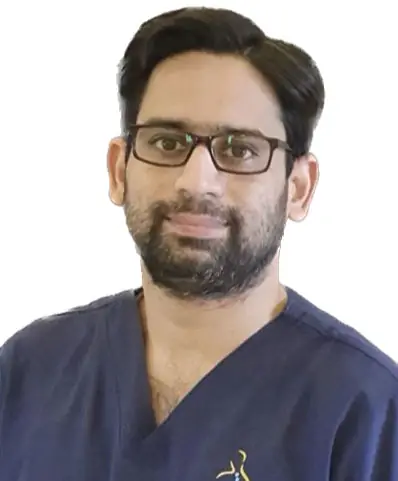
Dr Agnivesh Tikoo
Spine Surgeon
MBBS, MS (Ortho), FNB Spine Surgery
Mumbai
Dr. Agnivesh Tikoo is a prominent figure in the field of Orthopaedics and spine surgery. With more than a decade of experience, Dr. Tikoo is renowned for his surgical skills and compassionate patient care. He has authored over 10 studies on various medical topics, focusing on cervical spine disorders and geriatric concerns, earning recognition for his contributions to the field.
Dr. Tikoo specializes in managing spine injuries, displaced fractures, cervical spine disorders, adolescent bone and spine issues, and low back pain. He is an active member of prestigious medical organizations such as the Association of Spine Surgeons of India, dedicated to advancing orthopaedic care and keeping abreast of medical advancements. Offering a wide range of services, Dr. Agnivesh Tikoo addresses various spine surgery conditions, including slip disc, spinal fusion surgery, degenerated disc, cervical spondylitis treatment, spinal canal stenosis, spinal cord injury treatment etc. His dedication to excellence and patient-focused approach establish him as one of foremost spine surgeons in India.

Dr Raghu Prasad Varma
Spine Surgeon
MBBS, MS, DNB, FCPS, Spine Fellowship (Germany), Spine Fellowship at NUH, Singapore
Mumbai
Dr. Raghuprasad Varma has a vivid experience of over 17 years in this field. He is a Diplomate of the National Board and his keen interest in spine surgery encouraged him to pursue Superspeciality in spine surgery.
He undertook advanced training and did several Fellowships in spine surgery at Robert Jones and Agnes Hunt Hospital (Oswestry), University Hospital and Stanmore in the United Kingdom, and Advanced trauma center, Leipzig, Germany. He has had the privilege to work with the NUH, Singapore in the Department of Spine and was also chosen for the Global outreach Fellowship for Scoliosis Research Society meeting in Miami, USA.
He is an expert at spinal surgeries for degenerative spinal disorders, adult and pediatric (Scoliosis and Kyphosis) spinal deformities, spinal infections and tumors, spinal trauma, minimally invasive spine surgery.
Fellowships in spine surgery at Robert Jones and Agnes Hunt Hospital (Oswestry), University Hospital and Stanmore in the United Kingdom, and Advanced trauma center, Leipzig, Germany. He has had the privilege to work with the NUH, Singapore in the Department of Spine and was also chosen for the Global outreach Fellowship for Scoliosis Research Society meeting in Miami, USA.
Best Spine Surgery Hospitals in India
Paras Hospital, Gurgaon
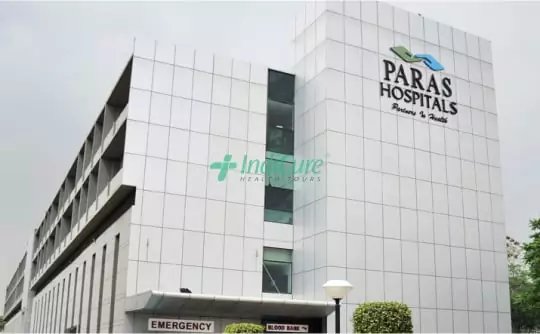
Location: Gurgaon
Speciality: Multi-Superspeciality
Accreditation: Accreditation : National Accreditation Board for Hospitals & Healthcare Providers (NABH), National Accreditation Board for Testing and Calibration Laboratories (NABL)
No. of Beds: Beds : 250
Paras Hospital is a NABH-accredited facility that was started in 2006 and now offers more than 55 different specialties under one roof. The Hospital has received numerous accolades Neurosciences (Neurology and Neurosurgery), Cardiac Sciences (Cardiology and Cardio-thoracic Surgery), Orthopedics (Trauma, Joint Replacement, and Spine Surgery), and Mother & Child Care are among its specialties. The Hospital has received numerous accolades, including: The region’s first neurology centre to operate on deep-seated tumors The first private hospital in the Delhi NCR to offer image-guided tumor navigation surgery. At the Six Sigma Healthcare Awards Function in 2015, the Breastfeeding Rooms in Public Places campaign was named Best Healthcare Campaign. At the 2017 Times Achievers Awards, we were named Best Hospital for Neurosurgery and Neurology in Delhi NCR. The hospital was also named Best Hospital for Neurosurgery and Neurology for International Patients.
Apollo Spectra Hospital, Chennai
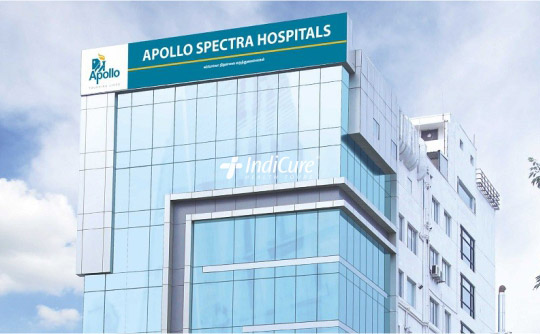
Location: Chennai
Speciality: Multi-Superspeciality
Loading...
Loading...
This state-of-the-art specialty hospital, which has a capacity of 47 beds, is dedicated to bringing together world-class medical services and the finest healthcare management techniques. Bariatric Surgery, ENT, General & Laparoscopic Surgery, Orthopedics & Spine, Urology, and Varicose Veins, to name a few, are among the surgical specialties offered at the hospital. The hospital has roughly 7 beds dedicated to critical care services, 5 ultra-modern modular OTs, a state-of-the-art rehabilitation centre, an in-house pharmacy, and a waiting lounge for in-patients’ families, to name a few. Over 155 healthcare experts, including 90 specialty specialists, are dedicated to setting a new standard in healthcare services with the single-minded goal of providing uncomplicated quality healthcare. Beds : 47
Endoscopic Spine Surgery
Endoscopic spine surgery, also known as Minimally Invasive Spine Surgery, or Minimal Access Spine Surgery is regarded as ground breaking, since it successfully treats the whole spectrum of spinal disc anomalies with minimal muscle damage and minimal recovery time.
Similar to conventional surgery, the main objective of minimally invasive spine surgery (MISS) is to stabilize the vertebrae and decompress the pinched nerves in order to reduce pain and eliminate unpleasant symptoms by reducing pressure on the nerves brought on by herniated discs, spinal stenosis, bone spurs, or tumors.
However, minimally invasive spinal surgery provides a quicker, safer, and less painful alternative. The surrounding muscles and other nearby tissues suffer significantly less interventional harm. Additional benefits of minimally invasive methods over traditional spine surgery include:
- Smaller incisions hence less chances of infection
- Minimal scarring and pain
- Reduced blood loss and muscle or tissue damage
- Faster recovery and reduced rehabilitation time
Conditions that can be treated with Minimally invasive/Endoscopic spine surgery.
The common conditions causing back/neck pain that can be treated by minimally invasive spine surgery includes:
- Spinal deformities (scoliosis)
- Spinal infections
- Spinal instability
- Herniated disc
- Degenerative disc disease
- Lumbar spinal stenosis
- Vertebral compression fractures
- Spinal Tumors
Who is a Candidate for Endoscopic Spine Surgery?
People who are not responding to non-surgical treatments including painkillers, nonsteroidal anti-inflammatory medications, and physical therapy, have back pain, numbness, or paralysis in their upper or lower limbs are candidates for minimally invasive spine surgery.
If there are signs of pressure on the spinal cord or the cauda equina, or if there are cases of significant or worsening paralysis, surgery for herniated discs should be considered an emergency.
Types of Endoscopic Spine Surgery
In cases when symptoms have not subsided after six weeks of conservative treatment, such as medication, injections, and physical therapy, surgery is considered as the last option. In order to relieve pressure on the spinal cord, the prolapsed portion of the disc will be removed during surgery.
- Endoscopic Discectomy: The most frequent reason for endoscopic spine surgery is lumbar disc herniation. Endoscopic discectomy involves removing the disc’s herniated portion. Depending on the location of the herniated disc and the surgeon’s preference, it can be performed as either a 1) Trans-foraminal endoscopic discectomy or a 2) Interlaminar endoscopic discectomy.
- Endoscopic Spine Decompression: Lumbar spinal stenosis can be decompressed by removing tissue that is pressing on the spinal cord and utilizing a larger endoscope (ligamentum flavum, overgrown fact joints, herniated disc).
- Endoscopic Lumbar Fusion: Complete endoscopic discectomy is performed before the lumbar fusion. Under the assistance of a fluoroscope, a tiny tube is used to insert the bone graft and cage into the intervertebral space. Then, tiny skin-piercing holes are used to introduce percutaneous pedicle screws.
- Posterior Cervical Endoscopic Discectomy: The posterior microforaminotomy method removes the herniated portion of the cervical disc using a narrower endoscope. This prevents the need for an anterior full discectomy, which calls for a fusion treatment. Endoscopic micro-foraminotomy can only be used to treat lateral herniated discs.
- Endoscopic Disc Debridement: A spine endoscope can be used to remove infected discitis brought on by bacteria or tuberculosis. This lessens discomfort and also provides tissue for additional research.
How is Endoscopic Spine Surgery done?
Medical devices known as tubular retractors are used during MISS fusion and decompression procedures. MISS can reduce soft tissue trauma in a number of ways. These consist of:
- Procedure with tubular retractor
This technique distends the soft tissues rather than cuts them, lowering the risk of injuring the muscle.
- Direct lateral access
This strategy minimizes pain and muscle stress by doing the surgery from the side.
- Thoracoscopic access
This technique, which requires a number of tiny incisions, is employed when a frontal approach is required.
- Percutaneous screw and rod placements
are used to support, immobilise, and aid in vertebral fusion with this technique. With the use of guidewires, it is accomplished.
Step 1
The tubular retractor is passed through the skin and soft tissues of the first step and down to the spinal column through a tiny incision. This makes a tunnel to the tiny spot in the spine where the issue is located. The tubular retractor is retained in place during the process and holds the muscles open rather than cutting them.
Step 2
The surgeon inserts tiny instruments through the center of the tubular retractor to gain access to the spine. The retractor is used to insert any fusion-related devices, such as screws or rods, as well as to remove any excised bone or disc material.
Step 3
The tubular retractor is taken out at the end of the process, and the muscles reposition themselves. As a result, the muscular injury that results from open procedures is less common.
What Results Can I Expect from Endoscopic Spine Surgery?
The success rates for minimally invasive spine surgery are very high. The majority of patients notice significant and long-lasting improvement in their back. In up to 90% of patients, it helps to reduce the signs and symptoms of herniated or slipped discs.
What is the Recovery after Endoscopic Spine Surgery like?
Every patient’s recovery is different. On the other hand, it is typical to experience discomfort at the site of the operation for the first few days. This pain can be managed with medicine. After a week following surgery, physical rehabilitation would be encouraged to begin. While you could resume your regular activities in approximately two weeks, a full recovery might take many weeks to months. Your medical professional will give you guidance on the rehabilitation process and when to begin strenuous exercises.
Questions to Ask
We at IndiCure completely understand your concerns and it is always our endeavor to provide the best outcome for every patient. Following is the list of questions you must ask before you embark on your journey for endoscopic spine surgery in India.
- Is it time for an endoscopic spine surgery?
- Is the spine surgeon board certified?
- How experienced is the Surgeon?
- Which language does the surgeon speak?
- Is the surgery done in a well-equipped facility?
- Can you give me any information on outcomes and complication rates?
- How much pain can I expect, and how will it be managed in the hospital and after I go home?
- What about the risks involved?
- Does the surgeon use a certified anesthetist?
- How long will the recovery period be?
Preparation for the Surgery
Prepare to answer questions about your:
- Medical history and exams
- Spinal evaluations
- MRI and/or CT Scans
- Current medication review