

Cervical Cancer Treatment Cost in India
Last updated: April 19, 2026
Cervical Cancer Treatment Cost in India depends on the type of treatment required, your medical condition, facility and the city where you choose to get the treatment done. You may need either surgery or chemotherapy, or may need both; or a combination of chemotherapy, radiotherapy and surgery. The cost would thus change accordingly.
Typical costs for Cervical Cancer Treatment in India looks like:
| Procedure | Cost (Range in US $) |
|---|---|
| Investigations | 500-1000 |
| Chemotherapy | 300-2000 per cycle |
| Radiotherapy | 3500-5500 |
| Trachelectomy | 2000-3500 |
| Hysterectomy | 3000-5000 |
With end to end services for your hassle-free Cancer Treatment in India, MediTraWell has made the entire process of seeking medical tourism in India easy and hassle free for you besides making it affordable.
Factors that affect Cervical Cancer Treatment Cost in India
- Oncologist’s FeesAn important expense when it comes to your cancer treatment is going to be your oncologist’s fees. MediTraWell recommends highly experienced, skilled, board-certified doctors who can deliver successful surgeries. Although the cost may vary depending on the experience of the surgeon, you can be assured that you are in safe and skilled hands when you choose cancer treatment in India with MediTraWell.
- Type of Treatment RequiredMany times, the best option might include more than one type of treatment. Surgery alone or with other treatments is used to treat most cancers. The cost associated with each type of treatment is different. MediTraWell recommends you understand the options by getting your details evaluated by our expert doctors.
- Number of Chemotherapy and Radiation CyclesThe overall cancer treatment cost depends on the number of chemotherapy or radiation therapy cycles that a patient must undergo. In some patients, the doctors might advise giving more than a couple of cycles of chemotherapy or radiation therapy to kill the cancerous cells.
- Surgical FacilityHaving your treatment for cancer in an accredited surgical facility by skilled and qualified medical staff is a critical factor. Moreover, the geographical location of this facility in India also affects the treatment cost. But, MediTraWell provides you with a projected estimate that will be all-inclusive and affordable.
- Pre and Post Treatment ExpensesThe pre-surgical/treatment expenses are associated with the stage of the cancer and medical condition of the patient and thus the number and type of investigations and treatment required. Post-treatment expenses may include prescription medications and follow-up consultations.
We at MediTraWell, understand that you travel with a budget in mind and do not like to be greeted by surprises after arrival in India. We thus club all these expenses and give you a package cost that is inclusive and affordable at the same time.
Your case manager shall give you an estimated cost of your surgery after discussing your medical reports with the surgeon. The final cost, however, shall be confirmed after your consultation with the surgeon.
Medi Trawell Services
Making Medical Travel to India Affordable & Hassle-free for 15+ Years

We Help you Choose the Right Treatment, Surgeon & Hospital

We Arrange Video/Telephonic Consultation with the Surgeon

We Assist you with Visa & Accommodation

We Receive you at the Airport and Drop you at Hotel/Hospital

We Assist you the at Hospital & Provide Post Operative Support
Our services are FREE for our patients.
In fact, we have Special Negotiated Rates with the Hospitals and you can avail Discounted Rates when you choose to Travel with MediTrawell. Container
Cancer Treatments We Offer
Here is a compilation of the cancer treatment options we provide in India.
- Leukemia
- Multiple Myeloma
- Aplastic Anemia
- Osteosarcoma
- Squamous Cell Carcinoma
- Pancreatic Cancer
- Eye Cancer
- Bladder Cancer
- Cervical Cancer
- Penile Cancer
- Endometrial Cancer
- Skin Cancer
- Bone Cancer
- Esophagus Cancer
- Kidney Cancer
- Testicular Cancer
- Breast Cancer
- Lung Cancer
- Ovarian Cancer
- Gallbladder Cancer
- Thyroid Cancer
- Colon Cancer
- Prostate Cancer
- Blood Cancer
Best Oncologists in India

Dr. Vinod Raina
Medical Oncologist
MBBS, MD, MRCP, FRCP
Gurgaon
Dr. Vinod Raina is one of the foremost medical oncologist and haematologist in India. He has rich and extensive experience of more than three decades and has over 600 transplants- under his belt for various cancers which is the largest number in India in the last 20 years. He also has to his credit the first high dose chemotherapy and peripheral blood stem cell transplant in India.
He also has to his credit the first high dose chemotherapy and peripheral blood stem cell transplant in India
Concurrent Bio-Radiotherapy for Head and Neck Cancers, Hematology, Medical oncology, high dose chemotherapy, peripheral blood stem cell transplant are the areas of his expertise. Concurrent Bio-Radiotherapy, Pediatric Chemotherapy, and Palliative Bio-Radiotherapy are some of his special interests.

Dr. Meenu Walia
Medical Oncologist
MBBS, MD, DNB
Delhi
About Doctor: Dr. Meenu Walia has an experience of more than 27 years in the field of Medical Oncology and Hematology. She is the keen Clinical researcher and principal investigator for several randomized multi-centric international clinical research trials.
She is highly skilled in treating Abdominal Solid Organ Cancers, Gastro-Intestinal Cancers, and Leukemia/Lymphoma. She is a Member of the American Society of Clinical Oncologists and the European Society for Medical Oncology, among other important organizations (ESMO). Clinical research is a specific focus of hers. She has served as the Principal Investigator for a number of randomized multicenter international clinical trials.
She is a Member of the American Society of Clinical Oncologists and the European Society for Medical Oncology, among other important organizations (ESMO). Clinical research is a specific focus of hers. She has served as the Principal Investigator for a number of randomized multicenter international clinical trials.
Dr. Walia is the first DNB Medical Oncologist in the country and has been honored with various awards during her tenure. India Today Group has honored her with the certificate for excellence in recognition of the exemplary work and dedication in the field of healthcare. She was also awarded the “Bharat Jyoti Award” and certificate for excellence by Dr. Bhishma Narain Singh- The former Governor of Tamil Nadu and Assam for her meritorious services, outstanding performance, and remarkable role in healthcare.

Dr. Randeep Singh
Medical Oncologist
MBBS, MD, DM
Gurgaon
Dr. Randeep Singh is an extensively trained doctor specialized in the management of cancer patients at the prestigious Tata Memorial Hospital (TMH), Mumbai.
He did his DM (Medical Oncology) and then worked as a consultant at TMH, Mumbai with the solid tumor-working group. He worked with Max Healthcare for five years. Thereafter he headed the department of Medical Oncology at HCG cancer center, Delhi before joining Artemis Hospitals, Gurgoan followed by Narayana Hospital.
He has vast experience in managing solid and hemato-lymphoid tumors with a special interest in breast, lung, and gastrointestinal cancers. Dr. Singh has more than 30 publications in national and international journals of high impact factor. He has also attended and presented various scientific papers in national and international journals.
Best Cancer Hospitals in India
These are our top cancer hospitals in India, ensuring you receive the healthcare you deserve.
Max Super Speciality Hospital, Saket, New Delhi
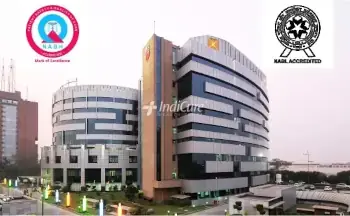
Location: New Delhi
Speciality: Multi-Superspeciality
Accreditation: Accreditation : Joint Commission International (JCI, USA), National Accreditation Board for Hospitals & Healthcare Providers (NABH), National Accreditation Board for Testing and Calibration Laboratories (NABL)
No. of Beds: Beds : 252
Max Super Specialty Hospital in Saket was established in 2006. Max Healthcare was recognized for its efforts to improve customer experience and patient safety at the FICCI Healthcare Excellence Awards and also awarded Express Healthcare Awards for Healthcare Excellence. The hospital has also been awarded Quality Council of India’s D L Shah National Award for ‘Economics of Quality’. Cardiology, Plastic Surgery, Cancer Care, Orthopaedics, Pediatrics, Neurosurgery, Mental Health and Behavioral Sciences, Endocrinology, ENT, Neurosciences, Eye Care, Internal Medicine, and Minimal Access Surgery are among the specialties.
Saifee Hospital, Mumbai

Location: Mumbai
Speciality: Multi-Superspeciality
Accreditation: Accreditation : National Accreditation Board for Testing and Calibration Laboratories (NABL), International Organization for Standardization (ISO)
No. of Beds: Beds : 256
Saifee Hospital was founded in 2005 and is ISO and NABL accredited. There was an old Saifee Hospital that has been in operation since 1948. In 2001, work on a new hospital on the site of an old one began. The new hospital was inaugurated in June 2005 in the presence of Dr. Manmohan Singh, India’s former Prime Minister. This hospital was named after Syedna Mohammad Burhanuddin’s father, Syedna Taher Saifuddin. This multi-specialty hospital offers a wide range of services, from easy Day-care treatments to acute care emergency medicine and sophisticated Cardiac surgery. It has India’s first LASIK (advanced laser eye surgery) suite. It has India’s first LASIK (advanced laser eye surgery) suite. https://www.MediTraWell.com/heart-surgery-cost-india/ https://www.MediTraWell.com/lasik-eye-surgery-cost-india/ Cardiac surgery LASIK
What is Cervical Cancer Treatment?
Cervical cancer is a type of cancer that occurs in the cells of the cervix – the lower part of the uterus that connects to the vagina.
Various strains of the human papillomavirus (HPV), a sexually transmitted infection, play a role in causing most cervical cancer.
When exposed to HPV, the body’s immune system typically prevents the virus from doing harm. In a small percentage of people, however, the virus survives for years, contributing to the process that causes some cervical cells to become cancer cells.
Types of cervical cancer
The main types of cervical cancer are:
Squamous cell carcinoma: This type of cervical cancer begins in the thin, flat cells (squamous cells) lining the outer part of the cervix, which projects into the vagina. Most cervical cancers are squamous cell carcinomas.
Adenocarcinoma: This type of cervical cancer begins in the column-shaped glandular cells that line the cervical canal.
Sometimes, both types of cells are involved in cervical cancer. Very rarely, cancer occurs in other cells in the cervix.
What are the symptoms of cervical cancer?
Early-stage cervical cancer generally produces no signs or symptoms.
Signs and symptoms of more-advanced cervical cancer include:
Cervical Cancer Treatment Options
Treatment for cervical cancer depends on several factors, such as the stage of the cancer, other health problems you may have and your preferences. Surgery, radiation, chemotherapy or a combination of the three may be used.
Surgery: Early-stage cervical cancer is typically treated with surgery. Which operation is best for you will depend on the size of your cancer, its stage and whether you would like to consider becoming pregnant in the future. Options might include:
Surgery to cut away the cancer only. For a very small cervical cancer, it might be possible to remove the cancer entirely with a cone biopsy. This procedure involves cutting away a cone-shaped piece of cervical tissue, but leaving the rest of the cervix intact. This option may make it possible for you to consider becoming pregnant in the future.
When is Cervical Cancer Treatment required?
Make an appointment with your doctor if you have any signs or symptoms that concern you. Also make an appointment with your doctor if you have other signs or symptoms that worry you. If you are found to suffer from cervical cancer, the treatment should be started immediately.
How is Cervical Cancer Treatment done?
The operation is done either through the vagina or the abdomen, and is sometimes done using laparoscopy.
Step 1: The surgeon then places a permanent “purse-string” stitch inside the uterine cavity to keep the opening of the uterus closed, the way the cervix normally would.
Step 2: The nearby lymph nodes are also removed using laparoscopy which may require another incision (cut). The operation is done either through the vagina or the abdomen.
This surgery is usually done through a large abdominal incision (also known as open surgery).
The surgeon removes the uterus along with the tissues next to the uterus (the parametria and the uterosacral ligaments), the cervix, and the upper part (about 1 inch [2-3cm]) of the vagina next to the cervix.
The uterus is removed using laparoscopy.
Step 1: First, a thin tube with a tiny video camera at the end (the laparoscope) is inserted into one or more very small surgical incisions made on the abdominal wall to see inside the abdomen and pelvis.
Step 2: Small instruments can be controlled through the tube(s), so the surgeon can cut around the uterus without making a large cut in the abdomen. The uterus is then removed through a cut in the vagina.
What is the Recovery after Cervical Cancer Treatment like?
You’ll have to stay in the hospital after your surgery. With a laparoscopic or vaginal hysterectomy, you’ll have a 1- or 2-day stay. Full recovery time is about 2 to 3 weeks. After an abdominal hysterectomy, you’ll stay in the hospital for 3 to 5 days.
Recovery time is longer – about 4 to 6 weeks.
You may have to stay in hospital for between 3 to 5 days after having a trachelectomy. Once you are home, you will usually need 4 to 6 weeks to fully recover from a trachelectomy.
What Results Can I Expect from Cervical Cancer Treatment?
The results are gratifying after the surgery and the treatment. After trachelectomy, some women are able to carry a pregnancy to term and deliver a healthy baby by cesarean section. Radical hysterectomy does not change a woman’s ability to feel sexual pleasure.
Questions to Ask
We at MediTraWell completely understand your concerns and it is always our endeavor to provide the best outcome for every patient. Following is the list of questions you must ask before you embark on your journey for Cervical Cancer Treatment in India.
- Is it time for Cervical Cancer surgery?
- Is the oncologist board certified?
- How experienced is the Surgeon?
- Which language does the surgeon speak?
- Is the treatment done in a well-equipped facility?
- What cancer treatment option is recommended for me?
- What about the risks involved?
- Does the surgeon use a certified anesthetist?
- How long will the recovery period be?
Preparation for the Surgery
Prepare to answer questions about your:
- Medical history and exams
- Previous surgeries
- Current medication review
- History of smoking, drugs, or alcohol