
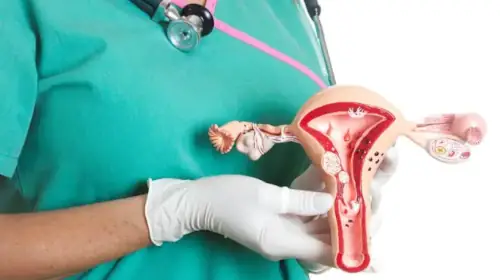
Ovarian Cancer Treatment Cost in India
Last updated: April 19, 2026
With end to end services for your hassle-free Cancer Treatment in India, MediTraWell has made the entire process of seeking medical tourism in India easy and hassle free for you besides making it affordable.
Factors that affect Ovarian Cancer Treatment Cost in India
- Oncologist’s Fees An important expense when it comes to your cancer treatment is going to be your oncologist’s fees. MediTraWell recommends highly experienced, skilled, board-certified doctors who can deliver successful surgeries. Although the cost may vary depending on the experience of the surgeon, you can be assured that you are in safe and skilled hands when you choose cancer treatment in India with MediTraWell.
- Type of Treatment Required Many times, the best option might include more than one type of treatment. Surgery alone or with other treatments is used to treat most cancers. The cost associated with each type of treatment is different. MediTraWell recommends you understand the options by getting your details evaluated by our expert doctors.
- Number of Chemotherapy and Radiation Cycles The overall cancer treatment cost depends on the number of chemotherapy or radiation therapy cycles that a patient must undergo. In some patients, the doctors might advise giving more than a couple of cycles of chemotherapy or radiation therapy to kill the cancerous cells.
- Surgical Facility Having your treatment for cancer in an accredited surgical facility by skilled and qualified medical staff is a critical factor. Moreover, the geographical location of this facility in India also affects the treatment cost. But, MediTraWell provides you with a projected estimate that will be all-inclusive and affordable.
- Pre and Post Treatment Expenses The pre-surgical/treatment expenses are associated with the stage of the cancer and medical condition of the patient and thus the number and type of investigations and treatment required. Post-treatment expenses may include prescription medications and follow-up consultations.
We at MediTraWell, understand that you travel with a budget in mind and do not like to be greeted by surprises after arrival in India. We thus club all these expenses and give you a package cost that is inclusive and affordable at the same time.
Your case manager shall give you an estimated cost of your surgery after discussing your medical reports with the surgeon. The final cost, however, shall be confirmed after your consultation with the surgeon.
Medi Trawell Services
Making Medical Travel to India Affordable & Hassle-free for 15+ Years

We Help you Choose the Right Treatment, Surgeon & Hospital

We Arrange Video/Telephonic Consultation with the Surgeon

We Assist you with Visa & Accommodation

We Receive you at the Airport and Drop you at Hotel/Hospital

We Assist you the at Hospital & Provide Post Operative Support
Our services are FREE for our patients.
In fact, we have Special Negotiated Rates with the Hospitals and you can avail Discounted Rates when you choose to Travel with MediTrawell. Container
Cancer Treatments We Offer
Here is a compilation of the cancer treatment options we provide in India.
- Leukemia
- Multiple Myeloma
- Aplastic Anemia
- Osteosarcoma
- Squamous Cell Carcinoma
- Pancreatic Cancer
- Eye Cancer
- Bladder Cancer
- Cervical Cancer
- Penile Cancer
- Endometrial Cancer
- Skin Cancer
- Bone Cancer
- Esophagus Cancer
- Kidney Cancer
- Testicular Cancer
- Breast Cancer
- Lung Cancer
- Ovarian Cancer
- Gallbladder Cancer
- Thyroid Cancer
- Colon Cancer
- Prostate Cancer
- Blood Cancer
Best Oncologists in India
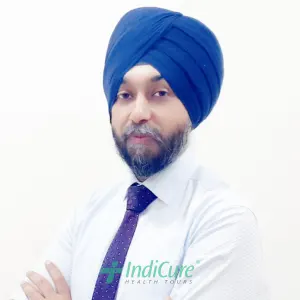
Dr. Randeep Singh
Medical Oncologist
MBBS, MD, DM
Gurgaon
Dr. Randeep Singh is an extensively trained doctor specialized in the management of cancer patients at the prestigious Tata Memorial Hospital (TMH), Mumbai.
He did his DM (Medical Oncology) and then worked as a consultant at TMH, Mumbai with the solid tumor-working group. He worked with Max Healthcare for five years. Thereafter he headed the department of Medical Oncology at HCG cancer center, Delhi before joining Artemis Hospitals, Gurgoan followed by Narayana Hospital.
He has vast experience in managing solid and hemato-lymphoid tumors with a special interest in breast, lung, and gastrointestinal cancers. Dr. Singh has more than 30 publications in national and international journals of high impact factor. He has also attended and presented various scientific papers in national and international journals.
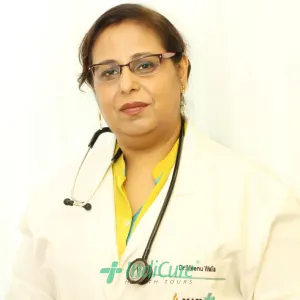
Dr. Meenu Walia
Medical Oncologist
MBBS, MD, DNB
Delhi
About Doctor: Dr. Meenu Walia has an experience of more than 27 years in the field of Medical Oncology and Hematology. She is the keen Clinical researcher and principal investigator for several randomized multi-centric international clinical research trials.
She is highly skilled in treating Abdominal Solid Organ Cancers, Gastro-Intestinal Cancers, and Leukemia/Lymphoma. She is a Member of the American Society of Clinical Oncologists and the European Society for Medical Oncology, among other important organizations (ESMO). Clinical research is a specific focus of hers. She has served as the Principal Investigator for a number of randomized multicenter international clinical trials.
She is a Member of the American Society of Clinical Oncologists and the European Society for Medical Oncology, among other important organizations (ESMO). Clinical research is a specific focus of hers. She has served as the Principal Investigator for a number of randomized multicenter international clinical trials.
Dr. Walia is the first DNB Medical Oncologist in the country and has been honored with various awards during her tenure. India Today Group has honored her with the certificate for excellence in recognition of the exemplary work and dedication in the field of healthcare. She was also awarded the “Bharat Jyoti Award” and certificate for excellence by Dr. Bhishma Narain Singh- The former Governor of Tamil Nadu and Assam for her meritorious services, outstanding performance, and remarkable role in healthcare.

Dr. Vinod Raina
Medical Oncologist
MBBS, MD, MRCP, FRCP
Gurgaon
Dr. Vinod Raina is one of the foremost medical oncologist and haematologist in India. He has rich and extensive experience of more than three decades and has over 600 transplants- under his belt for various cancers which is the largest number in India in the last 20 years. He also has to his credit the first high dose chemotherapy and peripheral blood stem cell transplant in India.
He also has to his credit the first high dose chemotherapy and peripheral blood stem cell transplant in India
Concurrent Bio-Radiotherapy for Head and Neck Cancers, Hematology, Medical oncology, high dose chemotherapy, peripheral blood stem cell transplant are the areas of his expertise. Concurrent Bio-Radiotherapy, Pediatric Chemotherapy, and Palliative Bio-Radiotherapy are some of his special interests.
Best Cancer Hospitals in India
These are our top cancer hospitals in India, ensuring you receive the healthcare you deserve.
Eye Q hospital, Gurgaon
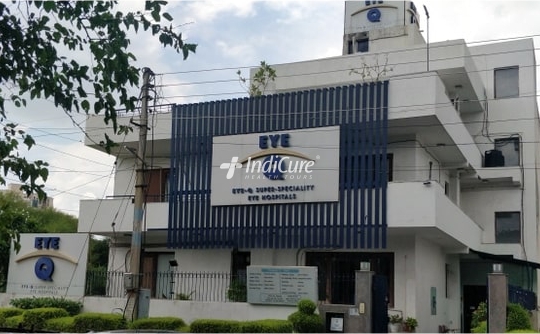
Location: Gurgaon
Speciality: Multi-Superspeciality
Loading...
Loading...
Eye-Q Hospital is an ISO 9001-2000 certified facility that opened in 2007. It is dedicated to providing high-quality eye treatment at a reasonable cost. WCRC Leaders Asia named Hospital the Most Trusted Brand of 2016-17 for its dependability and client satisfaction.
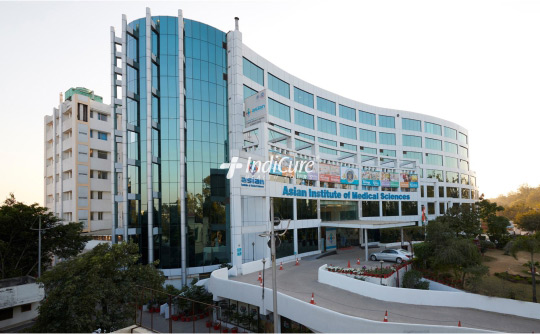
Asian Institute of Medical Sciences, Faridabad
Location: Delhi (NCR)
Speciality: Multi-Superspeciality
Accreditation: Accreditation : National Accreditation Board for Hospitals & Healthcare Providers (NABH), National Accreditation Board for Testing and Calibration Laboratories (NABL)
No. of Beds: Beds : 425
Asian Institute of Medical Sciences, founded in 2010, is a super specialty tertiary care hospital with some of India’s most outstanding medical specialists. It is NABH and NABL accredited, and it is equipped with cutting-edge technology. It is NABH and NABL accredited, and it is equipped with cutting-edge technology. It has been ranked as follows: The Economic Times Survey named them Best Healthcare Brand for the second year in a row in 2016 and 2017. ‘The Week’ magazine has ranked the hospital among the top 7 hospitals in Delhi NCR for the past four years. In the ‘The Week-Hansa Research Survey 2018,’ it was ranked as the 4th best hospital in Delhi and the NCR. It is the first hospital in North India to use Varian’s RapidArc on a Trilogy system, as well as a number of high-tech devices. It has 8 hospitals with 4500+ skilled employees and 1100+ doctors that provide comprehensive treatment and palliative care.
What is Ovarian Cancer Treatment?
Ovarian cancer is a growth of cells that forms in the ovaries. The cells multiply quickly and can invade and destroy healthy body tissue.
The female reproductive system contains two ovaries, one on each side of the uterus. The ovaries – each about the size of an almond – produce eggs (ova) as well as the hormones estrogen and progesterone.
Ovarian Cancer Treatment Options
Treatment of ovarian cancer usually involves a combination of surgery and chemotherapy. Other treatments may be used in certain situations.
Surgery: Operations to remove ovarian cancer include:
Surgery to remove one ovary. For early-stage cancer that hasn’t spread beyond one ovary, surgery may involve removing the affected ovary and its fallopian tube. This procedure may preserve your ability to have children.
Surgery to remove both ovaries. If cancer is present in both your ovaries, but there are no signs of additional cancer, your surgeon may remove both ovaries and both fallopian tubes. This procedure leaves your uterus intact, so you may still be able to become pregnant using your own frozen embryos or eggs or with eggs from a donor.Surgery to remove both ovaries and the uterus. If your cancer is more extensive or if you don’t wish to preserve your ability to have children, your surgeon will remove the ovaries, the fallopian tubes, the uterus, nearby lymph nodes and a fold of fatty abdominal tissue (omentum).
Surgery for advanced cancer. If your cancer is advanced, your doctor may recommend surgery to remove as much of the cancer as possible. Sometimes chemotherapy is given before or after surgery in this situation.
Chemotherapy: Chemotherapy is a drug treatment that uses chemicals to kill fast-growing cells in the body, including cancer cells. Chemotherapy drugs can be injected into a vein or taken by mouth. Chemotherapy is often used after surgery to kill any cancer cells that might remain. It can also be used before surgery.
Targeted therapy: Targeted drug treatments focus on specific weaknesses present within cancer cells. By attacking these weaknesses, targeted drug treatments can cause cancer cells to die.
Hormone therapy: Hormone therapy uses drugs to block the effects of the hormone estrogen on ovarian cancer cells. Some ovarian cancer cells use estrogen to help them grow, so blocking estrogen may help control the cancer. Hormone therapy might be a treatment option for some types of slow-growing ovarian cancers. It may also be an option if the cancer comes back after initial treatments.
Immunotherapy: Immunotherapy uses the immune system to fight cancer. The body’s disease-fighting immune system may not attack cancer cells because they produce proteins that help them hide from the immune system cells. Immunotherapy works by interfering with that process. Immunotherapy might be an option for treating ovarian cancer in certain situations.
Supportive (palliative) care: Palliative care is specialized medical care that focuses on providing relief from pain and other symptoms of a serious illness. Palliative care can be used while undergoing other aggressive treatments, such as surgery and chemotherapy.
When is Ovarian Cancer Treatment required?
If you are suffering from any of the above mentioned symptoms, you should see a doctor immediately who would advise tests to confirm the diagnosis. If you are diagnosed with ovarian cancer, you need to start the treatment immediately.
How is Ovarian Cancer Treatment done?
Surgery to remove one ovary
For early-stage cancer that hasn’t spread beyond one ovary, surgery may involve removing the affected ovary and its fallopian tube. This procedure may preserve your ability to have children.
Surgery to remove both ovaries
If cancer is present in both your ovaries, but there are no signs of additional cancer, your surgeon may remove both ovaries and both fallopian tubes. This procedure leaves your uterus intact, so you may still be able to become pregnant using your own frozen embryos or eggs or with eggs from a donor.
Surgery to remove both ovaries and the uterus
If your cancer is more extensive or if you don’t wish to preserve your ability to have children, your surgeon will remove the ovaries, the fallopian tubes, the uterus, nearby lymph nodes and a fold of fatty abdominal tissue (omentum).
Surgery for advanced cancer
If your cancer is advanced, your doctor may recommend surgery to remove as much of the cancer as possible. Sometimes chemotherapy is given before or after surgery in this situation.
What is the Recovery after Ovarian Cancer Treatment like?
Surgery to treat ovarian cancer is a major operation. It can take up to 3 months to fully recover. You’ll need to take things very easy for at least the first couple of weeks. Rest as much as possible and try to avoid spending too long on your feet.
What Results Can I Expect from Ovarian Cancer Treatment?
The results of the surgery chosen depend on the stage of ovarian cancer. If detected early, there is a good chance of complete recovery.
Questions to Ask
We at MediTraWell completely understand your concerns and it is always our endeavor to provide the best outcome for every patient. Following is the list of questions you must ask before you embark on your journey for Ovarian Cancer Treatment in India.
- Is it time for ovarian cancer surgery?
- Is the oncologist board certified?
- How experienced is the Surgeon?
- Which language does the surgeon speak?
- Is the treatment done in a well-equipped facility?
- What cancer treatment option is recommended for me?
- What about the risks involved?
- Does the surgeon use a certified anesthetist?
- How long will the recovery period be?
Preparation for the Surgery
Prepare to answer questions about your:
- Medical history and exams
- Previous surgeries
- Current medication review
- History of smoking, drugs, or alcohol