

Oral Cancer Treatment Cost in India
Last updated: April 19, 2026
Oral Cancer Treatment Cost in India depends on the type of treatment required, your medical condition, hospital and the city where you choose to get the treatment done.
Typical Costs for Oral Cancer Treatment in India looks like:
| Procedure | Cost (Range in US $) |
|---|---|
| Investigations | 500-1,000 |
| Chemotherapy | 300-2,000 per cycle |
| Radiotherapy | 3,500-5,500 |
| Surgery | 2,000-3,000 |
With end to end services for your hassle-free Cancer Treatment in India, MediTraWell has made the entire process of seeking medical tourism in India easy and hassle free for you besides making it affordable.
Factors that affect Oral Cancer Treatment Cost in India:
- Type of Treatment
Many times, the best option might include more than one type of treatment. Surgery, alone or with other treatments, is used to treat most uterine cancers. The cost associated with each type of treatment is different. MediTraWell recommends you to understand the options by consulting our expert oncologists.
- Number of Chemotherapy and Radiation Cycles
The overall oral cancer treatment cost depends on the number of chemotherapy or radiation therapy cycles that a patient has to undergo. In some patients, the doctors might advise giving more than a couple of cycles of chemotherapy or radiation therapy to kill the cancerous cells.
- Oncologist’s Fees
An important expense when it comes to your oral cancer treatment in India is going to be your oncologist’s fees. MediTraWell recommends highly experienced, skilled, board-certified surgeons who are capable of delivering successful surgeries. Although the charges may vary depending on the experience of the surgeon, you can be assured that you are in safe and skilled hands when you choose cancer treatment in India with MediTraWell.
- Surgical Facility
Having your treatment for oral cancer in an accredited surgical facility by skilled and qualified medical staff is a critical factor. Moreover, the geographical location of this facility in India also affects the quote. But, MediTraWell provides you with a projected estimate that will be all inclusive and affordable.
- Pre and Post Treatment Expenses
The pre-surgical/treatment expenses are associated with the stage of the cancer and medical condition of the patient and thus the number and type of investigations and treatment required. Post-treatment expenses may include prescription medications and follow-up consultations.
We at MediTraWell, understand that you travel with a budget in mind and do not like to be greeted by surprises after arrival in India. We thus club all these expenses and give you a package cost that is inclusive and affordable at the same time.
Your case manager shall give you an estimated cost of your surgery after discussing your medical reports with the surgeon. The final cost, however, shall be confirmed after your consultation with the surgeon.
Medi Trawell Services
Making Medical Travel to India Affordable & Hassle-free for 15+ Years

We Help you Choose the Right Treatment, Surgeon & Hospital

We Arrange Video/Telephonic Consultation with the Surgeon

We Assist you with Visa & Accommodation

We Receive you at the Airport and Drop you at Hotel/Hospital

We Assist you the at Hospital & Provide Post Operative Support
Our services are FREE for our patients.
In fact, we have Special Negotiated Rates with the Hospitals and you can avail Discounted Rates when you choose to Travel with MediTrawell. Container
Cancer Treatments We Offer
Here is a compilation of the cancer treatment options we provide in India.
- Leukemia
- Multiple Myeloma
- Aplastic Anemia
- Osteosarcoma
- Squamous Cell Carcinoma
- Pancreatic Cancer
- Eye Cancer
- Bladder Cancer
- Cervical Cancer
- Penile Cancer
- Endometrial Cancer
- Skin Cancer
- Bone Cancer
- Esophagus Cancer
- Kidney Cancer
- Testicular Cancer
- Breast Cancer
- Lung Cancer
- Ovarian Cancer
- Gallbladder Cancer
- Thyroid Cancer
- Colon Cancer
- Prostate Cancer
- Blood Cancer
Best Oncologists in India

Dr. Randeep Singh
Medical Oncologist
MBBS, MD, DM
Gurgaon
Dr. Randeep Singh is an extensively trained doctor specialized in the management of cancer patients at the prestigious Tata Memorial Hospital (TMH), Mumbai.
He did his DM (Medical Oncology) and then worked as a consultant at TMH, Mumbai with the solid tumor-working group. He worked with Max Healthcare for five years. Thereafter he headed the department of Medical Oncology at HCG cancer center, Delhi before joining Artemis Hospitals, Gurgoan followed by Narayana Hospital.
He has vast experience in managing solid and hemato-lymphoid tumors with a special interest in breast, lung, and gastrointestinal cancers. Dr. Singh has more than 30 publications in national and international journals of high impact factor. He has also attended and presented various scientific papers in national and international journals.

Dr. Vinod Raina
Medical Oncologist
MBBS, MD, MRCP, FRCP
Gurgaon
Dr. Vinod Raina is one of the foremost medical oncologist and haematologist in India. He has rich and extensive experience of more than three decades and has over 600 transplants- under his belt for various cancers which is the largest number in India in the last 20 years. He also has to his credit the first high dose chemotherapy and peripheral blood stem cell transplant in India.
He also has to his credit the first high dose chemotherapy and peripheral blood stem cell transplant in India
Concurrent Bio-Radiotherapy for Head and Neck Cancers, Hematology, Medical oncology, high dose chemotherapy, peripheral blood stem cell transplant are the areas of his expertise. Concurrent Bio-Radiotherapy, Pediatric Chemotherapy, and Palliative Bio-Radiotherapy are some of his special interests.

Dr. Meenu Walia
Medical Oncologist
MBBS, MD, DNB
Delhi
About Doctor: Dr. Meenu Walia has an experience of more than 27 years in the field of Medical Oncology and Hematology. She is the keen Clinical researcher and principal investigator for several randomized multi-centric international clinical research trials.
She is highly skilled in treating Abdominal Solid Organ Cancers, Gastro-Intestinal Cancers, and Leukemia/Lymphoma. She is a Member of the American Society of Clinical Oncologists and the European Society for Medical Oncology, among other important organizations (ESMO). Clinical research is a specific focus of hers. She has served as the Principal Investigator for a number of randomized multicenter international clinical trials.
She is a Member of the American Society of Clinical Oncologists and the European Society for Medical Oncology, among other important organizations (ESMO). Clinical research is a specific focus of hers. She has served as the Principal Investigator for a number of randomized multicenter international clinical trials.
Dr. Walia is the first DNB Medical Oncologist in the country and has been honored with various awards during her tenure. India Today Group has honored her with the certificate for excellence in recognition of the exemplary work and dedication in the field of healthcare. She was also awarded the “Bharat Jyoti Award” and certificate for excellence by Dr. Bhishma Narain Singh- The former Governor of Tamil Nadu and Assam for her meritorious services, outstanding performance, and remarkable role in healthcare.
Best Cancer Hospitals in India
These are our top cancer hospitals in India, ensuring you receive the healthcare you deserve.
Manipal Hospital, Whitefield
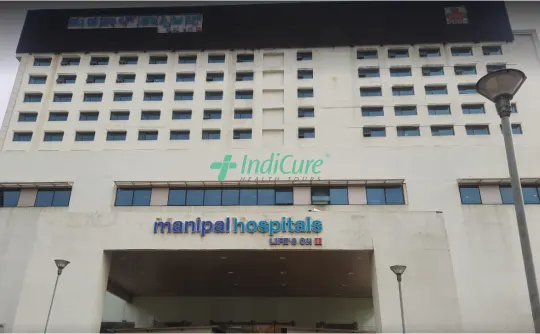
Location: Bangalore
Speciality: Multi-Superspeciality
Accreditation: Accreditation : NABH, NABL (ISQUA)
No. of Beds: Beds : 280
Manipal Hospital Whitefield is part of the renowned Manipal Hospitals network, which is known for its patient care and quality. It is a 280-bed multi-specialty hospital in Bangalore’s Whitefield neighborhood that provides world-class care. The hospital is NABH and NABL (ISQUA) accredited. The 280 bedded hospital with 10 beds in CCU, and 2 OperationTheatres.
MGM Healthcare, Chennai
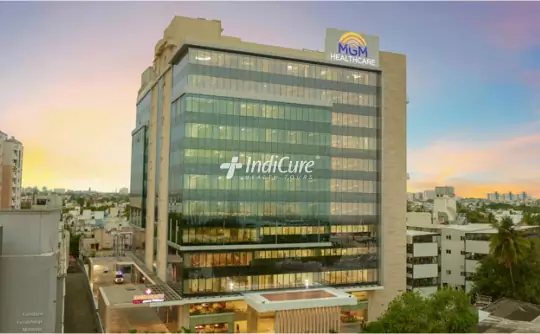
Location: Chennai
Speciality: Multi-Superspeciality
Loading...
No. of Beds: Beds : 400
MGM Healthcare is a 400-bed super specialty hospital in Chennai. The hospital has many feathers to its cap. In a single year, 102 heart transplants are performed (3rd highest in the world), There have been 110 pediatric heart transplants (Highest in Asia), More than 365 heart-lung transplant surgeries have been performed in India, making it the country with the most transplants. The hospital has done the most VAD implantations, including LVAD, RVAD, and BIVAD. More than 25,000 heart procedures have been conducted by the professional team of MGM. It is the first LEED Platinum-certified green hospital in India.
Oral Cancer
Oral cancer is a type of cancer that develops in the mouth or throat tissues. It’s part of a bigger category of tumors known as head and neck cancers. The majority form in the squamous cells of your mouth, tongue, and lips.
Oral cancer affects more than 49,000 people in the United States each year, with the majority of instances happening in persons over the age of 40. Oral cancer is usually found after it has spread to the lymph nodes in the neck.
Oral cancer usually affects persons in their sixties and seventies. Your lips and the earliest parts of your tongue, as well as the roof and floor of your mouth, are all affected by oral cancer. It also affects your oropharynx, which includes the last section of your tongue and the roof of your mouth, as well as your tonsils, sides, and back of your throat.
What is Oral Cancer?
Oral cancer, often known as mouth cancer, is a type of cancer that affects the inside of the mouth. Oral cancer can resemble a common condition with your lips or mouth, such as white spots or bleeding sores.
The difference between a common condition and cancer is that these changes are permanent. Oral cancer can spread from your mouth and throat to other parts of your head and neck if left untreated.
Symptoms of Oral Cancer:
- Swellings/thickenings, lumps or bumps on the lips, gums, or other places inside the mouth, rough spots/crusts/or eroded areas
- Velvety white, red, or speckled (white and red) patches in the mouth.
- Mouth bleeding for no apparent reason
- Any part of the face, mouth, or neck that has unexplained numbness, loss of feeling, or pain/tenderness
- Sores that bleed readily and do not heal within two weeks on the face, neck, or mouth
- A throbbing sensation or the sensation that something is stuck in the back of the neck
- Chewing, swallowing, speaking, or moving the jaw or tongue are all difficult tasks.
- Hoarseness, a persistent sore throat, or a change in voice
- Ear ache
- The way your teeth or dentures fit together has changed.
- Weight loss that is dramatic
What causes Oral Cancer?
Mouth cancers develop when the DNA of cells on the lips or in the mouth undergoes mutations. The DNA of a cell includes the instructions that tell it what to do. When healthy cells would perish, the genetic alterations tell the cells to keep growing and dividing. A tumor can occur when abnormal mouth cancer cells congregate. They may spread from inside the mouth to other sections of the head and neck, as well as other parts of the body, over time
Risk factors
Factors that can increase your risk of mouth cancer include:
- Tobacco use in any form, such as cigarettes, cigars, pipes, chewing tobacco, and snuff,
- Excessive alcohol consumption
- Lips that have been exposed to too much sunlight
- Human papillomavirus (HPV)
- Immune system dysfunction
Prevention
There is no definite way to avoid mouth cancer. You can, however, lower your chance of mouth cancer if you:
- Stop using tobacco or don’t start using it at all.
- If you drink alcohol at all, do it in moderation.
- Excessive sun exposure to your lips should be avoided.
- See your dentist on a regular basis.
Oral Cancer Stages:
- Stage 1: The tumor is 2 centimeters (cm) or less in diameter and has not migrated to the lymph nodes.
- Stage 2: The tumor is 2-4 cm in diameter and has not migrated to the lymph nodes.
- Stage 3: Either the tumor is greater than 4 cm and has not spread to the lymph nodes, or it is any size and has spread to one lymph node but not to other parts of the body.
- Stage 4: Tumors of any size have expanded to surrounding tissues, lymph nodes, or other parts of the body, and cancer cells have spread to nearby tissues, lymph nodes, or other parts of the body.
Oral Cancer Treatment
The majority of patients with mouth cancer are treated with surgery. Most of these tumors can be removed through the mouth, but others may require a more invasive procedure. The size, stage, and location of the tumor all influence which surgery is best for the patient.
One of the operations described below may be used to remove the tumor, depending on its location and size:
- Primary tumor resection The surgeon removes the cancerous tissue in your mouth, as well as a little amount of normal tissue around the tumor. Reconstruction may be done to repair the area if a considerable amount of tissue is removed. Doctors accomplish this by removing healthy tissue from another section of your body. It’s possible to employ skin, muscle, or even bone.
- Mandible resection The surgeon may remove part or all of your jawbone (mandible) if the malignancy is in your jawbone (mandible) (called mandibulectomy). Bone from another area of your body, bone from a donor, or a metal plate can all be used to rebuild the jawbone.
- Maxillectomy If the cancer is in the bone that holds your top teeth (maxilla) in the front area of your mouth, your surgeon may need to remove some of the bone. A prosthesis may be prescribed for you. This is a unique device that inserts into your mouth’s roof to hide the surgical hole. You might be able to receive the prosthetic before the procedure. Following surgery, it will be refitted by a professional.
- Mohs micrographic surgery Mohs surgery is a type of micrographic surgery. If you have a cancer in your lip, the Mohs technique may be performed to remove it. The idea is to keep your lip’s function and appearance intact. One tiny layer of skin is shaved off at a time by the surgeon. Each layer is immediately inspected for cancer cells. The procedure is finished when no more cancer cells are seen and no more layers of skin are removed.
- Removal of the tongue The tongue is removed. For tongue cancer, a full or partial removal of the tongue (called a glossectomy) may be required.
- Neck dissection If your cancer has spread to your lymph nodes in your neck, you may need this procedure. The lymph nodes in the neck, as well as some surrounding tissue, are removed by the surgeon. This is done at the same time as the tumor removal procedure.
- Tracheostomy If your cancer or surgery is making it difficult for you to breathe, you may need this operation. A hole is made in the front of your neck, into your windpipe, by the surgeon (trachea). A short tube called a tracheostomy (trach) tube keeps the hole open. The tube is then used to breathe through. A tracheostomy might be temporary, only needed until the swelling subsides. It could be temporary or permanent, meaning you’ll have it for the rest of your life.
- Feeding tube placement If your cancer or therapy makes it difficult for you to eat, your surgeon will insert a gastrostomy tube (g-tube or PEG tube) into your stomach. It enters your body through the skin that covers your stomach. Another alternative is to insert the tube down your nose, down your esophagus (swallowing tube), and into your stomach. A nasogastric feeding tube, or NG tube, is used for this. The feeding tube is then used to deliver liquid nutrition directly to your stomach. An NG tube is only used for a brief period of time. A PEG or g-tube can be used for a short time or for a long time.
When is Oral Cancer Treatment needed?
If you are suffering from any of the above mentioned symptoms, you should see a doctor immediately who would advise tests to confirm the diagnosis. If you are diagnosed with oral cancer, you need to start the treatment immediately.
How is Oral Cancer Surgery Performed?
The main (primary) tumor is removed using a technique that is determined by the size and location of the tumor. If a tumor is located in the front of the mouth, for example, it may be quite simple to remove it through the mouth. However, a larger tumor (especially one that has spread into the oropharynx) may require a neck incision or a special saw to cut through the jaw bone to reach the tumor. (This procedure is known as a mandibulotomy.)
What Results can I Expect from Oral Cancer Surgery?
The outcome of the surgery you choose is determined by the stage of your mouth cancer. There is a good likelihood of total recovery if the cancer is detected early.
What is the Recovery after Oral Cancer Surgery like?
You may need to stay in the hospital for a few days after surgery. The length of your hospital stay is determined by how much and what section of your oral cavity was removed. After oral cancer surgery, most people are able to return home within a few days.
Questions to Ask
We at MediTraWell completely understand your concerns and it is always our endeavor to provide the best outcome for every patient. Following is the list of questions you must ask before you embark on your journey for oral cancer surgery in India.
- Is the oncologist board certified?
- How experienced is the surgeon?
- Which language does the surgeon speak?
- Is the treatment done in a well-equipped facility?
- What cancer treatment option is recommended for me?
- What about the risks involved?
- Does the surgeon use a certified anesthetist?
- How long will the recovery period be?
Preparation for the Surgery
Prepare to answer questions about your:
- Medical history and exams
- Previous surgeries
- Current medication review
- History of smoking, drugs, or alcohol