

Aortic Valve Replacement Cost in India
Last updated: April 19, 2026
Starting from USD 14,000
INCLUDES
- FDA Approved Implant
- Surgery and Stay at the Hospital
- Pre-operative Investigations
- Medicines, Consumables & Food at the hospital
- Airport Transfers & MediTraWell assistance
DOES NOT INCLUDE
- Accommodation outside the Hospital
- Air tickets
- Medical Visa fee
STAY REQUIRED
- Stay at the Hospital - 1 to 2 days
- Stay at the Hotel - 7 to 8 days
- Stay in India - 8 to 10 days
With end to end services for your hassle-free Cancer Treatment in India, MediTraWell has made the entire process of seeking medical tourism in India easy and hassle free for you besides making it affordable.
Factors that Affect AICD Cost in India
- Type of AICD
A significant portion of the overall AICD cost in India arises from the type of implant used. There are different types of implants available which include s ingle chamber, dual chamber, biventricular, and subcutaneous implant. The doctor shall recommend the appropriate implant depending on your medical condition and requirements. MediTraWell recommends you explore the options by consulting our expert Interventional Cardiologists.
- Cardiologist’s Fees
A significant component of an AICD cost in India is the heart surgeon’s fees. MediTraWell recommends highly experienced, skilled, board-certified heart surgeons who can deliver excellent results. While the charges may vary based on the surgeon’s experience, you can be confident that you are in safe and capable hands when opting for affordable heart surgery in India with MediTraWell Health Tours.
- Your Choice of Surgical Facility
Selecting an accredited medical facility with skilled and qualified medical staff is essential for the success of AICD procedure in India. Larger cities in India generally provide superior medical facilities and more experienced heart surgeons, leading to higher costs. MediTraWell Health Tours recommends surgical facilities in these larger cities to prioritize quality of care and ensure safety of our overseas guests.
- Surgery-Related Expenses
The expenses related to AICD surgery include the pre- and post-surgical expenses. The amount of pre-surgical expenses depends on the age and medical condition of the patient and thus the number and type of investigations that may be required. The amount of post-surgical expenses depend on prescription medications and extent of follow-up consultations required.
We Customize AICD Cost in India Quote to Suit Your Preferences
At MediTraWell Health Tours, we consolidate most of the expenses for your AICD cost in India to provide you with an inclusive and cost-effective package tailored to your budget and individual requirements. After receiving medical reports, your case manager will provide an estimated cost based on a discussion with the heart surgeon in India.
The final AICD cost in India can however be confirmed after your face-to-face consultation with the heart surgeon.
We at MediTraWell, understand that you travel with a budget in mind and do not like to be greeted by surprises after arrival in India. We thus club all these expenses and give you a package cost that is inclusive and affordable at the same time.
Your case manager shall give you an estimated cost of your surgery after discussing your medical reports with the surgeon. The final cost, however, shall be confirmed after your consultation with the surgeon.
Medi Trawell Services
Making Medical Travel to India Affordable & Hassle-free for 15+ Years

We Help you Choose the Right Treatment, Surgeon & Hospital

We Arrange Video/Telephonic Consultation with the Surgeon

We Assist you with Visa & Accommodation

We Receive you at the Airport and Drop you at Hotel/Hospital

We Assist you the at Hospital & Provide Post Operative Support
Our services are FREE for our patients.
In fact, we have Special Negotiated Rates with the Hospitals and you can avail Discounted Rates when you choose to Travel with MediTrawell. Container
Cardiac Procedures We Offer
Here is a compilation of the heart treatment options we provide in India.
- Holter Monitoring
- Alcohol Septal Ablation
- AICD
- Coronary Angiography
- Coronary Angioplasty (PTCA)
- Pacemaker Implantation
- Cardiac Bypass (Heart Bypass)
- ASD Device Closure
- Aortic Valve Replacement
- ASD Treatment
- VSD Treatment
- Cardiac Tumor Surgery
- EP Study
- Balloon Valvuloplasty
- Bentall Procedure
- Cardiac Ablation
- Minimally Invasive Heart Bypass
- Valve Replacement Surgery
- Pediatric Heart Surgery
- Robotic Heart Surgery
- Heart Transplant
- LVAD (Left Ventricular Assist Device)
- TAVR (Transcatheter Aortic Valve Replacement)
- Truncus Arteriosus Repair
Best cardiologist in India
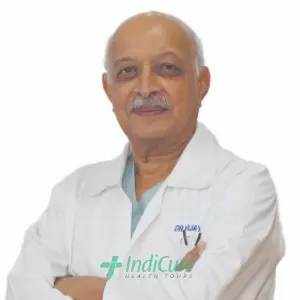
Dr. Vijay Dikshit
Cardiac Surgeon
MBBS, MS, MCh
Hyderabad
Dr. Vijay Dikshit is a well-known Cardiothoracic Surgeon with over 42 years of experience. Peripheral Angioplasty, Balloon Mitral Valvuloplasty, Intra-Arterial Thrombolysis, Pacemaker Implantation, and Mitral/Heart Valve Replacement are some of his specialties.
In 1974, he earned his MBBS, and in 1978, he earned his MS in General Surgery from the University of Lucknow. In 1980, he graduated from the University of Lucknow with an M.Ch. in Cardiothoracic Surgery.
He is a member of the Indian Medical Association and the Indian Cardiological Society. Several prizes and honors have been bestowed upon him.
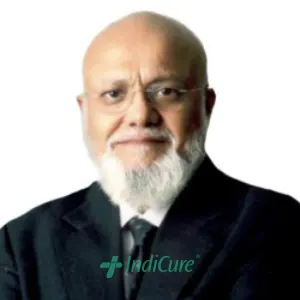
Dr. S.S. Bhattacharya
Cardiac Surgeon
MBBS, MS, MCh
Mumbai
Dr. S.S. Bhattacharya is a famous Cardiac Surgeon in India with more than 36 years of experience. He was involved in the development of several surgical devices, including the Arterial Retractor for Mitral Valve Replacement and the Internal Mammary Artery Retractor for the removal of bilateral Internal Mammary Arteries.
He has articles published in international and national peer-reviewed journals. He has given talks at conferences where he has shared his research findings.
He has successfully treated over 15,000 cases, many of which were complex cases. Dr. Bhattacharya was also honored with a memorial award for his pioneering work in cardiothoracic and vascular surgery.
Dr Mahesh Ghogare
Interventional Cardiologist
MBBS, MD, DM, Member- American College of Cardiology, Fellowship, European Society of Cardiology (FESC)
Mumbai
Dr Mahesh Ghogare is a renowned cardiologist in India with an experience of around 15 years. He has achieved proficiency in coronary angiographies and angioplasties using the radial approach, a highly skilled technique involving the hand vessel. With an experience performing more than 3500 angiographies and more than 500 angioplasties primarily through the radial route, Dr Ghogare demonstrates expertise in this method. Additionally, he specializes in complex congenital 2D and 3D echocardiograms. His training includes interventions for pediatric cardiac conditions such as ASD device closure and PDA device closure.
Dr Ghogare completed his super specialization (DM Cardiology) in adult and pediatric cardiology at LTMMC and LTMGH, Sion Hospital, Mumbai. Following this, he served as an Assistant Professor in the Department of Cardiology. Presently he is working as Senior consultant at Apollo Hospital, Navi Mumbai.
https://www.MediTraWell.com/asd-device-closure-cost-india/
https://www.MediTraWell.com/pda-device-closure-cost-india/
ASD device closure
Best Cancer Hospitals in India
These are our top cancer hospitals in India, ensuring you receive the healthcare you deserve.
SCI International Hospital, New Delhi
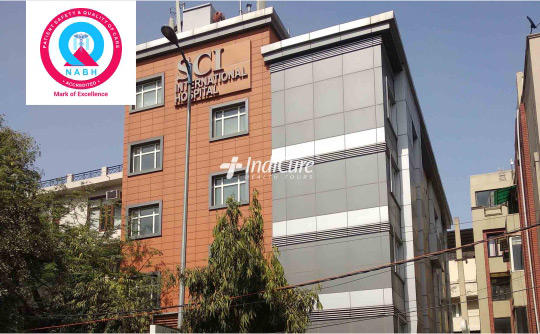
Location: New Delhi
Speciality: Multi-Superspeciality
Accreditation: Accreditation : NABH
No. of Beds: Beds : 80
SCI International Hospital, which opened in 2014, is a multi-specialty hospital that offers high-quality, low-cost surgical services. The hospital began with 40 beds and now has a total of 80 beds. SCI is a NABH-accredited facility with cutting-edge technology. The emergency is addressed by skilled and competent doctors 24 hours a day, 7 days a week, with the quickest possible reaction time. The hospital maintains its own blood bank.
Max Super Speciality Hospital, Patparganj
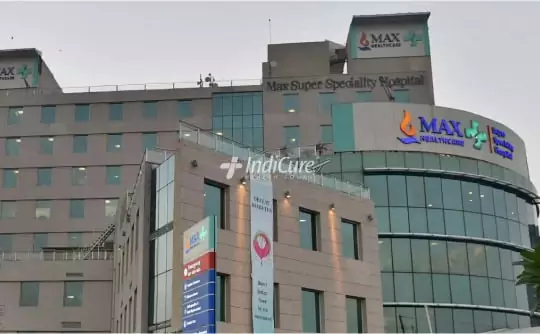
Location: Delhi
Speciality: Multi-Superspeciality
Accreditation: Accreditation : National Accreditation Board for Hospitals & Healthcare Providers (NABH), National Accreditation Board for Testing and Calibration Laboratories (NABL)
No. of Beds: Beds : 147
In 2005, the Max Super Specialty Hospital in Patparganj opened its doors. Max Healthcare is the first hospital in India to be recognized by HIMSS at the ‘Stage 6’ level. The hospital received the Healthcare Prize for Operational Excellence in Environmental Conservation from the FICCI. The hospital received the Healthcare Prize for Operational Excellence in Environmental Conservation from the FICCI. The hospital is ISO 9001:2000 certified and its laboratories have received NABH and NABL accreditation. https://www.MediTraWell.com/dental-tourism-india/ Dental Care Aesthetic and Reconstructive Surgery, ENT, Dental Care, Cancer Care, Neurosciences, Cardiac Surgery, Orthopedics, and many other specialties are available at the hospital. The Pacemaker Clinic, Pain Clinic, Arrhythmia & Electrophysiology Clinic, Diabesity Clinic, and Headache Clinic are all specialty clinics.
What is Aortic Valve Replacement?
Aortic valve repair and replacement are operations used to address disorders of the aortic valve, which is one of four valves that regulate blood flow through the heart.
The aortic valve keeps blood flowing through the heart in the right direction. It connects the main pumping chamber of the heart (left ventricle) to the major artery that carries oxygen-rich blood throughout your body (aorta).
The aortic valve opens with each ventricular contraction, allowing blood to flow from the left ventricle into the aorta. The aortic valve closes when the ventricle relaxes, preventing blood from flowing backward into the ventricle. When the aortic valve isn’t functioning properly, it can obstruct blood flow and make the heart work harder to pump blood to the rest of the body. Aortic valve repair or replacement can help treat aortic valve disease by restoring normal blood flow, reducing symptoms, prolonging life, and preserving heart muscle function. Surgery for aortic valve disease is associated with the severity of your condition, whether you have signs and symptoms, and whether your condition is worsening. Aortic Valve Repair or Replacement is advised when:
- The valve is leaky (aortic insufficiency, also known as aortic regurgitation)
- The valve is narrowed and doesn’t open fully (aortic stenosis)
The aortic is the most commonly replaced valve. The replaced valves can be made either of tissues from animals or humans and mechanical valves made of man-made material.
- Tissue valve where an animal or human donor is used
- Mechanical valve is made of durable materials
When is Aortic Valve Replacement Required?
The Valve Replacement surgery is indicated in the following conditions:
Congenital Heart Valve Diseases such as narrow or leaking valves, and bicuspid aortic valves. Acquired Heart Valve Diseases such as Calcification of the valves, Infection such as Infective endocarditis or Syphilis, Rheumatic valve disease, Angina, tumors of the valve, Hypertension, enlarged heart muscles known as Cardiomyopathy, increased opening of the annulus of the valve and Aortic aneurysm to name a few.
How is Aortic Valve Replacement Done?
Valve replacement surgery is done under general anesthesia and takes about four to five hours. The surgery is done either as an open-heart surgery where the patient is put on a heart-lung machine or rarely as beating heart surgery without the use of heart-lung machine, when the patient’s heart is normally beating.
Step 1: After the incision is made and breastbone and ribs are separated, the surgeon will then open the heart and will trace the faulty valve.
Step 2: The edges around the valve are slightly sliced to help loosen it from the tendons that connect it to the rest of the heart and then the valve can be removed.
Step 3: The new valve is then inserted and attached into place. After the surgery is done, the patient is taken off the bypass machine, and the chest is closed.
What is the Recovery After Aortic Valve Replacement Like?
Aortic valve replacement surgery has an exceptional outcome and gives extremely satisfying results. The majority of patients who undergo the procedure return to normal activities after the operation. Their quality of life also improves because they no longer have difficulty breathing, fainting spells, or palpitations.
Questions you must ask
Here is a set of questions you should consider asking before commencing your journey for Aortic Valve Replacement surgery in India.
- Is the heart surgeon board certified?
- How experienced is the Surgeon?
- Which language does the surgeon speak?
- Is the treatment done in a well-equipped facility?
- What treatment option is recommended for me?
- What about the risks involved?
- Does the surgeon use a certified anesthetist?
- How long will the recovery period be?
Be ready to respond about:
Prepare to answer questions about your:
- Medical history and exams
- Previous surgeries
- Current medication review
- History of smoking, drugs, or alcohol