
ASD Device Closure Cost in India
Last updated: April 19, 2026
Starting from USD 14,000
INCLUDES
- FDA Approved Implant
- Surgery and Stay at the Hospital
- Pre-operative Investigations
- Medicines, Consumables & Food at the hospital
- Airport Transfers & MediTraWell assistance
DOES NOT INCLUDE
- Accommodation outside the Hospital
- Air tickets
- Medical Visa fee
STAY REQUIRED
- Stay at the Hospital - 1 to 2 days
- Stay at the Hotel - 7 to 8 days
- Stay in India - 8 to 10 days
With end to end services for your hassle-free Cancer Treatment in India, MediTraWell has made the entire process of seeking medical tourism in India easy and hassle free for you besides making it affordable.
Factors that Affect AICD Cost in India
- Type of AICD
A significant portion of the overall AICD cost in India arises from the type of implant used. There are different types of implants available which include s ingle chamber, dual chamber, biventricular, and subcutaneous implant. The doctor shall recommend the appropriate implant depending on your medical condition and requirements. MediTraWell recommends you explore the options by consulting our expert Interventional Cardiologists.
- Cardiologist’s Fees
A significant component of an AICD cost in India is the heart surgeon’s fees. MediTraWell recommends highly experienced, skilled, board-certified heart surgeons who can deliver excellent results. While the charges may vary based on the surgeon’s experience, you can be confident that you are in safe and capable hands when opting for affordable heart surgery in India with MediTraWell Health Tours.
- Your Choice of Surgical Facility
Selecting an accredited medical facility with skilled and qualified medical staff is essential for the success of AICD procedure in India. Larger cities in India generally provide superior medical facilities and more experienced heart surgeons, leading to higher costs. MediTraWell Health Tours recommends surgical facilities in these larger cities to prioritize quality of care and ensure safety of our overseas guests.
- Surgery-Related Expenses
The expenses related to AICD surgery include the pre- and post-surgical expenses. The amount of pre-surgical expenses depends on the age and medical condition of the patient and thus the number and type of investigations that may be required. The amount of post-surgical expenses depend on prescription medications and extent of follow-up consultations required.
We Customize AICD Cost in India Quote to Suit Your Preferences
At MediTraWell Health Tours, we consolidate most of the expenses for your AICD cost in India to provide you with an inclusive and cost-effective package tailored to your budget and individual requirements. After receiving medical reports, your case manager will provide an estimated cost based on a discussion with the heart surgeon in India.
The final AICD cost in India can however be confirmed after your face-to-face consultation with the heart surgeon.
We at MediTraWell, understand that you travel with a budget in mind and do not like to be greeted by surprises after arrival in India. We thus club all these expenses and give you a package cost that is inclusive and affordable at the same time.
Your case manager shall give you an estimated cost of your surgery after discussing your medical reports with the surgeon. The final cost, however, shall be confirmed after your consultation with the surgeon.
Medi Trawell Services
Making Medical Travel to India Affordable & Hassle-free for 15+ Years

We Help you Choose the Right Treatment, Surgeon & Hospital

We Arrange Video/Telephonic Consultation with the Surgeon

We Assist you with Visa & Accommodation

We Receive you at the Airport and Drop you at Hotel/Hospital

We Assist you the at Hospital & Provide Post Operative Support
Our services are FREE for our patients.
In fact, we have Special Negotiated Rates with the Hospitals and you can avail Discounted Rates when you choose to Travel with MediTrawell. Container
Cardiac Procedures We Offer
Here is a compilation of the heart treatment options we provide in India.
- Holter Monitoring
- Alcohol Septal Ablation
- AICD
- Coronary Angiography
- Coronary Angioplasty (PTCA)
- Pacemaker Implantation
- Cardiac Bypass (Heart Bypass)
- ASD Device Closure
- Aortic Valve Replacement
- ASD Treatment
- VSD Treatment
- Cardiac Tumor Surgery
- EP Study
- Balloon Valvuloplasty
- Bentall Procedure
- Cardiac Ablation
- Minimally Invasive Heart Bypass
- Valve Replacement Surgery
- Pediatric Heart Surgery
- Robotic Heart Surgery
- Heart Transplant
- LVAD (Left Ventricular Assist Device)
- TAVR (Transcatheter Aortic Valve Replacement)
- Truncus Arteriosus Repair
Best cardiologist in India
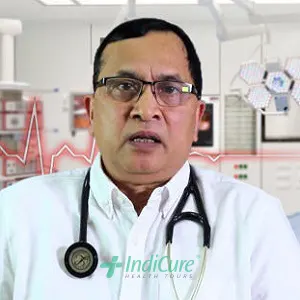
Dr. Bhabha Nanda Das
Cardiac Surgeon
MBBS, MS, MCh, Fellowships
New Delhi
Dr. BN Das is a well-known and well-respected cardiothoracic surgeon in Delhi. With more than 36 years of expertise, he has conducted over 20,000 heart procedures to date. Dr. Das received his MBBS, MS, and McH degrees from some of Delhi’s most prestigious institutions. Following that, he was awarded a Fellowship by the World Health Organization.
CABG on a beating heart, Aortic Aneurysm Surgery, Double Valve Replacement/Mitral Valve Replacement/Aortic Valve Replacement, All Types of Congenital Anomalies, and Intra Cardiac Repair are among Dr B N Das’s specialties.
With more than 36 years of expertise, he has conducted over 20,000 heart procedures to date
a Fellowship by the World Health Organization
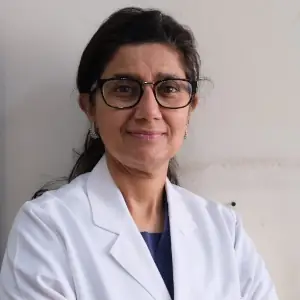
Dr Aparna Jaswal
Interventional Cardiologist
MBBS, MD, DNB, Training, Cardiac Electrophysiology at St. Luke's Hospital in Milwaukee, USA
Delhi
Dr. Aparna Jaswal is a highly recognized Cardiologist in India, specializing in EPS & RFA of complex arrhythmias, AICD implantation, and biventricular pacing.
She joined Fortis Escorts Heart Institute & Research Centre in New Delhi in 1998, and has been an integral part of the Department of Cardiac Electrophysiology since then. Dr. Jaswal regularly performs electrophysiological studies and radio frequency catheter ablation for various cardiac arrhythmias. She has received training in Cardiac Electrophysiology at St. Luke’s Hospital in Milwaukee, USA, and holds the ‘Certified Cardiac Device Specialist’ certification from IBHRE, HRS.
Dr. Jaswal is involved in numerous research projects and actively participates in national and international research trials. She is frequently invited as a faculty member to various national and international symposia and workshops. Notably, she initiated the EP program in Mauritius in November 2010. She also received a Fellowship from Heart Rhythm Society, USA in 2011.
https://www.meditrawell.com/eps-rfa-treatment-cost-in-india/
https://www.meditrawell.com/aicd-cost-india/
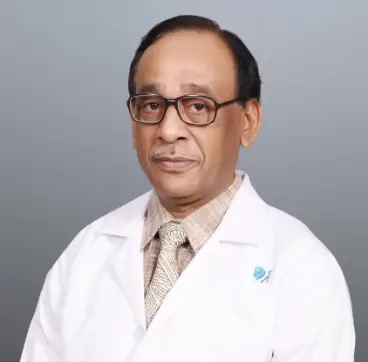
Dr K K Saxena
Cardiology
MBBS, MD, DM, Fellowship, Interventional Cardiology, Royal Adelaide Hospital, Australia
Delhi
Dr. K K Saxena is a well renowned cardiologist in India with over 35 years of experience, establishing him as a seasoned expert in heart care. Dr. Saxena holds MBBS, MD, and DM degrees, besides having a Research Fellowship in Interventional Cardiology and Cardiovascular Investigational Unit from Royal Adelaide Hospital, Australia, reflecting his dedication to advancing his expertise in cardiology.
Dr Saxena is skilled in performing various procedures such as angioplasty, echocardiography, stress tests, pacemaker implantation, and cardiac catheterization.
Best Cancer Hospitals in India
These are our top cancer hospitals in India, ensuring you receive the healthcare you deserve.
Harleys Clinic, Mumbai
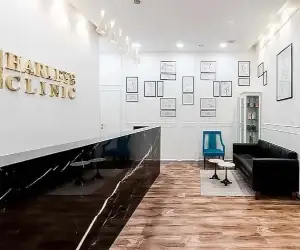
Location: Mumbai
Speciality: Hair Transplant & Plastic Surgery
Loading...
Loading...
Harleys Hair Transplant Clinic stands out with Mumbai’s leading hair transplant surgeon, renowned for meticulous attention to detail, ensuring optimal transplant results. The clinic boasts state-of-the-art technologies and facilities essential for hair transplant procedures. With a team of highly experienced and skilled surgeons, Harleys Hair Transplant Clinic offers a range of hair restoration therapies at competitive prices, including beard hair transplant and non-shave FUE. Patients are assured of minimal post-transplant complications such as scars. The clinic specializes in Advanced FUE Hair transplants, delivering full results within 6 to 9 months. All procedures adhere to clinical standards, ensuring safety and FDA approval, thus giving you the best results for your Hair Transplant surgery. https://www.MediTraWell.com/hair-transplant-india/ Hair Transplant
Fortis Escorts Heart Institute, Delhi
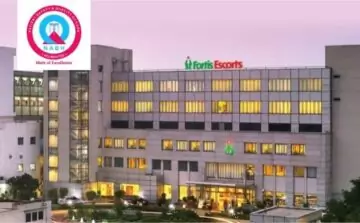
Location: New Delhi
Speciality: Multi-Superspeciality
Accreditation: Accreditation : Joint Commission International (JCI, USA), National Accreditation Board for Hospitals & Healthcare Providers (NABH)
No. of Beds: Beds : 285
Fortis Escorts Heart Institute, located in New Delhi, India, is one of the most renowned and well-established cardiac care centres in the country. This best heart hospital has received numerous awards and accolades and recognition for its high-quality services. The hospital boasts a team of highly qualified and some of the best cardiologists, cardiac surgeons, nurses, and support staff who are experts in their respective fields. A large number of the doctors at Fortis Escorts Heart Institute have international training and experience. Fortis Escorts Heart Institute is equipped with state-of-the-art technology and modern facilities, including advanced cardiac catheterization labs, cardiac surgery theaters, and cardiac imaging equipment. It was one of the pioneers in starting Robotic Heart Surgery. https://www.MediTraWell.com/robotic-heart-surgery-india/ Robotic Heart Surgery
What is ASD Device Closure?
Atrial septal defect (ASD) transcatheter repair, also known as ASD device closure, is a procedure to fix a hole in the atrial septum. The atrial septum is a wall that separates the right and left upper chambers in the heart (atria). This hole is called an atrial septal defect or ASD.
When the septum does not form properly, you are born with an ASD (congenital defect). A “hole in the heart” is what it is commonly known as.
Atrial septal defects are the third most frequent type of congenital heart abnormality and the most common among adults.
A secundum ASD is a hole in the septum’s center. Blood can flow from one side of the atria to the other through the hole. The direction is determined by the amount of pressure in the atria.
Because they do not show symptoms, many people are unaware that they have ASD. When a chest X-ray for another illness reveals that the right side of the heart is larger than normal, some people learn about the defect.
Closure Device
A unique closure device is used to conduct percutaneous closure of PFO and ASD. The device is folded or attached to a special catheter, which is comparable to the catheter used during your catheterization procedure. The catheter is moved into the heart and through the defect after being put into a vein in the leg. The device is progressively pushed out of the catheter, allowing each side to expand up and cover each side of the opening (much like a sandwich), effectively closing the hole or defect. The device is removed from the catheter once it is in the appropriate place. Heart tissue grows over the implant over time, becoming a part of the heart. The procedure is monitored by X-ray and an ultrasound camera inserted in the heart from a vein in the top of the leg.
When is ASD Device Closure required?
When a child is between the ages of four and six, ASD Closure is advised if a moderate to large defect is there. When a problem is discovered in a young adult, the advantages of closure are significant.
Patients who don’t qualify for catheter-based closure devices may need surgery to close their septal defect. There are minimally invasive and robotically assisted methods available. Congenital heart cardiologists, interventionalists, and surgeons collaborate to ensure that each patient receives the best treatment for their condition.
How is ASD Device Closure done?
Step 2: The surgeon will carefully maneuver the catheter through the blood vessel, starting from an artery in the groin area and guiding it through the arterial system towards the heart. Using X-rays and echocardiograms, the location of the catheter can be tracked as it progresses toward the atrial septum.
Step 3: The surgeon will deploy the small device from the catheter and position it over the opening in the atrial septum. Then the device will be securely anchored. The catheter will be carefully withdrawn through the blood vessel. The healthcare provider will close and bandage the site where the tube was inserted.
What is the Recovery after ASD Device Closure like?
After surgery, patients are taken to the intensive care unit and monitored. Pain is likely, and pain medication is given as appropriate. Patients also are on a respirator and have a breathing tube for the first few hours after surgery.
The length of the hospital stay depends on how quickly a patient recovers and can perform some physical activity.
What Results Can I Expect from ASD Device Closure?
The outlook after ASD surgery is excellent. Once an ASD has been closed, it’s unlikely that more surgery will be needed.
Questions you must ask
Here is a set of questions you should consider asking before commencing your medical tour for ASD Device Closure in India.
- Is the plastic surgeon board-certified?
- How experienced is the surgeon?
- Which language does the surgeon speak?
- Is the treatment done in a well-equipped facility?
- Is it possible to see before and after photographs?
- What will be expected of me to get the best results?
- What about the risks involved?
- How long will the recovery period be?
- Can I have feedback from real people?
Be ready to respond about:
- Medical history and exams
- Previous surgeries
- Current medication review
- History of smoking, drugs, or alcohol
- Pictures of target areas
- Surgical expectations