

Heart Bypass Surgery Cost in India
Last updated: April 19, 2026
Starting from USD 4,000
INCLUDES
- FDA Approved Implant
- Surgery and Stay at the Hospital
- Pre-operative Investigations
- Medicines, Consumables & Food at the hospital
- Airport Transfers & MediTraWell assistance
DOES NOT INCLUDE
- Accommodation outside the Hospital
- Air tickets
- Medical Visa fee
STAY REQUIRED
- Stay at the Hospital - 1 to 2 days
- Stay at the Hotel - 7 to 8 days
- Stay in India - 8 to 10 days
With end to end services for your hassle-free Cancer Treatment in India, MediTraWell has made the entire process of seeking medical tourism in India easy and hassle free for you besides making it affordable.
Factors that Affect Heart Bypass Surgery Cost in India
- Type (Number) of Bypass Required:
The heart bypass surgery cost in India depends on whether it is single, double, triple, or quadruple bypass, as each involves bypassing 1 to 4 blocked arteries. With more arteries, the surgery becomes more complex, requiring additional grafts, longer operating times, and extended post-operative care, driving up the overall cost.
- Heart Surgeon’s Fees
A significant component of a heart bypass surgery cost in India is the heart surgeon’s fees. MediTraWell recommends highly experienced, skilled, board-certified heart surgeons who can deliver excellent results. While the charges may vary based on the surgeon’s experience, you can be confident that you are in safe and capable hands when opting for affordable heart surgery in India with MediTraWell.
- Type of Surgical Approach
In the pursuit of enhancing patient care, the medical field continually introduces new techniques and technologies into surgical procedures. These innovative advancements are designed to improve outcomes, reduce recovery times, and increase the overall effectiveness of treatments. While these advancements can significantly benefit patient care, they may also lead to higher cost of heart bypass surgery cost in India.
- Your Choice of Surgical Facility:
Selecting an accredited medical facility with skilled and qualified medical staff is essential for the success of a heart bypass surgery in India. Larger cities in India generally provide superior medical facilities and more experienced heart surgeons, leading to higher costs. MediTraWell Health Tours recommends surgical facilities in these larger cities to prioritize quality of care and ensure patient safety of our foreign guests.
- Surgery-Related Expenses
The surgery-related expenses for hear by pass include the pre- and post-surgical expenses. The pre-surgical expenses are associated with the age and medical condition of the patient and thus the number and type of investigations required. The post-surgical expenses may include prescription medications and follow-up consultations.
We Customize Heart Bypass Surgery in India Quote to Suit Your Preferences
At MediTraWell Health Tours, we consolidate most of the expenses for your Heart Bypass Surgery in India to provide you with an inclusive and cost-effective package tailored to your budget and individual requirements. After receiving medical reports, your case manager will provide an estimated cost based on a discussion with the heart surgeon.
The final Heart Bypass Surgery cost in India can however be confirmed after your face-to-face consultation with the heart surgeon in India.
We at MediTraWell, understand that you travel with a budget in mind and do not like to be greeted by surprises after arrival in India. We thus club all these expenses and give you a package cost that is inclusive and affordable at the same time.
Your case manager shall give you an estimated cost of your surgery after discussing your medical reports with the surgeon. The final cost, however, shall be confirmed after your consultation with the surgeon.
Medi Trawell Services
Making Medical Travel to India Affordable & Hassle-free for 15+ Years

We Help you Choose the Right Treatment, Surgeon & Hospital

We Arrange Video/Telephonic Consultation with the Surgeon

We Assist you with Visa & Accommodation

We Receive you at the Airport and Drop you at Hotel/Hospital

We Assist you the at Hospital & Provide Post Operative Support
Our services are FREE for our patients.
In fact, we have Special Negotiated Rates with the Hospitals and you can avail Discounted Rates when you choose to Travel with MediTrawell. Container
Cardiac Procedures We Offer
Here is a compilation of the heart treatment options we provide in India.
- Holter Monitoring
- Alcohol Septal Ablation
- AICD
- Coronary Angiography
- Coronary Angioplasty (PTCA)
- Pacemaker Implantation
- Cardiac Bypass (Heart Bypass)
- ASD Device Closure
- Aortic Valve Replacement
- ASD Treatment
- VSD Treatment
- Cardiac Tumor Surgery
- EP Study
- Balloon Valvuloplasty
- Bentall Procedure
- Cardiac Ablation
- Minimally Invasive Heart Bypass
- Valve Replacement Surgery
- Pediatric Heart Surgery
- Robotic Heart Surgery
- Heart Transplant
- LVAD (Left Ventricular Assist Device)
- TAVR (Transcatheter Aortic Valve Replacement)
- Truncus Arteriosus Repair
Best cardiologist in India
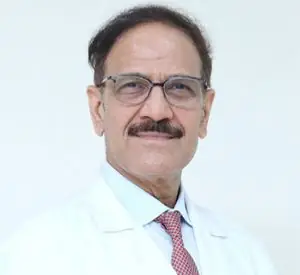
Dr Subhash Chandra
Interventional Cardiologist
MBBS, MD, DM, DNB, United States Medical Licensing Examination (USA) & PDF (Brussels, Belgium)
Delhi
Dr. Subash Chandra is a highly esteemed cardiologist in India. With over 25,000 complex cardiology procedures successfully performed, he has been honoured with numerous national and international awards.
With over 25,000 complex cardiology procedures successfully performed
He is currently working as the Chairman in Interventional Cardiology at BLK-Max Super Speciality Hospital, New Delhi and has previously worked at most of the renowned cardiac hospitals in India. He has had a long working stint as Director & Senior Consultant, Fortis Escorts Heart Institute, New Delh; Director – Narinder Mohan Heart Centre and Senior Consultant at Indraprastha Apollo Hospital, New Delhi.
Dr Chandra has received extensive training in the field of cardiology and has been a fellow in interventional cardiology at Rouen, France; Fellow CRT course at Crossings Brussels, Belgium and Fellow of Carotid Interventions again at Crossings, Brussels, Belgium.
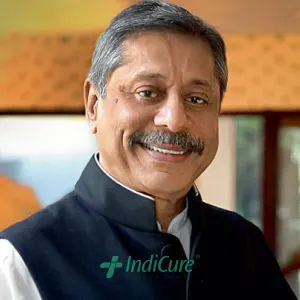
Dr. Naresh Trehan
Cardiac Surgeon
MBBS, Diplomate American Board
Gurgaon
With over 40 years of expertise, Dr. Naresh is considered one of the most successful cardiac surgeon in India, having conducted over 48000 cardiac procedures. He is also the founder of prestigious Escorts Heart Institute and Research Center and Chairman & Managing Director of Medanta, The Medicity.
Cardiomyoplasty, myocardial total arterial revascularization, transmyocardial laser revascularization, reduction ventriculoplasty (Batista Operation), heart port access surgery, aortic valve surgery, and robotically assisted cardiac surgery are among the cardiothoracic surgeries in which he specializes. Dr. Trehan also specializes in Cardiovascular Diseases and Cardiothoracic Surgery, such as thoracic surgeries for chest wall deformities, heart attacks, heart failure, and video-assisted minimally invasive cardiac surgery, among other procedures.
Diplomate in Surgery and Cardio-thoracic surgery in the United States
Dr. Naresh completed his medical education at King George’s Medical University in Lucknow in 1968, followed by Diplomate in Surgery and Cardio-thoracic surgery in the United States. In 2002, he was also awarded a Fellowship by the Royal Australasian College of Surgeons. Since 1991, he has been the President of India’s personal surgeon. Dr. Naresh Trehan has received numerous honors, including the Padma Shri, Padma Bhushan, and Lal Bahadur Shastri National Award, among others.
Fellowship by the Royal Australasian College of Surgeons
Padma Shri, Padma Bhushan, and Lal Bahadur Shastri National Award, among others
Former president of the International Society for Minimally Invasive Cardiac Surgery (ISMICS) in the United States, as well as a member of important organizations such as the Society of Thoracic Surgeons in the United States and the European Association for Cardio-thoracic Surgery, to mention a few.
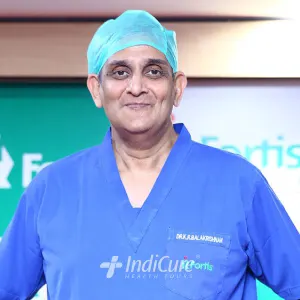
Dr. K R Balakrisnan
Cardiac Surgeon
MBBS, MS, MCh
Chennai
Dr. K R Balakrishnan is a well-known cardiothoracic surgeon in Chennai. With over 30 years of experience, he is credited with implanting India’s first LVAD and HVAD pump as destination therapy. Dr. Balakrishnan received his MBBS from JIPMER and his MS in General Surgery from the prestigious AIIMS in Delhi. Following that, he completed his McH (Cardiothoracic Surgery) at the University’s KEM Hospital.
At Fortis Malar Hospital in Chennai, he was key in establishing India’s First Comprehensive Centre for Heart Failure Management. Dr. Balakrishnan has collaborated with Sir Brian Barratt-Boyes of Green Lane Hospital in New Zealand and Dr. Albert Starr of Oregon Health Science University and St. Vincent Hospital in the United States.
With over 30 years of experience, he is credited with implanting India’s first LVAD and HVAD pump as destination therapy
Dr. Balakrishnan is also involved in the development of pulsatile and continuous flow LVADs (Left Ventricular Assist Devices) and the molecular biology of ventricular hypertrophy with a number of institutions. Dr. Balakrishnan is the first cardiologist in India to undertake both HVAD and LVAD implant surgery as destination therapy.
he was key in establishing India’s First Comprehensive Centre for Heart Failure Management. Dr. Balakrishnan has collaborated with Sir Brian Barratt-Boyes of Green Lane Hospital in New Zealand and Dr. Albert Starr of Oregon Health Science University and St. Vincent Hospital in the United States
Dr. Balakrishnan is the first cardiologist in India to undertake both HVAD and LVAD implant surgery as destination therapy
Best Cancer Hospitals in India
These are our top cancer hospitals in India, ensuring you receive the healthcare you deserve.
Insight Eye Clinic, Mumbai
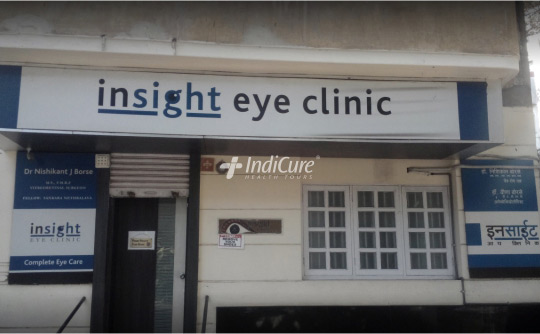
Location: Mumbai
Speciality: Multi-Superspeciality
Loading...
Loading...
Insight Eye Clinic is a cutting-edge and one of Mumbai’s leading eye care centres, delivering high-quality eye care. The facility is well equipped with eye care experts, specially trained staff, and the latest in eye care technology to ensure that the patients are treated with the utmost care and warmth. They are specialized in the treatments of vitreous and retinal diseases. Dr. Nishikant Borse, the chief surgeon is the foremost Retinal surgeon of India, with experience of 17 years in dealing with complex retina cases.
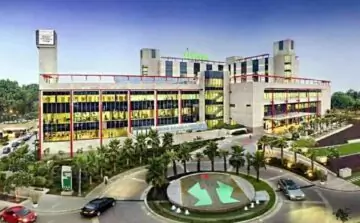
Fortis Memorial Research Institute, Gurgaon
Location: Gurgaon
Speciality: Multi-Superspeciality
Accreditation: Accreditation : Joint Commission International (JCI, USA), National Accreditation Board for Hospitals & Healthcare Providers (NABH)
No. of Beds: Beds : 1000
The hospital is located in Gurgaon or NCR (National Capital Region), on the outskirts of Delhi. Besides being a premium referral healthcare facility, it endeavors to be the ‘Mecca of Healthcare’ for the Asia Pacific and beyond. The hospital is set on a spacious 11 acres campus, with 1000 beds, is equipped with state-of-the-art technology. FMRI is the first to bring the most advanced technology not only in India or Asia, but few are the first to be introduced in the world.
What is a Heart Bypass Surgery?
Coronary artery bypass graft surgery (CABG), also known as heart bypass or open heart surgery is a procedure where a healthy blood vessel (artery or vein) from the arm, chest, or leg is used to bypass narrowed coronary arteries to restore normal blood flow to the heart muscles.
It is done when medications have failed to relieve the symptoms and there are multiple blockages in more than one artery and angioplasty is not a good option.
Coronary bypass surgery reroutes blood around a portion of a coronary artery that is completely or partially clogged. A healthy blood vessel is taken from your leg, arm, or chest and connected below and above the blocked arteries in your heart during the procedure. Blood flow to the heart muscle improves thanks to a new conduit.
Coronary heart disease is heart disease when coronary arteries become blocked with fat and calcium deposits known as “plaques”. The blood supply is thus compromised to the muscles of the heart causing symptoms like angina. Left untreated, it can lead to heart attack or heart failure.
When is Heart Bypass Surgery required?
Heart Bypass Surgery is advised:
- When the number, location, and extent of coronary artery stenosis (occlusions) present a significant risk of heart attack to the patient
- The left main coronary artery is severely stenosed
- If the angioplasty has failed or the artery has become narrow again
- During or immediately after a heart attack to attempt to salvage damaged heart muscle
How is Heart Bypass Surgery done?
Step 1
Traditionally Heart Bypass is performed under general anesthesia. The surgery lasts for 3 -6 hrs. The incision runs on the sternum and the chest cavity is opened to gain access to the heart. The number of bypasses required is determined by the location and severity of the blockages in your heart.
Step 2
The grafted artery or vein is grafted and prepared. The heart is stopped by chemical means and hypothermia and the graft is attached to the suitable site. The circulation is maintained by heart-lung machines.
Step 3
One end of the graft goes into the aorta and the other end into the coronary artery beyond the narrowed part. The surgeon will restore your heartbeat, unhook you from the heart-lung machine, and close your chest bone with wire after the transplant is completed.
Your surgeon may also employ the following surgical techniques:
Off-pump or beating-heart surgery: This method entails operating on a beating heart while employing specialized technology to keep the portion of the heart the surgeon is working on stable. Because the heart is still beating, this form of operation is difficult. It isn’t a feasible solution for everyone.
Minimally invasive surgery refers to surgery that is performed through small incisions in the chest, typically using robotics and video imaging to help the surgeon work in a tight space. Port-access or keyhole surgery are terms used to describe several types of minimally invasive surgery.
What is the Recovery after Heart Bypass Surgery like?
The patient recovers in a surgical intensive care unit for one to two days after the operation. Drugs are prescribed to control pain and to prevent unwanted blood clotting. One can resume a normal routine on the third day, including eating regular food, sitting up, and walking around a bit. Full recovery from coronary artery bypass graft surgery takes about 6 to 8 weeks.
What Results Can I Expect from Heart Bypass Surgery?
Angina can be relieved with heart bypass surgery.
Patients with reduced heart muscle pump function or stenosis of the left major coronary or numerous arteries had a better long-term survival rate after surgery.
The majority of patients are symptom-free for 10 to 15 years after surgery. It’s crucial to remember, however, that cardiac bypass doesn’t fix the underlying problem of coronary artery disease, which causes blood channels to narrow.
Cardiac bypass reroutes blood flow and protects your heart from harm right away. As a result, even after surgery, long-term lifestyle modifications are still required. To have a healthy heart, you must quit smoking, exercise, and make dietary modifications, to name a few crucial lifestyle aspects.
Questions you must ask
Here is a set of questions you should consider asking before commencing your journey for Heart Bypass Surgery in India.
- Is the heart surgeon board certified?
- How experienced is the Surgeon?
- Which language does the surgeon speak?
- Is the treatment done in a well-equipped facility?
- What treatment option is recommended for me?
- What about the risks involved?
- Does the surgeon use a certified anesthetist?
- How long will the recovery period be?
Be ready to respond about:
Prepare to answer questions about your:
- Medical history and exams
- Previous surgeries
- Current medication review
- History of smoking, drugs, or alcohol