

Left Ventricular Assisted Device Cost in India
Last updated: April 19, 2026
Starting from USD 90,000
INCLUDES
- FDA Approved Implant
- Surgery and Stay at the Hospital
- Pre-operative Investigations
- Medicines, Consumables & Food at the hospital
- Airport Transfers & MediTraWell assistance
DOES NOT INCLUDE
- Accommodation outside the Hospital
- Air tickets
- Medical Visa fee
STAY REQUIRED
- Stay at the Hospital - 1 to 2 days
- Stay at the Hotel - 7 to 8 days
- Stay in India - 8 to 10 days
With end to end services for your hassle-free Cancer Treatment in India, MediTraWell has made the entire process of seeking medical tourism in India easy and hassle free for you besides making it affordable.
Factors that Affect Left Ventricular Assisted Device Cost in India
- Device Cost
The primary expense for your Left Ventricular Assisted Device Cost in India will be the cost of the device itself. MediTraWell’s partner hospitals ensure that only FDA-approved LVADs are used, guaranteeing safety and quality. In comparison to the USD 60,000 to 70,000 prices in the USA, patients traveling to India can benefit from significantly lower overall treatment costs without compromising on quality of device or care.
- Heart Surgeon’s Fees
A significant component of a Left Ventricular Assisted Device Cost in India is the heart surgeon’s fees. MediTraWell recommends highly experienced, skilled, board-certified heart surgeons who have the track record of delivering excellent results. While the charges may vary based on the surgeon’s experience, you can be confident that you are in safe and capable hands when opting for affordable left ventricular assisted device surgery in India with MediTraWell Health Tours.
- Type of Surgical Approach
In the pursuit of enhancing accuracy of surgical procedure and patient care, the medical equipment continually introduces new techniques and technologies into surgical procedures. These advancements are designed to improve outcomes, reduce recovery times, and increase the overall effectiveness of treatments. While these advancements can significantly benefit patient care, they may also lead to higher Left Ventricular Assisted Device Cost in India.
- Your Choice of Surgical Facility
Selecting an accredited medical facility with skilled and qualified medical staff is essential for the success of a Left Ventricular Assisted Device in India. Larger cities in India generally provide superior medical facilities and more experienced heart surgeons, leading to higher costs. MediTraWell Health Tours recommends surgical facilities in these larger cities to prioritize quality of care and ensure patient safety.
- Surgery-Related Expenses
The costs related to left ventricular assisted devise include the pre- and post-surgical expenses. The pre-surgical expenses are associated with the age and medical condition of the patient requiring different number and type of investigations required. The post-surgical expenses include prescription medications and follow-up consultations for optimum recovery.
We Customize Left Ventricular Assisted Device in India Quote to Suit Your Preferences
At MediTraWell Health Tours, we consolidate most of the expenses for your Left Ventricular Assisted Device in India to provide you with an inclusive and cost-effective package tailored to your budget and individual requirements. After receiving medical reports, your case manager will provide an estimated cost based on a discussion with the heart surgeon in India.
The final cost of Left Ventricular Assisted Device in India can however be confirmed after your face-to-face consultation with the heart surgeon.
We at MediTraWell, understand that you travel with a budget in mind and do not like to be greeted by surprises after arrival in India. We thus club all these expenses and give you a package cost that is inclusive and affordable at the same time.
Your case manager shall give you an estimated cost of your surgery after discussing your medical reports with the surgeon. The final cost, however, shall be confirmed after your consultation with the surgeon.
Medi Trawell Services
Making Medical Travel to India Affordable & Hassle-free for 15+ Years

We Help you Choose the Right Treatment, Surgeon & Hospital

We Arrange Video/Telephonic Consultation with the Surgeon

We Assist you with Visa & Accommodation

We Receive you at the Airport and Drop you at Hotel/Hospital

We Assist you the at Hospital & Provide Post Operative Support
Our services are FREE for our patients.
In fact, we have Special Negotiated Rates with the Hospitals and you can avail Discounted Rates when you choose to Travel with MediTrawell. Container
Cardiac Procedures We Offer
Here is a compilation of the heart treatment options we provide in India.
- Holter Monitoring
- Alcohol Septal Ablation
- AICD
- Coronary Angiography
- Coronary Angioplasty (PTCA)
- Pacemaker Implantation
- Cardiac Bypass (Heart Bypass)
- ASD Device Closure
- Aortic Valve Replacement
- ASD Treatment
- VSD Treatment
- Cardiac Tumor Surgery
- EP Study
- Balloon Valvuloplasty
- Bentall Procedure
- Cardiac Ablation
- Minimally Invasive Heart Bypass
- Valve Replacement Surgery
- Pediatric Heart Surgery
- Robotic Heart Surgery
- Heart Transplant
- LVAD (Left Ventricular Assist Device)
- TAVR (Transcatheter Aortic Valve Replacement)
- Truncus Arteriosus Repair
Best cardiologist in India
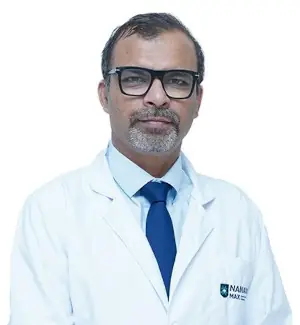
Dr Chandrashekhar Kulkarni
Cardiac Surgeon
MBBS, MS, MCh (CTVS), FRCS, UK, Fellowship CTVS, NZ
Mumbai
Dr Chandrashekhar Kulkarni is a very senior heart surgeon in India, who has been extensively trained in India and abroad at countries like UK and New Zealand. He has an experience of 20+ years in performing cardiovascular surgeries and is particularly interested in Minimally Invasive Cardiac surgery and regularly performs procedures like Minimally invasive heart bypass surgery etc.
Dr Kulkarni received his Fellowship in Cardio-Thoracic Surgery from Greenlane Hospital, New Zealand after completing his super-specialization M.Ch. degree in CVT Surgery from Mumbai University, where he received Dr P K Sen Gold Medal in Cardio-Thoracic Surgery.
He has worked extensively in CVTS surgery and held senior positions at some of the best hospitals in Mumbai. He is presently working as Director & Head, CVTS and Robotic Heart Surgery, at one of the most prestigious hospitals in Mumbai, Nanavati Max Super specialty Hospital. He has previously worked as Chief Consultant and Programme Head of Heart & Lung Transplantation and Minimally Invasive & Robotic Cardiac Surgery at Global Hospitals, and Dr LH Hiranandani Hospital, Mumbai.
https://www.MediTraWell.com/minimally-invasive-heart-bypass-cost-india/
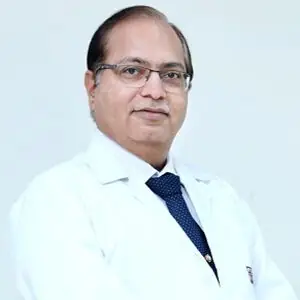
Dr Ramji Mehrotra
Cardiac Surgeon
MBBS, MS, MCh (CTVS), Fellowship- Cardiac Surgery, Harvard Medical School, Boston, USA
New Delhi
Dr. Ramji Mehrotra is a prominent figure in Cardio Thoracic and Vascular Surgery (CTVS), and one of the best cardiac surgeons in India, boasting over 28 years of extensive experience. He is renowned for his expertise in Beating Heart Surgery, Total Arterial CABG, and has a legacy of numerous successful procedures. He has a record pf performing more than 18,000 cardiovascular surgeries and 3000+ pediatric surgeries.
Currently serving as the Vice Chairman and Chief of the Cardio Thoracic and Vascular Surgery (CTVS) Department at BLK Super Speciality Hospital in New Delhi, Dr Mehrotra has been associated with numerous prestigious institutions, including Harvard Medical School affiliates such as Boston Children’s Hospital and Brigham & Women’s Hospital in Boston, USA, as well as Fortis Escorts Heart Institute and Indraprastha Apollo Hospital in New Delhi, among others.
over 28 years of extensive experience
Dr Mehrotra performs a wide range of cardiac surgeries, with special interest in new age procedures like TAVI / TAVR, Surgeries for Heart Failure- LVAD, Heart Transplantation etc.
18,000 cardiovascular surgeries and 3000+ pediatric surgeries
Harvard Medical School affiliates such as Boston Children’s Hospital and Brigham & Women’s Hospital in Boston, USA
https://www.MediTraWell.com/tavi-procedure-cost-in-india/
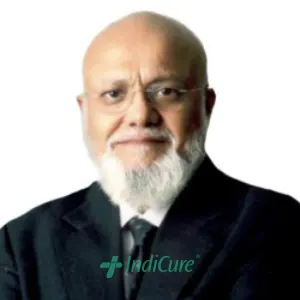
Dr. S.S. Bhattacharya
Cardiac Surgeon
MBBS, MS, MCh
Mumbai
Dr. S.S. Bhattacharya is a famous Cardiac Surgeon in India with more than 36 years of experience. He was involved in the development of several surgical devices, including the Arterial Retractor for Mitral Valve Replacement and the Internal Mammary Artery Retractor for the removal of bilateral Internal Mammary Arteries.
He has articles published in international and national peer-reviewed journals. He has given talks at conferences where he has shared his research findings.
He has successfully treated over 15,000 cases, many of which were complex cases. Dr. Bhattacharya was also honored with a memorial award for his pioneering work in cardiothoracic and vascular surgery.
Best Cancer Hospitals in India
These are our top cancer hospitals in India, ensuring you receive the healthcare you deserve.
Medanta Medicity, Gurgaon
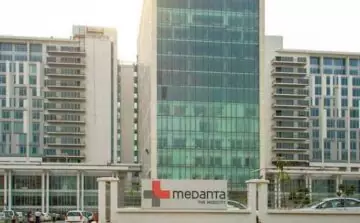
Location: Gurgaon
Speciality: Multi-Superspeciality
Accreditation: Accreditation : Joint Commission International (JCI, USA), National Accreditation Board for Hospitals & Healthcare Providers (NABH), National Accreditation Board for Testing and Calibration Laboratories (NABL)
No. of Beds: Beds : 1250
Medanta The Medicity is a renowned multi-specialty hospital in Gurgaon, India, known for providing comprehensive cardiac care. Medanta was established by Dr. Naresh Trehan in 2009, a renowned Cardiovascular and Cardiothoracic surgeon, after he returned to India post his long stint in USA. The hospital has received various national and international accreditations, including Joint Commission International from USA, reflecting its commitment to quality and safety standards. The hospital has dedicated cardiac surgery units with advanced operating theatres for a variety of heart surgeries, including coronary artery bypass grafting (CABG), valve repair or replacement, and heart transplant surgery.
Cloudnine Hospital, Bangalore
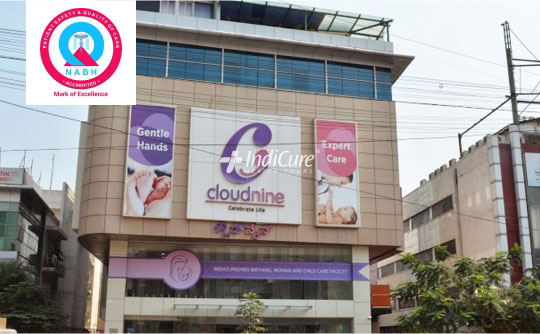
Location: Bangalore
Speciality: Multi-Superspeciality
Loading...
No. of Beds: Beds : 50
Cloudnine Hospital in Bangalore was established in 2007 as part of the Cloudnine Group of Hospitals, which was founded by neonatologist Dr. R. Kishore Kumar. The organization operates 19 hospitals and clinics in Bangalore, Chennai, Pune, Gurgaon, Mumbai, and Chandigarh. Old Airport Road, HRBR Layout, Bellandur, Whitefield, Malleshwaram, and Jayanagar are the six branches in Bangalore. The hospital has delivered over 36,000 infants across multiple locations. The hospital offers world-class medical facilities as well as a personnel dedicated to the complete well-being of women and babies. It has achieved its goal of achieving a maternal death rate of zero percent and a baby survival rate of 99.83 percent.
What is Left Ventricular Assist Device (LVAD)?
A ventricular assist device (VAD), also known as a mechanical circulatory support device, is an implantable mechanical pump that assists in the pumping of blood from your heart’s lower chambers (ventricles) to the rest of your body. In those with weakening hearts or heart failure, a VAD is used.
Although a VAD can be implanted in your heart’s left, right, or both ventricles, it is most commonly used in the left. A left ventricular assist device is implanted in the left ventricle (LVAD) and serves as a partial artificial heart.
The device can be used for short, intermediate, or long term- typically to treat advanced heart failure.
While you wait for a heart transplant or for your heart to become strong enough to pump blood on its own, you may have a VAD implanted. If you have heart failure and are not a suitable candidate for a heart transplant, your doctor may propose that you have a VAD implanted as a long-term treatment.
The LVAD is placed by performing an open-heart surgery. The components of an LVAD vary depending on the device type, but there are four core components:
In the chest, the pump unit is installed. The surgeon places it at the apex of the heart, where it gets blood. This blood is then sent to the aorta (the main artery that carries blood from the heart to the rest of the body) via a tube. It pumps blood from the left ventricle to the aorta continuously.
A driveline (cable) and a control system are connected to the pump (controller). The driveline connects the device to the controller (a small computer) on the outside of your body through the skin on your belly (abdomen). The controller controls the pump and displays messages and alarms to aid in system operation.
The LVAD is powered by a power supply (rechargeable batteries or a wire that fits into an electrical outlet).
When is LVAD required?
Your doctor may recommend that you have a VAD implanted if:
You are waiting for a heart transplant: While you wait for a donor heart to become available, you may have a VAD installed temporarily. A VAD can keep blood flowing even if your heart is damaged, and it will be removed once your new heart is placed. It may also assist in enhancing the performance of other organs in your body that aren’t operating properly, as well as other medical issues. A “bridge to transplant” is a VAD that is installed while you are waiting for a heart transplant.
Because of your age or other medical issues, you are currently ineligible for a heart transplant: People with heart failure who aren’t ideal candidates for a heart transplant are increasingly using VADs as a long-term treatment. If you’re over the age of 65, you might not be eligible for a heart transplant. In that case, the VAD would be implanted as a heart failure treatment. A VAD can help you live a better life.
Your heart’s function can become normal agains: If your heart failure is only temporary, your doctor may recommend a VAD to keep your heart strong enough to pump blood on its own. The term “bridge to recovery” is used to describe this situation.
It’s also feasible that a VAD will be placed for a brief period of time during or after heart surgery. For a few weeks or months, you may have a VAD installed.
How is LVAD done?
Open heart surgery is needed to implant an LVAD. The surgery is done under general anesthesia and you will be asleep the entire time. The procedure lasts 4-6 hours.
Step 1
The surgeon makes a long incision on the breastbone and accesses the heart by spreading the rib cage.
Step 2
The surgeon connects one end of the LVAD tube to the heart’s left ventricle and a tube exiting the other end of the external LVAD to the aorta.
Step 3
A driveline connects the LVAD to a power source and control unit. The patient is then weaned off bypass, and the chest is stitched closed.
What is the Recovery after LVAD like?
Patients with LVAD must carefully follow the guidelines given by their cardiac surgeon in order to improve their quality of life. Your ability to return home will be determined by your rate of recovery and medical condition.
Following surgery, cardiac rehabilitation is a vital program to participate in. Some activities, such as swimming, contact sports, and weight lifting, may be prohibited. Before and after the LVAD implant operation, it’s critical to maintain healthy lifestyle adjustments.
What Results Can I Expect from LVAD?
The LVAD improves the function of the kidneys, liver, brain, and other organs by increasing blood flow to the body; it also improves the patient’s strength and ability to participate in activities like cardiac rehabilitation by increasing blood flow to the body. The benefits of LVAD include:
Greater life expectancy: Patients with severe heart failure who receive LVAD live longer than those who receive only medical treatment.
Better quality of life: Patients with severe heart failure can use an LVAD to participate in activities that were previously impossible.
Fewer symptoms of heart failure: Shortness of breath, excess fluid, and weariness are all signs of heart failure that an LVAD can help with. This allows patients to feel better and participate in everyday activities, avoiding heart failure hospitalization.
Questions you must ask
Here is a set of questions you should consider asking before commencing your medical journey for the Left Ventricular Assisted Device in India.
- Is the heart surgeon board certified?
- How experienced is the Surgeon?
- Which language does the surgeon speak?
- Is the treatment done in a well-equipped facility?
- What treatment option is recommended for me?
- What about the risks involved?
- Does the surgeon use a certified anesthetist?
- How long will the recovery period be?
Be ready to respond about:
Prepare to answer questions about your:
- Medical history and exams
- Previous surgeries
- Current medication review
- History of smoking, drugs, or alcohol