

Pacemaker Cost in India
Last updated: April 19, 2026
Starting from USD 4,000
INCLUDES
- FDA Approved Implant
- Surgery and Stay at the Hospital
- Pre-operative Investigations
- Medicines, Consumables & Food at the hospital
- Airport Transfers & MediTraWell assistance
DOES NOT INCLUDE
- Accommodation outside the Hospital
- Air tickets
- Medical Visa fee
STAY REQUIRED
- Stay at the Hospital - 1 to 2 days
- Stay at the Hotel - 7 to 8 days
- Stay in India - 8 to 10 days
With end to end services for your hassle-free Cancer Treatment in India, MediTraWell has made the entire process of seeking medical tourism in India easy and hassle free for you besides making it affordable.
Factors that Affect Pacemaker Cost in India
- Type of Pacemaker Implantation
A substantial part of the total pacemaker cost in India comes from the type of pacemaker device chosen for the procedure. The specific pacemaker needed will depend on your medical condition and heart’s functionality, which our doctors will determine after thoroughly evaluating your medical reports or conducting an in-person examination.
Depending on the assessment, you may require either a single-chamber pacemaker or a more advanced dual-chamber or biventricular pacemaker, based on the severity of the heart’s electrical issues and rhythm disturbances.
- Cardiologist’s Fees
A significant component of a pacemaker cost in India is the heart surgeon’s fees. MediTraWell recommends highly experienced, skilled, board-certified heart surgeons who have the track record of delivering excellent results. While the charges may vary based on the surgeon’s experience, you can be confident that you are in safe and capable hands when opting for affordable heart surgery in India with MediTraWell Health Tours.
- Your Choice of Surgical Facility
Selecting an accredited medical facility with skilled and qualified medical staff is essential for the success of pacemaker implantation surgery in India. Larger cities in India generally provide superior medical facilities and more experienced heart surgeons, leading to higher costs. MediTraWell Health Tours recommends surgical facilities in these larger cities to prioritize quality of care and ensure patient safety.
- Surgery-Related Expenses
The expenses related to pacemaker implantation include the pre- and post-surgical expenses. The pre-surgical expenses are associated with the age and medical condition of the patient and thus the number and type of investigations required. Post-surgical expenses include prescription medications and follow-up consultations.
We Customize Pacemaker Cost in India Quote to Suit Your Preferences
At MediTraWell Health Tours, we consolidate most of the expenses for your pacemaker cost in India to provide you with an inclusive and cost-effective package tailored to your budget and individual requirements. After receiving medical reports, your case manager will provide an estimated cost based on a discussion with the heart surgeon.
The final pacemaker cost in India can however be confirmed after your face-to-face consultation with the heart surgeon in India.
We at MediTraWell, understand that you travel with a budget in mind and do not like to be greeted by surprises after arrival in India. We thus club all these expenses and give you a package cost that is inclusive and affordable at the same time.
Your case manager shall give you an estimated cost of your surgery after discussing your medical reports with the surgeon. The final cost, however, shall be confirmed after your consultation with the surgeon.
Medi Trawell Services
Making Medical Travel to India Affordable & Hassle-free for 15+ Years

We Help you Choose the Right Treatment, Surgeon & Hospital

We Arrange Video/Telephonic Consultation with the Surgeon

We Assist you with Visa & Accommodation

We Receive you at the Airport and Drop you at Hotel/Hospital

We Assist you the at Hospital & Provide Post Operative Support
Our services are FREE for our patients.
In fact, we have Special Negotiated Rates with the Hospitals and you can avail Discounted Rates when you choose to Travel with MediTrawell. Container
Cardiac Procedures We Offer
Here is a compilation of the heart treatment options we provide in India.
- Holter Monitoring
- Alcohol Septal Ablation
- AICD
- Coronary Angiography
- Coronary Angioplasty (PTCA)
- Pacemaker Implantation
- Cardiac Bypass (Heart Bypass)
- ASD Device Closure
- Aortic Valve Replacement
- ASD Treatment
- VSD Treatment
- Cardiac Tumor Surgery
- EP Study
- Balloon Valvuloplasty
- Bentall Procedure
- Cardiac Ablation
- Minimally Invasive Heart Bypass
- Valve Replacement Surgery
- Pediatric Heart Surgery
- Robotic Heart Surgery
- Heart Transplant
- LVAD (Left Ventricular Assist Device)
- TAVR (Transcatheter Aortic Valve Replacement)
- Truncus Arteriosus Repair
Best cardiologist in India
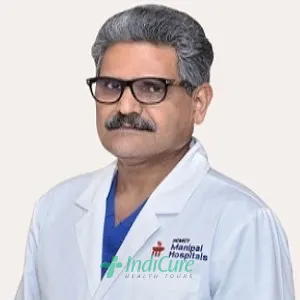
Dr. Y K Mishra
Cardiac Surgeon
MBBS, MS, Fellowships, PhD
Delhi
Dr. Y K Mishra is one of India’s most known and skilled cardiac surgeons. With over 32 years of expertise, he is well-known and has successfully completed over 14,000 open heart procedures as well as over 500 robotic surgeries. He is the fourth Asian and the second Indian to receive this honor. Dr. A. P. J. Abdul Kalam presented him with the Lifetime Achievement Award, as well as an Honoris Causa Doctorate (Doctor of Science) from the Governor of Madhya Pradesh and the Chancellor of Rani Durgavati Vishwavidyalaya.
He has been invited as a guest lecturer from all over the world. He has a deep interest in training, teaching, and research work in addition to his clinical practice. He also chaired scientific sessions at national and international conferences in the United States, the United Kingdom, China, Italy, Japan, France, and the Far East. At his workshops in Thailand, Bangladesh, and Nepal, he presented live cases.
He is the fourth Asian and the second Indian to receive this honor. Dr. A. P. J. Abdul Kalam presented him with the Lifetime Achievement Award, as well as an Honoris Causa Doctorate (Doctor of Science) from the Governor of Madhya Pradesh and the Chancellor of Rani Durgavati Vishwavidyalaya.
He graduated from the famed S. S Medical College in Rewa with a Master’s degree in surgery and a Bachelor’s degree in medicine (MP). Afterwards, he earned his PhD in Cardiovascular Surgery from Moscow’s Bakulev Institute of Cardiovascular Surgery. Dr. Mishra received his Fellowship in Cardiovascular surgery from the University Hospital Uppsala’s Thoracic Centre. He has received training in the following areas: Robotic Cardiac Surgery from Odessa, Texas, USA, University Hospital Utrecht, Netherlands, and Ohio State University Columbus Medical Center, USA. From Odessa, Texas, USA, he did a special course in Minimally Invasive Cardiac Surgery in endoscopic IMA harvesting at the Institute of TeleSurgery from the University of Strasbourg, France, and from Heart Port Research & Training Centre in Salt Lake City, Utah, USA. Dr. Mishra is the only member of the International Society for Minimally Invasive Cardiac Surgery’s Board of Directors.
He also chaired scientific sessions at national and international conferences in the United States, the United Kingdom, China, Italy, Japan, France, and the Far East.
Afterwards, he earned his PhD in Cardiovascular Surgery from Moscow’s Bakulev Institute of Cardiovascular Surgery. Dr. Mishra received his Fellowship in Cardiovascular surgery from the University Hospital Uppsala’s Thoracic Centre. He has received training in the following areas: Robotic Cardiac Surgery from Odessa, Texas, USA, University Hospital Utrecht, Netherlands, and Ohio State University Columbus Medical Center, USA. From Odessa, Texas, USA, he did a special course in Minimally Invasive Cardiac Surgery in endoscopic IMA harvesting at the Institute of TeleSurgery from the University of Strasbourg, France, and from Heart Port Research & Training Centre in Salt Lake City, Utah, USA.
He is a Fellow Member of the Association Thoracic Cardiovascular Surgeons of India and a Founder Member of the Indian College of Cardiology. He is also the creator of the Payasuni Heart Valve Foundation, which focuses on rheumatic heart disease prevention and treatment. His specialization is minimally invasive heart surgery. Aortic surgery, robotic surgery, and beating heart coronary artery bypass
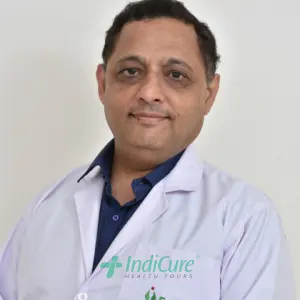
Dr. Anvay Mulay
Cardiac Surgeon
MBBS, MS, MCh
Mumbai
Currently associated with the Department of Heart Transplant as a Consultant and Head Cardiac Surgeon, Dr. Anvay Mulay is one of the most prominent and well-known cardiothoracic and vascular surgeons in India.
He has done more than 4000 successful beating heart bypass procedures and is a pioneer in adult cardiac surgery, particularly in the field of coronary artery bypass graft surgery (CABG). He has the largest series of beating heart coronary bypass surgeries to his credit.
4000 successful beating heart bypass procedures and is a pioneer in adult cardiac surgery
Aortic Root Replacements, Total Arterial Revascularization, Minimally Invasive Cardiac Surgery, Mitral, Aortic, and Tricuspid Valve Repair, Aortic Aneurysm / Aortic Dissections, and Surgery for Heart Failure are the areas of his expertise.
He has the largest series of beating heart coronary bypass surgeries to his credit
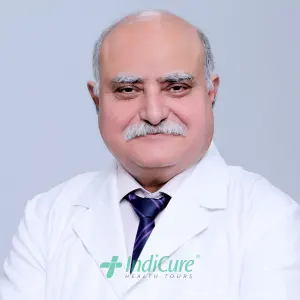
Dr. Ajay Kaul
Cardiac Surgeon
MBBS, MS, MCh, Fellowship in Heart & Lung transplant, Hannover Medical School, Fellowship in Minimally Invasive Cardiac Surgery, Lipzig Heart Centre, Germany
Delhi, NCR (Noida)
He graduated from Bombay University with a Master’s degree in Cardiothoracic and Vascular Surgery. He also has Fellowships in Cardiac Surgery, Cardiac Transplantation, and Minimally Invasive Surgery from prestigious institutions such as the Royal Prince Alfred Hospital in Germany, the Royal Melbourne Children’s Hospital in Melbourne, Hannover Medical School in Germany, and the Leipzig Cardiac Centre in Germany (Germany).
Dr. Ajay Kaul is a very prominent and accomplished cardiac surgeon in India. He has conducted over 15,000 Cardiac Surgeries and 4000 Total Arterial Coronary Bypass Surgeries in his 36-year career.
Royal Prince Alfred Hospital in Germany, the Royal Melbourne Children’s Hospital in Melbourne, Hannover Medical School in Germany, and the Leipzig Cardiac Centre in Germany (Germany).
Dr. Kaul is a multi-talented surgeon with expertise in complete Arterial Heart Bypass Surgery, Valve repair & replacement surgeries such as Aortic Valve Replacement, Mitral Valve Replacement, Pediatric Cardiac Surgery, Aneurysm Surgery, and Cardiac Failure Surgery. He has also received extensive training in cardiac transplantation and ventricular support devices. He is a member of the Cardiological Society of India and the Association of Cardiothoracic Surgery of India, among other organizations. Dr. Kaul has been featured in a number of notable news outlets, including ET Healthworld and NDTV establishing him as one of the best cardiac surgeons in India.
Best Cancer Hospitals in India
These are our top cancer hospitals in India, ensuring you receive the healthcare you deserve.
HCG Cancer Hospital, Mumbai
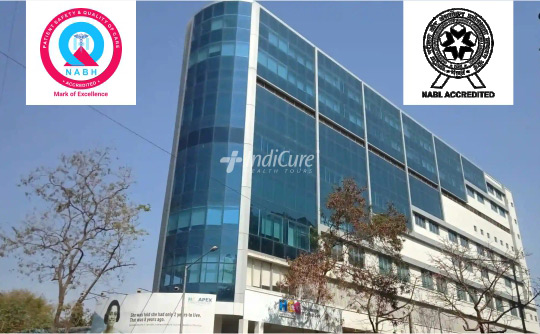
Location: Mumbai
Speciality: Multi-Superspeciality
Accreditation: Accreditation : National Accreditation Board for Hospitals & Healthcare Providers (NABH)
No. of Beds: Beds : 207
HCG Cancer Centre is the first dedicated cancer hospital in Mumbai giving a top-quality treatment by using worldwide advancements. In the state of Maharashtra, it is the first centre to launch the Elekta Versa HD Radiation Machine. This machine has agility, which allows for a high-speed, high-precision beam to precisely target the tumor. The hospital is NABH accredited. In the state of Maharashtra, it is the first centre to launch the Elekta Versa HD Radiation Machine. HCG Centre, Mumbai is the first hospital in Western India to use CyberKnife, the world’s first whole-body robotic radiosurgery technology. The Radixact TomoTherapy Radiation Therapy machine was also introduced in Mumbai. A dedicated hemato-oncology unit with a Bone Marrow Transplant program is available at the hospital. Thyroid and prostate cancers are treated with high-dose isotope therapies at the department. The hospital’s Nuclear medicine section contains modern PET Scan machines amongst other things making it one of the best hospitals in Mumbai. https://www.MediTraWell.com/bone-marrow-transplant-cost-india/ Bone Marrow Transplant https://www.MediTraWell.com/prostate-cancer-treatment-cost-india/ prostate cancers
Fortis Hospital, Rajaji Nagar, Bangalore
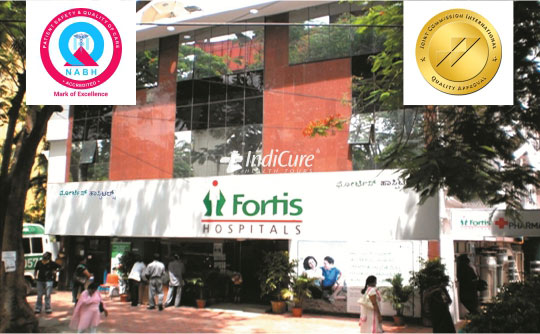
Location: Bangalore
Speciality: Multi-Superspeciality
Accreditation: Accreditation : JCI, NABH
No. of Beds: Beds : 50
The Fortis Hospital in Rajajinagar was founded in 2002 and is JCI and NABH accredited. The Fortis Hospital in Rajajinagar is a world-class medical centre that is part of the Fortis network of hospitals. The hospital focuses on providing excellent patient care with nationally and internationally known experts. Rajajinagar’s Fortis Hospital is known for its cutting-edge medical technologies and dedicated patient care. Cardiology & Cardiac Surgery, Urology, Nephrology, Neurosciences, Orthopedics, Digestive Care, Emergency Care, and Critical Care are some of the specialties available.
What is Heart Pacemaker Implantation?
The heart has a conduction system that transmits electrical impulses to keep the heart muscles in appropriate rhythm. These electrical impulses are generated in the right atrium by specific Sino Atrial tissues (S A nodes), and subsequently spread throughout the upper chambers. The Atrioventricular node, which connects the auricles and ventricles, distributes the impulses. Another group of tissues known as the Bundle of Hiss is in charge of electrical conduction, which causes the ventricles to contract and pump blood to the body and lungs. These three together make up the heart’s natural pacemakers.
Arrhythmia is a disease that occurs when electrical impulses in the heart are interrupted.
Brady arrhythmias occur when the heart beats too slowly. Heart block or sinus bradycardia can be the cause. Sinus bradycardia is caused by the natural pacemakers slowing down. A block or delay in the conduction of electrical impulses in the heart causes heart block. Heart blocks come in a variety of degrees and types, such as 1st-degree AV block and 2nd-degree AV block.
Tachyarrhythmias occur when the heart beats too quickly. Pacemakers are used to treat ventricular tachycardia and atrial fibrillation, two forms of tachycardia. Ventricular tachycardia is caused by fast contractions in the ventricles, which can result in cardiac collapse. Atrial fibrillation is a condition in which the atria fail to pump blood into the ventricles.
Arrhythmias can cause the following symptoms:
- Syncope and dizziness
- Shortness of breath and palpitations
- Confusion in the mind
- Fatigue
The following are the causes of cardiac arrhythmias:
- The natural aging of cardiac muscles
- Coronary artery disease (CAD)
- Angina pectoris (heart attack)
- Congenital heart defects
- Certain medications
A pacemaker is a surgically implanted device that sends tiny electrical impulses to the heart muscles to maintain or restore normal heart rate in cases of slow or unpredictable heartbeat. Brady-arrhythmia is the most common reason for pacemaker implantation; however, the decision is made based on the source of the arrhythmia, the severity and permanence of the condition, symptoms, and the patient’s risks.
The artificial pacemaker consists of the following components:
A pulse generator comprises a thin metal box that produces the electrical impulses and a computer processor to set the rate, pattern, output, and other parameters.
Leads to carrying electrical impulses to the heart muscles from the generator.
Electrodes at the ends of leads transmit electrical impulses to the heart muscles.
When is Pacemaker Required?
To help manage your heartbeat, a pacemaker is inserted. When you have a slow heartbeat (bradycardia) after a heart attack, surgery, or medication overdose but your heartbeat is predicted to recover, your doctor may consider a temporary pacemaker. A pacemaker can be permanently placed to treat heart failure or to rectify a chronic slow or irregular heartbeat.
Types of Pacemakers
Pacemakers are classified as:
Single-chamber pacemakers: These carry impulses of either the right atrium or right ventricle.
Dual-chamber pacemaker: This has two leads, to the right atrium and right ventricle so that a more natural approach of the heart activity is obtained.
Triple-chambered pacemaker: This leads to the right atrium, the right ventricle, and left ventricle. It is used in cases when the heart muscles are weak.
Biventricular Pacemaker: commonly known as cardiac resynchronization therapy, is a treatment for people with heart failure and irregular heartbeats. The right and left ventricles (lower heart chambers) are stimulated by this type of pacemaker, which causes the heart to beat more efficiently.
There are different types of pacemakers to restore or maintain a regular heartbeat:
- Demand pacemakers operate when the heart’s own pacemaker is slow.
- Rate-responsive pacemakers increase or decrease heart rate according to the body requirement like in rest or during activity.
How is the Pacemaker Implantation Procedure Done?
Pacemaker implantation procedure is done by specially trained cardiologists or electrophysiologists who are experienced to perform such procedures. It can be done under local or general anesthesia. Fluoroscopy is used for imaging of the procedure. The type of device decides the length of the surgery.
Step 1
The surgeon inserts a needle into a large vein near one of the shoulders to guide the wires of the pacemaker and correctly place them in the heart.
Step 2
The procedure is guided by an X-ray “movie”. After successfully placing the wires, the surgeon makes a small cut into the skin of the chest or abdomen and inserts the pacemaker just under the skin.
Step 3
The pacemaker is connected to leads or wires that are threaded through veins into specific chambers of the heart. Once in place, the device is tested to make sure it works properly.
What is the Recovery After Pacemaker implantation Like?
Recovery after pacemaker implantation is rapid, but arm movement and activity restrictions are advised for the first few weeks. The hospital stay is short, a day or two after the surgery. Routine activities can be resumed in about two weeks.
What Results Can I Expect from Pacemaker Implantation?
Properly implanted pacemakers resolve arrhythmias and other symptoms of abnormal heart rate. Pacemaker usually lasts up to 10-15 years on average. It can be replaced after that time.
Questions you must ask
Here is a set of questions you should consider asking before commencing your medical trip for Pacemaker Implantation surgery in India.
- Is the heart surgeon board certified?
- How experienced is the Surgeon?
- Which language does the surgeon speak?
- Is the treatment done in a well-equipped facility?
- What treatment option is recommended for me?
- What about the risks involved?
- Does the surgeon use a certified anesthetist?
- How long will the recovery period be?
Be ready to respond about:
Prepare to answer questions about your:
- Medical history and exams
- Previous surgeries
- Current medication review
- History of smoking, drugs, or alcohol