

Robotic Heart Surgery In India
Last updated: April 19, 2026
Cost Depends on the Procedure
INCLUDES
- FDA Approved Implant
- Surgery and Stay at the Hospital
- Pre-operative Investigations
- Medicines, Consumables & Food at the hospital
- Airport Transfers & MediTraWell assistance
DOES NOT INCLUDE
- Accommodation outside the Hospital
- Air tickets
- Medical Visa fee
STAY REQUIRED
- Stay at the Hospital - 1 to 2 days
- Stay at the Hotel - 7 to 8 days
- Stay in India - 8 to 10 days
With end to end services for your hassle-free Cancer Treatment in India, MediTraWell has made the entire process of seeking medical tourism in India easy and hassle free for you besides making it affordable.
Factors that Affect the Cost of Robotic Heart Surgery in India
- Type of Heart Surgery
The primary factor influencing the cost of robotic heart surgery in India is the specific procedure required, whether a robotic heart bypass, valve replacement, cardiac ablation, or another cardiac or thoracic surgery. Numerous cardiac and thoracic surgery procedures can be performed using robotic heart surgery in India.
- Cardiac Surgeon’s Fees
A key expense for Robotic Heart Surgery in India is the cardiac surgeon’s fees. MediTraWell Health Tours works exclusively with highly skilled, experienced, and board-certified cardiac surgeons who have a strong track record in successful heart surgeries. While fees may vary based on the surgeon’s expertise, choosing MediTraWell Health Tours ensures you are in safe, experienced hands for your heart surgery in India.
- Type of Surgical Approach
New techniques and technologies introduced to enhance patient care may increase the cost due to advanced surgical approaches.
- Your Choice of Surgical Facility
Undergoing Robotic Heart Surgery in India in an accredited facility with skilled, qualified medical staff is essential. Additionally, the facility’s location can influence the overall cost of robotic surgery in India. MediTraWell Health Tours, however, offers an affordable projected estimate to help you plan your treatment effectively.
- Surgery-Related Expenses
These include pre- and post-surgical costs. Pre-surgical expenses depend on the patient’s age and medical condition, determining the necessary tests. Post-surgical expenses may involve medication and follow-up consultations.
We Customize the Cost of Robotic Heart Surgery in India Quote to Suit Your Preferences
At MediTraWell Health Tours, we consolidate most of the expenses for your robotic heart surgery in India to provide you with an inclusive and cost-effective package tailored to your budget and individual requirements. After receiving medical reports, your case manager will provide an estimated cost based on a discussion with the heart surgeon.
The final cost of a robotic heart surgery in India can however be confirmed after your face-to-face consultation with the heart surgeon.
We at MediTraWell, understand that you travel with a budget in mind and do not like to be greeted by surprises after arrival in India. We thus club all these expenses and give you a package cost that is inclusive and affordable at the same time.
Your case manager shall give you an estimated cost of your surgery after discussing your medical reports with the surgeon. The final cost, however, shall be confirmed after your consultation with the surgeon.
Medi Trawell Services
Making Medical Travel to India Affordable & Hassle-free for 15+ Years

We Help you Choose the Right Treatment, Surgeon & Hospital

We Arrange Video/Telephonic Consultation with the Surgeon

We Assist you with Visa & Accommodation

We Receive you at the Airport and Drop you at Hotel/Hospital

We Assist you the at Hospital & Provide Post Operative Support
Our services are FREE for our patients.
In fact, we have Special Negotiated Rates with the Hospitals and you can avail Discounted Rates when you choose to Travel with MediTrawell. Container
Cardiac Procedures We Offer
Here is a compilation of the heart treatment options we provide in India.
- Holter Monitoring
- Alcohol Septal Ablation
- AICD
- Coronary Angiography
- Coronary Angioplasty (PTCA)
- Pacemaker Implantation
- Cardiac Bypass (Heart Bypass)
- ASD Device Closure
- Aortic Valve Replacement
- ASD Treatment
- VSD Treatment
- Cardiac Tumor Surgery
- EP Study
- Balloon Valvuloplasty
- Bentall Procedure
- Cardiac Ablation
- Minimally Invasive Heart Bypass
- Valve Replacement Surgery
- Pediatric Heart Surgery
- Robotic Heart Surgery
- Heart Transplant
- LVAD (Left Ventricular Assist Device)
- TAVR (Transcatheter Aortic Valve Replacement)
- Truncus Arteriosus Repair
Best cardiologist in India

Dr Aparna Jaswal
Interventional Cardiologist
MBBS, MD, DNB, Training, Cardiac Electrophysiology at St. Luke's Hospital in Milwaukee, USA
Delhi
Dr. Aparna Jaswal is a highly recognized Cardiologist in India, specializing in EPS & RFA of complex arrhythmias, AICD implantation, and biventricular pacing.
She joined Fortis Escorts Heart Institute & Research Centre in New Delhi in 1998, and has been an integral part of the Department of Cardiac Electrophysiology since then. Dr. Jaswal regularly performs electrophysiological studies and radio frequency catheter ablation for various cardiac arrhythmias. She has received training in Cardiac Electrophysiology at St. Luke’s Hospital in Milwaukee, USA, and holds the ‘Certified Cardiac Device Specialist’ certification from IBHRE, HRS.
Dr. Jaswal is involved in numerous research projects and actively participates in national and international research trials. She is frequently invited as a faculty member to various national and international symposia and workshops. Notably, she initiated the EP program in Mauritius in November 2010. She also received a Fellowship from Heart Rhythm Society, USA in 2011.
https://www.meditrawell.com/eps-rfa-treatment-cost-in-india/
https://www.meditrawell.com/aicd-cost-india/

Dr Sanjeev Gera
Interventional Cardiologist
MBBS, MD, DNB - Cardiology, FESC, MACC, CRT-D Fellowship, Imaging IVUS fellowship, Medtronic TAVR Certification
Delhi
With over 20 years of extensive experience, Dr. Sanjeev Gera is considered one of the most renowned and best cardiologists in India. Trained at prestigious institutes in Delhi, he is celebrated for his evidence-based, patient-centric, and cost-effective approach to treating cardiac conditions.
Having worked previously for more than 10 years at the renowned Fortis Escorts hospital, Dr. Gera is presently working as Director and Head of Cardiology department at Fortis hospital, Noida.
He has earned recognition on various international platforms and has received numerous accolades for his contributions. His passion and dedication are evident in his commitment to delivering high-quality care to his patients in the field of cardiology.

Dr Ramji Mehrotra
Cardiac Surgeon
MBBS, MS, MCh (CTVS), Fellowship- Cardiac Surgery, Harvard Medical School, Boston, USA
New Delhi
Dr. Ramji Mehrotra is a prominent figure in Cardio Thoracic and Vascular Surgery (CTVS), and one of the best cardiac surgeons in India, boasting over 28 years of extensive experience. He is renowned for his expertise in Beating Heart Surgery, Total Arterial CABG, and has a legacy of numerous successful procedures. He has a record pf performing more than 18,000 cardiovascular surgeries and 3000+ pediatric surgeries.
Currently serving as the Vice Chairman and Chief of the Cardio Thoracic and Vascular Surgery (CTVS) Department at BLK Super Speciality Hospital in New Delhi, Dr Mehrotra has been associated with numerous prestigious institutions, including Harvard Medical School affiliates such as Boston Children’s Hospital and Brigham & Women’s Hospital in Boston, USA, as well as Fortis Escorts Heart Institute and Indraprastha Apollo Hospital in New Delhi, among others.
over 28 years of extensive experience
Dr Mehrotra performs a wide range of cardiac surgeries, with special interest in new age procedures like TAVI / TAVR, Surgeries for Heart Failure- LVAD, Heart Transplantation etc.
18,000 cardiovascular surgeries and 3000+ pediatric surgeries
Harvard Medical School affiliates such as Boston Children’s Hospital and Brigham & Women’s Hospital in Boston, USA
https://www.MediTraWell.com/tavi-procedure-cost-in-india/
Best Cancer Hospitals in India
These are our top cancer hospitals in India, ensuring you receive the healthcare you deserve.
Max Super Speciality Hospital, Saket, New Delhi
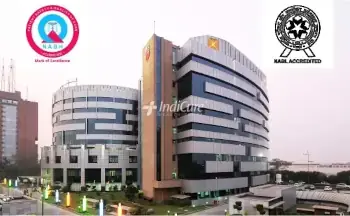
Location: New Delhi
Speciality: Multi-Superspeciality
Accreditation: Accreditation : Joint Commission International (JCI, USA), National Accreditation Board for Hospitals & Healthcare Providers (NABH), National Accreditation Board for Testing and Calibration Laboratories (NABL)
No. of Beds: Beds : 252
Max Super Specialty Hospital in Saket was established in 2006. Max Healthcare was recognized for its efforts to improve customer experience and patient safety at the FICCI Healthcare Excellence Awards and also awarded Express Healthcare Awards for Healthcare Excellence. The hospital has also been awarded Quality Council of India’s D L Shah National Award for ‘Economics of Quality’. Cardiology, Plastic Surgery, Cancer Care, Orthopaedics, Pediatrics, Neurosurgery, Mental Health and Behavioral Sciences, Endocrinology, ENT, Neurosciences, Eye Care, Internal Medicine, and Minimal Access Surgery are among the specialties.
Fortis S L Raheja Hospital, Mumbai
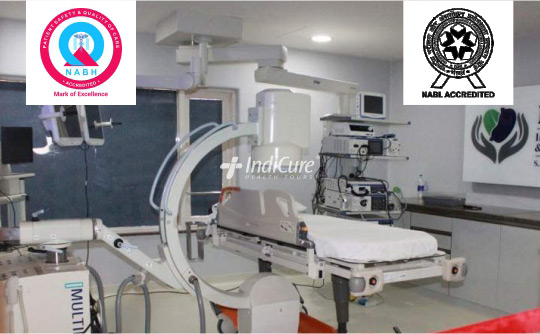
Location: Mumbai
Speciality: Multi-Superspeciality
Accreditation: Accreditation : National Accreditation Board for Hospitals & Healthcare Providers (NABH), National Accreditation Board for Testing and Calibration Laboratories (NABL)
No. of Beds: Beds : 170
S. L. Raheja Hospital, Mumbai, was founded in 1981 and is a super specialty hospital in Mahim’s suburbs. It is known for providing world-class care in a variety of specialties, including neurology, cardiology, orthopedics, spine, oncology, and minimally invasive surgery. It is one of the few institutions in Mumbai to offer specialized hyperbaric oxygen therapy for diabetic patients, and it is NABH and NABL accredited. Oncology and diabetes are two of the hospital’s specialties. The medical and surgical oncologists are represented by eight and nineteen experts respectively. There are 11 medical and 3 surgical endocrinologists on staff. The operating rooms and catheterization labs are outfitted with cutting-edge technology that meets worldwide standards making it one of the best hospitals in Mumbai. https://www.MediTraWell.com/cancer-treatment-cost-india/ Oncology https://www.meditrawell.com/best-oncologist-india/ oncologists
What is a Robotic Heart Surgery?
Robotic surgery, also known as robot-assisted surgery, is a type of surgery in which surgeons use a computerized robotic arm with miniature equipment attached to execute difficult procedures. Smaller incisions and precise motion control result from the minimally invasive approach, which improves patient outcomes.
A sternotomy, or cutting through the breastbone and opening the ribs, is the standard procedure for open cardiac surgery. This invasive procedure causes severe trauma, a longer recovery time, and a higher chance of major complications.
Robotic surgery allows for minimally invasive surgery without the need to open the chest. Instead, the surgical system’s robotic arms operate through a series of small incisions called ports down the side of the chest. During the surgery, the surgeon has complete control over his activities and is able to do it with better precision.
There are numerous fundamental qualities of a robotic surgical system that make it perfect for minimally invasive surgery. A surgeon console, an equipment trolley, and a visioning platform are included.
From the console, the surgeon can operate this equipment as well as the camera. The surgeon can operate all arms of the surgical system simultaneously by inserting his fingers into the master controls. The high-definition 3D camera delivers a clearer, more detailed 12-times magnified 3-D picture of the operative site. Sensors register the surgeon’s finger and wrist movements, which are then translated into action in the robotic arms with high precision.
In many aspects, robotic surgery is better than both traditional open surgery and endoscopic surgery. The following are some of the procedure’s technical advantages:
- The approach allows for a three-dimensional and magnified view of the surgical site, allowing for a better understanding of the operative field’s depth.
- The robotic arms’ actions are more accurate and delicate.
- Tremor-free movements, ambidexterity, and freedom from the fulcrum effect associated with the use of long-shafted endoscopic instruments are all advantages of robotic surgery.
- The surgeon can operate within a tiny area such as the left atrium of the heart using the robotic system’s multi-jointed endo-wrist, which are wrist-like articulating devices.
- The most modern robotic systems include an additional arm that can be used for left atrial retraction or to help with coronary anastomosis.
Because robot-assisted cardiac surgery is done through keyhole incisions, it has the following advantages in terms of Patient Outcomes:
- Minimal invasion surgery results in less trauma
- Because the incisions are tiny, they heal faster and leave less scarring
- Blood loss is reduced
- Postoperative pain is reduced
- Recovery time is reduced
- Infection risk is reduced
- Hospital stays are shorter
- Return to usual exercise and work more quickly
When is Robotic Heart Surgery Required?
Not everyone is a candidate for robotic heart surgery. Your doctor and treatment team will work with you to see if it’s a viable choice for you.
Your doctor will likely evaluate your medical history and run tests to learn more about your heart health in order to assess whether minimally invasive heart surgery is the best option for you.
How is Robotic Heart Surgery done?
Step 1
You will be given general anesthesia, and have a breathing tube. The surgeon will make several small incisions on the side of your chest, aligning them with the gaps between your ribs. Depending on the procedure, you may be placed on a heart-lung machine.
Step 2
Robotic arms will be inserted through the incisions, each holding specialized tools to perform tasks on the heart or nearby arteries. A small incision will also be made to insert a video camera, which provides a magnified, three-dimensional view of the surgical area.
Step 3
The cardiac surgeon will then control the robotic arms and camera from a console in the operating room. Once the procedure is complete, the surgeon will remove the robotic arms and camera and then close the incisions after they are finished.
What is the Recovery After Robotic Heart Surgery Like?
After the surgery, you will be transferred to a recovery area where you will be monitored. Following that, you should expect a relatively brief hospital stay, usually half as long as with traditional open-heart surgery. When your pain is under control, you can keep liquids down without nausea or vomiting, and your lab values are close to normal or to your baseline before the treatment, your healthcare professional will usually discharge you.
On top of that, you can expect minimal scarring on your chest. Your chest may be scarred for up to ten inches after open-heart surgery. Only a few little scars on the side of your chest remain after robotic cardiac surgery.
You may also be able to resume normal activities sooner than following open-heart surgery. After a few weeks, most people are able to resume their typical activities. Your healthcare provider will make specific activity recommendations.
What Results Can I Expect from Robotic Heart Surgery?
The patient’s features, such as the existence of co-morbidities, age, and overall systemic state, have a significant impact on the surgery’s result. One of the most significant advantages of robotic cardiac surgery is that it carries fewer risks than open-heart surgery, resulting in better outcomes and success.
What is a Robotic Heart Surgery?
Robotic surgery, also known as robot-assisted surgery, is a type of surgery in which surgeons use a computerized robotic arm with miniature equipment attached to execute difficult procedures. Smaller incisions and precise motion control result from the minimally invasive approach, which improves patient outcomes.
A sternotomy, or cutting through the breastbone and opening the ribs, is the standard procedure for open cardiac surgery. This invasive procedure causes severe trauma, a longer recovery time, and a higher chance of major complications.
Robotic surgery allows for minimally invasive surgery without the need to open the chest. Instead, the surgical system’s robotic arms operate through a series of small incisions called ports down the side of the chest. During the surgery, the surgeon has complete control over his activities and is able to do it with better precision.
There are numerous fundamental qualities of a robotic surgical system that make it perfect for minimally invasive surgery. A surgeon console, an equipment trolley, and a visioning platform are included.
From the console, the surgeon can operate this equipment as well as the camera. The surgeon can operate all arms of the surgical system simultaneously by inserting his fingers into the master controls. The high-definition 3D camera delivers a clearer, more detailed 12-times magnified 3-D picture of the operative site. Sensors register the surgeon’s finger and wrist movements, which are then translated into action in the robotic arms with high precision.
In many aspects, robotic surgery is better than both traditional open surgery and endoscopic surgery. The following are some of the procedure’s technical advantages:
- The approach allows for a three-dimensional and magnified view of the surgical site, allowing for a better understanding of the operative field’s depth.
- The robotic arms’ actions are more accurate and delicate.
- Tremor-free movements, ambidexterity, and freedom from the fulcrum effect associated with the use of long-shafted endoscopic instruments are all advantages of robotic surgery.
- The surgeon can operate within a tiny area such as the left atrium of the heart using the robotic system’s multi-jointed endo-wrist, which are wrist-like articulating devices.
- The most modern robotic systems include an additional arm that can be used for left atrial retraction or to help with coronary anastomosis.
Because robot-assisted cardiac surgery is done through keyhole incisions, it has the following advantages in terms of Patient Outcomes:
- Minimal invasion surgery results in less trauma
- Because the incisions are tiny, they heal faster and leave less scarring
- Blood loss is reduced
- Postoperative pain is reduced
- Recovery time is reduced
- Infection risk is reduced
- Hospital stays are shorter
- Return to usual exercise and work more quickly
When is Robotic Heart Surgery Required?
Not everyone is a candidate for robotic heart surgery. Your doctor and treatment team will work with you to see if it’s a viable choice for you.
Your doctor will likely evaluate your medical history and run tests to learn more about your heart health in order to assess whether minimally invasive heart surgery is the best option for you.
How is Robotic Heart Surgery done?
Step 1
You will be given general anesthesia, and have a breathing tube. The surgeon will make several small incisions on the side of your chest, aligning them with the gaps between your ribs. Depending on the procedure, you may be placed on a heart-lung machine.
Step 2
Robotic arms will be inserted through the incisions, each holding specialized tools to perform tasks on the heart or nearby arteries. A small incision will also be made to insert a video camera, which provides a magnified, three-dimensional view of the surgical area.
Step 3
The cardiac surgeon will then control the robotic arms and camera from a console in the operating room. Once the procedure is complete, the surgeon will remove the robotic arms and camera and then close the incisions after they are finished.
What is the Recovery After Robotic Heart Surgery Like?
After the surgery, you will be transferred to a recovery area where you will be monitored. Following that, you should expect a relatively brief hospital stay, usually half as long as with traditional open-heart surgery. When your pain is under control, you can keep liquids down without nausea or vomiting, and your lab values are close to normal or to your baseline before the treatment, your healthcare professional will usually discharge you.
On top of that, you can expect minimal scarring on your chest. Your chest may be scarred for up to ten inches after open-heart surgery. Only a few little scars on the side of your chest remain after robotic cardiac surgery.
You may also be able to resume normal activities sooner than following open-heart surgery. After a few weeks, most people are able to resume their typical activities. Your healthcare provider will make specific activity recommendations.
What Results Can I Expect from Robotic Heart Surgery?
The patient’s features, such as the existence of co-morbidities, age, and overall systemic state, have a significant impact on the surgery’s result. One of the most significant advantages of robotic cardiac surgery is that it carries fewer risks than open-heart surgery, resulting in better outcomes and success.
Questions you must ask
Here is a set of questions you should consider asking before commencing your medical journey for robotic heart surgery in India.
- Is the heart surgeon board certified?
- How experienced is the Surgeon?
- Which language does the surgeon speak?
- Is the treatment done in a well-equipped facility?
- What treatment option is recommended for me?
- What about the risks involved?
- Does the surgeon use a certified anesthetist?
- How long will the recovery period be?
Be ready to respond about:
Prepare to answer questions about your:
- Medical history and exams
- Previous surgeries
- Current medication review
- History of smoking, drugs, or alcohol