Ventricular Septal Defect Treatment Cost in India
Last updated: April 19, 2026
Starting from USD 4,500
The Ventricular Septal Defect Treatment Cost in India starts from USD 4,500. It varies depending on the patient’s medical condition, medical history, the surgeon, the facility, and the city in India where you choose to get the surgery done.
The cost for ventricular septal defect treatment quoted in India above is indicative and should not be taken as the final cost of the surgery. The final cost can be ascertained after the surgeon in India has physically evaluated the patient. The cost in Indian Rupees can vary based on the exchange rate.
INCLUDES
- FDA Approved Implant
- Surgery and Stay at the Hospital
- Pre-operative Investigations
- Medicines, Consumables & Food at the hospital
- Airport Transfers & MediTraWell assistance
DOES NOT INCLUDE
- Accommodation outside the Hospital
- Air tickets
- Medical Visa fee
STAY REQUIRED
- Stay at the Hospital - 1 to 2 days
- Stay at the Hotel - 7 to 8 days
- Stay in India - 8 to 10 days
With end to end services for your hassle-free Cancer Treatment in India, MediTraWell has made the entire process of seeking medical tourism in India easy and hassle free for you besides making it affordable.
Factors that affect Ventricular Septal Defect (VSD) Treatment cost in India
- Pediatric Cardiac Surgeon’s Fees
A significant component of the Ventricular Septal Defect Treatment Cost in India is the heart surgeon’s fees. MediTraWell Health Tours recommends highly experienced, skilled, board-certified heart surgeons in India who can deliver excellent results. While the charges may vary based on the surgeon’s experience, you can be confident that you are in safe and capable hands when opting for affordable heart surgery in India with MediTraWell Health Tours.
- Type of Surgical Approach
In the pursuit of enhancing patient care, the medical field continually introduces new techniques and technologies into surgical procedures. These innovative advancements are designed to improve outcomes, reduce recovery times, and increase the overall effectiveness of treatments. While these advancements can significantly benefit patient care, they may also lead to higher Ventricular Septal Defect Treatment Cost in India.
- Your Choice of Surgical Facility
Selecting an accredited medical facility with skilled and qualified medical staff is essential for the success of your Ventricular Septal Defect (VSD) Treatment in India. Larger cities in India generally provide superior medical facilities and more experienced surgeons, leading to higher costs. MediTraWell Health Tours recommends surgical facilities in these larger cities in India to prioritize quality of care and ensure safety of our international patient guests.
- Surgery-Related Expenses
The surgery-related expenses include the pre- and post-surgical expenses. The pre-surgical expenses are associated with the age and medical condition of the patient and thus the number and type of investigations required. Post-surgical expenses may include prescription medications and follow-up consultations.
We Customize Ventricular Septal Defect (VSD) Treatment in India Quote to Suit Your Preferences
At MediTraWell Health Tours, we consolidate most of the expenses for your Ventricular Septal Defect (VSD) Treatment in India to provide an inclusive and cost-effective package tailored to your budget and individual requirements. After receiving medical reports, your Case Manager will provide an estimated cost based on a discussion with the heart surgeon in India.
The final Ventricular Septal Defect (VSD) Treatment cost in India can however be confirmed after your face-to-face consultation with the heart surgeon in India.
We at MediTraWell, understand that you travel with a budget in mind and do not like to be greeted by surprises after arrival in India. We thus club all these expenses and give you a package cost that is inclusive and affordable at the same time.
Your case manager shall give you an estimated cost of your surgery after discussing your medical reports with the surgeon. The final cost, however, shall be confirmed after your consultation with the surgeon.
Medi Trawell Services
Making Medical Travel to India Affordable & Hassle-free for 15+ Years
We Help you Choose the Right Treatment, Surgeon & Hospital
We Arrange Video/Telephonic Consultation with the Surgeon

We Assist you with Visa & Accommodation

We Receive you at the Airport and Drop you at Hotel/Hospital

We Assist you the at Hospital & Provide Post Operative Support
Our services are FREE for our patients.
In fact, we have Special Negotiated Rates with the Hospitals and you can avail Discounted Rates when you choose to Travel with MediTrawell. Container
Cardiac Procedures We Offer
Here is a compilation of the heart treatment options we provide in India.
- Holter Monitoring
- Alcohol Septal Ablation
- AICD
- Coronary Angiography
- Coronary Angioplasty (PTCA)
- Pacemaker Implantation
- Cardiac Bypass (Heart Bypass)
- ASD Device Closure
- Aortic Valve Replacement
- ASD Treatment
- VSD Treatment
- Cardiac Tumor Surgery
- EP Study
- Balloon Valvuloplasty
- Bentall Procedure
- Cardiac Ablation
- Minimally Invasive Heart Bypass
- Valve Replacement Surgery
- Pediatric Heart Surgery
- Robotic Heart Surgery
- Heart Transplant
- LVAD (Left Ventricular Assist Device)
- TAVR (Transcatheter Aortic Valve Replacement)
- Truncus Arteriosus Repair
Best cardiologist in India
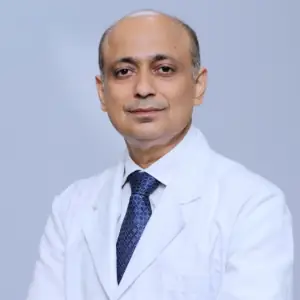
Dr Sanjeev Gera
Interventional Cardiologist
MBBS, MD, DNB - Cardiology, FESC, MACC, CRT-D Fellowship, Imaging IVUS fellowship, Medtronic TAVR Certification
Delhi
With over 20 years of extensive experience, Dr. Sanjeev Gera is considered one of the most renowned and best cardiologists in India. Trained at prestigious institutes in Delhi, he is celebrated for his evidence-based, patient-centric, and cost-effective approach to treating cardiac conditions.
Having worked previously for more than 10 years at the renowned Fortis Escorts hospital, Dr. Gera is presently working as Director and Head of Cardiology department at Fortis hospital, Noida.
He has earned recognition on various international platforms and has received numerous accolades for his contributions. His passion and dedication are evident in his commitment to delivering high-quality care to his patients in the field of cardiology.
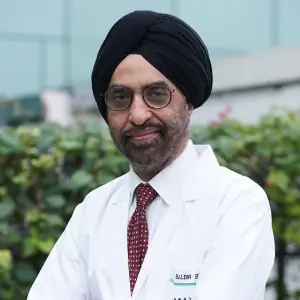
Dr Balbir Singh
Interventional Cardiologist
MBBS, MD, DM, Fellowship- American College of Cardiology, USA
Delhi
Dr. Balbir Singh is a prominent cardiologist in India, with acclaim both nationally and internationally. He has garnered numerous international and national awards, including the fourth highest civilian award in India- Padma Shree award.
fourth highest civilian award in India- Padma Shree award
Dr. Singh is known for pioneering several advancements in invasive cardiology and holds faculty positions at major conferences in Europe and America. His specialties include pacemakers, coronary angioplasty, electrophysiology, radiofrequency ablation for arrhythmias and devices for heart failure treatment.
He serves on advisory panels for several international societies and is a Fellow of the American College of Cardiology. He has contributed chapters to various books and journals in his field.
https://www.MediTraWell.com/pacemaker-cost-india/
https://www.MediTraWell.com/angioplasty-surgery-cost-india/
coronary angioplasty
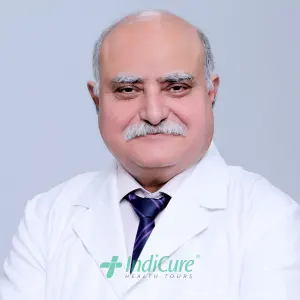
Dr. Ajay Kaul
Cardiac Surgeon
MBBS, MS, MCh, Fellowship in Heart & Lung transplant, Hannover Medical School, Fellowship in Minimally Invasive Cardiac Surgery, Lipzig Heart Centre, Germany
Delhi, NCR (Noida)
He graduated from Bombay University with a Master’s degree in Cardiothoracic and Vascular Surgery. He also has Fellowships in Cardiac Surgery, Cardiac Transplantation, and Minimally Invasive Surgery from prestigious institutions such as the Royal Prince Alfred Hospital in Germany, the Royal Melbourne Children’s Hospital in Melbourne, Hannover Medical School in Germany, and the Leipzig Cardiac Centre in Germany (Germany).
Dr. Ajay Kaul is a very prominent and accomplished cardiac surgeon in India. He has conducted over 15,000 Cardiac Surgeries and 4000 Total Arterial Coronary Bypass Surgeries in his 36-year career.
Royal Prince Alfred Hospital in Germany, the Royal Melbourne Children’s Hospital in Melbourne, Hannover Medical School in Germany, and the Leipzig Cardiac Centre in Germany (Germany).
Dr. Kaul is a multi-talented surgeon with expertise in complete Arterial Heart Bypass Surgery, Valve repair & replacement surgeries such as Aortic Valve Replacement, Mitral Valve Replacement, Pediatric Cardiac Surgery, Aneurysm Surgery, and Cardiac Failure Surgery. He has also received extensive training in cardiac transplantation and ventricular support devices. He is a member of the Cardiological Society of India and the Association of Cardiothoracic Surgery of India, among other organizations. Dr. Kaul has been featured in a number of notable news outlets, including ET Healthworld and NDTV establishing him as one of the best cardiac surgeons in India.
Best Cancer Hospitals in India
These are our top cancer hospitals in India, ensuring you receive the healthcare you deserve.
Manipal Hospital, Dwarka
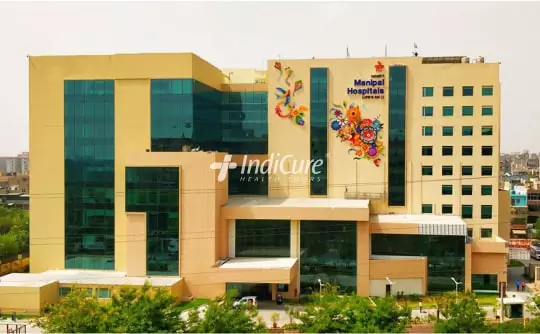
Location: New Delhi
Speciality: Multi-Superspeciality
Accreditation: Accreditation : National Accreditation Board for Hospitals and Healthcare (NABH)
No. of Beds: Beds : 380
Manipal Hospitals Dwarka is a multi-specialty hospital with paperless services and seamless integration. It is part of the Manipal Hospitals Group, which began as Kasturba Medical College in Manipal, Karnataka, in 1953 and is now India’s third-largest established player in healthcare in India. There are more than ten business hospitals, five teaching hospitals, and over 5900 beds in the group. Frost & Sullivan Healthcare Excellence Awards in 2011, Asian HR Leadership Awards in 2013 – Under the categories ‘Institution Building and Diversity & Human Resources,’ Asia Training and Development Excellence Awards in 2014, Golden Peacock National Training Award in 2014, and Asia Training and Development Excellence Awards in 2015.
IBS Institute of Brain & Spine, New Delhi
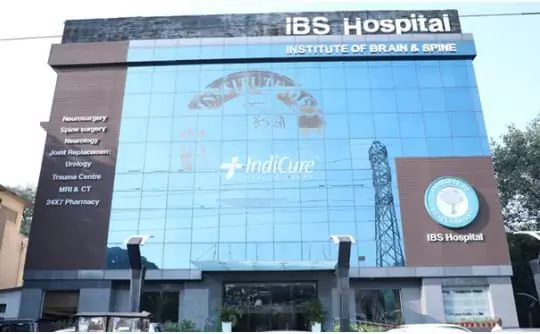
Location: New Delhi
Speciality: Multi-Superspeciality
Accreditation: Accreditation : National Accreditation Board for Hospitals & Healthcare Providers (NABH)
No. of Beds: Beds : 50
IBS Hospital was opened in 2011 to focus on modern neurosurgery, neurology, spine surgery, and joint replacement surgeries. Institute of Brain and Spine is a NABH-accredited facility that provides a comprehensive range of non-surgical therapies, diagnostics, and minimally invasive surgical procedures. https://www.MediTraWell.com/deep-brain-stimulation-cost-india/ deep brain stimulation The hospital offers a wide range of treatments for Parkinson’s disease, tremors, gastroparesis, spasticity, dystonia, bowel control, and other unusual conditions, including spinal cord stimulation, neuromodulation therapy, sacral neuromodulation, peripheral nerve stimulation, high cervical stimulation, nerve stimulation, brachial plexus nerve stimulation, electrical cortical stimulation, and drug pump insertion.
What is Ventricular Septal Defect (VSD) Treatment?
A hole in the heart, known as a ventricular septal defect (VSD), is a common birth abnormality (congenital). The hole (defect) is in the septum, which separates the heart’s lower chambers (ventricles) and permits blood to flow from the left to the right side. The oxygen-rich blood is then pumped back to the lungs rather than out to the body, putting more strain on the heart.
A tiny ventricular septal defect may not cause any issues, and many VSDs close on their own. VSDs that are medium or bigger may require surgical treatment early in life to avoid problems.
Signs and symptoms of serious heart defects often appear during the first few days, weeks, or months of a child’s life.
Symptoms of a Ventricular Septal Defect (VSD) in a baby include:
- Failure to thrive due to poor eating
- Breathing quickly or feeling out of breath
- Easy to exhaustion
A ventricular septal defect may go undetected by you and your doctor at birth. Symptoms may not develop until later in childhood, if at all, if the abnormality is minor. The signs and symptoms vary depending on the size of the hole and any other cardiac abnormalities that may be present.
If your doctor hears a murmur while listening to your baby’s heart with a stethoscope during a routine visit, he or she may suspect a heart abnormality. A VSD may not be diagnosed until a person reaches maturity.
Problems early in the heart’s development produce congenital cardiac abnormalities, but there’s often no definite cause. Environmental and genetic factors may both play a role. VSDs can occur on their own or in conjunction with other congenital cardiac abnormalities.
When is Ventricular Septal Defect (VSD) Treatment required?
Surgical correction is typically done on babies in their first year. Children and adults with a medium or large ventricular septal defect, or one that is causing symptoms, may require surgery to close the defect.
How is Ventricular Septal Defect (VSD) Treatment done?
Step 1
The surgical process begins with the patient being placed under general anesthesia. The surgeon then makes an incision in the chest to access the heart. This approach allows the surgeon to have a clear and direct view of the ventricular septum.
Step 2
Once the heart is exposed, the surgeon repairs the hole in one of two ways: Primary Repair: In some cases, the surgeon stitches the hole directly using sutures. This method is typically used for smaller defects. For larger holes, the surgeon uses a mesh cloth patch.
Step 3
Over time, the body’s natural tissue growth processes take over. The heart tissue grows around and over the patch, eventually absorbing it into the muscle. This effectively closes the defect and restores normal heart function.
What is the Recovery after Ventricular Septal Defect (VSD) Treatment like?
Your child will be admitted to the intensive care unit (ICU) right after the procedure. To keep your child as comfortable as possible, pain medication and sedatives will be administered. Most kids can resume their typical activities after 1-2 months of the procedure.
What Results Can I Expect from Ventricular Septal Defect (VSD) Treatment?
Adults who have closed VSDs and no other heart or lung problems should expect to live a normal life. Only 6% of patients have undergone a re-operation to plug minor leaks that occurred around the patch in the 40 years after the surgery has been extensively used for VSD treatment.
Questions you must ask
Here is a set of questions you should consider asking before commencing your medical journey for Ventricular Septal Defect (VSD) Treatment in India.
- Is the heart surgeon board certified?
- How experienced is the Surgeon?
- Which language does the surgeon speak?
- Is the treatment done in a well-equipped facility?
- What treatment option is recommended for me?
- What about the risks involved?
- Does the surgeon use a certified anesthetist?
- How long will the recovery period be?
Be ready to respond about:
Prepare to answer questions about your:
- Medical history and exams
- Previous surgeries
- Current medication review
- History of smoking, drugs, or alcohol