

AICD Cost in India
Last updated: April 19, 2026
Starting from USD 14,000
INCLUDES
- FDA Approved Implant
- Surgery and Stay at the Hospital
- Pre-operative Investigations
- Medicines, Consumables & Food at the hospital
- Airport Transfers & MediTraWell assistance
DOES NOT INCLUDE
- Accommodation outside the Hospital
- Air tickets
- Medical Visa fee
STAY REQUIRED
- Stay at the Hospital - 1 to 2 days
- Stay at the Hotel - 7 to 8 days
- Stay in India - 8 to 10 days
With end to end services for your hassle-free Cancer Treatment in India, MediTraWell has made the entire process of seeking medical tourism in India easy and hassle free for you besides making it affordable.
Factors that Affect AICD Cost in India
- Type of AICD
A significant portion of the overall AICD cost in India arises from the type of implant used. There are different types of implants available which include s ingle chamber, dual chamber, biventricular, and subcutaneous implant. The doctor shall recommend the appropriate implant depending on your medical condition and requirements. MediTraWell recommends you explore the options by consulting our expert Interventional Cardiologists.
- Cardiologist’s Fees
A significant component of an AICD cost in India is the heart surgeon’s fees. MediTraWell recommends highly experienced, skilled, board-certified heart surgeons who can deliver excellent results. While the charges may vary based on the surgeon’s experience, you can be confident that you are in safe and capable hands when opting for affordable heart surgery in India with MediTraWell Health Tours.
- Your Choice of Surgical Facility
Selecting an accredited medical facility with skilled and qualified medical staff is essential for the success of AICD procedure in India. Larger cities in India generally provide superior medical facilities and more experienced heart surgeons, leading to higher costs. MediTraWell Health Tours recommends surgical facilities in these larger cities to prioritize quality of care and ensure safety of our overseas guests.
- Surgery-Related Expenses
The expenses related to AICD surgery include the pre- and post-surgical expenses. The amount of pre-surgical expenses depends on the age and medical condition of the patient and thus the number and type of investigations that may be required. The amount of post-surgical expenses depend on prescription medications and extent of follow-up consultations required.
We Customize AICD Cost in India Quote to Suit Your Preferences
At MediTraWell Health Tours, we consolidate most of the expenses for your AICD cost in India to provide you with an inclusive and cost-effective package tailored to your budget and individual requirements. After receiving medical reports, your case manager will provide an estimated cost based on a discussion with the heart surgeon in India.
The final AICD cost in India can however be confirmed after your face-to-face consultation with the heart surgeon.
We at MediTraWell, understand that you travel with a budget in mind and do not like to be greeted by surprises after arrival in India. We thus club all these expenses and give you a package cost that is inclusive and affordable at the same time.
Your case manager shall give you an estimated cost of your surgery after discussing your medical reports with the surgeon. The final cost, however, shall be confirmed after your consultation with the surgeon.
Medi Trawell Services
Making Medical Travel to India Affordable & Hassle-free for 15+ Years

We Help you Choose the Right Treatment, Surgeon & Hospital

We Arrange Video/Telephonic Consultation with the Surgeon

We Assist you with Visa & Accommodation

We Receive you at the Airport and Drop you at Hotel/Hospital

We Assist you the at Hospital & Provide Post Operative Support
Our services are FREE for our patients.
In fact, we have Special Negotiated Rates with the Hospitals and you can avail Discounted Rates when you choose to Travel with MediTrawell. Container
Cardiac Procedures We Offer
Here is a compilation of the heart treatment options we provide in India.
- Holter Monitoring
- Alcohol Septal Ablation
- AICD
- Coronary Angiography
- Coronary Angioplasty (PTCA)
- Pacemaker Implantation
- Cardiac Bypass (Heart Bypass)
- ASD Device Closure
- Aortic Valve Replacement
- ASD Treatment
- VSD Treatment
- Cardiac Tumor Surgery
- EP Study
- Balloon Valvuloplasty
- Bentall Procedure
- Cardiac Ablation
- Minimally Invasive Heart Bypass
- Valve Replacement Surgery
- Pediatric Heart Surgery
- Robotic Heart Surgery
- Heart Transplant
- LVAD (Left Ventricular Assist Device)
- TAVR (Transcatheter Aortic Valve Replacement)
- Truncus Arteriosus Repair
Best cardiologist in India
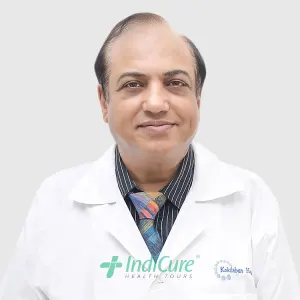
Dr. Nandkishore Kapadia
Cardiac Surgeon
MBBS, MS, MCh, Fellowships
Mumbai
Dr. Nandkishore Kapadia is regarded as one of India’s most prestigious cardiothoracic surgeons. He has over 28 years of expertise and has conducted over 5000 cardiovascular surgeries. Dr. Kapadia has performed over 10,000 CABG surgeries and 5000 additional open heart procedures, 500 minimally invasive cardiac treatments, 190 heart and lung transplants, and 150 ECMO and VAD implantations.
Dr. Kapadia earned his MBBS and MS degrees from the prestigious MGM Medical College in Indore. He then completed his Mch (Cardiovascular Surgery) at Vellore’s reputed Christian Medical College. Dr. Kapadia has completed Fellowships in Coronary Bypass Surgery & Heart Transplant, Valve Surgery, Heart Transplant, and Adult Cardiac Surgery and Heart Transplant in France and the United States, respectively.
conducted over 5000 cardiovascular surgeries. Dr. Kapadia has performed over 10,000 CABG surgeries and 5000 additional open heart procedures, 500 minimally invasive cardiac treatments, 190 heart and lung transplants, and 150 ECMO and VAD implantations.
Dr. Kapadia has received the coveted Mayor choix de Chirurgien award from the Mayor of Paris, as well as a special recognition from the Mayor of Philadelphia.Many innovative techniques and hybrid cardiac procedures have been developed by him, as well as adjusted immunosuppression protocols to suit Indian heart and lung transplant candidates. Request Consultation
Dr. Kapadia has received the coveted Mayor choix de Chirurgien award from the Mayor of Paris, as well as a special recognition from the Mayor of Philadelphia
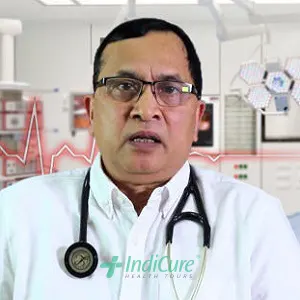
Dr. Bhabha Nanda Das
Cardiac Surgeon
MBBS, MS, MCh, Fellowships
New Delhi
Dr. BN Das is a well-known and well-respected cardiothoracic surgeon in Delhi. With more than 36 years of expertise, he has conducted over 20,000 heart procedures to date. Dr. Das received his MBBS, MS, and McH degrees from some of Delhi’s most prestigious institutions. Following that, he was awarded a Fellowship by the World Health Organization.
CABG on a beating heart, Aortic Aneurysm Surgery, Double Valve Replacement/Mitral Valve Replacement/Aortic Valve Replacement, All Types of Congenital Anomalies, and Intra Cardiac Repair are among Dr B N Das’s specialties.
With more than 36 years of expertise, he has conducted over 20,000 heart procedures to date
a Fellowship by the World Health Organization

Dr. Sandeep Attawar
Cardiac Surgeon
MBBS, MS, M.Ch (Cardiothoracic Surgery)
Hyderabad
Dr. Sandeep Attawar is a known expert in the field of heart and lung transplantation and is one of the leading cardiac surgeons in India. He has performed over 10,000 open and closed heart procedures, over 300 adult heart and lung transplants, and over two dozen LVAD implants over his career. As of August 2021, he had conducted over 26 double-lung transplants during COVID, one of the greatest amounts in the world.
From infants to octogenarians, he has done a wide range of difficult cardiac surgeries on patients of all ages. Those under his care have a high degree of satisfaction, which is commensurate with his outstanding outcomes.
He has performed over 10,000 open and closed heart procedures, over 300 adult heart and lung transplants, and over two dozen LVAD implants over his career. As of August 2021, he had conducted over 26 double-lung transplants during COVID, one of the greatest amounts in the world
Dr. Attawar is also a member of the International Society for Minimally Invasive Cardiac Surgery (ISMICS), the International Society for Heart and Lung Transplantation (ISHLT), the Minimally Invasive Robotic Association (MIRA), the Society of Thoracic Surgeons (STS), and the European Association of Cardio-Thoracic Surgery (EACTS). He has had work published in prestigious journals such as the Annals of Thoracic Surgery (ATS) and is a member of the Journal of Thoracic Surgery’s editorial board. He is also a member of the ISHLT I2C2 committee’s worldwide faculty, which oversees policies on mechanically assisted circulatory therapy. He is interested in furthering the field of mechanically aided circulation employing Left Ventricular Assist Devices as a proctor for HM3, Jarvik 2000, and ReliantHeart (LVADs).
Best Cancer Hospitals in India
These are our top cancer hospitals in India, ensuring you receive the healthcare you deserve.
Aster RV Hospital, JP Nagar
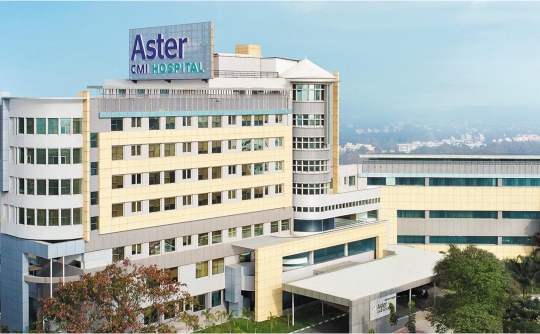
Location: Bangalore
Speciality: Multi-Superspeciality
Loading...
No. of Beds: Beds : 250
Dr.Azad Moopen, a doctor and philanthropist, created Aster RV Hospital in 1987. It is a well-known hospital that offers health-care services in a variety of areas with focus on cardiac, brain, and gastro sciences. The hospital has branches in eight countries and is headquartered in Dubai. It has about 25 hospitals, 116 clinics, and 236 pharmacies.
Wockhardt Hospital, Mumbai

Location: Mumbai
Speciality: Multi-Superspeciality
Accreditation: Accreditation : Joint Commission International (JCI, USA), National Accreditation Board for Hospitals & Healthcare Providers (NABH), National Accreditation Board for Testing and Calibration Laboratories (NABL)
No. of Beds: Beds : 250
Wockhardt Hospitals is the hospital branch of the leading Wockhardt pharmaceutical company in India. The company is more than 4 decades old and is present in more than 20 countries around the globe. Wockhardt has 9 facilities in India in Mumbai, Nagpur, Rajkot, Nasik, and Surat. Wockhardt Hospital, South Mumbai is one of the most famous and advanced facilities of the Wockhardt group. Accredited by JCI, NABH and NABL, Wockhardt hospital, South Mumbai is a tertiary care multi super-specialty hospital offering state-of-the-art facilities and international standards of care. Accredited by JCI, NABH and NABL, Wockhardt hospital, South Mumbai is a tertiary care multi super-specialty hospital offering state-of-the-art facilities and international standards of care. In pursuance of its vision to establish state-of-the-art medical facilities in India along with a high degree of clinical excellence, the hospital has entered into strategic alliances with Partners Medical International, USA, whereby Wockhardt has access to Harvard’s expertise and experience in the fields of surgery and other Medicare services, making it one of the best hospitals in Mumbai.
What is AICD (Automatic Implantable Cardioverter-Defibrillator)?
The automatic implantable cardioverter-defibrillator (AICD) is a device designed to monitor the heartbeat. This device can deliver an electrical impulse or shock to the heart when it senses a life-threatening change in the heart’s rhythm. Like a pacemaker, the AICD is small enough to be implanted under the skin in the upper chest.
The AICD system consists of:
- A pulse generator that can send an electrical impulse or shock to the heart
- Electrodes that sense the rhythm of the heart and deliver a shock to the heart muscle
- Batteries designed to last four to five years and deliver about 100 shocks
- A small computer chip that tells the AICD when to deliver a shock
Your doctor can also program the AICD to deliver a variety of sophisticated electrical therapies depending on the type of abnormal rhythm problem being treated.
When is AICD Needed?
The indications for an AICD are:
- People whose heart suddenly stops
- People who have had documented excessive rapid heartbeats (Ventricular Tachycardia)
- Or patients who are at risk for the above rhythm problems due to:
- A poor or inadequate blood flow to the heart
- A severe heart attack (MI)
- An enlarged heart (cardiomyopathy) or related conditions like congestive heart failure
What are the Different Types of AICDs?
AICDs are classified as:
- Single chamber: These ICDs use a lead (wire) that is attached to the right ventricle to deliver energy.
- Dual chamber: These ICDs use leads that are attached to the right atrium and the right ventricle.
- Biventricular: This type of ICD has leads attached to the right atrium, the right ventricle, and the left ventricle. Biventricular ICDs can improve symptoms of heart failure in about two-thirds of patients who remain symptomatic while taking medication for heart failure.
- Subcutaneous: These ICDs work by monitoring the heart rhythm through wires placed just under the skin above the heart. The advantage of a subcutaneous ICD (also called an “S-ICD”) is that there are no wires in the body’s circulatory system, so the risk of the most serious infections is decreased.
How is the AICD Procedure Done?
An intravenous (IV) line will be started in your arm. Your doctor will inject a local anesthetic to numb the site where the device will be placed. Typically, AICDs are implanted just under the collarbone, usually on the left side.
Step 1: Your doctor will make a small incision in the skin. From there, lead wires are passed through a vein to your heart and then tested to check their position in your heart.
Step 2: A little pocket is made under the skin for the pulse generator. It is about the size of a book of matches. The leads are connected to the pulse generator, and tested. Then your doctor will close the incision and program the device.
What is the Recovery After AICD Like?
Recovery after AICD implantation is rapid, but arm movement and activity restrictions are advised for the first few weeks. The hospital stay is short, a day or two after the surgery. Routine activities can be resumed in about two weeks.
What Results Can I Expect After AICD Implantation?
An AICD is designed to treat dangerously fast heart rates. It continuously monitors your heart and restores your heart to its normal heart rate. It’s like having an emergency response team with you 24 hours a day, 7 days a week.
Questions you must ask
Here is a set of questions you should consider asking before commencing your medical journey for AICD procedure in India.
- Is the cardiologist board certified?
- How experienced is the doctor?
- Which language does the surgeon speak?
- Is the treatment done in a well-equipped facility?
- What option is recommended for me?
- What about the risks involved?
- Does the surgeon use a certified anesthetist?
- How long will the recovery period be?
Be ready to respond about:
Prepare to answer questions about your:
- Medical history and exams
- Previous surgeries
- Current medication review
- History of smoking, drugs, or alcohol