

Knee Replacement Surgery Cost in India
Last updated: April 25, 2026
Starting from USD 14,000
INCLUDES
- FDA Approved Implant
- Surgery and Stay at the Hospital
- Pre-operative Investigations
- Medicines, Consumables & Food at the hospital
- Airport Transfers & MediTraWell assistance
DOES NOT INCLUDE
- Accommodation outside the Hospital
- Air tickets
- Medical Visa fee
STAY REQUIRED
- Stay at the Hospital - 1 to 2 days
- Stay at the Hotel - 7 to 8 days
- Stay in India - 8 to 10 days
With end to end services for your hassle-free Cancer Treatment in India, MediTraWell has made the entire process of seeking medical tourism in India easy and hassle free for you besides making it affordable.
Factors that affect Knee Replacement cost in India
- Orthopedic Surgeon’s Fees
An important expense when it comes to your Knee Replacement cost in India is going to be your orthopedic surgeon’s fees. IndiCure hand-picks an experienced, skilled, board-certified surgeons who are capable of delivering successful knee replacement surgeries. Although, the price tag may vary depending on the experience of the surgeon.
- Type of Implant and Surgical Approach
A significant portion of the overall cost of a Knee Replacement arises from the cost of the knee implant. This includes the material the implant is made up of. The other factor is the use of any customized surgical instruments or specialized computer technology. With the hopes of improving patient care, new techniques and technologies are often introduced to the surgical process. Such innovative advancements in the surgical approach can increase costs.
- Surgical Facility
Having your Knee Replacement in an accredited surgical facility by skilled and qualified medical staff is a critical factor. Moreover, the geographical location of this facility also affects the initial quote. But, IndiCure provides you with a projected estimate that will be all inclusive and affordable.
- Surgery-Related Expenses
The surgery-related expenses include the pre- and post-surgical expenses. The pre-surgical expenses are associated with the candidacy and the medical history of the patient. This also includes the routine medical exams and tests to ensure you’re a good fit for the surgery. Post-surgical expenses can include prescription medications, physical therapy, rehabilitation stay, and follow-up consultations.
We at IndiCure, understand that you travel with a budget in mind and do not like to be greeted by surprises after arrival in India. We thus club all these expenses and give you the package cost that is inclusive and affordable at the same time.
Your case manager shall give you an estimated cost of your surgery after discussing your medical reports with the surgeon. The final cost, however, shall be confirmed after your consultation with the surgeon.
We at MediTraWell, understand that you travel with a budget in mind and do not like to be greeted by surprises after arrival in India. We thus club all these expenses and give you a package cost that is inclusive and affordable at the same time.
Your case manager shall give you an estimated cost of your surgery after discussing your medical reports with the surgeon. The final cost, however, shall be confirmed after your consultation with the surgeon.
Medi Trawell Services
Making Medical Travel to India Affordable & Hassle-free for 15+ Years

We Help you Choose the Right Treatment, Surgeon & Hospital

We Arrange Video/Telephonic Consultation with the Surgeon

We Assist you with Visa & Accommodation

We Receive you at the Airport and Drop you at Hotel/Hospital

We Assist you the at Hospital & Provide Post Operative Support
Our services are FREE for our patients.
In fact, we have Special Negotiated Rates with the Hospitals and you can avail Discounted Rates when you choose to Travel with MediTrawell. Container
Orthopedic Surgery Procedures Offered
- Acetabular osteotomy
- ACL Reconstruction Surgery
- Ankle arthroscopy
- Ankle reconstruction
- Ankle Replacement Surgery
- Arthroscopy
- Autologous chondrocyte implantation (ACI)
- Bankart repair
- Bone grafting
- Bone metastasis surgery
- Bone reconstruction
- Bunion surgery
- Bone Fracture Repair
- Carpal tunnel decompression
- Cartilage repair
- Cartilage restoration
- Congenital hand deformity correction
- Distal radioulnar joint replacement
- Elbow arthroscopy
- Elbow replacement surgery
- External fixation
- Femoral osteotomy
- Fibula free flap
- Finger fusion
- Finger joint replacement
- Finger reattachment
- Foot reconstruction
- Free muscle transfer
- Fresh osteochondral allograft reconstruction
- Growing rods
- Guided growth in children
- Hand reconstruction
- Hand surgery
- Hand transplant
- Hemipelvectomy
- Hip arthroscopy
- Hip core decompression
- Hip labral repair
- Hip preservation surgery
- Hip replacement
- Joint replacement
- Joint replacement revisions
- Knee fusion
- Knee osteotomy
- Knee reconstruction
- Knee replacement
- Ligament reconstruction of fingers
- Ligament reconstruction of forearm
- Ligament reconstruction of shoulder
- Ligament reconstruction of wrist
- Limb deformity correction
- Limb lengthening
- Limb salvage surgery
- Medial patellofemoral ligament reconstruction
- Meniscus repair
- Meniscus transplantation
- Microvascular surgery
- Multiligament knee reconstruction
- Muscle transfers
- Nerve grafts
- Nerve reconstruction
- Nerve transfer
- Nonunion surgery
- Offset procedures
- Osteotomy
- Partial knee replacement
- Pelvic tumor surgery
- Periacetabular osteotomy (PAO)
- Physeal bar resection
- Posterior cruciate ligament (PCL) reconstruction
- Reverse shoulder replacement
- Revision of previous trauma surgery
- Robot-assisted partial knee resurfacing
- Rotationplasty
- Rotator cuff surgery
- Sacroiliac joint fusions
- Shoulder arthroscopy
- Shoulder replacement surgery
- Spatial frame corrections
- Tendon transfer
- Toe-to-thumb transfer
- Tommy John surgery
- Trigger Finger Release Surgery
- Unicompartmental knee replacement
- Vascularized bone grafting
- Vascularized free fibula transfer
- Wrist arthroscopy
- Wrist fusion
- Wrist reconstruction
- Wrist replacement
Best cardiologist in India
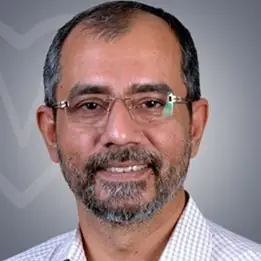
Dr. Mangal Parihar
Orthopaedics & Limb lengthening Surgery
MBBS, MS (Ortho), Fellowships in Illizarov Technique, USA, England
Mumbai
Dr. Mangal Parihar is an expert in Orthopaedic Surgery who focuses on fixing bone deformities, making limbs longer with Ilizarov and Orthofix devices, and replacing joints. He studied medicine and orthopaedics at Seth G S Medical College and KEM Hospital in Mumbai. He trained in joint replacement with Dr. C S Ranawat at a special hospital in New York, USA. He also learned Ilizarov techniques from Dr. Dror Paley at a centre for limb lengthening and reconstruction in Baltimore, USA. He got hip resurfacing training from Dr. Derek McMinn of Birmingham. He also went to Blackburn Royal Infirmary in Blackburn, England for more training.
He has performed many limb lengthening surgeries in India using the latest methods for lengthening and correcting deformities. He is the top reconstruction orthopaedic surgeon in India and his colleagues respect him a lot. He gets patients from all over the country and abroad who have problems that normal orthopaedic surgery cannot solve.
He keeps learning new methods to give the best care to his patients. He played a key role in bringing Hexapod — a six-axis correction technology that has changed the field of deformity correction and limb lengthening in India.
https://www.MediTraWell.com/limb-lengthening-surgery-cost-india/
limb lengthening in India
Dr. Nilen A Shah
Orthopedic & Knee Replacement Surgeon
MBBS, D.Ortho, MS (Ortho), MCh (Ortho) UK
Mumbai
Dr. Nilen Shah is a famous orthopedic and knee replacement surgeon in India. He does about 1000 knee replacements a year in Mumbai.
He was a ‘Clinical and Research Knee Fellow’ in Bristol, England, for 18 months, where he mastered knee surgery. He also worked as an orthopedic registrar in the UK on the ODTS rotation. He invented the minimally invasive subvastus technique for knee replacement surgery. Dr. Shah has been praised for his technique, and he frequently performs live surgeries at conferences in India. He is a critic for the Indian Express.
He is on the editorial boards of several orthopedic journals. Dr. Nilen A Shah also did clinical research and reviewed research projects in the UK.
Dr. Shah showed 300 knees that were operated on using the minisubvastus technique at WIROC 2007, and he lectured on Knee Arthroplasty at WIROC 2008. He has spoken at many conferences, including an AIIMS update on arthroplasty in 2014.
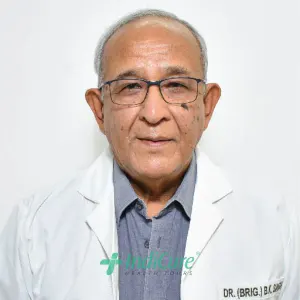
Dr (Brig.) B.K. Singh
Orthopedic & Knee Replacement Surgeon
MBBS, MS (Ortho), MCh (Ortho)UK, Robotic Joint replacement surgery (Osaka, Japan)
Gurgaon
Dr. Singh is the associate director of the Orthopaedics department at Artemis Hospital in Gurgaon and has 35 years of experience in the field.
He has done more than 5000 arthroplasties. He introduced many types of arthroplasties during his 15-year leadership career in India.
He has been trained in joint replacement surgery at the Institute of Orthopedics, The Robert Jones and Agnes Hunt Orthopedic Hospital Oswestry, and the University of Birmingham (UK). He has also received advanced training in Navigation and Robot-Assisted Joint Replacement Surgery in Osaka, Japan, making him one of the few surgeons in India who can do robotic hip and knee replacements.
He is a member of several prestigious organizations, including the Indian Orthopedic Association, where he is a life member. He is also Former President of the Delhi Orthopedic Association, as well as a Life Member of the Indian Arthroplasty Association and the Association of Surgeons of India.
Best Cancer Hospitals in India
These are our top cancer hospitals in India, ensuring you receive the healthcare you deserve.
Metro Hospital & Heart Institute, Faridabad
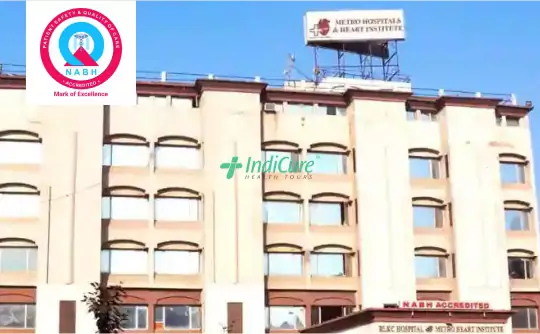
Location: Delhi (NCR)
Speciality: Multi-Superspeciality
Accreditation: Accreditation : Joint Commission International (JCI, USA)
No. of Beds: Beds : 400
Dr. Purshotam Lal, the recipient of the Padma Vibhushan and the Dr. B C Roy National Awardee, founded Metro Hospital in Faridabad in 2002. Cardiology, Neuro Sciences, Orthopedics, Onco-surgery, Centre for Liver & Digestive Diseases, and Centre for Mother & Child Care are the hospital’s major departments. The hospital has 2 separate units: Preventive cardiology, interventional cardiology, electrophysiology, cardiothoracic, and vascular surgery are all available at Metro Heart Institute in Faridabad. Metro Heart Institute is a 90-bed facility. Metro Multispeciality Hospital is a 307-bed facility.
Vijaya Hospital, Chennai

Location: Chennai
Speciality: Multi-Superspeciality
Accreditation: Accreditation : NABH, NABL
No. of Beds: Beds : 750
Vijaya Hospital was one of Chennai’s earliest multi-specialty hospitals, opening in 1972. The Vijaya Medical and Educational Trust (VMET), which was founded by Sri. B. Nagi Reddi, a recipient of the Dada Saheb Phalke award and the creator of Vijaya Vauhini Studios, is a NABL and NABH accredited hospital. Vijaya Eye Foundation, Vijaya Hospital (VH), Vijaya Heart Foundation (VHF), and Vijaya Health Centre make up the trust (VHC). Vijaya Health Centre, which opened in 1987, has performed over 13,000 beating heart surgeries and over 50,000 angiographies.
What is Knee Replacement Surgery?
Simple actions like walking or climbing stairs may be difficult to perform if your knee is significantly injured by arthritis or injury. It’s possible that you’ll start to feel pain while sitting or lying down.
If nonsurgical treatments such as medicines and the use of walking aids are no longer effective, knee replacement surgery may be an option. Joint replacement surgery is a safe and effective way to ease pain, correct leg deformities, and get back to your daily routine.
Other Treatment Options
Treatment alternatives to Knee Replacement include:
- Nonsurgical treatment for osteoarthritis/arthritis includes:
- Physical therapy
- Analgesics and anti-inflammatory medications and suitable drugs in cases of infections of the joints
- Knee bracing or shoe inserts which help in knee alignment and balancing of weight on the knee joints.
- Visco-supplementation injections for lubricating the joint to make the joint movement less painful.
- Nonsurgical treatment for osteoarthritis/arthritis includes:
- Alternative Treatment Options- Ayurveda is an ancient Indian medical practise that dates back over 3,000 years. Internal cleansing is the first step in Ayurveda treatment, followed by a particular diet, herbal treatments, massage therapy, yoga, and meditation.There are various Ayurveda treatment options available to completely cure knee pain. Talk to your case manager and he/she shall be able to help you.
- Surgical alternatives include:
- Arthroscopy is a minimally invasive procedure where small incisions can be done to repair the damage with arthroscopy.
- Osteotomy is a surgical procedure where the involved leg bone is cut, realigned, and allowed to heal. It is useful for patients older than 60 with inflammatory arthritis.
- Partial knee replacement involves replacing only the part of the knee joint that is damaged or arthritic.
Knee Replacement Surgery in India
Because only the surface of the bones are replaced, a knee replacement (also known as knee arthroplasty) is more correctly referred to as a knee “resurfacing.”
A knee replacement technique consists of four essential steps:
- Get the bone ready. Damaged cartilage on the end surfaces of femur and tibia, as well as a tiny piece of underlying bone, are removed.
- Place the metal implants in their proper places. Metal components are used to replace the lost cartilage and bone, re-creating the joint’s surface. Metal pieces can be cemented or “pressed-fit” into the bone.
- The patella should be resurfaced. With a plastic button, the undersurface of the patella (kneecap) is sliced and resurfaced. Depending on the situation, some surgeons do not resurface the patella.
When is Knee Replacement Surgery required?
You, your family, your primary care doctor, and your orthopedic surgeon should all work together to make the decision to have knee replacement surgery.
Your doctor may recommend knee replacement surgery for a variety of reasons. The following are common characteristics of people who benefit from knee replacement surgery :
- Knee discomfort or stiffness that prevents you from doing things like walking, climbing stairs, or getting in and out of chairs. It may be difficult to walk more than a few blocks without experiencing substantial discomfort, necessitating the use of a cane or walker.
- Moderate or severe knee discomfort while even while resting throughout the day
- Knee edema and inflammation that does not improve with rest or medicine
- Knee deformity (knee bending inward or outward)
- Other non-surgical therapies, such as anti-inflammatory medicines, cortisone injections, lubricating injections, physical therapy, or other procedures, have failed to significantly improve the condition.
Patients with bent knee deformities, such as the one depicted in this photo, will benefit from total knee replacement.
Knee replacement surgery does not have any age or weight restrictions.
Surgery is recommended based on a patient’s discomfort and handicap, not their age. The majority of patients who get total knee replacements are between the ages of 50 and 80, but orthopedic surgeons assess each patient individually. Knee replacements have been successfully performed on patients of all ages, from teenagers with juvenile arthritis to the elderly with degenerative arthritis.
Surgical Options
There are 3 techniques used for the knee replacement surgery:
Traditional Knee Replacement: This procedure is done under general anaesthesia. An 8-12 inch vertical incision is made in the front of the knee. The surgeon then prepares the bone to remove the damaged bone and cartilage surfaces at the end of tibia and femur.The cartilage and bone that are removed are replaced with artificial metal components made of alloys or high grade polymers. The metal components are cemented to the underlying bone for proper fit. The lower surface of the kneecap (patella) is removed and resurfaced. A spacer is inserted between the metal components for smooth gliding between the surfaces. The surgery takes about 2-3 hours. Rehabilitation is advised after the surgery as guided by the surgeon.
Minimally Invasive Knee Replacement: Unlike traditional knee replacement surgery, the minimally invasive knee replacement is less invasive performed using smaller incisions of 4-6 inch. The artificial implants used are the same as used in traditional replacement. However, the bones are prepared using specially designed surgical equipment for proper placement of the implants. This technique is less invasive with less damage and disruption of the adjacent structures that results in reduced postoperative pain, smaller scars and early recovery.
Computer Navigated Knee Replacement: Computer navigation Knee Replacement using NAV3 technology is the most advanced and revolutionary surgical procedure that is being performed in India with great success. This technique improves the accuracy of the prosthetic implantation with further minimizing the need for surgical exposure resulting in less scarring, faster recovery and thus improving the short and long term performance of the knee joint.
How is Knee Replacement Surgery done?
General anesthesia (putting you to sleep) and spinal, epidural, or regional nerve block anesthesia are the most common types of anesthesia (you are awake but your body is numb from the waist down). Your anesthesia experts will advise which form of anesthesia is ideal for you.
The surgery normally takes between two and three hours. To reestablish the alignment and functionality of your knee, your orthopedic surgeon will remove the damaged cartilage and bone and then place new metal and plastic implants.
Step 1: The surgeon makes a vertical incision in the front of the knee. The surgeon then prepares the bone to remove the damaged bone and cartilage surfaces at the end of tibia and femur.
Step 2: The cartilage and bone that are removed are replaced with artificial metal components made of alloys or high grade polymers. The metal components are cemented to the underlying bone for proper fit.
Step 3: The lower surface of the kneecap (patella) is removed and resurfaced. A spacer is inserted between the metal components for smooth gliding between the surfaces.
What is the Recovery after Knee Replacement Surgery like?
You will have some discomfort after the surgery. This is a common thing during the healing process. Your doctor and nurses will attempt to lessen your pain, allowing you to recover more quickly from surgery.
Medications are frequently provided for short-term pain management. Nonsteroidal anti-inflammatory drugs (NSAIDs), acetaminophen, and local anesthetics are among the medications available to assist control pain.
What Results Can I Expect from Knee Replacement Surgery?
The results of knee replacement surgery are very gratifying. The patient is relieved of the knee pain completely and is able to enjoy an active lifestyle.
You would not be advised to do certain high impact activities like jogging and jumping for a few weeks by the surgeon. An elderly patient above 80 is able to do the activities of daily living which were painful or not possible earlier.
Metal detectors, which are necessary for security in airports and some businesses, may be triggered by your new knee. If the alarm goes off, tell the security worker about your knee replacement. We shall give you a letter that states that you have had a knee replacement and have an implant in the knee, which can be shown to the security.
Questions to Ask
We at IndiCure completely understand your concerns and it is always our endeavor to provide the best outcome for every patient. Following is the list of questions you must ask before you embark on your journey for Knee Replacement surgery in India.
- Is it time for a Knee Replacement?
- Is the orthopedic surgeon board certified?
- How experienced is the Surgeon?
- Which language does the surgeon speak?
- Is the treatment done in a well-equipped facility?
- Should minimally invasive knee replacement surgery be considered?
- Can you give me any information on outcomes and complication rates?
- How much pain can I expect, and how will it be managed in the hospital and after I go home?
- Is physical therapy necessary after surgery?
- What about the risks involved?
- Does the surgeon use a certified anesthetist?
- How long will the recovery period be?
Preparation for the Surgery
Prepare to answer questions about your:
- Medical history and exams
- Urinary evaluations
- Previous surgeries
- Current medication review
- History of smoking, drugs, or alcohol
- Surgical expectations
- Social Planning
- Home Planning