

Shoulder Replacement Surgery Cost in India
Last updated: April 25, 2026
Starting from USD 7,200
INCLUDES
- FDA Approved Implant
- Surgery and Stay at the Hospital
- Pre-operative Investigations
- Medicines, Consumables & Food at the hospital
- Airport Transfers & MediTraWell assistance
DOES NOT INCLUDE
- Accommodation outside the Hospital
- Air tickets
- Medical Visa fee
STAY REQUIRED
- Stay at the Hospital - 1 to 2 days
- Stay at the Hotel - 7 to 8 days
- Stay in India - 8 to 10 days
With end to end services for your hassle-free Cancer Treatment in India, MediTraWell has made the entire process of seeking medical tourism in India easy and hassle free for you besides making it affordable.
Factors that Affect Shoulder Replacement Cost in India:
- Orthopedic Surgeon’s Fees
A significant component of the Shoulder Replacement Cost in India is the orthopedic surgeon’s fees. IndiCure recommends highly experienced, skilled, board-certified orthopedic surgeons who can deliver excellent results. While the charges may vary based on the surgeon’s experience, you can be confident that you are in safe and capable hands when opting for affordable shoulder replacement surgery in India with IndiCure Health Tours.
- Type of Implant and Surgical Approach
A substantial part of the total expense for joint replacement surgery in India is attributed to the cost of the shoulder implant itself, which varies based on the materials used. Additionally, using customized surgical instruments or advanced computer technologies contributes to the overall cost. To enhance patient care, new techniques and technologies are frequently incorporated into surgical procedures. While these innovations aim to improve outcomes, they can also lead to higher costs.
- Your Choice of Surgical Facility
Selecting an accredited medical facility with a skilled orthopedic surgeon and qualified medical staff is essential for the success of your shoulder replacement surgery in India. Larger cities in India generally provide superior medical facilities and more experienced surgeons, leading to higher costs. IndiCure Health Tours recommends surgical facilities in these larger cities to prioritize quality of care and ensure patient safety.
- Surgery-Related Expenses
The surgery-related expenses include the pre- and post-surgical expenses. The pre-surgical expenses are associated with the age and medical condition of the patient and thus the number and type of investigations required. Post-surgical expenses may include prescription medications and follow-up consultations.
We at MediTraWell, understand that you travel with a budget in mind and do not like to be greeted by surprises after arrival in India. We thus club all these expenses and give you a package cost that is inclusive and affordable at the same time.
Your case manager shall give you an estimated cost of your surgery after discussing your medical reports with the surgeon. The final cost, however, shall be confirmed after your consultation with the surgeon.
Medi Trawell Services
Making Medical Travel to India Affordable & Hassle-free for 15+ Years

We Help you Choose the Right Treatment, Surgeon & Hospital

We Arrange Video/Telephonic Consultation with the Surgeon

We Assist you with Visa & Accommodation

We Receive you at the Airport and Drop you at Hotel/Hospital

We Assist you the at Hospital & Provide Post Operative Support
Our services are FREE for our patients.
In fact, we have Special Negotiated Rates with the Hospitals and you can avail Discounted Rates when you choose to Travel with MediTrawell. Container
Orthopedic Surgery Procedures Offered
- Acetabular osteotomy
- ACL Reconstruction Surgery
- Ankle arthroscopy
- Ankle reconstruction
- Ankle Replacement Surgery
- Arthroscopy
- Autologous chondrocyte implantation (ACI)
- Bankart repair
- Bone grafting
- Bone metastasis surgery
- Bone reconstruction
- Bunion surgery
- Bone Fracture Repair
- Carpal tunnel decompression
- Cartilage repair
- Cartilage restoration
- Congenital hand deformity correction
- Distal radioulnar joint replacement
- Elbow arthroscopy
- Elbow replacement surgery
- External fixation
- Femoral osteotomy
- Fibula free flap
- Finger fusion
- Finger joint replacement
- Finger reattachment
- Foot reconstruction
- Free muscle transfer
- Fresh osteochondral allograft reconstruction
- Growing rods
- Guided growth in children
- Hand reconstruction
- Hand surgery
- Hand transplant
- Hemipelvectomy
- Hip arthroscopy
- Hip core decompression
- Hip labral repair
- Hip preservation surgery
- Hip replacement
- Joint replacement
- Joint replacement revisions
- Knee fusion
- Knee osteotomy
- Knee reconstruction
- Knee replacement
- Ligament reconstruction of fingers
- Ligament reconstruction of forearm
- Ligament reconstruction of shoulder
- Ligament reconstruction of wrist
- Limb deformity correction
- Limb lengthening
- Limb salvage surgery
- Medial patellofemoral ligament reconstruction
- Meniscus repair
- Meniscus transplantation
- Microvascular surgery
- Multiligament knee reconstruction
- Muscle transfers
- Nerve grafts
- Nerve reconstruction
- Nerve transfer
- Nonunion surgery
- Offset procedures
- Osteotomy
- Partial knee replacement
- Pelvic tumor surgery
- Periacetabular osteotomy (PAO)
- Physeal bar resection
- Posterior cruciate ligament (PCL) reconstruction
- Reverse shoulder replacement
- Revision of previous trauma surgery
- Robot-assisted partial knee resurfacing
- Rotationplasty
- Rotator cuff surgery
- Sacroiliac joint fusions
- Shoulder arthroscopy
- Shoulder replacement surgery
- Spatial frame corrections
- Tendon transfer
- Toe-to-thumb transfer
- Tommy John surgery
- Trigger Finger Release Surgery
- Unicompartmental knee replacement
- Vascularized bone grafting
- Vascularized free fibula transfer
- Wrist arthroscopy
- Wrist fusion
- Wrist reconstruction
- Wrist replacement
Best cardiologist in India
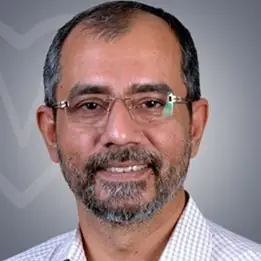
Dr. Mangal Parihar
Orthopaedics & Limb lengthening Surgery
MBBS, MS (Ortho), Fellowships in Illizarov Technique, USA, England
Mumbai
Dr. Mangal Parihar is an expert in Orthopaedic Surgery who focuses on fixing bone deformities, making limbs longer with Ilizarov and Orthofix devices, and replacing joints. He studied medicine and orthopaedics at Seth G S Medical College and KEM Hospital in Mumbai. He trained in joint replacement with Dr. C S Ranawat at a special hospital in New York, USA. He also learned Ilizarov techniques from Dr. Dror Paley at a centre for limb lengthening and reconstruction in Baltimore, USA. He got hip resurfacing training from Dr. Derek McMinn of Birmingham. He also went to Blackburn Royal Infirmary in Blackburn, England for more training.
He has performed many limb lengthening surgeries in India using the latest methods for lengthening and correcting deformities. He is the top reconstruction orthopaedic surgeon in India and his colleagues respect him a lot. He gets patients from all over the country and abroad who have problems that normal orthopaedic surgery cannot solve.
He keeps learning new methods to give the best care to his patients. He played a key role in bringing Hexapod — a six-axis correction technology that has changed the field of deformity correction and limb lengthening in India.
https://www.MediTraWell.com/limb-lengthening-surgery-cost-india/
limb lengthening in India

Dr. Mudit Khanna
Orthopedic & Knee Replacement Surgeon
MBBS, MS, M.Ch (Liverpool, UK), Clinical Trainings from Various Countries
Mumbai
Dr. Mudit Khanna is one of the best knee replacement surgeon in India who has expertise in arthroplasty and arthroscopy.
He graduated with his M.B.B.S. and M.S. in Orthopedic Surgery from the renowned King George Medical College. He then pursued advanced training in joint replacement surgery and arthroscopic surgery at various prestigious centers in the United Kingdom, Europe, USA, and Australia. He spent five years working in different roles as part of his higher surgical training in Orthopedic Surgery in the UK.
He obtained his M.R.C.S. from the Royal College of Surgeons of Edinburgh, U.K., and his M.Ch. in Orthopedic Surgery from the University of Dundee, Scotland, UK. He also worked as a Senior Clinical Fellow at the well-known Queen Elizabeth Hospital in the UK and received the Asia Pacific Zimmer Fellowship, which he completed at the famous Cleveland Clinic in Ohio, USA.
He is a recognized authority in all kinds of primary and revision joint replacement surgeries, as well as complex sports-related injuries that require arthroscopic treatment such as Knee arthroscopy surgery.
https://www.MediTraWell.com/arthroscopy-knee-surgery-cost-india/
Knee arthroscopy surgery
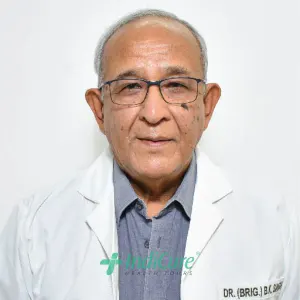
Dr (Brig.) B.K. Singh
Orthopedic & Knee Replacement Surgeon
MBBS, MS (Ortho), MCh (Ortho)UK, Robotic Joint replacement surgery (Osaka, Japan)
Gurgaon
Dr. Singh is the associate director of the Orthopaedics department at Artemis Hospital in Gurgaon and has 35 years of experience in the field.
He has done more than 5000 arthroplasties. He introduced many types of arthroplasties during his 15-year leadership career in India.
He has been trained in joint replacement surgery at the Institute of Orthopedics, The Robert Jones and Agnes Hunt Orthopedic Hospital Oswestry, and the University of Birmingham (UK). He has also received advanced training in Navigation and Robot-Assisted Joint Replacement Surgery in Osaka, Japan, making him one of the few surgeons in India who can do robotic hip and knee replacements.
He is a member of several prestigious organizations, including the Indian Orthopedic Association, where he is a life member. He is also Former President of the Delhi Orthopedic Association, as well as a Life Member of the Indian Arthroplasty Association and the Association of Surgeons of India.
Best Cancer Hospitals in India
These are our top cancer hospitals in India, ensuring you receive the healthcare you deserve.
Dr. LH Hiranandani Hospital, Powai, Mumbai
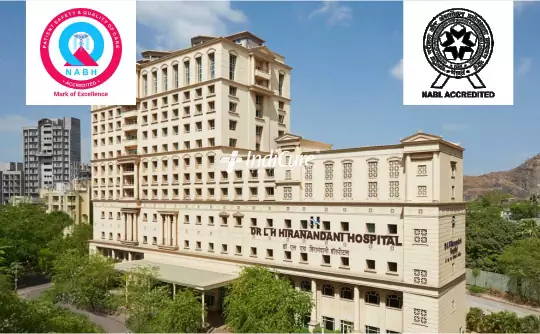
Location: Mumbai
Speciality: Multi-Superspeciality
Accreditation: Accreditation : NABH, NABL
No. of Beds: Beds : 240
Dr. L H Hiranandani hospital was founded in honor of the legend, Padma Bhushan Dr. Hiranandani, and came into existence in February 2004. Within 3 years, viz 2007, it became the first hospital in Western India to receive NABH accreditation, which only eight hospitals in India had received then. The hospital offers all medical and diagnostic facilities under one roof and is counted among the best hospitals in Mumbai. Not only accreditation, but the hospital also has the rare honor to receive the IMC Ramkrishna Bajaj National Quality Award trophy, for excellence in healthcare in 2008. In 2009, Hiranandani hospital received the coveted International Asia Pacific Quality Award (The Malcolm Baldridge Award) as it is known outside the United States. Within 3 years, viz 2007, it became the first hospital in Western India to receive NABH accreditation, which only eight hospitals in India had received then.
Regen Ortho Sport, Hyderabad
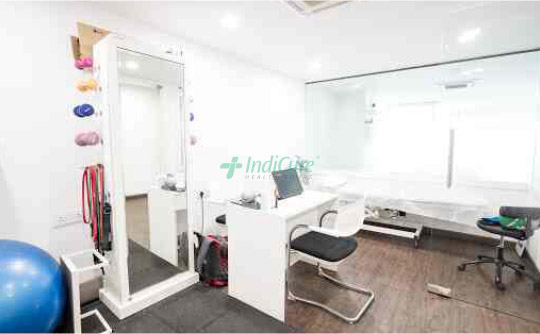
Location: Hyderabad
Speciality: Multi-Superspeciality
Loading...
No. of Beds: Beds : 350
Regen Ortho Sport is a global network of regenerative medicine specialists who treat patients in Australia, Asia, Europe, North America, and the Middle East. It is India’s only orthopedic centre that performs Platelet Procedures. Since 2005, the clinic has completed over 89,000 Regenexx operations, which are the world’s most advanced orthopedic procedures.
Shoulder Replacement in India
The shoulder joint is a ball and socket type of joint. Shoulder replacement surgery, also known as total shoulder arthroplasty, involves replacing the fractured ends of the upper arm bone (humerus) and, in most cases, the shoulder bone (scapula) with artificial implants to relieve pain and restore range of motion.
In individuals with end-stage shoulder arthritis, shoulder replacement is a highly beneficial operation for reducing pain and restoring mobility. The operation relieves discomfort and aids in the restoration of shoulder motion, strength, and function.
Even though shoulder joint replacement is less prevalent than knee or hip replacement, it is just as effective in relieving joint discomfort.
In the 1950s, the first shoulder replacement surgery was conducted in the United States to address serious shoulder fractures. Over time, shoulder joint replacement has grown to be used for a variety of additional painful shoulder disorders, such as various forms of arthritis.
According to the Agency for Healthcare Research and Quality, about 70,000 people in the United States receive shoulder replacement surgery each year. In comparison, almost 900,000 Americans get knee and hip replacement surgery each year.
Indications of Shoulder Replacement:
- Shoulder ache that prevents you from doing things you want to do every day
- You have moderate to severe pain even while taking rest
- Reduction in mobility and/or tiredness.
- There has been no significant improvement with various treatments such as anti-inflammatory medications, cortisone injections, or physical therapy.
Causes of Shoulder Pain
- Osteoarthritis– This type of arthritis is the “Wear and tear” that comes with age. The cartilage that covers the ends of these bones falls away in persons 50 years and older, which can lead to bone grinding against bone and severe bone spurs.
- Rheumatoid Arthritis– The connective tissue thickens and becomes inflammatory, causing cartilage degradation and eventually causing bone loss, discomfort, and stiffness.
- Post-traumatic Arthritis– after a severe shoulder injury
- Rotator Cuff Tear Arthropathy
- Avascular Necrosis– happens when the blood supply to the bone is interrupted
- Severe Fractures– A serious fracture of the shoulder is another frequent reason individuals have shoulder replacements.
- Failed Previous Shoulder Replacement Surgery
Types of Shoulder Replacement
Shoulder replacements are of various types. Before making any recommendations, your surgeon will carefully assess your circumstances. They’ll talk to you about which sort of replacement is best for you. Do not hesitate to inquire about the type of implant that will be utilized in your case, as well as why that particular option is the best option for you.
1) Total Shoulder Replacement:
The most standard total shoulder replacement involves replacing the arthritic joint surfaces using a metal ball attached to a stem, and a plastic socket.
These components are available in a variety of sizes. They can be glued or pressed into place in the bone. Your surgeon may opt for a non-cemented (press-fit) humeral component if the bone is of acceptable quality.
The humeral component may be implanted with bone cement if the bone is soft. In most situations, bone cement is used to implant an all-plastic glenoid (socket) component.
Patients with bone-on-bone osteoarthritis and healthy rotator cuff tendons are usually good candidates for total shoulder replacement.
2) Stemmed Hemiarthroplasty:
Depending on your shoulder’s condition, the surgeon may merely replace the ball. Hemiarthroplasty is the name for this treatment.
The surgeon replaces the head of the humerus with a metal ball and stem, identical to the component used in a total shoulder replacement, in a typical hemiarthroplasty. A stemmed hemiarthroplasty is the term for this procedure.
When the humeral head is severely shattered but the socket is normal, some surgeons propose hemiarthroplasty. The following are some more reasons for a hemiarthroplasty:
- Arthritis that involves only the head of the humerus, with a glenoid that has a healthy and intact cartilage surface
- Shoulders with severely weakened bone in the glenoid
- Some shoulders with severely torn rotator cuff tendons and arthritis
In some cases, doctors choose between a total shoulder replacement and a hemiarthroplasty in the operating room during surgery.
Total shoulder arthroplasty relieves pain better than hemiarthroplasty in patients with osteoarthritis, according to studies.
3) Resurfacing Hemiarthroplasty:
Resurfacing hemiarthroplasty includes replacing only the humeral head’s joint surface with a cap-like prosthesis that does not have a stem. It provides a bone-preserving alternative to the traditional stemmed shoulder replacement for patients with arthritis of the shoulder. It is recommended in patients where:
- The glenoid still has an intact cartilage surface
- There has been no fresh fracture of the humeral neck or head
- There is a desire to preserve humeral bone
Resurfacing hemiarthroplasty eliminates the hazards of component wear and loosening that might arise with traditional complete shoulder replacements in patients who are young or very active. Resurfacing hemiarthroplasty may be easier to convert to total shoulder replacement later, if necessary, because of its more conservative nature.
4) Reverse Total Shoulder Replacement:
Reverse total shoulder replacement is a different form of shoulder replacement. People who need a reverse complete shoulder replacement have:
- Completely torn rotator cuffs with severe arm weakness
- The effects of severe arthritis and rotator cuff tearing (cuff tear arthropathy)
- Had a previous shoulder replacement that failed
Even with a traditional total shoulder replacement, these people may have pain. They may also find it difficult to raise their arm above a 90-degree angle. It can be extremely debilitating to be unable to move your arm away from your side.
The socket and metal ball are switched in a reverse complete shoulder replacement: The shoulder bone is linked to a metal ball, while the upper arm bone is attached to a plastic socket. This permits the patient to elevate the arm using the deltoid muscle rather than the damaged rotator cuff.
When is Shoulder Replacement Needed?
An older patient with severe pain from degenerative shoulder arthritis – pain that hasn’t responded to conservative treatment but hasn’t substantially reduced the patient’s range of motion in the shoulder – is the best candidate for total shoulder replacement surgery.
Patients with bone-on-bone osteoarthritis and healthy rotator cuff tendons are usually good candidates for total shoulder replacement.
How is Shoulder Replacement Done?
Step 1
The surgeon separates the deltoid and pectoral muscles. One of the front muscles of the rotator cuff, which covers the shoulder, is sliced to open the shoulder. The surgeon may manipulate the arthritic components of the shoulder ball and socket because this “opens the door.”
Step 2
The procedure involves removing the arthritic parts of the joint, and then inserting the implant components: a socket, ball, and stem. The stem is inserted into the patient’s humerus and is connected to the metal ball component, allowing for improved joint function and mobility.
Step 3
Once the rotator cuff muscle incision is closed and patched, the external skin incision area is cleaned to prevent infection and then sutured. To further protect the wound and support the healing process, a sterile bandage is applied. This bandage helps keep the area clean and secure.
What Results Can I Expect from Shoulder Replacement?
The outcomes of shoulder replacement surgery are highly encouraging. Approximately 95% of people who have shoulder replacements are pain-free. Shoulder replacement can help you live a better life by reducing joint pain, increasing your range of motion, and improving your quality of life. It may take a few months before you realize all of the benefits of the procedure.
What is the Recovery after Shoulder Replacement like?
Patients usually need eight weeks or longer to recover. A patient may not be able to conduct heavy labor or intensive strength exercises for several months. The patient can begin unrestricted, active use of the arm and shoulder in 6-8 weeks. Throughout physical treatment, mobility improves. In two to three weeks, one can return to work.