

Liver Transplant Cost in India
Last updated: May 3, 2026
Starting from USD 28,000
The Liver Transplant cost in India starts from USD 28,000 and varies depending on the patient’s medical history, the donor’s medical history, the surgeon, the surgical facility, and the city where you choose to get the surgery done.
The cost quoted above is indicative and should not be taken as the final cost of the surgery. The final cost can be ascertained after the surgeon has evaluated the patient. The cost in Indian Rupees can vary based on the exchange rate.
INCLUDES
- Surgery
- Stay at the Hospital
- Pre-operative Investigations
- Medicines, Consumables
- Food at the hospital
- Airport Transfers
- MediTraWell assistance
DOES NOT INCLUDE
- Accommodation outside the Hospital
- Air tickets
- Medical Visa fee
STAY REQUIRED
- Stay at the Hospital - 1 to 2 days
- Stay at the Hotel - 7 to 8 days
- Stay in India - 8 to 10 days
Factors that affect Liver Transplant cost in India
- Surgeon’s Fees
One of the key costs you will face when undergoing a liver transplant in India is the liver transplant surgeon’s fee. IndiCure connects you with board-certified surgeons in India who are highly skilled and have delivered successful liver transplant surgeries. While the surgeon’s fee can vary based on their experience, you can trust IndiCure to recommend surgeons who prioritize your safety and deliver excellent outcomes when you choose liver transplant surgery in India.
- Type of Surgical Approach
With the hopes of improving patient care, new techniques and technologies are often introduced to the surgical process. Such innovative advancements in the surgical approach can increase costs.
- Choice of Surgical Facility
Choosing an accredited surgical facility with skilled and qualified medical staff is crucial for the success of liver transplant surgery in India. In India, larger cities typically offer superior medical facilities and more experienced surgeons, resulting in higher costs. IndiCure Health Tours specifically recommends surgical facilities in larger cities of India to prioritize quality of care and ensure patient safety.
- Surgery-Related Expenses
Surgery-related costs encompass both pre-and post-operative expenses. Pre-operative costs are influenced by factors such as the patient’s age and medical condition, determining the necessity and type of investigations needed. Post-operative expenses may involve prescribed medications and subsequent follow-up appointments.
We at MediTraWell, understand that you travel with a budget in mind and do not like to be greeted by surprises after arrival in India. We thus club all these expenses and give you a package cost that is inclusive and affordable at the same time.
Your case manager shall give you an estimated cost of your surgery after discussing your medical reports with the surgeon. The final cost, however, shall be confirmed after your consultation with the surgeon.
Medi Trawell Services
Making Medical Travel to India Affordable & Hassle-free for 15+ Years

We Help you Choose the Right Treatment, Surgeon & Hospital

We Arrange Video/Telephonic Consultation with the Surgeon

We Assist you with Visa & Accommodation

We Receive you at the Airport and Drop you at Hotel/Hospital

We Assist you the at Hospital & Provide Post Operative Support
Our services are FREE for our patients.
In fact, we have Special Negotiated Rates with the Hospitals and you can avail Discounted Rates when you choose to Travel with MediTrawell. Container
Best Liver Transplant Surgeons in India

Dr Abhideep Chaudhary
Liver Transplant And Hepatobiliary Surgeon
MBBS, MS, Fellowship in Multi-organ transplant, USA, Fellowship in Paediatric Transplant (USA), Fellowship in Hepatobiliary and Transplant surgery (USA)
Delhi
Dr Abhideep Chaudhary is one of the very eminent and renowned Transplant surgeons functioning in this field since 2005 and having a rich experience of over 16 years.
He is a medical graduate from the prestigious AIIMS Hospital, Delhi and his fellowship in Multi organ transplant from American Society of Transplant surgeons. He further acquired proficiency in hepatobiliary and liver transplant surgery while working in the Division of Transplant Surgery at Thomas Starlz Transplantation Institute, Pittsburgh, USA.
He is currently a core member and expert in the Liver Transplantation Department at Jaypee hospital, Noida. Dr Abhideep has to his credit around 11 research papers and 24 abstracts which were published in the leading international journals. He also holds the affiliation of several professional organizations such as International Liver Transplant Society, American Society of Transplant Surgeons and Association of Surgeons of India.
He is an expert in performing Liver Transplant, Liver Cancer, Minimally Invasive Surgery, Laparoscopic and Robotic Surgery, Treatment for Pancreatic and biliary diseases etc.

Dr Suresh Singhvi
Liver Transplant And Hepatobiliary Surgeon
MBBS, MS, DNB, FRCS (Ed.UK), FRCS (Glasgow, UK), CCST (UK), Fellowship in Liver Transplantation (Germany & South Korea)
New Delhi
Dr Suresh Singhvi is amongst the most reputed and renowned liver transplant surgeons holding a rich professional experience of around 27 years in the field of liver transplantation, Hepato pancreatico biliary surgery and surgical gastroenterology.
He has completed his medical graduation from few of the prestigious medical institutes in India and did the specialization in Liver transplantation from Hamburg, Germany and specialization in Hepatopancreaticobiliary and liver transplant surgery from the United Kingdom. He has pursued advance training in the Living donor liver transplantation, split liver transplantation and cadaver liver transplantation from Germany.
Dr Singhvi has been associated with the top notch medical institutes in India and is also affiliated to several renowned associations and medical organizations.

Dr Ramdip Ray
GI & Liver Transplant Surgeon
MBBS, MS (Surg), MRCS
Gurgaon
Dr Ramdip Ray is a highly renowned and expert GI and liver transplant surgeon in India. Dr Ray is a graduate of Medical College, Kolkata. Subsequently he underwent training in Surgery at the Institute of Post Graduate Medical Education& Research ( IPGMER ) and SSKM Hospital in Kolkata and then joined as Senior Residentat the University College of Medical Sciences ( UCMS ) in Delhi
In 2005 he underwent training in Upper GI & Laparoscopic Surgery with Mr Andrew Baker at the Wrexham Maelor Hospital in Wales, UK. He is a Member of the prestigious Royal College of Surgeons of England (MRCS).
Dr. Ray is known for his path breaking work in the field of GI surgery and liver transplant. He has successfully performed liver transplants on a few difficult cases with great success.
Best Liver Transplant Hospitals in India
Eye Q hospital, Gurgaon
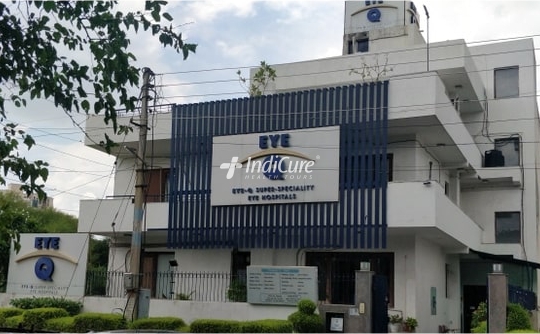
Location: Gurgaon
Speciality: Multi-Superspeciality
Loading...
Loading...
Eye-Q Hospital is an ISO 9001-2000 certified facility that opened in 2007. It is dedicated to providing high-quality eye treatment at a reasonable cost. WCRC Leaders Asia named Hospital the Most Trusted Brand of 2016-17 for its dependability and client satisfaction.
Apollo Hospital, Jubilee Hills, Hyderabad
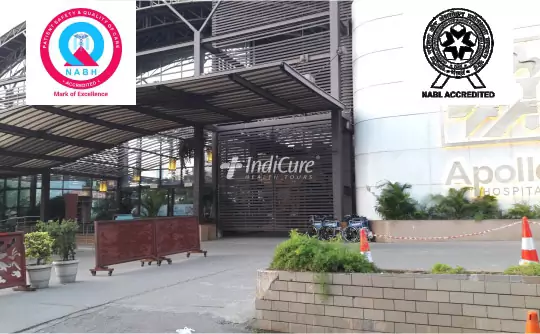
Location: Hyderabad
Speciality: Multi-Superspeciality
Accreditation: Accreditation : Joint Commission International (JCI, USA), National Accreditation Board for Hospitals & Healthcare Providers (NABH)
No. of Beds: Beds : 350
Apollo Heart Institute at Apollo Hospital, Hyderabad comprises a committed group of healthcare professionals, including doctors and medical staff, who spearhead the most extensive range of cardiac services in the region. The services encompass diagnostics and preventive healthcare, emergency medical care, as well as in-patient and post-operative care. The hospital has consistently pioneered advancements in various specialized fields such as interventional cardiology, cardiac surgery, structural heart interventions, pediatric surgery, electrophysiology, robotic surgical procedures, robotic cardiology, and heart transplantation. With over 1.5 lakh cardiac procedures performed with a success rate of around 99%, Apollo Hospital Hyderabad stands tall in the field of cardiac care.
Questions you must ask
Here is a set of questions you should consider asking before commencing your journey for a liver transplant in India.
- Is it time for a Liver transplant?
- Is the surgeon board certified?
- How experienced is the Surgeon?
- Which language does the surgeon speak?
- Is the treatment done in a well-equipped facility?
- Can you give me any information on outcomes and complication rates?
- How much pain can I expect, and how will it be managed in the hospital and after I go home?
- What about the risks involved?
- Does the surgeon use a certified anesthetist?
- How long will the recovery period be?
Be ready to respond about:
Prepare to answer questions about your:
- Medical history and exams
- Previous surgeries
- Current medication review
- History of smoking, drugs, or alcohol
Liver Transplant in India
Organ transplant laws in India are very strict, prohibiting any commercial transaction for liver transplants. Organ transplant law in India allows only blood relatives to donate liver to the patient. A special permission from the Govt. of India is to be taken if an unrelated person wants to donate a part of his or her liver to the patient.
There should be no commercial transaction involved between the donor and the recipient for a liver transplant in India. If the proposed donor or the recipient or both are foreigners and are seeking liver transplant operation in India, a senior Embassy official of the country of origin or the government of the country concerned (authenticated by the Embassy concerned in India) has to certify the relationship between the donor and the recipient.
There is a long waiting time for liver from dead or cadavers, so foreigners usually never get cadaveric donations if they wish to undergo cadaveric liver transplant in India.
Steps for Liver Transplant Surgery in India
- Identify a donor from your country- preferably a close relative
- Investigate donor- patient compatibility in your country. If it is not available, get it done in a country closest to you else, or you may have to come to India for investigations.
- When the compatibility is confirmed, both the patient and the donor shall be investigated for operability.
- Liver transplant in India will happen after the above confirmations and completion of documents related to liver transplant operation.
NOTE: IT IS IMPORTANT TO NOTE THAT INDICURE DOES NOT ARRANGE DONORS. THE DONOR FOR LIVER TRANSPLANT HAS TO BE A CLOSE RELATIVE OF THE PATIENT (SIBLING/ PARENTS/ CHILDREN/SPOUSE). IN CASE THE DONOR IS NOT A CLOSE RELATIVE, GOVERNMENT PERMISSION IS REQUIRED AND IS GIVEN ONLY IF IT IS ESTABLISHED THAT THERE IS NO COMMERCIAL TRANSACTION INVOLVED BETWEEN THE DONOR AND THE RECIPIENT.
As the latest techniques of liver transplant are advancing, many people from around the world come for Liver transplantation in India. Owing to the low cost of liver transplant in India, highly skilled & experienced surgeons and state-of-the-art hospital facilities, India has emerged as one of the most favorable destinations for organ transplants in the world.
Comparing the cost of liver transplant in India and Western countries, one would find a huge cost difference. The cost of a liver transplant in the US varies between USD 250,000 – USD 315,000 whereas the cost of Liver transplantation in India ranges between US $28, 000 – $50, 000 which is less than one-fourth of the cost of the surgery in the US.
What is a Liver Transplant?
The liver is one of the most vital and largest organs of the human body that serves as the powerhouse of energy as it produces:
- Glucose which is the basic sugar and source of energy
- Proteins which are the building blocks essential for growth
- Bile, a fluid stored in the gallbladder that is necessary for absorption of the fats and vitamins
- Blood clotting factors that aid in healing wounds
Being the largest organ of the human body, it is ideal for storage of essential substances like vitamins and minerals. It metabolizes and detoxifies the substances ingested by the body. Moreover, it also acts as a filter that removes impurities from the blood.
Liver transplantation is a complex and major surgical procedure that is done to replace the damaged or diseased liver with a healthy and normally functioning liver taken from the donor. A liver transplant is the second most commonly performed transplantation in the world after kidney transplant. It is indicated when the liver fails to perform its normal functions due to severe damage to the liver leading to its failure.
Deceased liver donation: involves transplantation of a liver that has been taken from the person who died recently.
Living donor liver transplant: a section of the liver is removed from the living donor and transplanted to the patient. As the liver has a tendency to regenerate itself, both the transplanted and the remaining part of the donor’s liver can regrow into the normal-sized liver.
A liver transplant is the option left when all other lifestyle modifications and treatments have not prevented liver failure. Liver failure, however, can happen slowly known as chronic liver failure, or can happen suddenly called acute liver failure.
Regardless of the type, liver failure can occur due to multiple causes but the most common cause for liver transplant is liver cirrhosis which is characterized by chronic scarring of the liver mostly due to hepatitis virus infection or chronic alcohol abuse.
Several other common conditions for liver transplant are:
- Bile duct disease like biliary duct atresia
- Chronic hepatitis B and hepatitis C infection
- Excessive iron in the body i.e. hemochromatosis
- Genetic diseases like Wilson’s disease
- Fatty liver disease
- Primary or early-stage liver cancer
- Autoimmune liver disease
- Alcoholic liver disease.
When is Liver Transplant required?
If the patient is suffering from a liver failure but his heart, lungs, kidneys, and immune system are strong enough to cope with the surgery, if he is mentally and emotionally stable, if the patient has family and friends who can take care of the patient before and after the surgery and if a cadaveric or a living donor is available, the patient is considered good for the liver transplant.
How is a Liver Transplant done?
Before the transplant surgery, both the patient and the donor are assessed and made to undergo a battery of tests to ensure that the donor is healthy enough to survive the surgery. The test includes blood testing and matching to check the compatibility. Various other tests and investigations include EKG, Echo, Chest X-ray, Abdominal CT scan, CT Cholangiogram, physical assessment by a physician, hepatologist, and psychological tests.
Liver transplant surgery is a major surgical procedure done under general anesthesia and takes about 12 hours to complete.
The donor is operated first to remove either the left or right lobe of his liver. Once the donor’s liver is removed, the surgeon prepares for the transplant of the liver into the patient’s body.
Step 1
The surgeon makes an incision on the upper right part of the abdomen in order to access the liver. The surgeon then cuts the essential blood vessels along with the bile ducts and removes the diseased liver.
Step 2
The failed and diseased liver is then replaced by the healthy liver from the donor and the blood vessels and biliary ducts are connected to the transplanted liver lobe.
Step 3
After a complete transplant, the surgeon closes the incisions and the patient is shifted to the ICU for recovery.
What is the Recovery after Liver Transplant like?
One needs to come to India about 2-3 weeks prior to the surgery for pre-operative assessment and paperwork formalities to be completed. A stay for around 6-8 weeks post-discharge would be needed for you to recover enough before you can go back. So, a total of about 12-16 weeks are required for your liver transplant surgery in India.
One needs to stay in the ICU for a week after the surgery and another 3 weeks in the transplant care unit following which the patient is discharged from the hospital. However, the donor will stay at the hospital for about a week.
After the surgery, the patient is moved to the intensive care unit (ICU) for 5-6 days, after which he is shifted to the transplant care unit/room where he would stay for another 3 weeks. It is normal to experience some pain and discomfort which shall be controlled with medications. The doctor will keep a check for any signs of bleeding, infections, or liver rejection. The patient is prescribed medicines to suppress the immune system so that the body does not reject the new liver.
Recovery after liver transplant is a very slow and long process that aims at steadily building the patient’s health and fitness. It may take 6 months to resume normal daily activities.
What Results Can I Expect from Liver Transplant?
One can expect gratifying results after liver transplant surgery. Most of the patients resume their regular lifestyle after 6 months of successful liver transplant. If supplemented with a healthy diet, regular exercise, and medication, one can lead a healthy and active life after a liver transplant.