
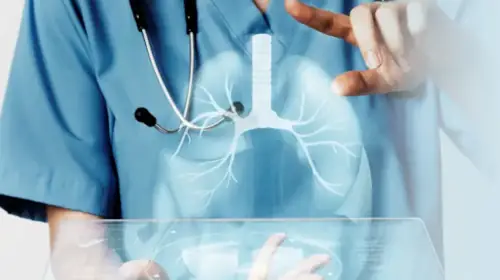
Lung Transplant Cost in India
Last updated: May 3, 2026
Starting from USD 25,000
Lung Transplant cost in India starts from US $25,000 and varies depending on your medical history and condition, comorbidities-if any, surgeon, hospital and the city where you choose to get the surgery done.
INCLUDES
- Surgery
- Stay at the Hospital
- Pre-operative Investigations
- Medicines, Consumables
- Food at the hospital
- Airport Transfers
- MediTraWell assistance
DOES NOT INCLUDE
- Accommodation outside the Hospital
- Air tickets
- Medical Visa fee
STAY REQUIRED
- Stay at the Hospital - 1 to 2 days
- Stay at the Hotel - 7 to 8 days
- Stay in India - 8 to 10 days
Factors that affect Lung Transplant cost in India
- Surgeon’s Fees
An important expense when it comes to your Lung Transplant is going to be your Surgeon’s fees. IndiCure recommends experienced, skilled, board-certified surgeons who are capable of delivering successful surgeries. The charges may vary depending on the experience of the surgeon, popularity, and the approach to treatment.
- Type of Surgical Approach
With the hopes of improving patient care, new techniques and technologies are often introduced to the surgical process. Such innovative advancements in the surgical approach can increase costs.
- Surgical Facility
Having your Lung Transplant in an accredited surgical facility by skilled and qualified medical staff is a critical factor. Moreover, the geographical location of this facility also affects the quote. But, IndiCure provides you with a projected estimate that will be affordable.
- Surgery-Related Expenses
The surgery-related expenses include the pre- and post-surgical expenses. The pre-surgical expenses are associated with the age and medical condition of the patient and thus the number and type of investigations required. Post-surgical expenses may include prescription medications and follow-up consultations.
We at MediTraWell, understand that you travel with a budget in mind and do not like to be greeted by surprises after arrival in India. We thus club all these expenses and give you a package cost that is inclusive and affordable at the same time.
Your case manager shall give you an estimated cost of your surgery after discussing your medical reports with the surgeon. The final cost, however, shall be confirmed after your consultation with the surgeon.
Medi Trawell Services
Making Medical Travel to India Affordable & Hassle-free for 15+ Years

We Help you Choose the Right Treatment, Surgeon & Hospital

We Arrange Video/Telephonic Consultation with the Surgeon

We Assist you with Visa & Accommodation

We Receive you at the Airport and Drop you at Hotel/Hospital

We Assist you the at Hospital & Provide Post Operative Support
Our services are FREE for our patients.
In fact, we have Special Negotiated Rates with the Hospitals and you can avail Discounted Rates when you choose to Travel with MediTrawell. Container
Best Lung Transplant Surgeons in India

Dr. Prashant Chhajed
Pulmonologist
MBBS, MD, Fellowship- Sydney, Australia
Mumbai
Dr. Prashant Chhajed has more than 24 years of experience as a pulmonologist. His areas of expertise include bronchoscopy, pleuroscopy, smoking cessation management, treatment of obstructive sleep apnea, treatment of lower/upper respiratory tract infections, treatment of bronchial asthma, thoracoscopy, treatment of chest diseases, treatment of pneumonia, treatment of lung infections, treatment of lung abscesses, and treatment of interstitial lung disease.
After earning his MBBS from the prestigious University of Mumbai in Mumbai and his DNB in Respiratory Diseases from the DNB board in New Delhi, Dr. Chhajed went on to receive a fellowship from Sydney, Australia’s renowned St. Vincent Hospital.
Dr. Chhajed went on to receive a fellowship from Sydney, Australia’s renowned St. Vincent Hospital.
Numerous national and international publications as well as frequent invitations to appear as a guest speaker regarding medical thoracoscopy at scientific meetings, CMEs, and conferences throughout the world are to his credit. He is a member of the Indian Maharashtra Medical Council.
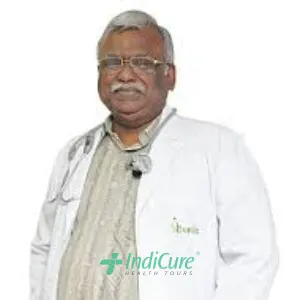
Dr. Prasanna Kumar Thomas
Pulmonologist
MBBS, MD, DTCD
Chennai
Dr. Prasanna Kumar Thomas is a renowned pulmonologist in India with more than 40 years of experience.
His credentials include an MBBS from Madras Medical College in Chennai, a Diploma in Tuberculosis and Chest Diseases from the same institution, and an MD in Tuberculosis and Chest Diseases from the same institution. He is a member of the Tamil Nadu Association of Pulmonologists, European Respiratory Society, American Thoracic Society, and Indian Medical Association.
Tamil Nadu Association of Pulmonologists, European Respiratory Society, American Thoracic Society, and Indian Medical Association.
He is particularly interested in treating lung cancer, pneumonia, infectious diseases, interstitial lung disorders, lower and upper respiratory tract infections, and airway diseases. He is actively working to encourage others to stop smoking. Dr. Thomas has taken part in numerous conferences at the national level.
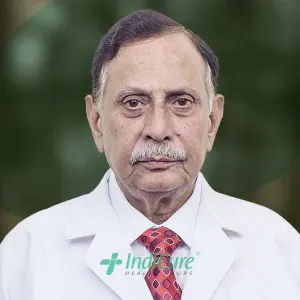
Dr. Shailendra Nath Gaur
Pulmonologist
MBBS, MD, Fellowships
Delhi NCR
Dr. Shailendra Nath Gaur is a renowned and accomplished pulmonologist in India who has been in practice for more than 40 years. His journey has been that of great success as a clinician and a teacher. He has treated many complex cases with great success.
Throughout his professional life, the doctor has been active in teaching and research in respiratory medicine. He serves as an examiner for the DTCD, MD, DNB, and Ph.D. programmes at various Indian universities. He has given 165 Guest Lectures at various conferences that he has attended. He is a member of the Ministry of Environment and Forest’s working group, the CDSCO’s Allergen Standardization Committee’s chairman, the Ministry of Health, and the National College of Chest Physicians’ secretary (India). More than 200 original works of Dr. Gaur has been published in national and international journals. Additionally, he serves as the chief editor for both Indian J. Allergy, Asthma and Immunology and Indian J. Chest Diseases and Allied Sciences.
He has received 12 National Awards and other academic distinctions. He is a Commonwealth Fellow as well.
He has received 12 National Awards and other academic distinctions. He is a Commonwealth Fellow as well. He is skilled at treating a variety of respiratory conditions, including Farmer lung disease, anaerobic lung disease, allergy and immunotherapy, and many uncommon fungal diseases.
Best Lung Hospitals in India
Apollo Spectra Hospital, Bangalore
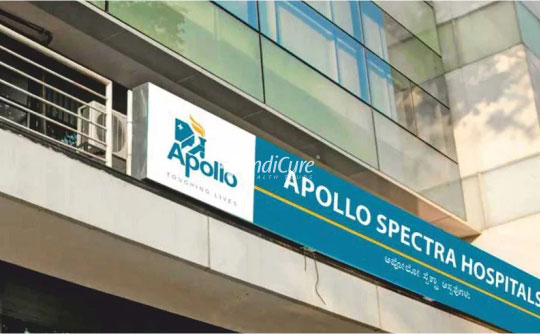
Location: Bangalore
Speciality: Multi-Superspeciality
Loading...
No. of Beds: Beds : 20
Apollo Spectra Hospital – Koramangala provides top-notch medical services with all the bells and whistles. The hospital, with a capacity of 20 beds, is dedicated to providing world-class medical services. Orthopedics & Spine, Varicose Veins, Urology, Bariatric Surgery, ENT, General and Laparoscopic Surgery, and more surgical specialties are available at the facility. The hospital uses sophisticated technologies to give tailored care for speedier recovery and minimal infection risk, thanks to its world-class infrastructure and top doctors.
Shroff Eye Hospital, Mumbai

Location: Mumbai
Speciality: Multi-Superspeciality
Accreditation: Accreditation : JCI, ISO
No. of Beds: Beds : 300
Shroff Eye Hospital is counted among the best eye hospitals, not only in Mumbai but in India and beyond. Established in 1919 by renowned Dr. C N Shroff, Shroff Eye Hospital has stood for excellence in eye care since its inception. With more than 94 years of experience in delivering eye care, the hospital offers a full array of state-of-the-art equipment and a high safety environment to treat eye problems accurately, safely, and effectively. Accredited by JCI and ISO certification, the hospital has many firsts to its credit not only in performing eye treatments for the first time in India; but being the first eye hospital to have JCI accreditation.
What is Lung Transplant?
A lung transplant is a surgical operation in which a diseased or failing lung is replaced with a healthy lung from a deceased donor. A lung transplant is intended for those who have tried alternative medications or treatments but still haven’t seen enough improvement in their condition.
Your body may struggle to get the oxygen it requires if your lungs are unhealthy or damaged. A range of disorders and ailments can harm your lungs and make it difficult for them to function properly.
The following are some of the more common causes:
- Chronic obstructive pulmonary disease (COPD), including emphysema
- Scarring of the lungs (pulmonary fibrosis)
- High blood pressure in the lungs (pulmonary hypertension)
- Cystic fibrosis
Medication or specific breathing devices can often be used to address lung problems. However, if these treatments fail or your lung function becomes life-threatening, your doctor may recommend a single-lung or double-lung transplant.
In addition to a lung transplant, certain people with coronary artery disease may require a surgery to restore blood flow to a blocked or narrowed artery in the heart. People with significant heart and lung diseases may require a combined heart-lung transplant in some situations.
There are 3 main types of lung transplant:
Single lung transplant – A single lung transplant involves removing a single damaged lung from the recipient and replacing it with a lung from a donor; this is commonly used to treat pulmonary fibrosis, but it is not suitable for people with cystic fibrosis because infection will spread from the remaining lung to the donated lung.
Double lung transplant – A double lung transplant, in which both lungs are removed and replaced with two donated lungs, is the most common treatment option for persons with cystic fibrosis or COPD.
Heart-lung transplant – A heart-lung transplant, in which the heart and both lungs are removed and replaced with a donor heart and lungs; this is frequently advised for persons with severe pulmonary hypertension.
Unfortunately, the demand for lung transplants vastly outnumbers the supply of accessible donated lungs.
When is Lung Transplant required?
A lung transplant will be needed when:
- a person has advanced lung disease that isn’t responding to other treatments
- a person’s life expectancy is estimated to be less than 2 to 3 years without a transplant.
The following are some of the conditions that can be treated with a lung transplant:
- Chronic obstructive pulmonary disease (COPD) – a general term for a number of conditions that damage the lungs, usually as a result of smoking
- Cystic fibrosis – an inherited condition that causes the lungs and digestive system to become clogged up with a thick, sticky mucus
- Pulmonary hypertension – high blood pressure in the blood vessels that carry blood from the heart to the lungs
- Idiopathic pulmonary fibrosis – scarring of the lungs
Because the cancer could return in the donor lungs, a lung transplant would not be suggested for someone with lung cancer. If you smoke, you will not be considered for a lung transplant.
A lung transplant is a serious procedure that carries a number of risks. Before the operation, your doctor should talk to you about whether the risks of the procedure outweigh the benefits. You should also discuss what you can do to mitigate the risks.
Evaluation & Finding the Donor
Evaluation and matching procedure:
A lung transplant evaluation is often lengthy and cumbersome. First and foremost, the physician sends the patient to a local transplant centre where the physicians evaluate the patient. This could happen multiple times over the course of several weeks.
In addition to the patient’s lung health, the doctors consider the patient’s family support, financial circumstances, psychological composition, and any other medical issues.
Several tests are carried out during a lung transplant evaluation, including:
- Pulmonary function tests
- Cardiac stress test
- Coronary artery catheterization
- Bone mineral density test
- Chest X-ray
- Computed tomography (CT scan) of the chest
- Blood tests for kidney and liver function, and a complete blood count (CBC)
- Blood type and antibodies present within the blood, for matching against potential organ donors
If the patient is judged to be a suitable candidate for lung transplant after the tests and interviews, his or her name is added to the regional and national organ recipient lists.
The Lung Allocation Score determines an individual’s position on the list based on a complex computation that attempts to forecast two things:
- How long is it likely that a patient will live without a lung transplant?
- When a patient receives a lung transplant, how long can they expect to live?
When organ donors’ lungs become available, people with better scores are given priority.
For foreigners coming to India for a lung transplant, it may take a few weeks to several months before you can find a donor for your lung transplant in India.
How is Lung Transplant done?
The duration of lung transplant surgery depends on the complexity of your case.
- For a single-lung transplant, surgery will take between 6 and 8 hours.
- For a double-lung transplant, surgery will take 8 to 12+ hours.
Step 1
The surgery is done under general anesthesia. You will have a breathing tube inserted into your throat and connected to a breathing machine (ventilator). A cut (incision) will be made in your chest by the surgeon. An incision will be made on the side of the chest where the lung will be replaced for a single lung transplant. An incision will be made horizontally across the chest below the breasts for a bilateral sequential transplant.
Step 2
You may be placed on a cardiopulmonary bypass machine, depending on your lung status and the type of transplant being performed (heart-lung machine). During the procedure, this machine delivers blood and oxygen to your body.
Step 3
The diseased lung(s) will be removed and the donor lung will be implanted in its place (s). The blood arteries and airways of the new lung will be connected. The lungs will be attached one by one in a bilateral sequential transplant. Stitches or surgical staples will be used to close the incision.
What is the Recovery after Lung Transplant like?
The patient is shifted to an Intensive Care Unit (ICU) after the lung transplant procedure, where he/she will stay for a few days spending on the recovery.
The patient is on a ventilator until he/she is able to breathe on their own. This could take anywhere from a few hours to several days.
The patient will need to take anti-rejection medications for the rest of life in order for the transplanted lung(s) to survive in the body.
The recovery process following a lung transplant is a long and slow one that tries to gradually improve the patient’s health and fitness. Resuming normal daily activities could take up to three to four months.
What Results Can I Expect from Lung Transplant?
People who have undergone a lung transplant in recent years have had a better outlook, and this trend is predicted to continue.
Approximately 9 out of 10 persons survive a lung transplant, with the majority of these surviving for at least a year.
After a lung transplant, about 5 out of 10 persons will live for at least 5 years, with many living for at least 10 years.
Questions to Ask
We at IndiCure completely understand your concerns and it is always our endeavor to provide the best outcome for every patient. Following is the list of questions you must ask before you embark on your journey for Lung Transplant in India.
- Is it time for a Lung transplant?
- Is the surgeon board certified?
- How experienced is the Surgeon?
- Which language does the surgeon speak?
- Is the treatment done in a well-equipped facility?
- Can you give me any information on outcomes and complication rates?
- How much pain can I expect, and how will it be managed in the hospital and after I go home?
- What about the risks involved?
- Does the surgeon use a certified anesthetist?
- How long will the recovery period be?
Preparation for the Surgery
Prepare to answer questions about your:
- Medical history and exams
- Previous surgeries
- Current medication review
- History of smoking, drugs, or alcohol