

Pancreas Transplant Cost in India
Last updated: May 3, 2026
Starting from USD 25,000
INCLUDES
- Surgery
- Stay at the Hospital
- Pre-operative Investigations
- Medicines, Consumables
- Food at the hospital
- Airport Transfers
- MediTraWell assistance
DOES NOT INCLUDE
- Accommodation outside the Hospital
- Air tickets
- Medical Visa fee
STAY REQUIRED
- Stay at the Hospital - 1 to 2 days
- Stay at the Hotel - 7 to 8 days
- Stay in India - 8 to 10 days
Factors that Affect Pancreas Transplant Cost in India
- Transplant Surgeon’s Fees
IndiCure Health Tours partners with highly skilled and board-certified surgeons who offer competitive fees. While the exact pancreas transplant cost may vary depending on your choice of surgeon, you can trust that you’re getting top-quality care at a reasonable price.
- Type of Surgical Approach
To provide the best possible care, surgeons may utilize advanced techniques. While these methods can improve outcomes, they may also come with higher associated costs for pancreas transplant in India.
- Choice of Surgical Facility
To ensure optimal outcomes, it’s essential to choose an accredited surgical center with experienced professionals. While major cities like Mumbai and Delhi offer advanced facilities, they may incur a higher pancreas transplant cost in India. IndiCure Health Tours can help you find the right balance between quality and affordability.
- Surgery-Related Expenses
The overall pancreas transplant cost in India includes pre- and post-surgical expenses. Pre-surgery costs can vary based on the patient’s individual needs, while post-surgery expenses may include medications and follow-up care.
We at MediTraWell, understand that you travel with a budget in mind and do not like to be greeted by surprises after arrival in India. We thus club all these expenses and give you a package cost that is inclusive and affordable at the same time.
Your case manager shall give you an estimated cost of your surgery after discussing your medical reports with the surgeon. The final cost, however, shall be confirmed after your consultation with the surgeon.
Medi Trawell Services
Making Medical Travel to India Affordable & Hassle-free for 15+ Years

We Help you Choose the Right Treatment, Surgeon & Hospital

We Arrange Video/Telephonic Consultation with the Surgeon

We Assist you with Visa & Accommodation

We Receive you at the Airport and Drop you at Hotel/Hospital

We Assist you the at Hospital & Provide Post Operative Support
Our services are FREE for our patients.
In fact, we have Special Negotiated Rates with the Hospitals and you can avail Discounted Rates when you choose to Travel with MediTrawell. Container
Best Pancreas Transplant Surgeons in India

Dr Ramdip Ray
GI & Liver Transplant Surgeon
MBBS, MS (Surg), MRCS
Gurgaon
Dr Ramdip Ray is a highly renowned and expert GI and liver transplant surgeon in India. Dr Ray is a graduate of Medical College, Kolkata. Subsequently he underwent training in Surgery at the Institute of Post Graduate Medical Education& Research ( IPGMER ) and SSKM Hospital in Kolkata and then joined as Senior Residentat the University College of Medical Sciences ( UCMS ) in Delhi
In 2005 he underwent training in Upper GI & Laparoscopic Surgery with Mr Andrew Baker at the Wrexham Maelor Hospital in Wales, UK. He is a Member of the prestigious Royal College of Surgeons of England (MRCS).
Dr. Ray is known for his path breaking work in the field of GI surgery and liver transplant. He has successfully performed liver transplants on a few difficult cases with great success.

Dr Abhideep Chaudhary
Liver Transplant And Hepatobiliary Surgeon
MBBS, MS, Fellowship in Multi-organ transplant, USA, Fellowship in Paediatric Transplant (USA), Fellowship in Hepatobiliary and Transplant surgery (USA)
Delhi
Dr Abhideep Chaudhary is one of the very eminent and renowned Transplant surgeons functioning in this field since 2005 and having a rich experience of over 16 years.
He is a medical graduate from the prestigious AIIMS Hospital, Delhi and his fellowship in Multi organ transplant from American Society of Transplant surgeons. He further acquired proficiency in hepatobiliary and liver transplant surgery while working in the Division of Transplant Surgery at Thomas Starlz Transplantation Institute, Pittsburgh, USA.
He is currently a core member and expert in the Liver Transplantation Department at Jaypee hospital, Noida. Dr Abhideep has to his credit around 11 research papers and 24 abstracts which were published in the leading international journals. He also holds the affiliation of several professional organizations such as International Liver Transplant Society, American Society of Transplant Surgeons and Association of Surgeons of India.
He is an expert in performing Liver Transplant, Liver Cancer, Minimally Invasive Surgery, Laparoscopic and Robotic Surgery, Treatment for Pancreatic and biliary diseases etc.

Dr Suresh Singhvi
Liver Transplant And Hepatobiliary Surgeon
MBBS, MS, DNB, FRCS (Ed.UK), FRCS (Glasgow, UK), CCST (UK), Fellowship in Liver Transplantation (Germany & South Korea)
New Delhi
Dr Suresh Singhvi is amongst the most reputed and renowned liver transplant surgeons holding a rich professional experience of around 27 years in the field of liver transplantation, Hepato pancreatico biliary surgery and surgical gastroenterology.
He has completed his medical graduation from few of the prestigious medical institutes in India and did the specialization in Liver transplantation from Hamburg, Germany and specialization in Hepatopancreaticobiliary and liver transplant surgery from the United Kingdom. He has pursued advance training in the Living donor liver transplantation, split liver transplantation and cadaver liver transplantation from Germany.
Dr Singhvi has been associated with the top notch medical institutes in India and is also affiliated to several renowned associations and medical organizations.
Best Transplant Hospitals in India
Fortis La Femme, Richmond Town, Bangalore
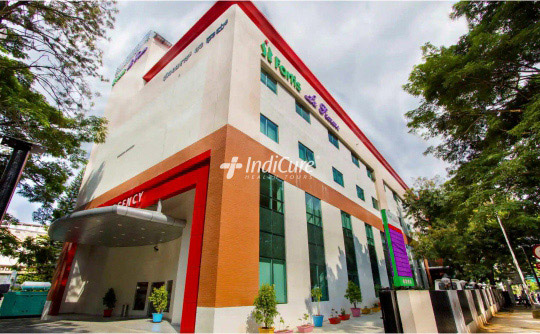
Location: Bangalore
Speciality: Multi-Superspeciality
Accreditation: Accreditation : NABH
No. of Beds: Beds : 72
Fortis La Femme is a 72-bed boutique institution in Richmond Town Bengaluru dedicated to women’s and children’s care. The hospital is India’s top healthcare provider for women at all periods of their lives, including pregnancy, adolescence, motherhood, menopause, and beyond. The hospital defies stereotypes by positioning itself as a comprehensive ‘Women’s Health’ provider. There are a variety of room options available at Fortis La Femme to suit any budget. Room options include General Ward, Twin Sharing, Single Deluxe, Suite, and Presidential Suite. Mamma Mia is known for providing unique prenatal and postnatal care to all expectant women through a variety of services such as Yoga, Lamaze, Exercise, Reflexology, and other services. The hospital also houses the Amaara Human Milk Bank, the world’s first and only non-profit human breast milk bank, which opened in October 2017.
Metro Hospital, Noida
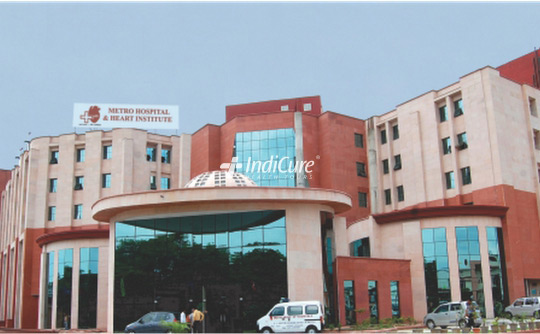
Location: New Delhi (NCR)
Speciality: Multi-Superspeciality
Accreditation: Accreditation : National Accreditation Board for Hospitals & Healthcare Providers (NABH), National Accreditation Board for Testing and Calibration Laboratories (NABL)
No. of Beds: Beds : 317
Metro hospitals & heart institute, a 317-bed state-of-the-art super specialty hospital with a specialized 110-bed metro heart institute and 207-bed metro multispeciality hospital, is one of the best hospitals in Noida. In addition to inpatient, outpatient, and emergency care, Metro Hospital offers a wide range of world-class health services. Dr. Purshotam Lal (chairman of the Metro group of hospitals) created Metro multispeciality hospital in 1998 with the goal of providing comprehensive healthcare at a reasonable price. Cardiology, pulmonology, neurology, orthopedics, gynecology & obstetrics, neonatology, pediatrics, ENT, and other specialties are among the services provided by Metro hospitals.
Questions you must ask
Here is a set of questions you should consider asking while planning your medical journey for a pancreas transplant surgery in India.
- Is it time for a pancreas transplant?
- Is the surgeon board certified?
- How experienced is the Surgeon?
- Which language does the surgeon speak?
- Is the treatment done in a well-equipped facility?
- Can you give me any information on outcomes and complication rates?
- How much pain can I expect, and how will it be managed in the hospital and after I go home?
- What about the risks involved?
- Does the surgeon use a certified anesthetist?
- How long will the recovery period be?
Be ready to respond about:
Prepare to answer questions about your:
- Medical history and exams
- Previous surgeries
- Current medication review
- History of smoking, drugs, or alcohol
What is Pancreas Transplant?
The pancreas is a tiny organ found near the stomach, intestines, and other organs in the abdomen. It’s about the size of a palm. It is behind the stomach and in front of the spine. The pancreas produces digestive juices as well as hormones such as insulin and glucagon, which help the body keep blood sugar levels in check and use and store food energy.
A pancreas transplant is an organ transplant in which a healthy (insulin-producing) pancreas is placed into someone whose pancreas is no longer producing adequate insulin. The healthy pancreas comes from a deceased donor or a partial pancreas from a living donor.
A pancreas transplant may be used to treat type 1 or insulin-dependent diabetes. A successful pancreas transplant will eliminate the requirement for insulin shots, as well as diabetes-related dietary and exercise restrictions, as well as the danger of severe low blood sugar reactions. A pancreas transplant can also help manage damage to other organs caused by type 1 diabetes, such as the kidneys, or eyes.
There are three main types of pancreas transplantation:
Pancreas Transplant Alone- For patients with type 1 diabetes who have severe, frequent hypoglycemia but good kidney function, a pancreas transplant alone is a good option.
Simultaneous pancreas-kidney transplant (SPK)- When the pancreas and kidney are transplanted from the same deceased donor at the same time, this is known as a simultaneous pancreas-kidney transplant (SPK). End-stage renal disease (ESRD) or end-stage kidney disease, which may require a kidney transplant, is one of the most devastating complications of type 1 diabetes. You must take antirejection medication for the kidney and continue to take insulin if you have a kidney transplant without a pancreas transplant. Diabetes has the potential to harm the new kidney as well as other organs. Successful combined kidney-pancreas transplants reduce diabetes deterioration and eliminate the requirement for insulin therapy in newly transplanted kidneys. A patient’s replacement kidney and pancreas would come from the same donor in the best-case scenario.
Pancreas-after-kidney transplant (PAK)- When a cadaveric, or deceased, donor pancreatic transplant is performed after a previous, and different, living or deceased donor kidney transplant, it is known as pancreas-after-kidney transplant (PAK).
When is a Pancreas Transplant Required?
A pancreas transplant may be considered a possible treatment option if one or more of the following apply.
- Standard treatment for type 1 diabetes isn’t working.
- Severe insulin reactions are common.
- Blood sugar management is really bad.
- Hypoglycemia Unconsciousness (see above)
- Severe Kidney impairment
How is Pancreas Transplant Done?
Evaluation and matching procedure:
Finding a donor can be difficult at times. The pancreas is frequently removed from someone who has been certified brain dead but is still on life support. The donor must meet certain transplant requirements, such as being healthy and of a certain age. The donor’s organ must also be immunologically compatible with the recipient’s body. To lower the chance of organ rejection, this is critical.
The pancreas can also be obtained from a living donor if a matching blood relative is willing to donate part of their pancreas. In these circumstances, donors donate a portion of their pancreas rather than the entire organ.
Both the patient and the donor are evaluated and put through a battery of tests prior to the transplant surgery to determine that the donor is healthy enough to survive the procedure. The exam comprises blood tests as well as compatibility matching. EKG, Echo, Chest X-ray, Abdominal CT scan, CT Cholangiogram, physical assessment by a physician, hepatologist, and psychiatric exams are among the additional tests and investigations.
Pancreas transplant surgery with a living donor:
Depending on whether you are getting a pancreatic transplant alone or a kidney and pancreas transplant at the same time, pancreas transplant surgery normally takes three to six hours.
The donor’s pancreas is first surgically removed: -a part of the body and tail of the pancreas are removed.
Step 1
The first step is to make an incision down the center of your abdomen. The new pancreas and a little section of the donor’s small intestine are surgically implanted into your lower belly.
Step 2
Your small intestine or gall bladder is joined to the donor intestine, and the donor pancreas is connected to blood arteries that also feed blood to your legs. To help digestion, your own pancreas is left in place.
Step 3
If you’re also getting a kidney transplant, the new kidney’s blood vessels will be connected to blood vessels in your lower belly. The ureter – the tube that connects the kidney to the bladder – of the new kidney will be linked to your bladder.
What is the Recovery After Pancreas Transplant Like?
The recovery process following a pancreas transplant is a long and gradual one that tries to gradually improve the patient’s health and fitness. Resuming normal daily activities could take up to three months.
You’ll need to travel to India approximately 2-3 weeks before the surgery for pre-operative testing and paperwork, and you’ll need to stay for around 6-8 weeks afterward. As a result, you’ll need about 12-14 weeks to fully recuperate from pancreatic transplant surgery in India.
Your replacement pancreas should begin working right away, and your old pancreatic will continue to operate normally.
If you receive a new kidney, it will produce urine in the same way that your healthy kidneys did. This usually begins right away. However, it may take several weeks to return to normal pee production in certain circumstances.
Close monitoring is required for three to four weeks after you leave the hospital. Following your pancreas transplant, you’ll need to take a number of medications. Immunosuppressants are medications that prevent your immune system from attacking your replacement pancreas.
What Results Can I Expect from Pancreas Transplant?
After a successful pancreas transplant, your new pancreas will make the insulin your body needs, so you’ll no longer need insulin therapy to treat type 1 diabetes.
The Diabetes cure rate is 80% at 10-years and the chances of a diabetic being alive at 25 years after a simultaneous kidney pancreas transplant are 70% versus 27% if the diabetic went in for a kidney transplant alone.