Varicose Vein Laser Treatment Cost in India
Last updated: May 3, 2026
Starting from USD 2000 for one leg
INCLUDES
- Surgery
- Stay at the Hospital
- Pre-operative Investigations
- Medicines, Consumables
- Food at the hospital
- Airport Transfers
- MediTraWell assistance
DOES NOT INCLUDE
- Accommodation outside the Hospital
- Air tickets
- Medical Visa fee
STAY REQUIRED
- Stay at the Hospital - 1 to 2 days
- Stay at the Hotel - 7 to 8 days
- Stay in India - 8 to 10 days
Factors that Affect Varicose Vein Laser Treatment Cost in India:
- Surgeon’s Fees
A significant component of Varicose Vein Laser Treatment Cost in India is the vascular surgeon’s fees. IndiCure only recommends highly experienced, skilled, board-certified vascular surgeons who can deliver excellent results. While the charges may vary based on the surgeon’s experience, you can be confident that you are in safe and capable hands when opting for affordable vascular surgery in India with IndiCure Health Tours.
- Your Choice of Surgical Facility
Selecting an accredited medical facility with skilled and qualified medical staff is essential for the success of Varicose Vein Laser Treatment in India. Larger cities in India generally provide superior medical facilities and more experienced vascular surgeons, leading to higher costs. IndiCure Health Tours recommends surgical facilities in these larger cities only to prioritize quality of care and ensure patient safety of our overseas guests.
- Surgery-Related Expenses
The overall expenses related to surgery include the pre- and post-surgical expenses. The pre-surgical expenses are dependant on the age and medical condition of the patient and may change basis the number and type of investigations required. The post-surgical expenses include prescription medications and follow-up consultations with the vascular surgeon.
We Customize Varicose Vein Laser Treatment in India Quote to Suit Your Preferences
At IndiCure Health Tours, we try to consolidate most of the expenses for your Varicose Vein Laser Treatment Cost in India to provide you with an inclusive and cost-effective package tailored to your budget and individual requirements. After receiving medical reports, your case manager will provide an estimated cost based on a discussion with the vascular surgeon.
The final Varicose Vein Laser Treatment Cost in India can however be confirmed after your face-to-face consultation with the chosen vascular surgeon in India.
We at MediTraWell, understand that you travel with a budget in mind and do not like to be greeted by surprises after arrival in India. We thus club all these expenses and give you a package cost that is inclusive and affordable at the same time.
Your case manager shall give you an estimated cost of your surgery after discussing your medical reports with the surgeon. The final cost, however, shall be confirmed after your consultation with the surgeon.
Medi Trawell Services
Making Medical Travel to India Affordable & Hassle-free for 15+ Years
We Help you Choose the Right Treatment, Surgeon & Hospital
We Arrange Video/Telephonic Consultation with the Surgeon
We Assist you with Visa & Accommodation

We Receive you at the Airport and Drop you at Hotel/Hospital

We Assist you the at Hospital & Provide Post Operative Support
Our services are FREE for our patients.
In fact, we have Special Negotiated Rates with the Hospitals and you can avail Discounted Rates when you choose to Travel with MediTrawell. Container
Questions you must ask
Here is a set of questions you should consider asking before commencing your medical journey for Varicose Vein Laser Treatment in India.
- Is the surgeon board certified?
- How experienced is the Surgeon?
- Which language does the surgeon speak?
- Is the treatment done in a well-equipped facility?
- Is it possible to see before and after photographs?
- What about the risks involved?
- How long will the recovery period be?
- Can I have feedback from real people?
Be ready to respond about:
Prepare to answer questions about your:
- Medical conditions or allergies
- Current medication review
- Previous surgeries
- Treatment goals
Best Vascular Surgeons in India
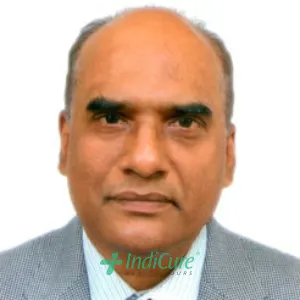
Dr. Suhas Parikh
Vascular Surgeon
Fellowship, Diploma, MCh, MS, MBBS,
Mumbai
Dr. Suhas Parikh is counted as one of the best vascular surgeons in India. He has more than 31 years of experience in the field of cardio-vascular and thoracic surgeries. He was the first Indian to work with the legend Dr. Christian Cabrol and the Heart Transplant team in Paris.
He received his MBBS, MS in general surgery, and MCh in cardiothoracic and vascular surgery from a prestigious medical college in Mumbai. He then completed his DRE in the French hospital La Pitie and his Fellowship at the Indian Society of Cardiology. He then went on to receive advanced training in minimally invasive cardiac surgery, off-pump coronary artery bypass surgery, and robotic surgery at the University of Leipzig in Germany, La Pitie Hospital in France, and Lenox Hill Hospital in the United States.
He has given guest lectures in India and overseas and participated in numerous seminars and conferences. He and his colleagues have completed more than 200 heart transplants, 1800 open-heart procedures, and 40 artificial heart implantations at La Pitie Hospital.
He was the first Indian to work with the legend Dr. Christian Cabrol and the Heart Transplant team in Paris.
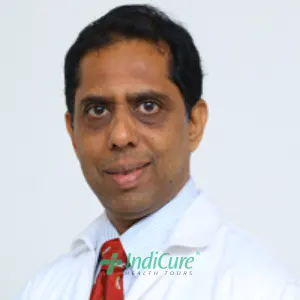
Dr. Balaji V
Vascular Surgeon
MBBS, MS, FRCS, Fellowships
Chennai
Dr. Balaji V has more than 25 years of outstanding experience as a vascular surgeon. His areas of specialization include pulmonary arteriovenous malformation vascular surgery, IVC filter implantation, endovascular renal treatment, IVC filter placement, endovascular treatment for renal and pulmonary artery, and arteriovenous malformation.
Dr. Balaji has received numerous honors, including Best Doctor in 2010 by the Indian Medical Association. He was the first Indian to pass the FRCS Intercollegiate Board Test, he is a Gold medalist in Anatomy, Urology, and Pediatric Surgery. He has also received pancreas transplant training at University of Minnesota Hospitals in Minneapolis, USA.
He has written or co-authored more than 25 publications on vascular and transplantation surgery in several national and international journals. He actively participates in a number of prestigious associations, including the British Transplantation Society, International College of Surgeons, and Vascular Surgical Society India.
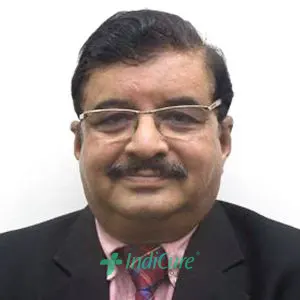
Dr. Kumud Rai
Vascular Surgeon
MBBS, MS, Fellowship
New Delhi
Dr. (Col) Kumud Rai is a well-known and esteemed vascular surgeon in India. He has more than 33 years of diverse experience in the field of vascular surgery. Dr. Rai attended the prestigious AFMC College in Pune for her MBBS and MS in Surgery. He then completed his Fellowship at Erasmus University in Holland.
Dr. Rai is one of the distinct surgeons to be honored with numerous awards and medals for his contribution in the field of medicine and towards the country. The President of India has given him the Presidential Citation Award for his contributions to the Kargil War, Pioneer in Vascular Surgery Award, INDOVASC, Vice President International Society for Vascular Surgery, and Sena Medal.
He is an expert in carotid surgery, aortic aneurysm repair (open and EVAR), peripheral bypass surgery (aorto-femoral, fem-distal), and dialysis access surgery (fistula/grafts).
Dr. Rai attended the prestigious AFMC College in Pune for her MBBS and MS in Surgery. He then completed his Fellowship at Erasmus University in Holland.
Varicose Veins
Varicose veins are twisted, enlarged veins. Varicose veins can develop in any superficial (near the skin’s surface) vein. Leg veins are the most frequently affected by varicose veins. This is due to the fact that standing and walking put more strain on the lower body’s veins.
Varicose veins are frequently only an aesthetic concern for many people. Others may have aching pain and discomfort from varicose veins. Varicose veins can occasionally result in more severe issues.
Symptoms of Varicose Veins:
Varicose vein symptoms include:
- Bluish-purple or dark-purple veins
- Tangled, bulging veins that frequently resemble cables on the legs
The following are examples of painful varicose vein indications and symptoms:
- Legs that are heavy or aching
- Lower leg edema, muscular cramps, burning, and throbbing
- Pain that worsens after spending a lot of time sitting or standing
- Itching around a vein or many veins
- Variations in skin tone near a varicose vein
Varicose veins and spider veins or thread veins are similar, although spider veins are smaller, are closer to the skin’s surface, and spider veins are frequently red or blue in color.
Spider veins can be present on the face as well as the legs. They come in different sizes and frequently resemble spider webs.
Causes of Varicose Veins:
Varicose veins can be caused by weak or broken valves. Blood is transported throughout the body through arteries from the heart. Blood is returned to the heart by veins from the rest of the body. Leg veins must defy gravity in order to return blood to the heart.
Elastic vein walls and muscle contractions in the lower legs help blood return to the heart. Veins have tiny valves that open to allow blood to flow toward the heart and seal to prevent it from flowing the other way. Blood can flow backward and pool in the veins if these valves are weak or broken, which can stretch or twist the veins.
Factors that can increase a person’s risk of developing thread veins include:
- Genetics
- Pregnancy
- Being female
- Being older
- Being overweight
- Hormones
- Sitting or standing for extended periods
- A previous blood clot or vein damage
- Excess pressure in the face
- Sun damage
Complications of Varicose Veins
Even though they are uncommon, untreated varicose veins can result in:
Ulcers- the skin around varicose veins can develop painful ulcers, especially close to the ankles. A skin discoloration usually appears before an ulcer develops. If you believe you have a leg ulcer, consult your doctor right away.
Blood clots- The swelling and soreness in the legs might occasionally be brought on by swollen deep leg veins. Consistent leg discomfort or swelling should be examined by a doctor since these may be symptoms of a blood clot.
Bleeding- Veins that are close to the skin can burst. Even though this typically only results in slight bleeding, medical intervention is still necessary.
Treatment for Varicose Veins
Wearing Compression Stockings- Wearing a properly fitting support hose is the most conservative course of action, particularly when the veins are the source of unpleasant or uncomfortable symptoms. Most surgical supply stores, as well as certain pharmacies, carry these stockings. They are available in pantyhose, above-the-knee, and below-the-knee designs.
Making Lifestyle Changes- Walking and maintaining good skin hygiene are effective treatments for varicose veins. A low-salt diet helps to lessen bloating and edema.
Sclerotherapy- The vein is directly injected with a highly concentrated saline (salt) solution or a carefully formulated detergent in this operation, which has been around since the 1930s. Over the course of three to six weeks, the vein progressively disappears. The treatment can be carried out in an outpatient setting and is easy and short.
Endovascular Laser Treatment- Varicose veins can now be treated without surgery with EVLA. The varicose veins are burned by a laser rather than being tied and removed. The body then naturally absorbs the dead tissue when the heat kills the vein walls, destroying the varicose veins. Instead of an operating room, it can be performed in a straightforward treatment room.
Occlusion of radiofrequency- A tiny catheter is used during this treatment to give radiofrequency radiation to the vein wall, which causes it to heat up, collapse, and seal shut. The operation can be carried out under local anesthetic and is typically performed in an outpatient setting.
Surgery- Endoscopic vein surgery, ambulatory phlebectomy, which enables the removal of large surface veins through extremely small incisions that do not require stitches, and stripping and ligation are surgical methods used to treat varicose veins. Anesthesia options for surgery include local, spinal, and general. Large varicose veins are usually treated surgically. A tiny camera is used during endoscopic vein surgery to examine the veins and remove them.
Lasers and intense pulsed light- These devices target and damage or eliminate aberrant veins using heat energy. Although there may be slight discomfort, one benefit of these therapies is that no needles or sclerosing solutions are needed. Blister formation and discoloration or staining are among the possible side effects. Examples include PhotoDerm and Vasculight.
Who is a Good Candidate for Varicose Vein Laser Treatment?
If your varicose veins are painful, red, and swollen, your doctor might recommend laser surgery. If the skin around your varicose veins becomes inflamed, laser surgery may also be suggested.
The ideal patient for Laser therapy is in good overall health, does not smoke and has realistic expectations from the procedure. Additionally, it can be your best option if you have a needle phobia, an allergy to the chemicals used in sclerotherapy, or your thread veins are too small to be injected.
How is Endovenous Laser Varicose Vein Surgery Done?
Endovenous laser treatment for varicose veins is usually done on an outpatient basis and does not require any hospital stay. The procedure usually takes an hour or little less to complete.
Step 1
The surgeon will numb the place where the tube or catheter will be inserted into your vein. Before and during the surgery, your healthcare provider will check the vein using a Doppler ultrasound machine. This method creates a picture of the vein on a computer screen using sound waves.
Step 2
The surgeon will insert the catheter into your body through a tiny cut or incision into the varicose vein to be treated. The catheter will be filled with a laser fiber. The laser will heat up the length of the vein as the surgeon pulls the catheter out. The vein closes up and ultimately shrinks.
You probably won’t need sutures because the cut where the catheter was put was likely tiny enough. In the area, a bandage will be applied.
What Results Can I Expect from Endovenous Laser Varicose Vein Surgery?
Laser thread vein removal is a non-invasive, safe and trusted treatment that will leave you with a clearer complexion, and more rejuvenated skin by minimizing the appearance of visible spider veins and unwanted broken capillaries. Best of all, it is an affordable treatment with virtually minimal downtime.
What is the Recovery after Endovenous Laser Varicose Vein Surgery like?
Following the operation, you will be advised to walk for 30 to 60 minutes. There may be minor bruises on your leg. In about two weeks, the bruises should fade.
After treatment, you can normally resume your normal activities, however we do urge that you avoid exercising in hot environments like the sauna or the gym. In the same way, we suggest that you avoid exposing the area to direct sunlight and wear sunscreen with a minimum SPF of 30.