

Slipped disc surgery cost in India
Last updated: May 3, 2026
Starting from USD 4500
Slipped Disc Operation Cost in India starts from US $4500 and varies depending on your medical condition, history and comorbidities, if any, surgeon, hospital and the city where you choose to get the surgery done.
INCLUDES
- Surgery
- Stay at the Hospital
- Pre-operative Investigations
- Medicines, Consumables
- Food at the hospital
- Airport Transfers
- MediTraWell assistance
DOES NOT INCLUDE
- Accommodation outside the Hospital
- Air tickets
- Medical Visa fee
STAY REQUIRED
- Stay at the Hospital - 1 to 2 days
- Stay at the Hotel - 7 to 8 days
- Stay in India - 8 to 10 days
Factors that affect Slipped Disc Surgery Cost in India:
- Type of Surgical Approach
A significant portion of the overall cost of the surgery arises from the use of any customized surgical instruments or specialized computer technology. With the hopes of improving patient care, new techniques and technologies are often introduced to the surgical process. Such innovative advancements in the surgical approach can increase costs.
- Surgical Facility
Having your slip disc operation in an accredited surgical facility by skilled and qualified medical staff is a critical factor. Moreover, the geographical location of this facility also affects the quote. But, IndiCure provides you with a projected estimate that will be all inclusive and affordable.
- Spine Surgeon’s Fees
An important expense when it comes to your slipped disc operation is going to be your spine surgeon’s fees. IndiCure recommends only experienced, skilled, board-certified surgeons who are capable of delivering successful herniated disc surgeries. Although the charges may vary depending on the experience of the surgeon, you can be assured to be in safe hands with IndiCure.
- Surgery-Related Expenses
The surgery-related expenses include the pre- and post-surgical expenses. The pre-surgical expenses are associated with the age and medical condition of the patient and thus the number and type of investigations required. Post-surgical expenses may include prescription medications, physical therapy, and follow-up consultations.
We at MediTraWell, understand that you travel with a budget in mind and do not like to be greeted by surprises after arrival in India. We thus club all these expenses and give you a package cost that is inclusive and affordable at the same time.
Your case manager shall give you an estimated cost of your surgery after discussing your medical reports with the surgeon. The final cost, however, shall be confirmed after your consultation with the surgeon.
Medi Trawell Services
Making Medical Travel to India Affordable & Hassle-free for 15+ Years

We Help you Choose the Right Treatment, Surgeon & Hospital

We Arrange Video/Telephonic Consultation with the Surgeon

We Assist you with Visa & Accommodation

We Receive you at the Airport and Drop you at Hotel/Hospital

We Assist you the at Hospital & Provide Post Operative Support
Our services are FREE for our patients.
In fact, we have Special Negotiated Rates with the Hospitals and you can avail Discounted Rates when you choose to Travel with MediTrawell. Container
Best Spine Surgeons for Minimally Invasive Spine Surgery in India
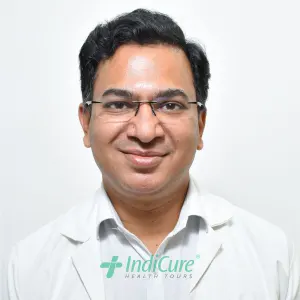
Dr. Hitesh Garg
Pediatric Orthopedics & Spine Surgeon
MBBS, MS, Fellowship Spine Surgery (Yale University, USA), Fellowship in Pediatric Spine (Shriners Hospitals for Children, USA), Joint Replacement Fellowship (AIIMS)
Gurgaon
He has to his credit over 2000 spine surgeries which include more than 1500 spinal fusion surgeries, over 150 cervical and lumbar artificial disc replacement surgeries, and around 250 deformity correction i.e. scoliosis and kyphosis correction surgeries.
Dr. Hitesh Garg is the most coveted and renowned surgeon having a very rich and extensive experience in the field of pediatric spine surgery. He received his training in spine surgery from a few of the premier spine centers in India and abroad.
He holds degrees from some of the world’s most prestigious medical schools. He earned his medical degree from the reputed AIIMS College in Delhi. Following that, he earned his Masters in Surgery (Orthopedics) from Mumbai’s prestigious KEM College. Dr. Garg received his Fellowship from Yale University in the United States and his Fellowship in Pediatric Spine Surgery from the University of Pennsylvania in the United States.
Dr. Garg received his Fellowship from Yale University in the United States and his Fellowship in Pediatric Spine Surgery from the University of Pennsylvania in the United States.
He’s been using cutting-edge technology including neuromonitoring, O-arms, navigation, and modular operating theaters. Dr. Garg has written chapters in world-renowned spine surgery books and has been published both domestically and internationally, making him one of best paediatric surgeons in India.

Dr. Vishal Peshattiwar
Spine Surgeon
Mumbai
Qualifications: MBBS, MS, Clinical Fellowship in Minimally invasive spine surgery (Singapore)
Dr. Vishal Peshattiwar has a rich professional experience of over 22 years. He has done Clinical Fellowship in Spine Surgery at the National University Hospital (NUH) in Singapore which is one of the top 10 universities across the world.
Dr. Vishal exclusively practices Spine surgery with the core focus on minimally invasive spine surgery (MISS) which brings to his credit the largest series of high risk and minimally invasive spine surgery with successful outcomes.
He has done Clinical Fellowship in Spine Surgery at the National University Hospital (NUH) in Singapore which is one of the top 10 universities across the world.
He is the first surgeon in India to perform a minimally invasive multi-level spine fixation procedure and also the first successful spine fixation surgery using the minimally invasive approach in a patient with liver failure and TB. He has performed the largest number of high-grade spine listhesis surgery using MISS and the largest series of Spine procedures in patients with chronic kidney failure in Mumbai.

Dr. Vineesh Mathur
Spine Surgeon
MBBS, MS, DNB, Fellowship in Spine Surgery (Korea)
New Delhi
Dr. Vineesh Mathur has a rich experience of over 25 years in the field of orthopedic and spine surgery. He has to his name over 5000 successful spine surgeries.
He is specialized in the management of spinal deformity and tumors. Dr. Mathur has been associated and worked with a few of the leading hospitals across the world which includes hospitals in Turkey, Denmark, Spain, the USA, and also at Seoul National University Hospital in South Korea. He has also been affiliated with some of the esteemed associations like the Association of Spine Surgeons of India and the North American Spine Society.
He is an expert in performing Minimally Invasive Spine Surgery, Spine Trauma, Spinal Instrumentation for spinal injuries, Degenerative spine surgery, Stabilization & Fusion Spine Surgery Request Consultation
Dr. Mathur has been associated and worked with a few of the leading hospitals across the world which includes hospitals in Turkey, Denmark, Spain, the USA, and also at Seoul National University Hospital in South Korea.
Association of Spine Surgeons of India and the North American Spine Society.
Best Spine Surgery Hospitals in India
Neelkanth Hospital, Gurgaon
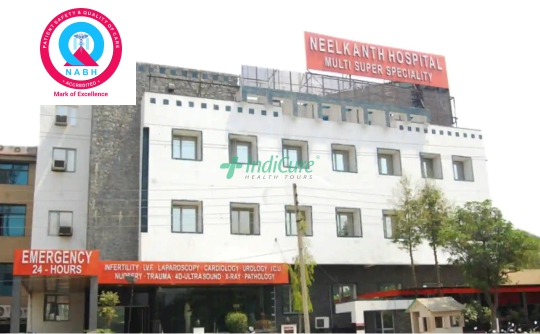
Location: Gurgaon
Speciality: Multi-Superspeciality
Accreditation: Accreditation : NABH
No. of Beds: Beds : 55
Neelkanth Hospital stands as a leading IVF and gynaecology centre with locations in Gurgaon, Delhi, and Patna. Dr. Bindu Garg, the Medical Director, spearheads the IVF center in Gurgaon, delivering specialized services to enhance the well-being of the patient community. As a highly reputable and relied-upon gynaecology and IVF centre, the hospital boasts state-of-the-art technologies and a team of exceptionally experienced experts. The team has consistently delivered superior and precise fertility treatments. The hospital’s primary focus is on the overall health and well-being of every patient, ensuring a secure and nurturing environment, prioritizing the care and comfort of patients served.
MIOT Hospital, Chennai
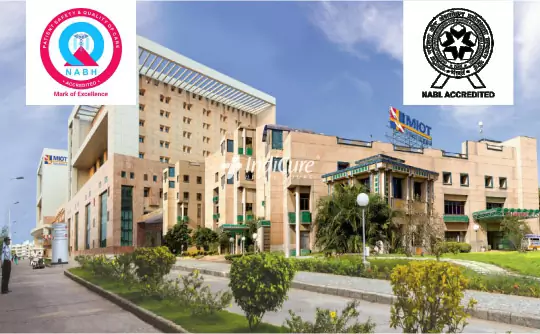
Location: Chennai
Speciality: Multi-Superspeciality
Accreditation: Accreditation : NABH, NABL
No. of Beds: Beds : 1000
MIOT, Madras Institute of Orthopedics and Traumatology was started by renowned Prof Dr. P. V. A. Mohandas in 1999 as a 70 bedded hospital, which has grown to a quaternary super-specialty 1000 bedded hospital in a span of fewer than two decades. MIOT offers more than 63 specialties and has one of the best imaging departments and state-of-the-art laboratories, which is ranked 8th in the whole world. With 21 state-of-the-art operation theaters equipped with the most sophisticated instruments, MIOT surgeons have been able to perform the most complex procedures with great success.
Slipped Disc
Slipped disc is also known as a prolapsed or herniated disc. It is a disorder where the nucleus pulposus, the inner soft component of the disc, protrudes through the weak or ruptured part of the disc, pressing on the nearby structures (nerves exiting the spinal cord), causing numbness, tingling, or even pain in the area.
Any level can experience a slipped disc or disc herniation, but the lumbar region is where it typically happens. The severity of the symptoms depends on the prolapse and herniation’s extent; the bigger the prolapse, the more severe the symptoms.
Slipped Disc Symptoms
Intermittent and persistent back pain are early signs of spine degeneration, but you can still go about your everyday activities. However, as the “jelly” begins to protrude from the “shell,” symptoms start to worsen; the pain becomes more intense, frequent, and persistent. If the pushing gel starts to squeeze the spinal nerves in the lumbar region, you can also notice weakness or numbness in your legs and buttocks.
Shoulder and arm pain results from a cervical spine rupture, and continued compression could result in lifelong paralysis.
Slipped disc is typically the final step of spine deterioration. The outer layer of your disc starts to tear when it is bent awkwardly or repeatedly, compressed, rotated, heavy objects are lifted, you sit in one place for an extended period of time, etc.
If no steps are taken to stop additional damage, the gel inside the disc begins to move out, resulting in excruciating back pain. If the pressure increases, the nucleus pulposus splits and the water inside leaks, just like a vehicle tyre that has been punctured, weakening the disc and reducing its buoyancy.
In cases when symptoms have not subsided after six weeks of conservative treatment, such as medication, injections, and physical therapy, surgery is frequently the last option and is recommended for patients. In order to relieve pressure on the spinal cord, the prolapsed portion of the disc will be removed during surgery.
Causes of Slipped Disc
Some of the common causes that cause slip disc are:
- The water content in the discs decreases with age and shrinks it causing disc degeneration
- Lifting heavy objects and in improper way
- Sitting in particular position like extended driving hours
- Overweight or sedentary lifestyle
- Sporting activities which require heavy lifting
- Excessive smoking
Treatment for Slipped Disc
Treatment options for a slipped disc include rest with pain medication, physical therapy or sometimes further treatments like injections and surgery.
- Medications and lifestyle changes: Nonsteroidal anti-inflammatory drugs (NSAIDs) are administered for pain management, and opioids are prescribed in cases of extreme pain that is refractory to NSAIDs. Back spasms are treated using muscle relaxants. Diet and exercise are advised for overweight people. Physical therapy helps to make the muscles in the spine stronger and more flexible in the legs and spine.
- Injections: Steroid injections are given to treat a herniated disk’s pain, swelling, and other symptoms.
- Surgery: When the aforementioned treatments have failed, surgery is a possibility for treatment. There are numerous surgical procedures for herniated disc surgery, including:
- Discectomy/ Microdiscectomy: the most frequent procedure performed to treat a herniated disc in the lumbar region is a discectomy. The disc fragment that is pressing on your nerve root is cut out during this treatment. Sometimes the entire disc is taken out.
- Laminotomy and laminectomy : in order to release pressure on your nerve roots, the surgeon performs a laminotomy, creating a hole in the vertebral arch (lamina). Through a small incision, the surgery is done, occasionally with a microscope. The lamina can be taken out if required. Laminectomy is the term used for this.
- Artificial Disc Surgery: when there is a lower back issue, this operation is often performed on a single disc. If you have osteoporosis, arthritis, or more than one degenerating disc, it’s not a good option for you.
- Spinal Fusion: two or more vertebrae are permanently fused together during this operation. Bone grafts from another region of your body or from a donor may be used to achieve this. Additionally, it could have screws and rods made of metal or plastic that are intended to add more support. Done to provide stability to your spine.
When is Slipped Disc Surgery Needed?
People with back pain, numbness or weakness in upper or lower limbs who are not responding to non-surgical treatments like pain killers, non-steroidal anti-inflammatory drugs and physiotherapy can consider surgery. They need further investigations like X-ray/ CT scan/ MRI to confirm bulging or protruding discs which can be corrected by surgery.
Surgery for herniated disc should be considered emergency if there are symptoms of pressure on the spinal cord or on the cauda equina or cases involving serious or increasing paralysis.
How is surgery for Slipped Disc Performed?
The most common procedures used to treat disc herniation are endoscopic discectomy and laminectomy. These surgeries are usually done under general anesthesia.
Step 1
In order to provide the surgeon better access to the affected area of your spine and to relieve pressure on your chest, belly, and pelvis, you will lie face down on a special curved mattress. Because the treatment is done under a general anesthetic, you won’t feel any pain and will be unconscious throughout. The entire process takes at least an hour, but depending on how complicated it is, it might take considerably longer.
Step 2
An X-ray will be used to calculate the precise amount of decompression necessary. Your back will be cut in the middle, with the incision going vertically along your spine. Your back muscles will be pulled away from your spine, revealing the back of your spine.
Step 3
The strain on the spinal cord or nerves will be relieved by gradually removing the damaged tissues or nerves. After a sufficient amount of decompression has been achieved, the incision will be closed and stitched up, and the muscles will be sewn back together.
What Results Can I Expect from Slipped Disc surgery?
The results of slip disc operation are good. A successful surgery relieves the symptoms of herniated or slipped disc in up to about 90% of the patients.
What is the Recovery from Slipped Disc Surgery Like?
Recovery is different for each patient. Generally speaking, it is normal to experience discomfort at the site of the operation for the first few days. This pain can be managed with pain medications. After a week following surgery, you would be instructed to begin physical therapy for rehabilitation. While you could resume your regular activities in approximately two weeks, a full recovery might take many weeks to months. Your surgeon will guide you on the rehabilitation process and when to begin strenuous exercises.
Questions to Ask
We at IndiCure completely understand your concerns and it is always our endeavor to provide the best outcome for every patient. Following is the list of questions you must ask before you embark on your journey for slip disc operation in India.
- Is it time for a herniated disc surgery?
- Is the spine surgeon board certified?
- How experienced is the Surgeon?
- Which language does the surgeon speak?
- Is the surgery done in a well-equipped facility?
- Can you give me any information on outcomes and complication rates?
- How much pain can I expect, and how will it be managed in the hospital and after I go home?
- What about the risks involved?
- Does the surgeon use a certified anesthetist?
- How long will the recovery period be?
Preparation for the Surgery
Prepare to answer questions about your:
- Medical history and exams
- Spinal evaluations
- MRI and/or CT Scans
- Current medication review