
Scoliosis Spine Surgery Cost in India
Last updated: May 3, 2026
Starting from USD 9000
Scoliosis Spine Surgery Cost in India starts from US $9,000 and varies depending on the levels needed to be treated, medical history and comorbidities-if any, surgeon, hospital and the city where you choose to get the surgery done.
INCLUDES
- Surgery
- Stay at the Hospital
- Pre-operative Investigations
- Medicines, Consumables
- Food at the hospital
- Airport Transfers
- MediTraWell assistance
DOES NOT INCLUDE
- Accommodation outside the Hospital
- Air tickets
- Medical Visa fee
STAY REQUIRED
- Stay at the Hospital - 1 to 2 days
- Stay at the Hotel - 7 to 8 days
- Stay in India - 8 to 10 days
Factors that affect Scoliosis Spine Surgery cost in India:
- Spine Surgeon’s Fees
An important expense when it comes to your scoliosis surgery is going to be your spine surgeon’s fees. IndiCure recommends only experienced, skilled, board-certified surgeons who are capable of delivering successful scoliosis surgeries. Although the charges may vary depending on the experience of the surgeon, you can be assured to be in safe hands with IndiCure.
- Type of Surgical Approach
A significant portion of the overall cost of the surgery arises from the use of any customized surgical instruments or specialized computer technology. With the hopes of improving patient care, new techniques and technologies are often introduced to the surgical process. Such innovative advancements in the surgical approach can increase costs.
- Surgical Facility
Having your scoliosis operation in an accredited surgical facility by skilled and qualified medical staff is a critical factor. Moreover, the geographical location of this facility also affects the quote. But, IndiCure provides you with a projected estimate that will be all inclusive and affordable.
- Surgery-Related Expenses
The surgery-related expenses include the pre- and post-surgical expenses. The pre-surgical expenses are associated with the age and medical condition of the patient and thus the number and type of investigations required. Post-surgical expenses may include prescription medications, physical therapy, and follow-up consultations.
We at MediTraWell, understand that you travel with a budget in mind and do not like to be greeted by surprises after arrival in India. We thus club all these expenses and give you a package cost that is inclusive and affordable at the same time.
Your case manager shall give you an estimated cost of your surgery after discussing your medical reports with the surgeon. The final cost, however, shall be confirmed after your consultation with the surgeon.
Medi Trawell Services
Making Medical Travel to India Affordable & Hassle-free for 15+ Years

We Help you Choose the Right Treatment, Surgeon & Hospital

We Arrange Video/Telephonic Consultation with the Surgeon

We Assist you with Visa & Accommodation

We Receive you at the Airport and Drop you at Hotel/Hospital

We Assist you the at Hospital & Provide Post Operative Support
Our services are FREE for our patients.
In fact, we have Special Negotiated Rates with the Hospitals and you can avail Discounted Rates when you choose to Travel with MediTrawell. Container
Best Spine Surgeons for Minimally Invasive Spine Surgery in India
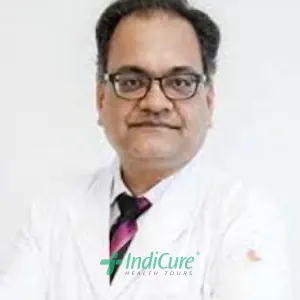
Dr. Vineesh Mathur
Spine Surgeon
MBBS, MS, DNB, Fellowship in Spine Surgery (Korea)
New Delhi
Dr. Vineesh Mathur has a rich experience of over 25 years in the field of orthopedic and spine surgery. He has to his name over 5000 successful spine surgeries.
He is specialized in the management of spinal deformity and tumors. Dr. Mathur has been associated and worked with a few of the leading hospitals across the world which includes hospitals in Turkey, Denmark, Spain, the USA, and also at Seoul National University Hospital in South Korea. He has also been affiliated with some of the esteemed associations like the Association of Spine Surgeons of India and the North American Spine Society.
He is an expert in performing Minimally Invasive Spine Surgery, Spine Trauma, Spinal Instrumentation for spinal injuries, Degenerative spine surgery, Stabilization & Fusion Spine Surgery Request Consultation
Dr. Mathur has been associated and worked with a few of the leading hospitals across the world which includes hospitals in Turkey, Denmark, Spain, the USA, and also at Seoul National University Hospital in South Korea.
Association of Spine Surgeons of India and the North American Spine Society.
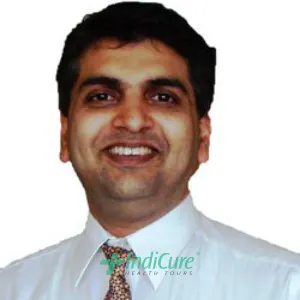
Dr. Arvind Kulkarni
Spine Surgeon
MBBS, MS, D.Ortho, FCPS-Spine (Canada), FNUH-Spine (Singapore), Fellow- Adult & Paediatric Spine Care (Australia)
Mumbai
Dr. Arvind Kulkarni is one of the leading surgeons for minimally invasive spine surgery in India. He is the pioneer in introducing Micro- Endoscopic techniques using the MetrX system for the first time in India in 2007. He is also entitled in Limca Book of Records for performing the first Artificial Disc Replacement (ProDisc-L) in the country.
He has extensive experience spanning over 20 years in this field having trained in a few of the top spinal centers across the world like National University Hospital, Singapore, West mead Adult & Children’s Hospitals, Australia, St George Hospital, Australia, and Toronto Western Hospital & Hospital for Sick Children Canada.
He is the pioneer in introducing Micro- Endoscopic techniques using the MetrX system for the first time in India in 2007. He is also entitled in Limca Book of Records for performing the first Artificial Disc Replacement (ProDisc-L) in the country.
National University Hospital, Singapore, West mead Adult & Children’s Hospitals, Australia, St George Hospital, Australia, and Toronto Western Hospital & Hospital for Sick Children Canada.
He has to his credit several scientific publications in high-impact journals. He is a recipient of the Korean SICOT award in 2008 and has also been honored with the ‘Outstanding Young Achiever Award’ by JCI, Marine Lines, Mumbai.
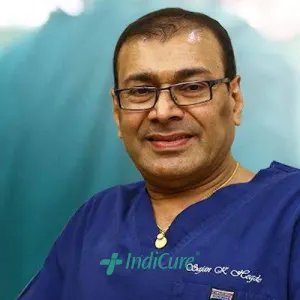
Dr. S K Hegde
Spine Surgeon
MBBS, MS (Ortho), Fellow Spine Surgeon (France, Germany & Switzerland) Experience: 33+ years
Chennai
Dr. Sajan K Hegde is a very senior spine surgeon having vast experience of more than 33 years. He heads the Spine Unit at Apollo Hospital in Chennai and is well known for performing spine surgeries using the latest technological advancements such as minimally invasive SI joint fusion and Cervical Artificial Disc.
He is a member of the Indian Orthopaedic Association, Association of Spine Surgeons of India, Group International COTREL DUBOUSSET (GICD), and Spine Trauma Study Group, USA.
He is also a pioneer in introducing several key modern instrumentation systems which include Cotrel – Dubousset, Moss Miami, Ray cages (PLIF), BAK cages, and Harms Mesh Systems. He has also introduced arthro-plastic reconstruction for lumbar and cervical discs in India. He has to his name Asia’s first deformity correction of infantile scoliosis using Shape-memory Alloy staples.
is well known for performing spine surgeries using the latest technological advancements such as minimally invasive SI joint fusion and Cervical Artificial Disc.
Best Spine Surgery Hospitals in India
UPHI- The Wellness & Surgical Centre, Gurgaon
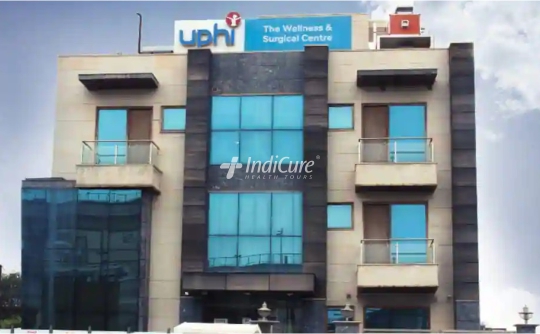
Location: Gurgaon
Speciality: Multi-Superspeciality
Loading...
Loading...
UPHI-The Wellness & Surgical Centre is a one-of-a-kind boutique hospital dedicated to offering exceptional outpatient surgical care to individuals with high expectations. The organization is committed to integrating the skills of highly specialized surgeons with international-standard equipment and facilities. UPHI is unique in delivering great outcomes to patients who want the finest in a quiet and luxurious setting by focusing their knowledge in certain surgical specializations. UPHI pledges to provide comprehensive care that meets or exceeds worldwide standards in a friendly, calm, home-like setting that prioritizes the patient. The hospital’s design reflects their strong dedication to patient safety, privacy, and comfort.
Fortis Hospital, Rajaji Nagar, Bangalore
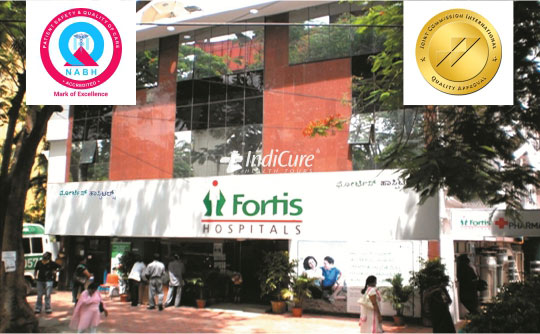
Location: Bangalore
Speciality: Multi-Superspeciality
Accreditation: Accreditation : JCI, NABH
No. of Beds: Beds : 50
The Fortis Hospital in Rajajinagar was founded in 2002 and is JCI and NABH accredited. The Fortis Hospital in Rajajinagar is a world-class medical centre that is part of the Fortis network of hospitals. The hospital focuses on providing excellent patient care with nationally and internationally known experts. Rajajinagar’s Fortis Hospital is known for its cutting-edge medical technologies and dedicated patient care. Cardiology & Cardiac Surgery, Urology, Nephrology, Neurosciences, Orthopedics, Digestive Care, Emergency Care, and Critical Care are some of the specialties available.
Scoliosis
Scoliosis is the lateral curvature in a normal straight spine mostly occurring during the child’s growing years. A side view shows convexity in upper back and concavity in lower back though it looks normal from front or back view. It can be seen in 3 shapes:
- single curve on left/ C shaped/ levo-scoliosis
- single curve on right/dextro-scoliosis
- two curves/ S shaped
Causes:
There can be many reasons for scoliosis, which can be categorized into:
- Congenital: Congenital scoliosis is the scoliosis present by birth due to embryonic malformation of one or more vertebrae and can occur at any location of the spine. Since scoliosis is present by birth, it is diagnosed early in life.
- Neuromuscular: Neuromuscular scoliosis is because of any neurological or muscular disease like cerebral palsy, muscular dystrophy or spina bifida. Neuromuscular scoliosis generally progresses very rapidly and needs surgery.
- Idiopathic: When the exact cause of scoliosis is not known, it is ascribed as idiopathic. It accounts for 80% of all known cases of scoliosis and is usually detected during puberty.
Most cases of scoliosis are mild and do not require any surgery. However, some children develop deformities that continue to get severe as they grow, which can be disabling. Severe spinal curves can reduce the amount of space within the chest making lung functioning difficult.
Scoliosis Surgery
The aim of the scoliosis surgery is threefold:
- Safely straighten the spine as much as possible
- Balance the torso and pelvic areas
- Maintain the correction for long term
This is done by two methods
- Spinal Fusion – fusing the vertebrae along the curve
- Supporting the spine – with rods and screws till the fusion takes place
Once the bone fuses, the spine does not move and the curve does not progress.
The surgery is done by two approaches:
Posterior (done through back) or Anterior (through sides) approach. Both have their own merits and demerits.
The surgery for treatment of scoliosis in India is done under general anesthesia and can take anywhere between 4-12 hours depending on the curve and how much the spine needs to be fused. Hospital stay of about a week is required after the surgery to make sure you are on the right healing path.
Who is a Candidate for Scoliosis Surgery?
Candidates for scoliosis spine surgery are adolescents if their curves are greater than 40 degrees and it continues to progress and adults with curves greater than 50 degrees. A good candidate for scoliosis spine surgery is one who is otherwise healthy, mentally and emotionally stable and can tolerate the surgery well.
How is Scoliosis Surgery done?
- Posterior Approach:
- A long incision is given on whole length of thoracic spine
- The muscles are separated from spine which gives access to the spine
- Rods are inserted to reduce the curve and screws are used to hold them
- Bone is inserted which causes spine fusion. Fusion progresses for 3 to 6 months but can continue up to 12 months
Severe deformation and rigid curvature requires another prior procedure called anterior release of disc space, after which bone is added to aid in fusion.
- Anterior Approach:
Curves present at thoracolumbar junction (T12-L1) can be treated by anterior approach.
- This requires open incision and rib removal. The diaphragm is released from the chest wall and the spine, so proper access is presented to the spine.
- Disc is removed so that the spine is loosened.
- Rods are introduced to reduce curvature and screws are used to keep it in place.
- Disc space is introduced with bone for fusion. Fusion proceeds for 3 to 6 months, and continues for 12 months.
Advantages of anterior approach are:
- Number of vertebrae fused is less and allows additional segment motion.
- The stress overload on a few segments is prevented.
- Better aesthetic appearance is achieved with better curve reduction.
What Results Can I Expect from Scoliosis Surgery?
Scoliosis spine surgery is quite successful in stopping the curve from growing. With sophisticated techniques, doctors can straighten the curve to a great extent which improves the patient’s appearance and functioning to a great extent.
What is the Recovery after Scoliosis Surgery like?
You would have a lot of pain after the surgery which would be controlled with pain medications. You would stay at the hospital for about a week to ten days to make sure you are on the right healing path. The surgeon would advise you to start walking on the second or third day of the surgery and physical therapy would begin on the third or fourth day of the surgery.
Most people return to school and work in 3-4 weeks. Full recovery can take from 4-6 months and most people can resume other activities and even sports after advice from the surgeon.
Questions to Ask
We at IndiCure completely understand your concerns and it is always our endeavor to provide the best outcome for every patient. Following is the list of questions you must ask before you embark on your journey for scoliosis spine surgery in India.
- Is it time for a scoliosis surgery?
- Is the spine surgeon board certified?
- How experienced is the Surgeon?
- Which language does the surgeon speak?
- Is the surgery done in a well-equipped facility?
- Can you give me any information on outcomes and complication rates?
- How much pain can I expect, and how will it be managed in the hospital and after I go home?
- What about the risks involved?
- Does the surgeon use a certified anesthetist?
- How long will the recovery period be?
Preparation for the Surgery
Prepare to answer questions about your:
- Medical history and exams
- Spinal evaluations
- MRI and/or CT Scans
- Current medication review