
TURP Cost in India
Last updated: May 3, 2026
Starting from USD 3000
The TURP cost in India starts from USD 3,000 and varies depending on the medical condition and history (if any), the surgeon, the facility, and the city where you choose to get the surgery done.
The cost quoted above is indicative and should not be taken as the final cost of the surgery. The final cost can be ascertained after the surgeon has evaluated the patient. The cost in Indian Rupees can vary based on the exchange rate.
INCLUDES
- Surgery
- Stay at the Hospital
- Pre-operative Investigations
- Medicines, Consumables
- Food at the hospital
- Airport Transfers
- MediTraWell assistance
DOES NOT INCLUDE
- Accommodation outside the Hospital
- Air tickets
- Medical Visa fee
STAY REQUIRED
- Stay at the Hospital - 1 to 2 days
- Stay at the Hotel - 7 to 8 days
- Stay in India - 8 to 10 days
Factors that affect Transurethral Resection of the Prostate cost in India
- Urologist’s Fees
One of the key costs you will face when contemplating Transurethral resection of the prostate in India is the urologist’s fee. IndiCure connects you with board-certified surgeons in India who are highly skilled and have delivered successful surgeries. While the urologist’s fee can vary based on their experience, you can trust IndiCure Health Tours to recommend doctors who prioritize your safety and deliver excellent outcomes when you choose TURP in India.
- Your Choice of Surgical Facility
Choosing an accredited medical facility with skilled and qualified medical staff is crucial for the success of TURP in India. In India, larger cities typically offer superior medical facilities and more experienced surgeons, resulting in comparatively higher costs than smaller cities. IndiCure Health Tours specifically recommends surgical facilities in larger cities of India to prioritize quality of care and ensure safety of our patient guests.
- Surgery-Related Expenses
The surgery-related expenses include the pre- and post-surgical expenses. The pre-surgical expenses are associated with the age and medical condition of the patient and thus the number and type of investigations required. Post-surgical expenses may include prescription medications and follow-up consultations.
We at MediTraWell, understand that you travel with a budget in mind and do not like to be greeted by surprises after arrival in India. We thus club all these expenses and give you a package cost that is inclusive and affordable at the same time.
Your case manager shall give you an estimated cost of your surgery after discussing your medical reports with the surgeon. The final cost, however, shall be confirmed after your consultation with the surgeon.
Medi Trawell Services
Making Medical Travel to India Affordable & Hassle-free for 15+ Years

We Help you Choose the Right Treatment, Surgeon & Hospital

We Arrange Video/Telephonic Consultation with the Surgeon

We Assist you with Visa & Accommodation

We Receive you at the Airport and Drop you at Hotel/Hospital

We Assist you the at Hospital & Provide Post Operative Support
Our services are FREE for our patients.
In fact, we have Special Negotiated Rates with the Hospitals and you can avail Discounted Rates when you choose to Travel with MediTrawell. Container
Best Urologists in India
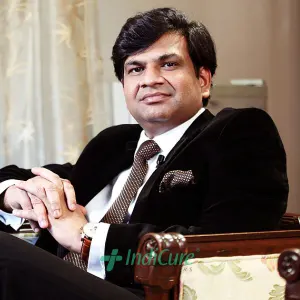
Dr Priyadarshni Ranjan
Kidney Transplant Surgeon And Urologist
MBBS, MS, MCh
Mohali
Dr Priyadarshni Ranjan is the most reputed and leading kidney transplant surgeon in the country currently heading the Advanced Kidney Care Unit at Fortis Hospital, Mohali.
He is an expert in performing kidney transplant surgery at more than 95% success rates which are at par with the leading kidney transplant centers across the world. He has performed the first successful Laparoscopic and Retroperitoneoscopic Kidney Cancer Surgeries at the Fortis Hospital Mohali.He has to his name around 45 international publications and two books in Urology and Kidney Transplantation.
He is amongst the handful urologists in India who are extensively skilled in performing complex tumor and non-tumor Kidney surgeries by Retroperitoneoscopy and Laparoscopy. He also has his name recorded in the Limca Book of Records for his extraordinary results in the treatment of kidney cancer. With this vast experience, he has around 3000 surgeries under his belt which includes Laparoscopic donor nephrectomies, kidney transplantation, Kidney cancer, Urinary bladder cancer, Prostate Operations for BPH etc.
He is amongst the handful urologists in India who are extensively skilled in performing complex tumor and non-tumor Kidney surgeries by Retroperitoneoscopy and Laparoscopy. He also has his name recorded in the Limca Book of Records for his extraordinary results in the treatment of kidney cancer.
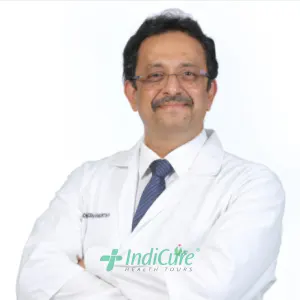
Dr Mohan Keshavmurthy
Urologist & Renal Transplant Surgeon
MBBS, MS, MCH, FRCS, FASTS
Bangalore
Dr. Keshavamurthy Mohan is one of the most eminent and reputed Urologist, Renal Transplant Surgeon having an extensive surgical experience of over 25 years.
He has performed over 2500 kidney transplants, 75 pancreas transplants, 2500 laser RIRS, and URS, and over 3000 Laser TURP procedures.
He was a meritorious and award winning student during his medical graduation following which he has done advanced training in Solid organ transplantation from QE II HSX, Halifax, Canada and also pursued Fellowship of American society of Transplantation. He is acknowledged for establishing the most successful kidney transplant programs in West and East Africa as well as the Middle East.
He is an expert in performing Laser Urology, complex reconstruction of the urinary tract, major uro-ontological procedures, Trans-urethral prostate procedures, kidney transplants, and pancreas transplants.
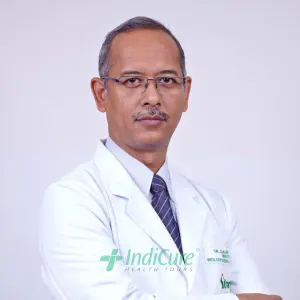
Dr. Sanjay Gogoi
Urologist And Renal Transplant Surgeon
MBBS, MS, MCH, DNB
Gurgaon
Dr. Sanjay Gogoi is the Director and Head of the Department of Urology and Renal Transplantation at FMRI, Gurgaon. Being extensively accomplished in Robotic from the Intuitive Surgical, California, he is expertise in minimally invasive transplant techniques of Laparoscopic and Robot-Assisted Transplantation.
He also has expertise in robotic and reconstructive procedures of kidneys, ureters, and bladder, in both adult and pediatric patients. He also has various national and international publications to his credit.
He is an expert in Robotic Urology, Reconstructive Urology, Pediatric Urology, Uro-oncology, renal transplantation, Endourology, Female Urology
Being extensively accomplished in Robotic from the Intuitive Surgical, California, he is expertise in minimally invasive transplant techniques of Laparoscopic and Robot-Assisted Transplantation.
Best Urology Hospitals in India
Asian Institute of Medical Sciences, Faridabad
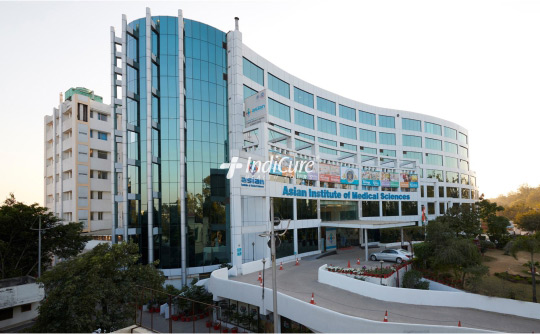
Location: Delhi (NCR)
Speciality: Multi-Superspeciality
Accreditation: Accreditation : National Accreditation Board for Hospitals & Healthcare Providers (NABH), National Accreditation Board for Testing and Calibration Laboratories (NABL)
No. of Beds: Beds : 425
Asian Institute of Medical Sciences, founded in 2010, is a super specialty tertiary care hospital with some of India’s most outstanding medical specialists. It is NABH and NABL accredited, and it is equipped with cutting-edge technology. It is NABH and NABL accredited, and it is equipped with cutting-edge technology. It has been ranked as follows: The Economic Times Survey named them Best Healthcare Brand for the second year in a row in 2016 and 2017. ‘The Week’ magazine has ranked the hospital among the top 7 hospitals in Delhi NCR for the past four years. In the ‘The Week-Hansa Research Survey 2018,’ it was ranked as the 4th best hospital in Delhi and the NCR. It is the first hospital in North India to use Varian’s RapidArc on a Trilogy system, as well as a number of high-tech devices. It has 8 hospitals with 4500+ skilled employees and 1100+ doctors that provide comprehensive treatment and palliative care.
Eye Q hospital, Gurgaon
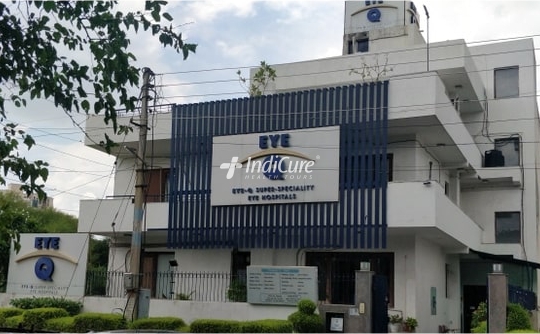
Location: Gurgaon
Speciality: Multi-Superspeciality
Loading...
Loading...
Eye-Q Hospital is an ISO 9001-2000 certified facility that opened in 2007. It is dedicated to providing high-quality eye treatment at a reasonable cost. WCRC Leaders Asia named Hospital the Most Trusted Brand of 2016-17 for its dependability and client satisfaction.
What is TURP?
Benign Prostate Hyperplasia
One of the most common ailments that aging men face is prostate gland enlargement. BPH, or benign prostate hyperplasia, affects 50% of men over the age of 50, with roughly 1/3 of these men experiencing symptoms such as a sluggish, interrupted, or weak urine stream, frequent urination, especially at night, and urgency with leaking or dribbling.
The enlarged prostate gland presses against the urethra, obstructing or interfering with urine flow out of the body. Some of the symptoms of BPH are:
- Problem starting to get a urine stream
- Frequent urination at night
- Urgency of urination
- Dribbling after urination
These symptoms can further lead to problems such as the formation of stones in the bladder or urinary infections.
With the time they reach 70-85 years of age, 90 percent of men are impacted by BPH. Fortunately, several surgical methods have been developed, with Transurethral Resection of Prostate being one of the most effective therapies.
Am I a good Candidate?
Your doctor may suggest medication or other solutions if you experience symptoms of an enlarged prostate. If those therapies don’t work, surgery may be suggested. The TURP operation may be required if the following conditions exist:
- you have slow urination
- your bladder never feels empty
- you feel an increased need to urinate at night
- you experience frequent urinary tract infections (utis)
- you experience bleeding from your prostate
- you have a history of bladder stones
- you develop kidney damage
How is TURP done?
Step 1
TURP involves the insertion of a resectoscope, a slender instrument measuring approximately 12 inches in length and half an inch in diameter, into the urethra to access the prostate gland.
Step 2
The resectoscope has a light source, valves for fluid irrigation control, and an electrical loop for tissue cutting and cauterization. Once inserted into the penis, the surgeon maneuvers the wire loop to systematically remove obstructive tissue fragments.
Step 3
Following the surgical procedure, the tissues that were sliced during the treatment are transported by fluid into the bladder and subsequently flushed out.
What is the Recovery after TURP like?
The recovery time after TURP surgery is short, however, the patient must stay in the hospital for a few days after the procedure. Following surgery, the patient is maintained under medical supervision and to drain urine, the patient is kept on the catheter for 2 to 3 days.
Analgesics and antibiotics may be needed to relieve pain and prevent infection. The patient is given enough liquids to drink for the bladder to be cleansed regularly. After TURP surgery, it can take up to a month to fully recover.
After surgery, the patient is advised to refrain from intense activity and carry heavy objects for at least one month. However, one week following surgery, the patient can resume normal activities. After 4 to 5 days, the patient is usually able to return home.
What Results Can I Expect from TURP?
TURP is a procedure used to treat men who have moderate to severe urinary issues that have not responded to treatment. While TURP has long been thought to be the most successful treatment for an enlarged prostate, several of other, less invasive treatments are gaining popularity.
Questions you must ask
Here is a set of questions you should consider asking before commencing your journey for Transurethral resection of the prostate in India.
- Is it time for a TURP surgery?
- Is the urologist board certified?
- How experienced is the Surgeon?
- Which language does the surgeon speak?
- Is the treatment done in a well-equipped facility?
- Can you give me any information on outcomes and complication rates?
- How much pain can I expect, and how will it be managed in the hospital and after I go home?
- What about the risks involved?
- Does the surgeon use a certified anesthetist?
- How long will the recovery period be?
Be ready to respond about:
Prepare to answer questions about your:
- Medical history and exams
- Previous surgeries
- Current medication review
- History of smoking, drugs, or alcohol